Connect with us

How To

This Bulletproof Lexus Luxury SUV Now Costs Less Than a Base Toyota RAV4

Published

on

Lexus LX 570

The Numbers Don’t Lie

Here’s a fact that should make any car shopper pause: a well-maintained Lexus LX 570 from a few years back now trades for less than a brand-new base Toyota RAV4. That’s not a typo.

New SUV prices have gone stratospheric. Even mainstream family crossovers now wear sticker prices that once belonged to luxury badges. The average transaction price for a new vehicle in the U.S. hovers above $48,000, and a loaded RAV4 can easily brush $40,000. Meanwhile, a 2016–2018 LX 570 with reasonable mileage often lists between $38,000 and $45,000 on the used market.

Let that sink in for a second.

You’re comparing a three-row, full-size, body-on-frame luxury SUV with a 5.7-liter V8 against a compact crossover. The Lexus LX 570 was built to conquer deserts and carry dignitaries. The RAV4 is built to carry groceries. Both are excellent at what they do. But they are not the same class of vehicle.

Why the LX 570 Is Called “Bulletproof”

The LX 570 has earned a reputation that few vehicles ever achieve. It’s not just reliable — it’s absurdly reliable. Owners routinely report crossing 200,000 miles with nothing but routine maintenance.

That’s because the LX 570 shares its bones with the Toyota Land Cruiser, a vehicle so over-engineered that humanitarian organizations and military forces around the world depend on it. The 5.7-liter 2UR-FE V8 is nearly indestructible. The six-speed automatic transmission is old-school but proven. The full-time four-wheel-drive system with a locking center differential can handle conditions that would make a RAV4 cry.

This isn’t a vehicle that will leave you stranded. It’s a vehicle that will outlive your patience before it outlives its usefulness.

Depreciation Is Your Friend

Here’s the kicker: the LX 570 depreciates like a luxury car but lasts like a work truck. The first owner takes the biggest financial hit — often 40% or more in the first five years. The second owner gets a nearly new vehicle at a fraction of the price.

And because the LX 570 is built to last 25 years or more, that “used” vehicle is barely broken in.

What You Actually Get for the Money

Let’s compare what $40,000 buys you in each vehicle.

Base Toyota RAV4 (new):

  • 203-horsepower four-cylinder engine
  • Cloth seats
  • 8-inch touchscreen
  • Front-wheel drive (unless you pay more)
  • Compact cargo space

Lexus LX 570 (used, 2017 model):

  • 383-horsepower V8 engine
  • Semi-aniline leather seats with heating and cooling
  • 12.3-inch display with navigation
  • Full-time four-wheel drive
  • Three rows of seating
  • Mark Levinson premium audio
  • Adaptive variable suspension
  • Hydraulic body motion control

We’re not talking about a slight upgrade. We’re talking about a completely different universe of vehicle.

The Catch: Fuel Economy and Maintenance

Let’s be real. There are reasons the LX 570 is cheap on the used market, and they all involve your wallet at the pump.

The EPA rates the LX 570 at 13 mpg city and 18 mpg highway. In real-world driving, expect around 14–15 mpg combined. The RAV4 gets nearly double that. If you drive 15,000 miles a year, the LX 570 will cost you roughly $1,800 more in fuel annually at current prices. That’s not nothing.

Maintenance is also more expensive. The LX 570 requires premium fuel, and when something does need replacing — brakes, tires, suspension components — the parts cost more because it’s a heavy, powerful luxury vehicle. But here’s the counterintuitive truth: the LX 570 needs fewer repairs than most vehicles. Reliability is a form of savings.

Why You Should Consider the LX 570

If you’re the type of buyer who keeps a car for 10 years and values comfort, safety, and dependability over the latest tech features, the LX 570 is arguably the smartest used car purchase on the market today.

It’s also a statement. Pulling up in a full-size Lexus SUV carries a different presence than a compact crossover. The LX 570 commands respect on the road, offers a commanding view of traffic, and provides a ride quality that few modern vehicles can match — even those costing twice as much.

Yes, you’ll sacrifice fuel economy and modern infotainment. The LX 570’s tech is dated by today’s standards. But if you’re looking for a vehicle that will never leave you stranded, that will carry your family in absolute comfort, and that will still be running when your grandkids learn to drive, the LX 570 is hard to beat.

The Bottom Line

The used market is full of bargains, but few are as compelling as the Lexus LX 570. When a luxury SUV with this level of capability and reliability costs less than a base model compact crossover, you have to ask yourself: what are you actually paying for in a new car?

If the answer is “peace of mind,” the LX 570 delivers that in spades. If the answer is “the latest touchscreen,” well, you know where to find the RAV4.

For buyers who prioritize substance over style, the LX 570 is the ultimate value play. And at these prices, it’s a no-brainer.

Continue Reading
Click to comment

Leave a Reply

Your email address will not be published. Required fields are marked *

Social Media

YouTube Just Made It Twice as Hard for New Creators to Start Earning Money

Published

on

YouTube monetization requirements

YouTube just doubled the bar for new creators

If you’ve been grinding on YouTube hoping to flip on monetization soon, you might want to sit down. The platform announced Monday that new creators will now need 8,000 qualified watch hours over the past year — double the previous 4,000 — or 20 million qualified Shorts views in the last 90 days, up from 10 million. The subscriber requirement stays at 1,000.

The new thresholds take effect February 1. Existing members of the YouTube Partner Program won’t be affected, according to the Google-owned company.

This isn’t a minor tweak. It’s a deliberate gate, and it’s going to keep a lot of aspiring creators out of the monetization pool.

Why the sudden shift?

YouTube says the changes are meant to “keep pace with the growth of YouTube,” which now sees over 200 billion daily Shorts views and more than a billion hours of watch time on TV every day. The logic: if the platform is bigger, the entry bar should be higher.

But let’s be honest. The real effect is that monetization becomes a reward for proven, sustained traction rather than a starting incentive. For Shorts creators especially, the jump from 10 million to 20 million views in 90 days is steep. That’s not a casual milestone — that’s a viral hit or a very consistent posting schedule.

Shorts creators face an extra hurdle

There’s another layer to this. Even if you’re already in the Partner Program, YouTube is raising the bar for earning through the Shorts Creators Pool. You’ll now need to maintain 10 million Shorts views over 90 days to keep pulling revenue from Shorts. Drop below that, and you stay in the program and keep earning on long-form content, but Shorts revenue pauses until you cross 10 million again.

So a channel that hits 9 million Shorts views in a quarter gets nothing from Shorts. That’s a tough pill to swallow for creators who’ve built their audience on short-form.

Premium Lite is expanding — and that’s good news for earnings

There’s a silver lining. YouTube is rolling out its cheaper Premium Lite subscription to every country where YouTube Premium is available. Premium Lite gives users ad-free viewing on most videos, offline downloads, and background play — all at a lower price point.

Creators get a cut of subscription revenue based on member watch time and views, with 55% going to long-form creators and 45% to Shorts creators. YouTube’s pitch: “When a user signs up for Premium, partners, on average, earn more than when the user was watching ads.” More subscribers means a bigger pool to split, and that could offset some of the sting from the higher thresholds.

What this means for your channel

If you’re just starting out, the math just got harder. You now need roughly 22 hours of watch time per day for a year to hit 8,000 hours. That’s not impossible — a few solid videos can do it — but it’s a different grind than before.

For Shorts-first creators, the 20-million-view threshold is the bigger ask. You’ll need to think hard about whether short-form alone can get you there, or whether you should diversify into long-form to build watch hours as a backup.

Here’s a quick breakdown of the new requirements:

  • Long-form: 1,000 subscribers + 8,000 watch hours in 12 months
  • Shorts: 1,000 subscribers + 20 million views in 90 days
  • Shorts revenue pool: Maintain 10 million views per 90 days once in the program

Not just YouTube — the whole industry is tightening

YouTube isn’t operating in a vacuum. Over the weekend, Elon Musk’s X revamped its creator payouts to only reward original content. Earlier this spring, Facebook launched a new monetization program aimed at luring creators from TikTok and YouTube. The trend is clear: platforms are getting pickier about who gets paid.

For creators, the takeaway is simple. YouTube Partner Program changes like these mean you can’t treat monetization as a near-term goal anymore. You have to build an audience that sticks around — and that might be the point.

If you’re already in the program, breathe easy. Your status is safe. But if you’re on the fence about starting a channel, know this: the bar just got higher, and it’s not coming back down.

Continue Reading

How To

Your next thermal paste replacement should also include one thing most people ignore

Published

on

thermal paste replacement

Why thermal paste replacement is inevitable

You can try everything else first — adjusting the fan curve, blowing out dust, even undervolting to shave a few watts off the power draw. Those tricks buy time. But eventually, every PC owner faces the same truth: the thermal paste between your processor and cooler has dried out, cracked, or simply stopped doing its job.

It’s not a question of if. It’s when.

And when that moment comes, most people grab a tube of paste, wipe off the old stuff, and slap on a fresh layer. Done, right? Not quite.

The step almost everyone skips

Here’s the thing most people ignore: cleaning the heatsink and CPU lid properly before applying new paste. Not just a quick wipe with a dry cloth — we’re talking about removing every trace of old thermal compound, including the residue that’s baked into microscopic grooves of the metal surface.

If you skip this, you’re essentially spreading new paste over a dirty foundation. The result? Your new thermal paste replacement won’t perform as well as it should, and it won’t last as long either.

What you need for a proper clean

  • Isopropyl alcohol (90% or higher — the higher the concentration, the faster it evaporates and the less residue it leaves)
  • Lint-free cloths or coffee filters (paper towels leave fibers behind)
  • Cotton swabs for tight corners
  • A plastic spudger or old credit card to gently scrape off stubborn chunks

Wet the cloth with alcohol, wipe the old paste off in one direction, then switch to a fresh area of the cloth and wipe again. Repeat until the cloth comes away clean. For dried-on paste, let the alcohol sit for a minute to soften it. Then scrape gently — never use anything metal, or you’ll scratch the surface and create new problems.

How to apply thermal paste correctly

Once the surfaces are spotless, the next mistake people make is applying too much paste. A pea-sized drop in the center of the CPU is enough. When you mount the cooler, the pressure spreads it evenly across the surface. More paste doesn’t mean better cooling — it means a mess and potentially worse performance if it spills over the edges.

For GPUs, the same rule applies, though the die is often smaller and more rectangular. A thin line along the center works better than a pea for some GPU dies. Check your specific card’s layout if you’re unsure.

How often should you replace thermal paste?

There’s no universal timeline. It depends on the quality of the paste, your operating temperatures, and how hard you push your hardware. As a rule of thumb, high-end pastes can last 3–5 years. Budget pastes might need replacing every 2 years. If your CPU or GPU temperatures are creeping up despite clean fans and good airflow, that’s your sign.

Some symptoms to watch for:

  • Idle temperatures that are 10°C higher than they used to be
  • Thermal throttling during light loads
  • Fan noise that ramps up more aggressively than before

Choosing the right thermal paste

Not all pastes are created equal. Some prioritize longevity, others maximum thermal conductivity, and a few focus on ease of application. For most users, a mid-range paste like Arctic MX-4 or Noctua NT-H1 offers a solid balance of performance and durability. If you’re overclocking or running a high-end GPU, you might want something like Thermal Grizzly Kryonaut, which is among the best performers but needs replacing more often.

Whatever you choose, remember: the paste is only as good as the surface it sits on. Clean properly, apply sparingly, and your thermal paste replacement will keep your system cool for years.

And if you’re also dealing with other PC issues, check out our guides on GPU thermal paste application and CPU cooler installation for more tips.

Continue Reading

Social Media

How Small Businesses Are Really Using AI: 5 Eye-Opening Findings

Published

on

small business AI use

The Numbers Behind the Shift

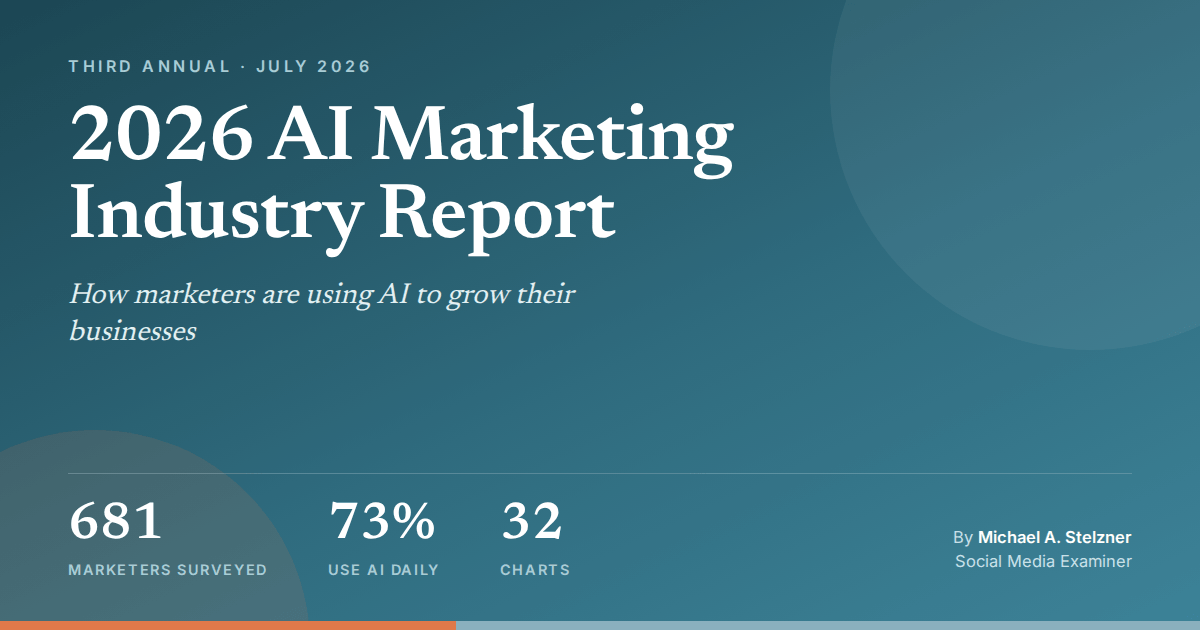
Two years ago, roughly one in three marketers relied on AI daily. Fast forward to today, and that figure has jumped to nearly 75%. That’s not a gradual uptick. It’s a full-blown transformation.

For small business owners, this shift carries weight. The Social Media Examiner‘s 2026 AI Marketing Industry Report digs deep into how businesses like yours are actually using AI — and the findings are more encouraging than you might expect.

Here are five takeaways that stand out, and what they mean for your bottom line.

1. AI Is No Longer a Luxury — It’s a Daily Workhorse

The most striking stat? Daily AI usage among marketers has more than doubled in two years. What was once a novelty tool for tech-savvy early adopters is now as routine as checking email.

Small businesses are leading this charge, not following. They’re using AI for everything from drafting social posts to responding to customer inquiries. The barrier to entry has dropped, and the payoff is immediate.

If you haven’t integrated AI into your daily workflow yet, you’re leaving time and money on the table. The tools are affordable, accessible, and surprisingly easy to master.

2. Content Creation Remains the Top Use Case

Ask any small business owner what they spend their mornings doing, and you’ll likely hear “writing content.” AI has become the go-to sidekick for this grind.

From blog outlines to email newsletters, AI helps marketers overcome the blank page problem. It’s not about replacing human creativity — it’s about amplifying it. You still provide the voice and the strategy; AI handles the heavy lifting.

The report shows that content generation is the most common application across all business sizes. For small teams with limited bandwidth, this is a game-changer in the best sense.

What This Means for Your Workflow

Start small. Use AI to brainstorm headlines, draft social captions, or repurpose a long post into multiple formats. You’ll quickly see where it saves you the most time.

3. Customer Service Is the Quiet Winner

Everyone talks about AI writing, but the real unsung hero is customer support. Small businesses are deploying chatbots and automated responses to handle routine questions, freeing up humans for complex issues.

The result? Faster response times and happier customers. And you don’t need a tech team to set this up — most platforms now offer plug-and-play solutions.

One caveat: the report stresses that AI should augment, not replace, your personal touch. Customers still want to reach a human when things get complicated.

4. The Cost Savings Are Real — and Significant

Hiring a full-time content writer or support agent is expensive. AI offers a fraction of the cost, and the report’s data backs this up.

Small businesses are reporting measurable savings on both time and money. Tasks that once took hours now take minutes. Projects that required outside contractors can now be handled in-house.

That doesn’t mean you should fire your team. Instead, reallocate their efforts to higher-value work — strategy, relationship building, and creative direction.

5. The Learning Curve Is Shorter Than You Think

One of the biggest myths about AI is that it requires technical expertise. The report demolishes that notion.

Most small business owners are learning on the job, using trial and error, and picking up skills faster than they expected. The tools are designed for non-technical users, and the payoff comes quickly.

If you’ve been hesitating because you’re not “techy,” the data says you’re overthinking it. Start with one tool, one task, and build from there.

What’s Next for Small Business AI Adoption?

The trajectory is clear: AI is becoming the standard for marketing operations, not the exception. As tools evolve, the gap between large enterprises and small businesses will continue to narrow.

For a deeper dive into the full dataset, check out the AI marketing industry report and see how your peers are adapting. And if you’re just getting started, our guide on AI tools for small business marketing offers practical first steps.

The bottom line? The future of small business is intertwined with AI, and the news is overwhelmingly positive. Those who embrace it now will have a head start on those who wait.

Continue Reading

Trending