Connect with us

How To

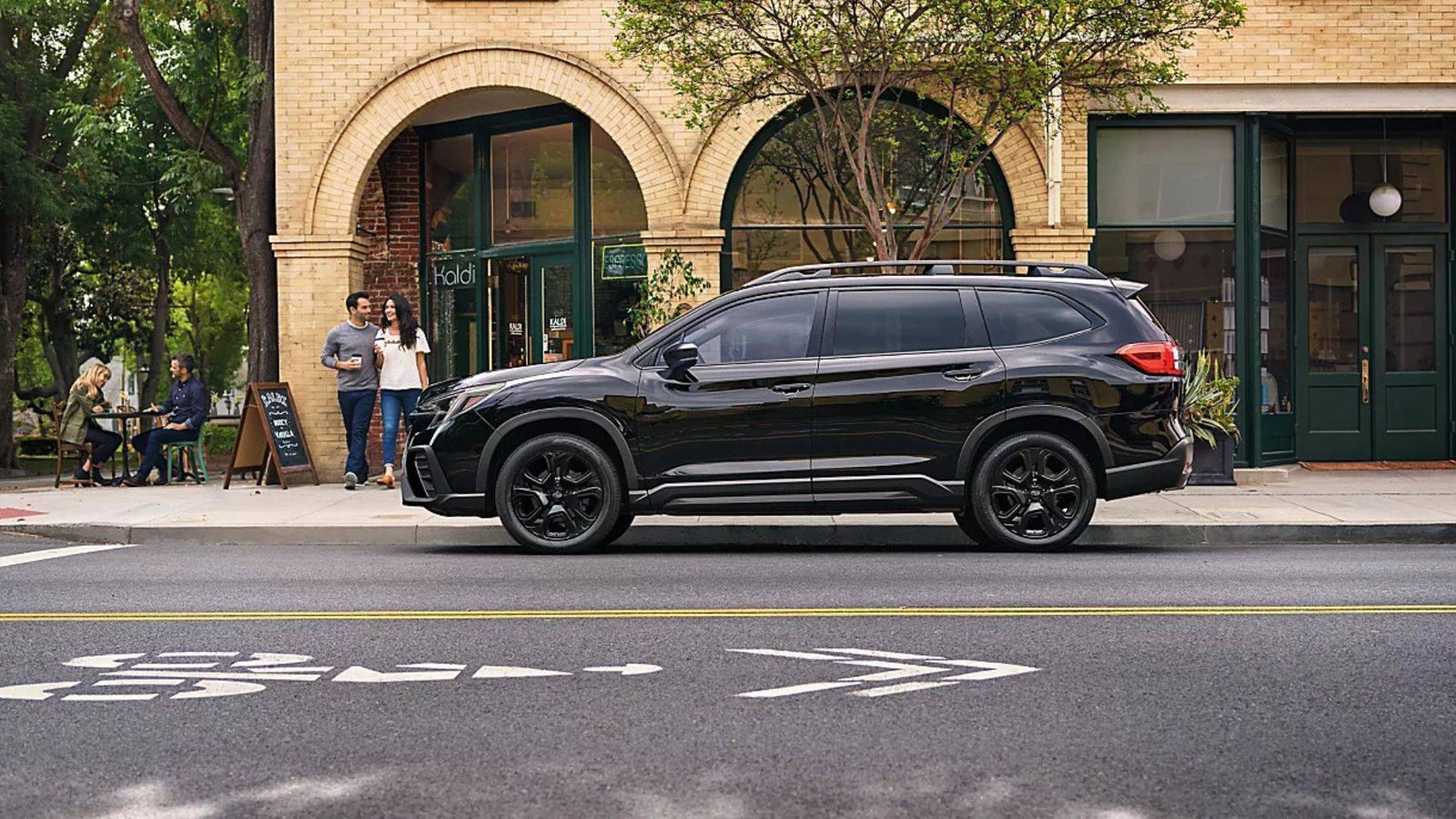
This Overlooked Japanese 3-Row SUV Quietly Out-Toyotas Toyota

Published

on

Japanese 3-row SUV

The Toyota Highlander Has a Rival It Never Saw Coming

Toyota owns the family SUV segment. The Toyota Highlander has been the default choice for suburban parents for two decades. It’s reliable, efficient, and about as exciting as a minivan with better marketing.

But there’s a Japanese three-row crossover that does almost everything the Highlander does—and some things it simply won’t. It’s not from Honda. It’s not from Nissan. It’s the Subaru Ascent, and it’s been flying under the radar since 2019.

Here’s why this underrated Japanese 3-row SUV deserves a spot on your driveway.

Standard All-Wheel Drive That Actually Works

The Highlander offers all-wheel drive, sure. But it’s an option. You pay extra. And on base trims, you’re driving front-wheel drive—which is fine until winter hits.

The Ascent makes symmetrical all-wheel drive standard on every trim. No options. No upcharges. Just grip, in every season, on every surface.

Subaru’s system is also smarter than most. It constantly shifts torque between wheels based on traction, and it works with the vehicle’s X-Mode off-road settings. That means the Ascent can handle gravel roads, muddy trails, and snowy commutes with equal composure. The Highlander feels like a minivan with an SUV body. The Ascent feels like a proper all-weather machine.

Capability You Can Actually Use

Ground clearance on the Ascent sits at 8.7 inches. That’s more than the Highlander’s 8.0 inches. It doesn’t sound like much, but it’s the difference between confidently cresting a snowy ridge and getting high-centered on a rock.

Add in hill descent control and the ability to tow up to 5,000 pounds, and you’ve got a family hauler that can drag a small camper. The Highlander matches that tow rating, but only when properly equipped—and you’ll pay for the privilege.

Interior Space That Puts the Highlander to Shame

Open the Ascent’s rear doors and you’ll find something rare in this segment: a third row that adults can actually use. Legroom in the way-back measures 31.7 inches. The Highlander offers just 27.7 inches.

That four-inch difference is massive. It’s the difference between your in-laws complaining and your in-laws falling asleep. The Ascent also offers captain’s chairs on higher trims, making access to the third row genuinely easy—even for kids in car seats.

Cargo space tells a similar story. With all three rows upright, the Ascent provides 17.8 cubic feet. Fold the third row flat and you get 47.9 cubic feet. Drop everything and you’re looking at 86.5 cubic feet of hauling capacity. The Highlander trails in every single measurement.

Family-Focused Features as Standard

Subaru didn’t just make the Ascent big. They made it smart. The standard EyeSight driver-assist suite includes adaptive cruise control, lane-keeping assist, and pre-collision braking—all without forcing you into a pricey options package.

Higher trims add a 180-degree front-view camera, which is a godsend when you’re trying to park in a crowded school lot. There’s also a rear-seat reminder system that nudges you to check the back before locking up. Small touches, but they matter when you’re running on three hours of sleep.

Reliability Without the Toyota Tax

Toyota charges a premium for its reputation. The Highlander starts around $39,000. The Ascent starts closer to $34,000. That’s a five-grand difference for a vehicle that’s just as dependable.

Subaru’s boxer engine—a 2.4-liter turbocharged four-cylinder—produces 260 horsepower and 277 pound-feet of torque. It’s punchy, responsive, and paired with a smooth continuously variable transmission that doesn’t drone like older CVTs. The Highlander’s base engine makes 265 horsepower, but you’ll need to rev it harder to get there.

Reliability-wise, the Ascent has proven itself. It’s not perfect—early models had some transmission software quirks—but Subaru addressed those with updates. Consumer reports and owner forums consistently rank it above average for long-term dependability.

The Verdict: Why Buy a Highlander When You Can Get More?

The Toyota Highlander is a fine vehicle. It’s efficient, holds its value, and has a dealer network that’s everywhere. But the Subaru Ascent does the same job with more capability, more space, and a lower price tag.

If you live somewhere with real winters, if you tow occasionally, or if you just want a three-row SUV that doesn’t feel like a penalty box, the Ascent is the smarter buy.

Toyota may own the reputation, but Subaru owns the value. And in a crowded segment full of lookalikes, that’s worth something.

Continue Reading
Click to comment

Leave a Reply

Your email address will not be published. Required fields are marked *

Social Media

Reddit wants to make karma less of a gatekeeper. AI moderation tools are the key

Published

on

AI moderation tools

Karma’s grip is loosening

For years, getting onto a bustling subreddit felt like trying to join a private club without knowing the secret handshake. New accounts with zero karma were often locked out, their posts silently removed by filters demanding proof of history. Reddit is finally acknowledging that this system, built to block bots, has become a wall for real humans.

On Wednesday, the company announced a sweeping set of infrastructure changes aimed at easing participation, fighting scraping, and giving moderators a lighter workload. The headline: karma and account-age restrictions could become far less central to how communities decide who gets to speak.

What’s actually changing?

Reddit isn’t killing karma outright. But the company is betting on stronger built-in abuse prevention systems to do the heavy lifting, so moderators don’t have to rely on blunt instruments like minimum account age or karma thresholds.

“This will make it easier for genuine new users to participate and easier for mods to welcome them with confidence,” the company said in its announcement.

The shift is significant because karma, Reddit’s upvote-based reputation score, was originally a clever spam filter. Post something helpful, get upvotes, earn trust. But over time, communities layered on strict requirements—often demanding hundreds of karma points—that made the platform feel hostile to newcomers.

Reddit’s new approach leans on AI to judge intent rather than history. The company is expanding its Reddit Rules Hub, a suite of AI-powered moderation tools that uses large language models to decide whether a post or comment violates a community’s specific rules. Instead of a blanket ban on low-karma users, the system can parse nuance and edge cases in natural language.

Rules Hub: a smarter bouncer

Rules Hub has been in testing with more than 700 communities. Now, all new communities can try it, and Reddit says it will roll out widely to existing communities later this year.

The tool doesn’t just flag rule-breaking content. It can automatically enforce a rule and choose the appropriate action—removing a post, sending a warning, or asking for a revision. That’s a big step beyond the old binary of “approved” or “removed.”

Reddit also upgraded tools that remind users of community rules before they post and that help members set custom flairs—those little tags that appear next to usernames in specific subreddits.

Why this matters for new users

For someone creating a Reddit account today, the experience can feel like navigating a minefield. Posts get removed without explanation. Comments vanish into the void. Communities are hard to discover. Reddit’s own words: “Today, new users can encounter invisible barriers like account age and karma thresholds, unclear removals, and poor community discovery.”

The company wants to fix that. “We want new users around the world to be able to easily find relevant communities, understand their rules and norms, and make useful contributions.”

That’s a direct acknowledgment that the old system punished the curious and the new. If AI moderation can reliably filter spam and harassment without punishing low-karma accounts, subreddits can open their doors wider.

Moderation gets an AI assist

Moderators are volunteers, often juggling multiple communities with thousands of daily posts. Rules Hub is designed to give them a break. By automating repetitive decisions, it frees humans to focus on tricky judgment calls.

But AI moderation isn’t flawless. LLMs can misread sarcasm or cultural context. Reddit’s system is still in testing, and the company hasn’t said how it handles appeals or false positives. Still, the direction is clear: automation is becoming the first line of defense.

Reddit is also moving its moderator workflows on Old Reddit—the legacy desktop interface—to the new stack, and migrating critical bots. That’s a nod to the platform’s power users, who’ve clung to the old design for years.

The business angle: converting lurkers into posters

This isn’t just about user experience. On Reddit’s second-quarter earnings call last week, executives stressed a near-term goal: converting its half-billion weekly active users into daily active users. The company beat estimates with $805 million in revenue and earnings per share of $1.25, but the stock dipped due to what CEO Steve Huffman called “choppy” search referral traffic.

Lowering barriers to posting is a direct growth lever. More participation means more content, more engagement, more time on site. And with AI moderation handling the grunt work, Reddit can scale that without burning out its volunteer moderators.

Still, some users worry that karma isn’t just a gate—it’s a quality signal. Remove it, and will subreddits drown in low-effort posts? Reddit’s bet is that AI can judge quality better than a point score ever could.

What to watch next

  • How Rules Hub handles edge cases and appeals as it rolls out to all communities.
  • Whether subreddits actually drop their karma thresholds once the new tools are available.
  • If AI moderation reduces the burden on volunteer moderators or creates new headaches.

Reddit has a history of rolling out changes that users resist. But this one might be different—because it’s not about taking away features. It’s about making the front page of the internet a place where a brand-new user can finally get a word in.

Continue Reading

How To

I Added Head Tracking to My Sim Racing Setup Using Just a Webcam and Free Software

Published

on

head tracking for games

Why I Ditched the VR Dream (For Now)

Sim racing on a single monitor works. You can hit apexes, battle for position, and finish a race without ever feeling like you’re missing something. But then you watch a replay from the cockpit cam, and the car rotates around you like you’re on a lazy Susan. That’s when the itch starts.

VR is the obvious answer, but it’s an expensive one. A decent headset runs you hundreds, and then there’s the GPU upgrade to keep frame rates playable. I wasn’t ready to drop that kind of cash just to look over my shoulder in a virtual Corvette. So I started looking for a cheaper way.

The solution? Head tracking for games using a webcam I already owned. Total cost: zero dollars.

How Webcam Head Tracking Actually Works

Before you roll your eyes, hear me out. Webcam head tracking isn’t some janky 2005 tech demo. Modern free software like OpenTrack uses your camera to detect your face and map its position in 3D space. Move your head left, and the in-game camera pans left. Lean in, and you get a closer look at the dashboard.

The magic happens with a technology called neural network face tracking. The software doesn’t need infrared dots or a special sensor. It just watches your face, estimates your head’s roll, pitch, and yaw, and translates that into mouse or joystick input that your game interprets as camera movement.

Is it as good as VR? No. But it’s a massive step up from a static camera, and it costs nothing to try.

What You’ll Need to Get Started

  • A webcam (even a laptop’s built-in one works, though a 30fps USB cam is better)
  • A PC that can run your game and the tracking software simultaneously
  • Free software: OpenTrack or FaceTrackNoIR
  • Optional: a small LED light to improve tracking in dark rooms

Setting Up OpenTrack for Sim Racing

I’ll walk you through my setup because it took some trial and error. First, download OpenTrack and install it. Then plug in your webcam and launch the program.

In the Input tab, select “PointTracker” or “NeuralNet Tracker” depending on your version. The neural net option is more accurate, but it needs a bit more CPU power. My old i5 handled it fine, though.

Next, set the output to “mouse emulation.” Most sim racing games, including Assetto Corsa and rFactor 2, respond to mouse input as camera control. You’ll need to map that mouse X and Y axis to look left/right and up/down in your game’s control settings.

Calibration: The 10-Minute Tweak That Matters

This is where most people give up. The default curves are too sensitive, and you’ll feel like you’re driving a bobblehead. Spend time in the Mapping tab adjusting the response curves. I set a gentle curve that gives me about 60 degrees of in-game rotation for a 30-degree head turn. That feels natural, not twitchy.

Also, enable “Center on startup” so the game starts with your head facing straight ahead. You can bind a key to recenter anytime you slouch or adjust your seat.

Which Games Benefit Most from Head Tracking?

Sim racing is the obvious use case, but it’s not the only one. I tested it across several titles, and here’s my honest ranking:

  1. Sim racing (Assetto Corsa, iRacing, RaceRoom): Being able to glance at your side mirror mid-corner is a game-changer for awareness.
  2. Flight sims (Microsoft Flight Simulator, X-Plane): Scanning the sky for traffic and checking your instruments feels natural.
  3. Space sims (Elite Dangerous, Star Citizen): Dogfighting without a fixed camera is almost mandatory.
  4. FPS games: Not recommended. Head tracking in shooters can mess with your aim. Keep it for cockpit games.

For racing, I’d argue head tracking is more useful than triple monitors in some ways. You get depth perception from motion parallax, which helps you judge braking points and apexes. That’s something a static triple-screen setup can’t offer.

Why This Beats Buying a $500 VR Headset

Let’s talk money. A Meta Quest 3 costs $499. A PC that can run VR sim racing smoothly? You’re looking at another $1,000 if you’re starting from scratch. That’s a big pill to swallow for a hobby.

Webcam head tracking costs nothing if you have a camera. The software is open source. The only investment is about an hour of setup time. And the payoff is real: I found myself hitting more consistent lines because I could actually see where I was going.

Sure, it’s not fully immersive. You won’t feel the G-forces or see the world in stereoscopic 3D. But for the price, it’s the best immersion upgrade you can make.

My Final Verdict on Webcam Head Tracking

After two weeks of racing with this setup, I’m not going back to a static camera. The first time I instinctively turned my head to check a car on my right and the view followed, I actually laughed out loud.

Is it perfect? No. The tracking can drift if you move out of the camera’s view, and you need good lighting. But those are minor quibbles when you consider the cost.

If you’re on the fence about VR or triple monitors, try this first. You might save yourself a fortune. And if you outgrow it, you can always upgrade later. For now, I’m enjoying the view from my cockpit — even if it’s through a $30 webcam.

If you’re curious about other budget immersion tricks, check out my guide on setting up a DIY button box for sim racing or the best free sim racing telemetry apps that work with any setup.

Continue Reading

How To

Stop Wasting Your Phone’s Speaker Volume — Here’s How to Unlock the Full 85dB

Published

on

The 85dB ceiling — and why your phone hides it

Most modern phones ship with dual speakers that can push past 85 decibels. That’s loud enough to fill a small room — or cut through the clatter of a busy café. But manufacturers rarely let you access that ceiling out of the box. They cap volume to protect the hardware and avoid distortion complaints.

I pulled out a decibel meter and tested my own device before and after tweaking a few settings. The jump surprised me. From a modest 72dB to a solid 84dB — nearly double the perceived loudness. All without a single accessory.

The trick isn’t a hack or a risky mod. It’s a mix of hidden settings and smart habits that most people never touch.

Why your phone’s volume seems stuck

Your phone’s volume slider isn’t the whole story. There’s a separate media volume, a call volume, and often a system volume — and they don’t always move together. On many Android phones, the volume keys adjust media volume by default, but the actual speaker output is governed by a separate gain stage buried in the settings.

Then there’s the software limiter. To prevent distortion at high volumes, phones often apply a dynamic range compressor. That’s why two phones with identical speakers can sound wildly different at max volume.

The fix? Dig into your sound settings and disable any “smart” or “adaptive” volume features. On Samsung devices, look for Adapt Sound; on Google Pixels, it’s Adaptive Sound. These features are designed to flatten frequency response, but they also eat into perceived loudness.

Turn off absolute volume (Android)

One of the most effective tweaks is buried in Developer Options. The setting is called Disable Absolute Volume. When enabled, your phone hands volume control to the connected device — which can cap output. Turning it off gives your phone’s amplifier full control.

Here’s how:

  1. Go to SettingsAbout Phone.
  2. Tap Build Number seven times to enable Developer Options.
  3. Go to SystemDeveloper Options.
  4. Scroll to Disable Absolute Volume and toggle it on.

This works especially well with Bluetooth speakers and headphones, but it can also affect the internal speaker on some models. Test it both ways.

Equalizer tricks that actually add volume

Most people think of equalizers as tone controls, but they can also boost perceived loudness. The trick is to avoid boosting frequencies that cause distortion. Instead, cut the lows slightly and boost the mids.

On iPhone, go to SettingsMusicEQ and select Late Night. This preset compresses dynamics and boosts overall loudness — perfect for quiet environments. On Android, use the built-in equalizer in Sound settings, or a reliable third-party app.

One caveat: don’t max out every band. That’s a fast track to blown speakers. A gentle 3–4dB boost in the 1kHz–4kHz range is enough to make vocals and dialogue cut through noise.

Clean your speakers — it sounds trivial, it isn’t

Dust and pocket lint are silent volume killers. I’ve seen speakers lose 30% of their output just from a clogged grille. A soft-bristled brush or a clean, dry toothbrush can work wonders. For deeper cleaning, use a tiny amount of isopropyl alcohol on a cotton swab — but never soak the speaker.

If you’re using a case, check that the speaker cutouts align perfectly. A misaligned case can muffle output more than you’d think.

When software isn’t enough — the hardware reality

Even after all these tweaks, physics still applies. A phone’s speaker driver is tiny, and pushing it too hard causes distortion. That’s why some apps — like VLC or Spotify — have their own volume boost features. VLC’s Audio Boost can push output beyond the system limit, but use it sparingly.

For media playback, apps like Poweramp or Neutron offer pre-amps that can add 6–12dB of clean gain. Just remember: every phone has a hard limit. If you push past it, you’ll hear crackling, and you risk permanent damage to the driver.

A final tip: keep your phone’s firmware updated. Manufacturers sometimes tweak audio drivers in updates, and a newer version can improve both loudness and clarity.

So go ahead — dig into those settings and give your phone’s speakers a second chance. That 85dB is already there, waiting for you to unlock it.

Continue Reading

Trending