Connect with us

How To

Top 10 Best Dating Android Apps of 2024 for Finding a Real Relationship

Published

on

Top 10 Best Dating Android Apps of 2024 for Finding a Real Relationship

Finding love in the digital age has never been easier, but with so many options, choosing the right platform can feel overwhelming. Whether you’re looking for a serious commitment or a meaningful connection, the best dating Android apps 2024 offer powerful tools to help you meet like-minded people. In this guide, we’ve curated the top 10 apps that prioritize real relationships over casual flings. From swiping to in-depth profiles, these apps are designed to bring you closer to your perfect match.

Why Choose Android Apps for Serious Dating in 2024?

Modern dating apps have evolved far beyond simple swiping. Today’s platforms use advanced algorithms, personality quizzes, and location-based matching to connect users who share genuine interests. For Android users, the Google Play Store is packed with apps that cater specifically to those seeking long-term partnerships. Best dating Android apps 2024 stand out because they combine user-friendly interfaces with robust privacy features, making online dating safer and more effective.

However, not all apps are created equal. Some focus on fast-paced hookups, while others encourage deeper conversations. If you’re serious about finding a real relationship, it pays to choose an app that aligns with your goals. Let’s explore the top contenders.

Top 10 Best Dating Android Apps 2024 for Real Relationships

1. Tinder: The Global Giant

When it comes to dating in India, Tinder remains the most downloaded and widely used app. Its powerful search algorithm can introduce you to hundreds of compatible partners in under a minute. The signature swipe feature lets you quickly like or pass on profiles, while the Mutual Friends list adds a social media twist. Tinder also offers a personalized dating experience, making it a solid choice for those new to online dating.

2. TrulyMadly: Popular for Indian Daters

TrulyMadly has carved a niche among Indian users who value trust and verification. This app allows you to connect with people of your choice and even ask friends to boost your dating score. With no age restrictions, you can find partners of any age. Plus, you can play online games with matches, adding a fun layer to the experience. It’s one of the best dating Android apps 2024 for those who want a secure yet playful environment.

3. Aisle: Quality Over Quantity

Aisle is a paid app that focuses on meaningful connections. Unlike free platforms, it requires users to pay a fee to interact with matches, which often leads to more serious intentions. The app’s motto, “Meet Someone New,” encourages daily engagement. You can send invitations to selected profiles, chat, and even make calls. For those tired of endless swiping, Aisle offers a curated approach to dating.

4. HAPPN: Privacy-First Matching

Originally developed in France, HAPPN has gained traction in India for its hybrid features that blend Tinder’s functionality with unique privacy controls. You can secretly send a “heart” to someone you like, and if the feeling is mutual, you can start messaging. Importantly, HAPPN never reveals your real location, ensuring your safety. This app is ideal for users who prioritize discretion while exploring new connections.

5. QuackQuack: Matchmaking Meets Dating

QuackQuack doubles as a matchmaking website and a dating app, helping users across India find life partners or casual friends. Its algorithm suggests profiles based on your preferences, and you can filter by location, age, and interests. If you’re looking to fill a romantic void, this app offers a straightforward way to meet new people online. It’s a versatile option for both serious and casual daters.

6. Frivil: For Love at First Sight

Frivil is designed for those who believe in instant chemistry. When you create an account, you’re shown multiple profiles that you must rank. The more attractive profiles you pick, the higher your score climbs. This gamified approach makes dating exciting and fast-paced. If you enjoy first impressions, Frivil is one of the best dating Android apps 2024 for spontaneous connections.

7. Woo: Built for Professionals

Woo targets high professionals who want to meet like-minded individuals. Its interactive interface includes features like direct messaging and “Question Cast,” where you can ask questions to multiple profiles. You can also send a “Crush” message to someone you fancy. If the recipient responds positively, you can chat and build a friendship or relationship. Woo’s focus on career-oriented users makes it a standout choice.

8. OkCupid: In-Depth Matching

OkCupid is renowned for its detailed profiles and compatibility questions. You can create a comprehensive summary of yourself and choose matches based on distance, interests, and values. The paid version, A-List, lets you see who has viewed your profile. This app is perfect for those who prefer substance over superficial swipes. It’s widely used in India and offers a thoughtful approach to dating.

9. Bumble: Women Take the Lead

Bumble empowers women by requiring them to make the first move within 24 hours of matching. If they don’t, the connection disappears. This feature encourages timely and respectful interactions. For men, it means you need to be ready to engage quickly. Bumble’s unique dynamic has made it a favorite for those seeking balanced relationships. It’s undoubtedly one of the best dating Android apps 2024 for modern daters.

10. Bloomy: Fun and Interactive

Bloomy aims to banish loneliness with its lively interface. Like Tinder, you can like or reject profiles by swiping. The app focuses on creating a fun atmosphere where you can meet new people without pressure. If you’re bored with solitude, Bloomy might just fill your life with excitement and new connections.

How to Choose the Right App for a Real Relationship

With so many options, selecting the right app depends on your personal preferences. Consider factors like user base, privacy features, and whether you prefer free or paid services. For example, if you value safety, HAPPN or Bumble might be better choices. If you’re looking for a serious partner, Aisle or OkCupid could be more suitable. Always read reviews and check the app’s community guidelines before diving in.

Building on this, it’s also important to create an authentic profile. Use recent photos and write a bio that reflects your true personality. This increases your chances of attracting compatible matches. Remember, the goal is to find a real relationship, so be honest about your intentions from the start.

Final Thoughts on the Best Dating Android Apps 2024

As the online dating landscape continues to evolve, these ten apps represent the cream of the crop for Android users in 2024. Whether you’re in India or elsewhere, each platform offers unique features to help you find love. From Tinder’s global reach to Bumble’s empowering approach, there’s something for everyone. For more tips on optimizing your dating profile, check out our guide on how to create a winning dating profile. If you’re curious about app security, read our article on safe online dating tips. Ultimately, the best dating Android apps 2024 are those that align with your relationship goals. Happy swiping!

Continue Reading
Click to comment

Leave a Reply

Your email address will not be published. Required fields are marked *

How To

I Ditched Task Manager for a 17-Year-Old Free App That Puts It to Shame

Published

on

free app beats Task Manager

Task Manager Has a Blind Spot

For as long as I’ve used Windows, Task Manager has been my go-to for checking hardware usage or hunting down rogue processes. But honestly? I stuck with it out of habit, not because it’s the best tool for the job.

That hit me hard last week. My CPU was pinned at a steady 40 percent, and the culprit was dllhost.exe. Task Manager showed me the process name and its CPU number — and that was it. No details on which DLL it was hosting, no file path, no way to dig deeper. I was staring at a black box.

Enter Process Explorer: A 17-Year-Old Veteran

Then I remembered a tool I’d used years ago: Process Explorer. First released in 2001, this free utility from Microsoft’s Sysinternals suite is still actively maintained. It’s often called Task Manager on steroids — and for good reason.

Within minutes of launching it, I could see exactly what dllhost.exe was doing. Process Explorer reveals the command line, the full path to the executable, and even the specific COM object the process is hosting. That one insight turned a frustrating guessing game into a quick fix.

What Process Explorer Does That Task Manager Can’t

  • Tree view: See parent-child relationships between processes, so you know what spawned what.
  • Full details: Double-click any process to get a mountain of tabs — performance, threads, TCP/IP, environment variables, and more.
  • DLL and handle search: Use Ctrl+F to find which process has a file or DLL locked. Task Manager can’t do this at all.
  • Color-coded processes: Services are pink, processes are blue, and new items flash green — you can spot changes instantly.

Why a 17-Year-Old App Still Wins

You’d think a tool that predates Windows XP would feel dated. Process Explorer doesn’t. It’s been updated consistently, and it supports 64-bit systems, high-DPI displays, and modern Windows versions up to Windows 11. It’s free, portable (no installation needed), and runs on any Windows PC.

Task Manager has improved over the years — the Windows 10 and 11 versions are far better than the old XP-era one. But it still hides the deep technical data that power users crave. Process Explorer hands it to you on a silver platter.

If you’re troubleshooting a dllhost.exe high CPU issue or just want to understand what your computer is really doing, this is the tool to grab. It’s also a lifesaver for finding which process is using a specific file — something Task Manager simply can’t do.

How to Get Started

Download Process Explorer from the official Sysinternals site. Unzip the folder, run procexp64.exe (or procexp.exe on 32-bit systems), and you’re in. It doesn’t even need admin rights for basic viewing, though you’ll want to run it as administrator to see full details on system processes.

Replace Task Manager in your muscle memory. The learning curve is gentle — the interface looks familiar, but every click reveals more depth. Once you’ve used Process Explorer, going back to the default tool feels like driving a car with a blindfold on.

So next time your CPU spikes and Task Manager gives you nothing but a name and a number, remember: there’s a free 17-year-old app that runs circles around it. Give it a try.

Continue Reading

How To

Stop settling for Android’s surface-level automation—Tasker does what Google won’t

Published

on

Tasker automation

Why Android’s built-in automation feels shallow

Most people have dabbled with the smart automation features baked into our phones. Between Samsung’s routines, Google Assistant, and the newer Gemini integrations, it feels like there are plenty of ways to automate a job. But here’s the thing: I’ve always found them disappointingly surface-level, especially when you stack them against the Shortcuts app on iPhones, which is genuinely stellar.

Android’s native tools are fine for the basics—turning on Wi-Fi when you get home, silencing notifications during a meeting. But the moment you want something even slightly unconventional, you hit a wall. Google’s approach is to hand you a few pre-baked recipes and hope you don’t ask for more.

That’s where Tasker automation steps in. It’s been around for over a decade, and it still does things that Google won’t even attempt.

Tasker isn’t just another automation app—it’s a toolbox

Tasker isn’t a single-purpose tool. It’s closer to a Swiss Army knife for your phone’s operating system. You build “profiles” that trigger “tasks” based on conditions you define—time, location, sensor data, app activity, even the content of a notification.

Want your phone to read out incoming texts when you’re driving? Tasker can do that. Want to automatically switch to grayscale mode at 10 PM to curb late-night scrolling? Done. Want to log every time you open Instagram and how long you spend there? Tasker will track it and even generate a report.

The real power, though, comes from its plugin ecosystem. Tools like AutoInput let you simulate taps and swipes, while Tasker’s built-in variables let you create logic loops that would make a programmer smile.

Tasker vs. Samsung Routines: No contest

Samsung’s Routines are slick and user-friendly, no doubt. But they’re also locked down. You can only use the conditions and actions Samsung decided to expose. Tasker, on the other hand, gives you root-level access if you’re willing to go that far, and even without root, it can reach into system settings that Samsung hides away.

Tasker vs. Google Assistant’s routines

Google Assistant routines are voice-first and cloud-dependent. That means they break when your connection is flaky, and they can’t do anything that requires local, real-time processing. Tasker runs entirely on your device, so it’s faster, more private, and infinitely more flexible.

What Tasker can do that Google won’t touch

Let’s get concrete. Here are five things I’ve personally set up with Tasker that would be impossible (or absurdly convoluted) with Google or Samsung’s tools:

  • Notification-based triggers: When a specific app sends a notification with certain text, Tasker can react—like auto-replying to a message from your partner when you’re in a meeting.
  • Sensor fusion: Combine accelerometer data, light sensor readings, and battery level to create a context-aware profile. For example, if the phone is face-down and the room is dark, it could assume you’re asleep and silence everything.
  • Variable manipulation: Store data across profiles, calculate things, and build complex decision trees. It’s like having a mini programming language in your pocket.
  • Auto-input simulation: With the AutoInput plugin, Tasker can physically tap buttons on your screen. That means you can automate apps that don’t offer any official automation hooks.
  • Tasker scenes: Create custom floating buttons or menus that appear over other apps. I’ve built a one-tap timer for my workouts that overlays any screen.

Getting started with Tasker: A quick primer

Tasker has a reputation for being intimidating, and honestly, it deserves it. The interface is dense, and the learning curve is steep. But the payoff is worth it, and there are ways to ease in.

Start with the built-in Tasker 101 tutorial, which walks you through your first profile. Then, browse the best Tasker profiles shared by the community—there are thousands of ready-made ones you can import with a single tap.

You’ll also want to grab a few essential plugins: Tasker itself, plus AutoInput, AutoNotification, and AutoTools. They’re paid, but they turn Tasker from a curiosity into a genuine workhorse.

Beginner mistakes to avoid

  • Don’t try to build everything at once. Pick one small automation and master it before moving on.
  • Read the variable names carefully. A single typo will break your profile silently.
  • Use the “Test” button on every action before you rely on it. Trust me, you’ll save yourself hours of debugging.

Is Tasker still relevant in 2025?

You might be wondering: with all the AI-powered automation coming from Google and Samsung, is Tasker still necessary? The short answer is yes—more than ever.

Gemini and Assistant are great at understanding natural language commands, but they’re still bound by the same API limitations. They can’t reach into the guts of your device the way Tasker can. And as Google continues to lock down Android’s internals for security, Tasker’s community keeps finding workarounds.

Moreover, Tasker has evolved. It now supports JavaScript, has a modernized UI, and integrates with Home Assistant for smart home automation. It’s not a relic; it’s a living project with a dedicated developer and a passionate user base.

The bottom line

If you’re happy with the surface-level automation that Google and Samsung offer, that’s fine. But if you’ve ever felt that nagging itch—the sense that your phone could do so much more—then Tasker automation is the answer. It’s not the easiest path, but it’s the most rewarding one.

Give it a weekend. Import a few profiles. Break something. Fix it. You’ll never look at your Android the same way again.

For more on getting the most out of your device, check out our guide on Android customization tips and advanced phone productivity tricks.

Continue Reading

Social Media

Bluesky’s active user base is shrinking as its focus expands beyond the app

Published

on

Bluesky user decline

The post-election bump has faded

Bluesky rode a wave of discontent out of X in late 2024. Millions signed up after the U.S. elections, eager for a decentralized alternative. But two years on, the numbers tell a sobering story.

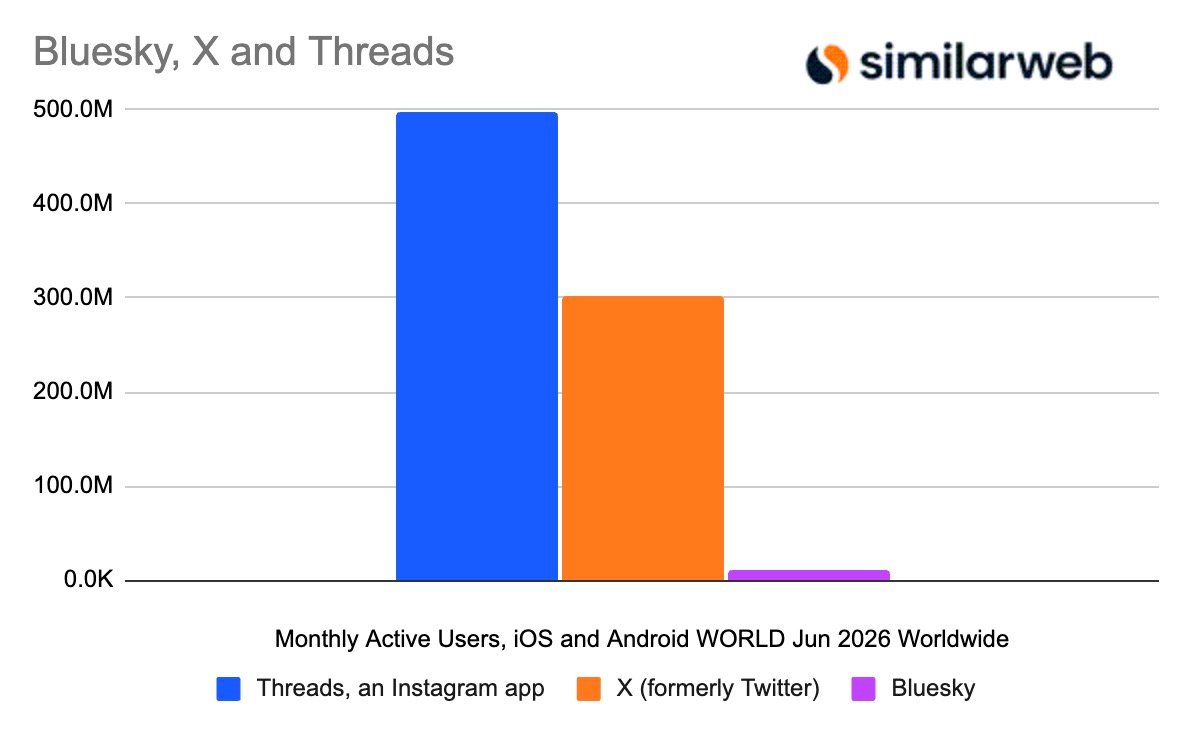
According to digital intelligence firm Similarweb, Bluesky’s mobile app had 10.4 million monthly active users worldwide in June 2026. That’s down 27.2% year-over-year. Daily active users fell even harder — 25.6% year-over-year in July, landing around 3 million.

These are not just post-election jitters. The app has lost more than half its monthly active users since its late-2024 peak. Quarterly averages dropped from roughly 22.1 million in Q4 2024 to 10.7 million in Q2 2026. That’s a 52% decline.

So what happened? Some of those who fled X simply didn’t stick around. The initial surge was real, but retention has been the challenge.

Quality over quantity: the committed core

Here’s the silver lining. The people who stayed are actually engaged. Bluesky’s stickiness rate — the ratio of daily to monthly active users — held at roughly 29% in June. That’s about the same as Threads, Meta’s X competitor.

This suggests Bluesky isn’t a ghost town. It’s a smaller, more loyal community. For a platform built on principles rather than scale, that might be enough.

But is it? The company’s public stats claim nearly 46 million registered users. Yet it doesn’t share daily or monthly active figures. Similarweb’s data fills that gap — and it’s not pretty.

Pivoting beyond the app: the AT Protocol bet

New CEO Toni Schneider isn’t panicking. And here’s why: Bluesky’s future may not be the Bluesky app at all.

The company is increasingly focused on the AT Protocol — the underlying infrastructure that powers Bluesky and now a growing ecosystem of third-party apps. Projects like BlackSky and Eurosky are gaining traction. Video-focused Skylight has found early adopters. The company even launched Attie, an AI-powered research tool.

This is a strategic shift. Instead of competing head-to-head with X or Threads for every user, Bluesky is betting that the protocol becomes the backbone for a new wave of social apps. If that happens, the app’s declining numbers matter less.

Private data support is also on the roadmap. That could attract a different type of user — people more interested in closed communities than public squares.

What the data doesn’t show

One fear was that Bluesky’s losses meant a return to X. Similarweb says no. X’s mobile monthly active users were down 3% year-over-year in June. Daily active users fell 7% in July to 123.7 million.

X is still huge, though — around 302 million monthly active users on mobile as of June 2026. Web visits actually grew 5.3% year-over-year to 4.7 billion in July.

So people aren’t rushing back to X. They’re just… leaving Bluesky.

Threads is the real winner

If anyone’s benefiting from Bluesky’s slide, it’s Threads. The Meta-owned app’s daily active users jumped 21.3% year-over-year to 147 million in July 2026. Website visits soared 112% to 471.6 million.

It’s unclear whether Threads is stealing Bluesky’s disenchanted users or attracting people who never used a Twitter-like service. Either way, the momentum is unmistakable.

For Bluesky, the question is whether a protocol-first strategy can sustain the company while the flagship app shrinks. It’s a risky bet. But with a loyal core and a growing developer ecosystem, it’s not a crazy one.

The next year will tell whether Bluesky becomes the decentralized social network that powers a new generation of apps — or just a footnote in the Twitter wars.

Continue Reading

Trending