Connect with us

How To

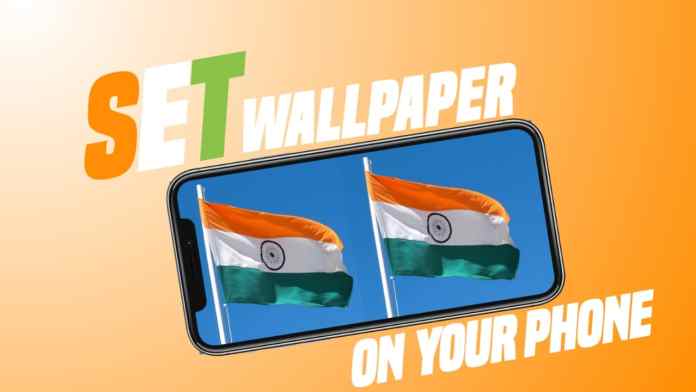
Transform Your Phone with Stunning Indian Flag Wallpapers: Top 4K Live Apps Review

Published

on

Why Indian Flag Wallpapers Elevate Your Mobile Experience

Expressing national pride through your smartphone has never been easier. Indian flag wallpapers offer a powerful way to showcase patriotism while personalizing your device’s appearance. These digital tributes to the tricolor transform ordinary phone screens into symbols of unity and heritage.

However, not all wallpaper applications deliver the quality and variety users deserve. The market floods with basic static images, leaving patriots searching for dynamic, high-resolution options that truly capture the flag’s essence.

Essential Features of Premium Indian Flag Wallpapers Apps

Therefore, selecting the right application requires understanding key features that separate exceptional apps from mediocre alternatives. Premium wallpaper applications should offer multiple resolution options, including 4K quality for modern smartphones with high-density displays.

Live wallpaper functionality adds movement and depth to static designs. This means your Indian flag wallpapers can wave gently in digital breeze or shimmer with animated effects that bring the tricolor to life on your screen.

In addition, comprehensive collections should include various interpretations of the flag design. Traditional representations sit alongside artistic variations, ensuring users find options matching their personal aesthetic preferences.

Resolution Quality Standards

As a result of advancing display technology, modern smartphones demand ultra-high-definition content. Applications providing Indian flag wallpapers must support resolutions from standard HD (1920×1080) up to 4K (3840×2160) for optimal visual impact.

Furthermore, adaptive scaling ensures wallpapers display correctly across different device sizes. This feature prevents pixelation or awkward cropping that could diminish the flag’s dignified appearance.

Top-Rated Applications for Indian Flag Wallpapers

Building on quality requirements, several applications excel in delivering superior Indian flag wallpapers. The most popular options combine extensive libraries with user-friendly interfaces and regular content updates.

Leading applications typically offer both free and premium tiers. Free versions provide substantial collections, while premium subscriptions unlock exclusive designs, remove advertisements, and enable advanced customization features.

On the other hand, some specialized apps focus exclusively on patriotic themes. These targeted platforms often provide deeper collections of Indian flag wallpapers alongside other national symbols and cultural imagery.

Installation and Setup Process

Consequently, downloading these applications follows standard procedures through official app stores. Google Play Store hosts most popular wallpaper apps, ensuring security and compatibility with Android devices.

This means users can browse reviews, check ratings, and verify developer credentials before installation. Most applications require minimal permissions, typically accessing storage for wallpaper files and display settings for application.

Customization Options and Creative Features

Meanwhile, advanced applications extend beyond simple wallpaper application. Interactive elements allow users to adjust animation speeds, modify color saturation, or overlay personal messages alongside Indian flag wallpapers.

Some platforms integrate social sharing capabilities, enabling users to showcase customized flag designs across social media platforms. This functionality transforms personal expression into community celebration of national pride.

Additionally, scheduling features can automatically rotate through different flag designs based on time of day or special occasions. Independence Day and Republic Day might trigger specific themed collections, maintaining relevance throughout the calendar year.

Performance and Battery Considerations

Nevertheless, live wallpapers consume more system resources than static images. Users should monitor battery usage and adjust animation complexity based on device capabilities and personal preferences.

Optimized applications balance visual appeal with power efficiency. Quality developers implement smart rendering techniques that minimize resource consumption while maintaining smooth animations and crisp image quality.

Community Features and Content Updates

Therefore, the most successful Indian flag wallpapers applications foster active user communities. Rating systems help identify popular designs, while user submissions expand available collections organically.

Regular updates introduce seasonal variations, commemorate national holidays, and incorporate user feedback into new features. This ongoing development ensures applications remain fresh and engaging over extended usage periods.

As a result, users benefit from continuously expanding libraries without requiring separate app downloads. Single applications evolve into comprehensive platforms for patriotic expression and mobile personalization.

Transform your device today by exploring these exceptional Indian flag wallpapers applications. Whether seeking subtle patriotic touches or bold national statements, the right app awaits to help you carry national pride wherever your smartphone travels.

Continue Reading

Social Media

Cut AI Costs, Build a Voice-Activated Content System, and More Marketing News

Published

on

reduce token usage

Why Token Usage Matters More Than You Think

If you’ve been using AI tools like ChatGPT or Claude for content creation, you’ve probably noticed something: the costs add up. Fast. That’s because every query you make—every prompt, every follow-up, every rewrite—consumes tokens. And tokens are the currency of the AI economy.

For marketers juggling multiple campaigns, token usage can quietly balloon. A single blog post might require dozens of interactions. Multiply that by a team of five, and you’re looking at a serious line item on your monthly software bill.

So how do you cut back without sacrificing quality? Start by batching your prompts. Instead of asking the AI to generate one section at a time, give it the full outline and ask for a complete draft. Fewer round-trips mean fewer tokens.

Another trick: use system prompts to set the tone and style upfront. That way, you’re not re-explaining your brand voice in every single message. It’s a small change, but it can cut your token usage by a significant margin.

Building a Voice-Activated Content System

Voice search isn’t new, but voice-activated content creation? That’s a different beast. Imagine dictating a rough idea to your phone, having the AI expand it into a full draft, and then publishing it with a few voice commands. It’s not science fiction—it’s becoming a practical workflow for busy marketers.

The key is to design your content system around voice-first interactions. That means optimizing your prompts for spoken language, which tends to be more conversational and less formal. You’ll also want to invest in a good transcription tool that can capture your thoughts accurately, even when you’re thinking out loud.

One marketer I spoke with uses voice memos to capture blog post ideas while commuting. Later, she feeds those transcripts into her AI tool and asks for a structured outline. The result? She saves hours of staring at a blank screen.

If you’re ready to try it, start small. Record a two-minute voice note about your next article topic. Then, paste the transcript into your AI assistant and ask for a first draft. You might be surprised at how natural the output sounds.

Tools to Get You Started

You don’t need a fancy setup. A smartphone, a decent microphone, and a subscription to a voice-to-text service are enough. Some AI platforms even have built-in voice input features now.

Marketers, Don’t Miss This Deal

Before we dive into the news, a quick heads-up: the 50% discount on Social Media Marketing World and AI Business World tickets expires tomorrow. If you’ve been on the fence, now’s the time to commit. The savings are substantial, and the sessions are packed with actionable insights.

I’ve attended in past years, and honestly, the networking alone is worth the price. You’ll meet people who are solving the same problems you are—and they’re usually happy to share what’s working.

This Week’s AI News for Marketers

Several updates this week caught my eye. First, a major social platform rolled out new AI-powered ad targeting features that promise to improve ROI. Early tests show a 15% increase in click-through rates, though the platform cautions that results vary by industry.

Second, there’s a new open-source language model that’s smaller but faster than its predecessors. For marketers on a budget, that could mean running AI tools locally without paying per-token fees. That’s a potential game-changer for small teams.

Finally, a leading analytics company released a report on consumer sentiment toward AI-generated content. The findings? Transparency matters. Audiences are more accepting of AI content when they know it’s AI-assisted—so don’t hide it.

Practical Tips to Keep Your AI Workflow Lean

Here’s a quick checklist to reduce token usage in your daily workflow:

  • Consolidate your prompts: Combine multiple requests into one message.
  • Use saved templates: Don’t rewrite the same instructions every time.
  • Limit the output length: Ask for a specific word count to avoid extra tokens.
  • Review and edit manually: Let the AI do the heavy lifting, then polish by hand.
  • Take advantage of free tiers: Use them for simple tasks that don’t require complex reasoning.

These small habits add up. Over a month, you could cut your token consumption by 30% or more—and that’s real money back in your pocket.

What’s Next for AI in Marketing?

The pace of change is relentless. Every week brings new tools, new features, and new best practices. The marketers who thrive are the ones who stay curious and adapt quickly.

If you’re looking for more in-depth guidance, check out our resources on AI marketing trends and social media strategy tips. And if you haven’t already, grab those discounted tickets before the deadline—you’ll thank yourself later.

That’s all for this week. Go enjoy your weekend, and maybe test out that voice-activated content system. Your future self will appreciate the efficiency.

Continue Reading

How To

6 Movies You Didn’t Know Were Inspired by Greek Mythology

Published

on

movies inspired by Greek mythology

The Ancient World Is Still Rolling the Credits

Greek mythology has been Hollywood’s silent co-writer for over a century. Sometimes it’s obvious — a sandal, a lightning bolt, a hero named Perseus. Other times, the gods slip in through the back door, wearing modern suits and speaking in corporate jargon. You’ve probably watched half a dozen of these films without catching the reference. That’s the point.

Here are six movies inspired by Greek mythology that are cleverer about their sources than you might think.

1. O Brother, Where Art Thou? (2000) — The Odyssey in Overalls

The Coen brothers’ Depression-era comedy is the most open about its lineage. The title itself is a nod to Preston Sturges, but the plot is pure Homer’s Odyssey — three escaped convicts wander through Mississippi, meeting a Cyclops (a one-eyed Bible salesman), a Siren (a trio of seductive singers), and a suitor problem straight out of Ithaca.

George Clooney’s Ulysses Everett McGill even shares his name with the Greek hero. The film doesn’t just copy the structure; it translates it into Americana. Blind prophets, river crossings, and a flood at the end — it’s all there, reimagined with bluegrass on the soundtrack.

2. Ex Machina (2014) — The Pygmalion Myth, Rebuilt in Glass and Code

Before Alex Garland made Civil War, he wrote a chamber piece about a programmer who visits a reclusive CEO and meets Ava, an AI with a face. The setup mirrors the myth of Pygmalion, the sculptor who fell in love with his ivory statue, Galatea, after the gods brought her to life.

But Garland flips the story. In the myth, the artist’s devotion is rewarded. In Ex Machina, the creator’s obsession becomes his undoing. Ava isn’t a passive muse; she’s a survivor. It’s a cold, clinical take on an ancient fantasy, and it cuts deeper because of it.

3. The Hunger Games (2012) — Theseus and the Minotaur, Televised

Suzanne Collins has admitted that Katniss Everdeen’s journey owes a debt to the myth of Theseus. Every year, Athens sent seven boys and seven girls to Crete to be devoured by the Minotaur in a labyrinth. Panem sends its tributes to an arena designed for maximum spectacle.

The parallels are structural more than literal. Katniss is a tribute who refuses to be a victim, much like Theseus used the thread of Ariadne to find his way out. The Capitol plays the role of King Minos, demanding sacrifice to maintain control. The movie, directed by Gary Ross, keeps that political edge sharp.

4. The Truman Show (1998) — A Modern Prometheus, Trapped in a Dome

Prometheus stole fire from the gods and gave it to humanity, then spent eternity chained to a rock with an eagle eating his liver. Jim Carrey’s Truman Burbank is a subtler version of that rebel. His “rock” is a giant television studio disguised as a town, and his eagle is the relentless gaze of millions of viewers.

When Truman finally sails his boat into the wall of his artificial sky, it’s a Promethean act of defiance. He doesn’t steal fire — he takes back his own life. The film, directed by Peter Weir, asks what it means to be a creator who controls every detail of another being’s existence. That’s a question the Greek gods themselves might have pondered.

5. The Matrix (1999) — Orpheus in a Trench Coat

Neo’s descent into the underworld to rescue a captive love isn’t exactly Orpheus’s journey — but the echoes are unmistakable. Morpheus, the character who guides him, is named after the Greek god of dreams. The film’s hero, played by Keanu Reeves, must believe in the impossible to escape the cave of shadows.

Plato’s Allegory of the Cave is the more direct philosophical ancestor, but the Orphic thread runs through the whole trilogy. Neo’s death and rebirth, his journey through the machine city, and his final sacrifice all carry the weight of ancient mystery cults. The Wachowskis were never shy about their influences — they just hid them behind bullet time and leather.

6. The Godfather (1972) — A Greek Tragedy in a Three-Piece Suit

Francis Ford Coppola’s mafia epic is often called a Shakespearean tragedy, but it owes just as much to the house of Atreus. Michael Corleone’s rise and fall mirrors Agamemnon’s — a man who sacrifices his family for power, then loses everything he tried to protect.

There’s even a direct nod to the myth of Medea. When Michael’s sister Connie goes mad with grief after her husband’s murder, her rage echoes the sorceress who destroyed her own children. The film’s structure — a cycle of revenge that consumes the avenger — is pure Greek tragedy. You don’t need a chorus to feel the doom closing in.

Why Hollywood Keeps Returning to These Myths

Greek mythology endures because it’s built on universal conflicts. Pride, revenge, love, sacrifice — these aren’t ancient concerns; they’re the same ones that drive every modern screenplay. Filmmakers don’t need to announce their sources. They just need to tap into the same emotional currents that made those stories last for millennia.

Next time you watch a movie about a reluctant hero or a doomed ruler, ask yourself: is there a myth hiding underneath? More often than not, the answer is yes.

More Cinematic Deep Dives

If you enjoyed this list, check out our breakdown of movies based on classic literature and films with hidden biblical references. You might be surprised by what’s lurking in your streaming queue.

Continue Reading

Social Media

Retro, the anti-algorithm photo app for friends, just banked $21M

Published

on

Retro photo-sharing app

Retro’s quiet $21M raise

The friend-focused photo-sharing app Retro has pulled in more than $21 million in Series A funding, according to an SEC filing spotted by Business Insider. The filing, dated August 19, sits under the startup’s legal name, Lone Palm Labs, and reveals the round actually closed back in December.

PitchBook now pegs the company’s valuation north of $100 million. Retro hasn’t commented publicly on the raise, and didn’t respond to a request for comment.

The money comes at a telling moment. Social media has become a firehose of creator content, algorithmically ranked and increasingly generated by AI. Retro’s pitch is almost contrarian: show photos to the people who actually know you.

Built by ex-Instagram engineers who saw the feed problem coming

Retro was founded by Nathan Sharp and Ryan Olson, two former Instagram product engineers. They watched the platform drift from a friend-sharing tool into a broadcast network dominated by influencers. Sharp told TechCrunch in December: “Something that has to be true and will be true is that people will still want to see more of their friends.”

His point cuts to the heart of the current social media malaise. The For You page is great for killing time, but it’s terrible for staying connected. Sharp again: “The photos and videos you take will need to find a place where they can reach the intended audience.”

Retro is that place. It strips away the algorithmic noise and puts the focus squarely on your inner circle.

From personal journal to shared photo space

Launched in 2023 as a personal photo journal, Retro has evolved. It now lets you privately share photos of your week with friends, create shared albums, view and share recaps, and even “rewind” to time-travel through old memories. The app has become a go-to for groups who want a shared visual history without the performance of posting to a public feed.

The growth numbers back up the concept. According to app intelligence provider Appfigures, Retro has been downloaded about 7 million times since launch. In-app spending has jumped more than 460% over the past 180 days — a sign that the people who do subscribe are sticking around and using it regularly.

No ads, just subscriptions

Retro’s business model is refreshingly simple: no advertising. Instead, the company offers in-app subscriptions that unlock features like video, GIF and sticker comments, more styles, unlimited history, and special app icons.

It’s a small subset of users who pay, but the company’s bet is that those who do are committed customers. The subscription model also aligns with the app’s ethos — your data and attention aren’t the product.

Who’s backing the anti-algorithm bet?

The investor list reads like a who’s who of tech and venture circles. Thrive Capital leads the round, joined by Figma CEO Dylan Field, Scribble Ventures, Box Group, Imaginary Ventures, Coalition, Conviction, Copper, Positive Sum, and a roster of angels.

The mix of strategic and financial backers suggests confidence in Retro’s vision. Field, who runs a design tool company, likely sees the value in a social app that prioritizes genuine connection over engagement metrics.

What Retro’s raise says about the future of social

The $21M round is more than just a milestone for one startup. It’s a signal that investors are betting on a future where social media returns to its roots — connecting real people with real friends. As AI-generated content floods mainstream platforms, the demand for authentic, private sharing spaces is only growing.

Retro isn’t trying to replace Instagram or TikTok. It’s carving out a niche for something more intimate. And with this fresh capital, the team plans to keep building features that make it easier to share moments with the people who matter most.

For anyone tired of doomscrolling through sponsored posts and AI slop, Retro’s photo-sharing app offers a quiet alternative. The question now is whether it can scale its niche appeal into something bigger. The early numbers suggest it’s on the right track.

Continue Reading

Trending