Connect with us

Artificial Intelligence

Vertu Alphafold Review: Alligator Skin, Solid Gold, and a Price That Defies Reason

Published

on

Vertu Alphafold: A Foldable Phone That Costs More Than a Luxury Car

Imagine a smartphone wrapped in genuine alligator skin, trimmed with solid gold, and priced like a high-end sports car. That is exactly what Vertu has unleashed with its latest creation, the Vertu Alphafold. This foldable device, unveiled in early 2026, pushes the boundaries of what a mobile phone can be—turning it into a status symbol for the ultra-wealthy. With a starting price of $6,880 and a top-tier variant reaching $46,800, the Alphafold is not just a gadget; it is a statement.

Vertu has long catered to the elite, but this new foldable takes extravagance to another level. While mainstream foldables from Samsung or OPPO cost a fraction of that, the Alphafold combines exotic materials with AI-powered business tools and a hefty dose of exclusivity. However, is it worth the eye-watering price? Let us break it down.

Vertu Alphafold: Design and Materials That Dazzle

The Vertu Alphafold is a masterpiece of craftsmanship. The standard model uses calfskin leather, but the real showstopper is the alligator leather version, which costs $8,800. For those who want even more bling, Vertu offers custom options with gold detailing and diamonds, pushing the price to $46,800. This is not a phone you buy for specs alone; it is a wearable piece of art.

Every unit is handcrafted, ensuring no two devices are exactly alike. The hinge mechanism, made from titanium and carbon fibre, is rated for up to 650,000 folds—a testament to durability. Yet, the luxury comes at a cost: the Alphafold is heavier and thicker than most foldables, prioritizing opulence over portability.

A Foldable Screen for Business and Pleasure

The device features an 8.05-inch foldable OLED display with a 120Hz refresh rate, complemented by a 6.53-inch outer screen. This setup is ideal for multitasking, whether you are reviewing spreadsheets or watching videos. The screens are vibrant and sharp, but they are not groundbreaking compared to rivals like the Huawei Mate X series.

Powering the Alphafold is Qualcomm’s Snapdragon 8 Elite chipset, paired with a massive 6,500mAh silicon-carbon battery. This battery supports fast wired and wireless charging, ensuring you stay connected all day. The camera system includes a 50MP primary sensor, a 50MP ultrawide, and a 5MP telephoto lens—adequate for snaps but not class-leading.

AI Assistant and Security: The Business Edge

Vertu positions the Alphafold as a business-focused device, and its AI assistant, Hermes Agent, is the centerpiece. This tool can manage schedules, approve workflows, plan travel, and integrate with Gmail, Google Calendar, WhatsApp, and more. It uses natural language commands, making it easy to delegate tasks.

Security is another priority. The Alphafold includes a dedicated A5 security chip that processes sensitive data locally. High-risk actions, such as financial approvals, still require manual confirmation. This dual-layer approach appeals to executives who handle confidential information.

However, there is a catch: reports suggest the Alphafold is a heavily customized version of the Nubia Fold, a phone that launched in China for a fraction of the price. This raises questions about originality, but Vertu argues that the software and materials justify the premium.

Is the Vertu Alphafold Worth the Investment?

For most people, spending $6,880 to $46,800 on a phone is absurd. But Vertu targets a different audience: buyers who value exclusivity over value. The Alphafold is not about competing with Samsung or Apple; it is about making a statement. The alligator skin, gold accents, and concierge services are designed for those who see their phone as an extension of their status.

On the other hand, the hardware is not revolutionary. The foldable display, camera, and chipset are comparable to mid-range foldables. The AI assistant is useful but not unique, as many phones now offer similar features. The real draw is the craftsmanship and the brand cachet.

Building on this, the Alphafold highlights a growing trend: luxury brands entering the foldable phone market. As foldables become more common, companies like Vertu are carving out a niche for the ultra-rich. Whether this strategy succeeds remains to be seen, but the Alphafold certainly turns heads.

Final Thoughts on the Vertu Alphafold

The Vertu Alphafold is a fascinating device that blurs the line between technology and fashion. It offers a unique combination of exotic materials, AI tools, and security features, all wrapped in a foldable form factor. But at its core, it is a luxury product for a niche audience.

If you have the budget and crave exclusivity, the Alphafold might be your next purchase. For everyone else, it is a spectacle—a glimpse into how far smartphone design can go when cost is no object. In 2026, even your phone can be a fashion statement, provided you have the cash to back it up.

Continue Reading
Click to comment

Leave a Reply

Your email address will not be published. Required fields are marked *

Artificial Intelligence

Why Meta’s Muse Spark AI May Take Longer to Reach Your Apps Than Expected

Published

on

Why Meta’s Muse Spark AI May Take Longer to Reach Your Apps Than Expected

Meta has been making bold claims about its artificial intelligence capabilities for years. Yet according to recent reports, the company’s next-generation AI model—codenamed Muse Spark—is facing significant delays. The Wall Street Journal has revealed that Meta repeatedly pushed back the release of this flagship model, citing performance issues and internal debates about its competitiveness.

These Muse Spark AI delays come at a critical time. The tech giant has invested billions in AI infrastructure and positioned itself as a major player in the generative AI race. But the setbacks suggest that building a truly competitive AI system is harder than the company anticipated.

What Is Muse Spark and Why Does It Matter?

Muse Spark was designed to be Meta’s most advanced multimodal AI system yet. The model was expected to handle text, images, reasoning, and even app-level interactions at a much higher level than current Meta AI offerings. According to internal plans, the company intended to release Muse Spark to developers, allowing third-party apps to build AI-powered tools around it.

However, engineers and executives within Meta have grown increasingly concerned. The model reportedly still falls short of rivals like OpenAI, Google, and Anthropic in key areas, including reasoning quality and overall performance consistency. This has led to repeated delays as the team tries to close the gap.

As a result, users should not expect Muse Spark to appear in their Instagram, WhatsApp, or Facebook apps anytime soon. The timeline remains uncertain, and the company has not officially confirmed a release date.

Internal Struggles and the Competitive Landscape

Meta’s AI ambitions are running into a harsh reality. The company has spent the last two years aggressively integrating AI assistants across its ecosystem, including Facebook, Instagram, WhatsApp, Messenger, and even hardware like Ray-Ban smart glasses. Yet despite this aggressive rollout, the next major leap appears to be slipping further behind schedule.

The delays highlight just how brutally competitive the generative AI race has become. Companies are no longer simply building chatbots. They are competing to create AI systems capable of replacing search engines, powering operating systems, automating workflows, and eventually becoming full digital assistants. Meta CEO Mark Zuckerberg has repeatedly emphasized AI as one of the company’s biggest long-term priorities, with tens of billions of dollars spent on chips, data centers, and infrastructure.

Nevertheless, rivals are moving extremely quickly. OpenAI continues expanding ChatGPT’s ecosystem, Google is deeply integrating Gemini into Android and Workspace, and Anthropic is increasingly attracting enterprise customers. Each delay gives these competitors more time to strengthen their ecosystems and user habits.

What the Delay Means for Everyday Users

For the average person, the Muse Spark AI delays mean that the advanced AI experiences Meta hinted at may take longer to materialize across its apps. This is significant because Meta’s ecosystem gives it something few competitors have: billions of active users already using its platforms daily. A successful AI rollout inside Meta apps could dramatically reshape how people search, message, create content, shop, and interact online.

At the same time, the delays reveal a broader reality about the AI industry right now. Building large AI models is one thing. Shipping reliable, scalable, consumer-ready AI products is something entirely different. Meta is learning the same lesson facing much of the tech industry: in AI, hype moves faster than products.

For more insights on how AI is shaping social media, check out our guide on AI trends in social platforms. If you are curious about the broader impact of generative AI, read our analysis on the generative AI race.

What Happens Next for Meta and Muse Spark

Meta has not officially confirmed a release timeline for Muse Spark, and the company may continue refining the model before exposing it to external developers. The bigger risk for Meta is timing. AI competition is moving at an unusually aggressive pace, and every delay gives rivals more time to strengthen their ecosystems and user habits.

For now, Meta’s AI ambitions remain massive. But if the reports are accurate, the company is learning that even with billions of dollars, building a world-class AI model takes time—and patience. Users should keep an eye on Meta’s developer conferences and official announcements for any updates on Muse Spark’s release.

In the meantime, the company will likely focus on improving its existing AI features across its apps. Whether that will be enough to keep pace with OpenAI and Google remains to be seen.

Continue Reading

Artificial Intelligence

You Can Literally Save the Planet by Being Less Polite to AI Bots Like ChatGPT and Gemini

Published

on

You Can Literally Save the Planet by Being Less Polite to AI Bots Like ChatGPT and Gemini

Think twice before typing a long, overly polite prompt to ChatGPT or Gemini. Every word you type consumes energy—far more than you might imagine. A recent report from the United Nations University Institute for Water, Environment and Health reveals a startling truth: our courteous interactions with AI are taking a toll on the environment. By cutting the pleasantries and getting straight to the point, you can literally save the planet from unnecessary energy waste.

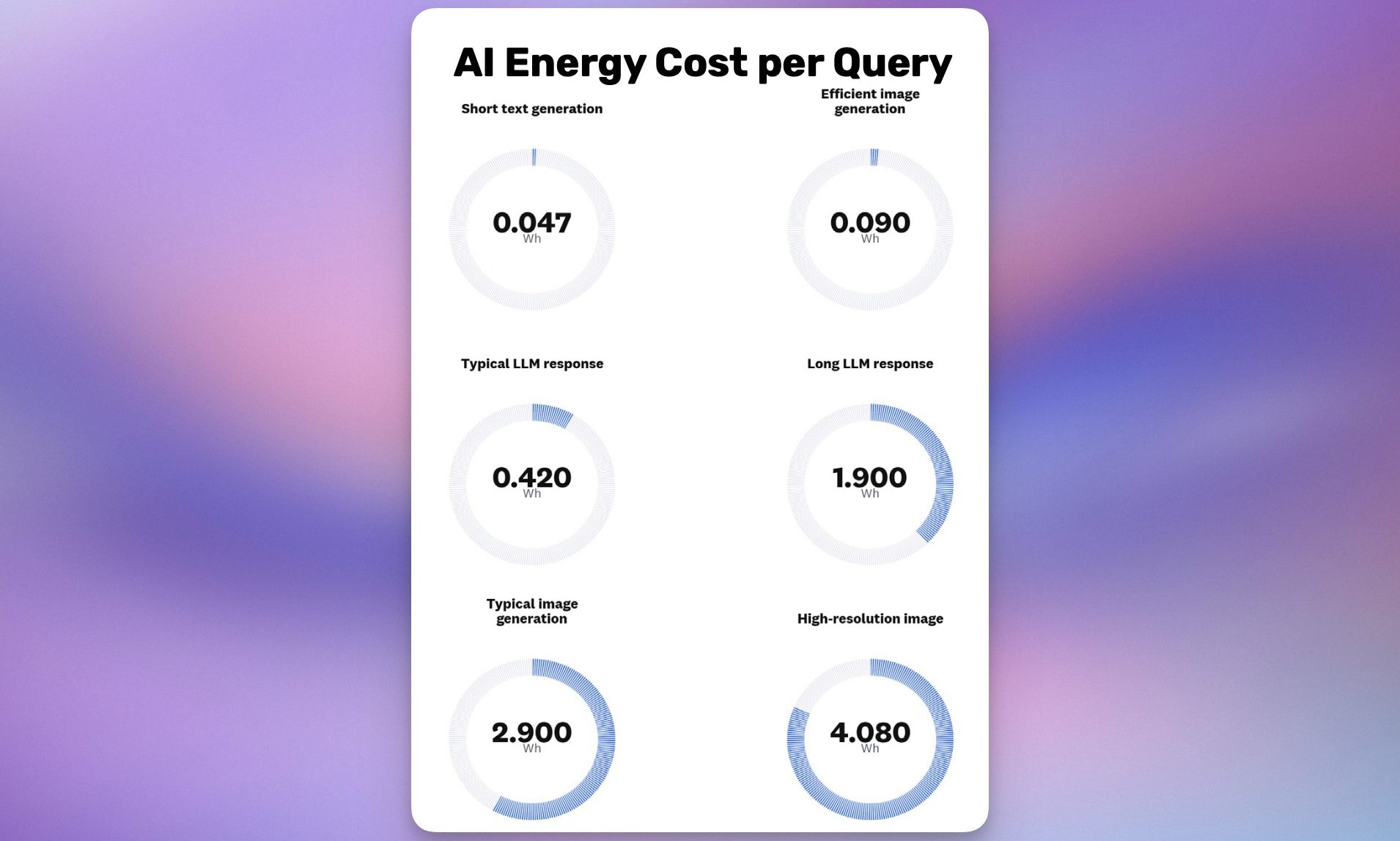
According to the report, ChatGPT alone processes around 2.5 billion prompts daily. At a conservative 0.42 watt-hours per prompt, that adds up to roughly 383 gigawatt-hours of electricity annually—enough to power nearly 3 million people in Sub-Saharan Africa for a year. This staggering figure highlights just how much energy our AI habits consume.

The Hidden Cost of Politeness in AI Interactions

When you ask an AI chatbot a question, every token—word or punctuation mark—requires computational power. The longer your prompt, the more energy needed for inference. This means that a simple “Hello, could you please tell me the weather?” uses more electricity than a direct “Weather today?” The same applies to Gemini and other large language models.

How Prompt Length Impacts Energy Use

The UN report emphasizes that prompt length directly affects energy consumption. It introduces the concept of “concise mode,” where shorter prompts reduce energy usage because AI inference scales with token count. If users trimmed prompts by just 30% in everyday interactions, per-query energy would drop by roughly 25%. This could save between 87 and 98 GWh of electricity per year—equivalent to the annual residential electricity use of up to 756,000 people.

Building on this, the type of task matters too. A typical ChatGPT text query uses about 200 times more energy than basic spam filtering. Generating a single AI image requires 2.9 Wh—60 times more than a short text answer. Video generation is even worse, with complex clips drawing over 415 Wh each. So, skipping those silly AI-generated memes or “brainrot” videos isn’t just about taste—it’s about energy conservation.

Practical Steps to Reduce AI Energy Consumption

You don’t need to stop using AI entirely, especially if it helps with daily tasks or work. However, you can adopt habits that lower your environmental impact. Start by being direct: skip the “please” and “thank you” for simple queries. Choose lighter models when the task doesn’t require heavy computation. For instance, use a smaller model for quick facts rather than a powerhouse like GPT-4.

Furthermore, avoid generating unnecessary content—like AI slop videos that clutter streaming platforms. These not only degrade user experience but also consume massive amounts of electricity. By being mindful, you contribute to a larger collective effort. Small habits at scale add up to a surprisingly big difference.

For more insights, check out our guide on how to reduce your AI energy footprint and explore eco-friendly tech tips for sustainable living.

The Bigger Picture: AI’s Environmental Footprint

This isn’t just about individual actions. The AI industry’s energy demand is growing rapidly. Data centers powering models like ChatGPT and Gemini already account for significant global electricity use. As AI adoption increases, so does its carbon footprint. Therefore, every efficiency gain matters—from developers optimizing algorithms to users trimming their prompts.

On the other hand, companies are also exploring renewable energy sources and more efficient hardware. But until these solutions become mainstream, user behavior plays a crucial role. By being less polite to AI bots, you’re not being rude—you’re being responsible. So next time you open ChatGPT or Gemini, remember: a shorter prompt is a greener prompt.

Continue Reading

Artificial Intelligence

China Is Moving Beyond Super-Apps to AI Agents That Handle Everything for You

Published

on

China Is Moving Beyond Super-Apps to AI Agents That Handle Everything for You

For years, China’s digital ecosystem revolved around super-apps like WeChat—massive platforms where users could chat, pay, shop, order food, book travel, and access countless mini-programs without ever leaving the interface. Now, a new shift is underway: the rise of AI agents China that aim to eliminate even that friction. Instead of tapping through menus, users simply tell an assistant what they need, and the agent does the rest.

Alibaba is leading this charge with its Qwen assistant, which is opening up to third-party brand agents. Early testers include KFC, Luckin Coffee, Mixue, and China Eastern Airlines. Meanwhile, Tencent is reportedly preparing its own agent inside WeChat. This transition could redefine how people interact with their smartphones, moving from manual navigation to conversational commands.

Why Super-Apps Are Giving Way to AI Agents

The super-app model trained millions of users to keep their digital lives inside one hub. WeChat, for instance, integrates messaging, payments, shopping, food delivery, ride-hailing, travel bookings, and more. However, even within these platforms, users still need to navigate multiple menus and sub-apps to complete tasks.

AI agents promise to collapse those steps. Consider ordering fried chicken: a traditional approach involves opening the app, finding the nearest KFC, selecting items, applying coupons, choosing pickup or delivery, and confirming payment. With Qwen, a single request like “Order my usual from KFC near work” triggers the agent to handle location detection, menu selection, coupon application, timing estimation, and order placement—all behind the scenes.

This shift is not just about convenience. As conversational AI China matures, brands see an opportunity to engage users proactively. Luckin Coffee could nudge customers to order ahead during peak hours. China Eastern Airlines might suggest trip plans based on past preferences. The appeal is practical: fewer menus, fewer app switches, and fewer checkout steps.

How Alibaba’s Qwen Is Reshaping Commerce

Alibaba has already integrated Qwen deeply into its e-commerce ecosystem via Taobao. The assistant can filter products, compare options, and complete purchases through a chatbot interface. This gives Qwen a direct route into commerce beyond food and travel, positioning it as a central shopping companion.

Building on this, Alibaba is encouraging brands to build their own AI agents on the Qwen platform. These agents can answer questions, suggest actions, and even anticipate needs before the user starts digging through an app. For example, a user planning a trip could ask Qwen to book a flight, reserve a hotel, and arrange airport transfers—all in one conversation.

However, trust remains a critical hurdle. An agent that orders the wrong item, misses a discount, or books the wrong trip will feel worse than tapping through the app yourself. Alibaba must ensure accuracy and reliability to win user confidence.

WeChat’s Pivot to an AI Agent

WeChat gives Tencent a natural launchpad for its own AI agent. The app already serves as a command center for daily life in China, holding chats, payments, shopping, services, content, and mini-programs in one place. An agent inside WeChat could compress familiar routines into a single request.

For instance, a user could ask for a taxi, a flight booking, a payment, or help navigating a mini-program—all through the chat interface. This would shift the habit WeChat created: users wouldn’t need to remember where each service lives if the agent can find the right path and finish the task. Tencent’s prototype is reportedly being tested, with compliance steps expected before a public launch.

This development signals that China’s super-apps China era won’t vanish. Instead, it will evolve. The super-app becomes the platform for AI agents, and the user experience shifts from manual navigation to conversational instructions.

What This Means for the Future of Smartphones

The rise of AI agents could fundamentally change how we use our phones. Instead of opening multiple apps, users might rely on a single assistant that orchestrates tasks across services. This is already happening with Qwen on Alibaba’s platforms and could expand to WeChat’s ecosystem.

As smartphone AI future unfolds, the phone itself may become less about apps and more about intent. You tell the device what you want, and it figures out the rest. This is a paradigm shift from app-centric to agent-centric computing.

For brands, this means rethinking customer engagement. Instead of building standalone apps, they may create AI agents that live inside larger platforms. For users, it promises a simpler, more intuitive digital experience—provided the technology earns their trust.

To stay updated on these trends, check out our analysis of AI trends shaping 2024 and China’s evolving tech ecosystem.

Continue Reading

Trending