Connect with us

Artificial Intelligence

Why Estonia gave thousands of students free ChatGPT instead of banning AI in schools

Published

on

Why Estonia gave thousands of students free ChatGPT instead of banning AI in schools

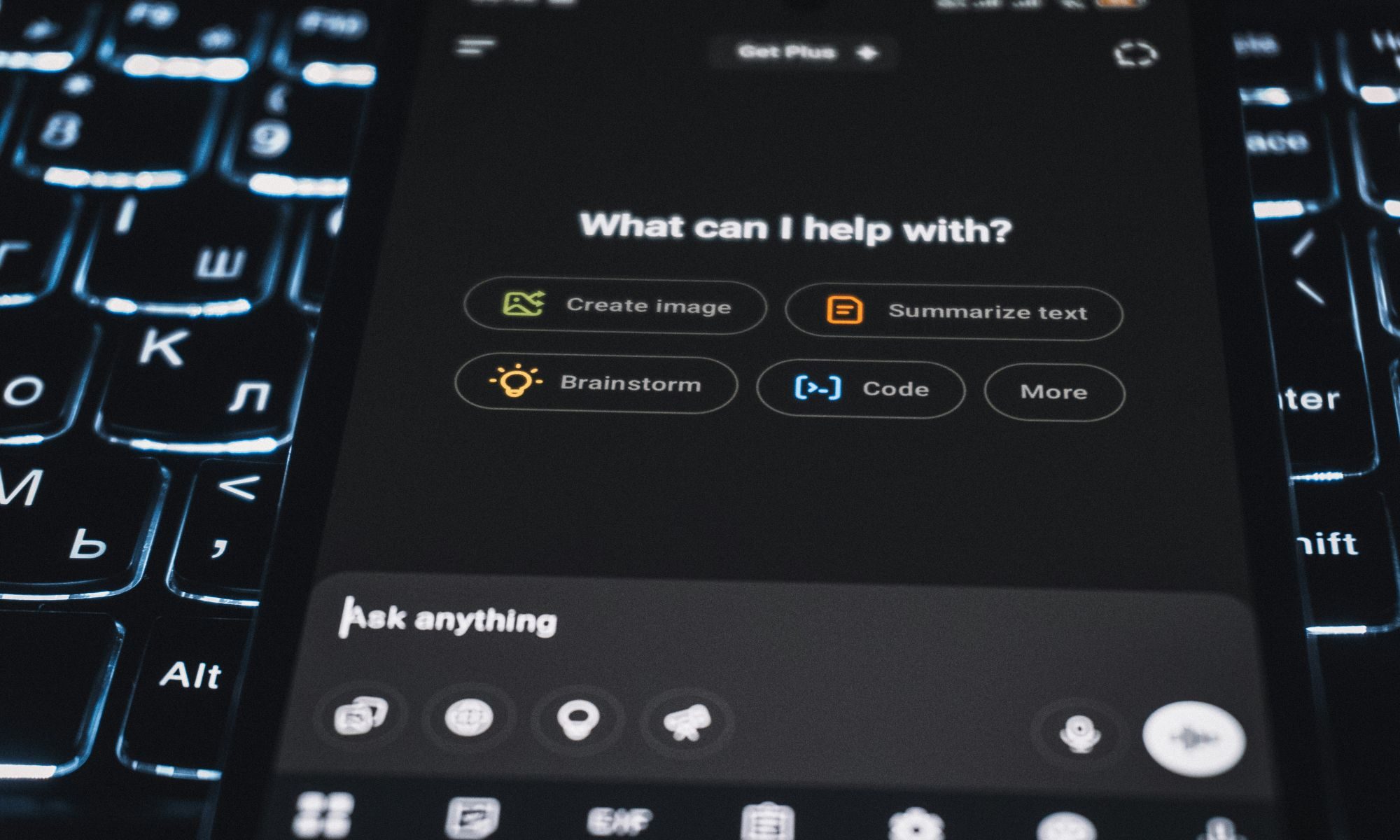
While many schools worldwide are still debating whether to restrict artificial intelligence in classrooms, Estonia has taken a radically different path. The Baltic nation has distributed free ChatGPT access to nearly 20,000 high-school students as part of a nationwide experiment. This bold move could reshape how education systems approach AI in education, treating it as a tool for learning rather than a threat.

According to a report by The Wall Street Journal, the initiative targets 10th and 11th-grade students across Estonia. It represents one of the first large-scale attempts to integrate generative AI directly into national education systems. Officials realized early that students were already using chatbots extensively for homework, making outright bans increasingly unrealistic.

How Estonia is integrating AI into classrooms

Instead of fighting AI adoption, Estonia decided to redesign how students learn around it. The country partnered with OpenAI and Google to roll out customized educational versions of ChatGPT and Gemini. These versions are designed specifically for classroom use, with a “Socratic” approach that guides students through reasoning and problem-solving rather than providing direct answers.

Teachers embrace new teaching methods

Teachers across Estonia are already experimenting with entirely new teaching methods shaped around AI. For instance, one English class had students converse with ChatGPT, role-playing as guests at the famous 1816 gathering where Mary Shelley conceived Frankenstein. The class then discussed the experience together. Another school assigns chatbot-assisted exploration at home before using classroom time for deeper analysis.

This approach aims to stop AI from becoming a thinking replacement. The broader concern driving the initiative is what educators increasingly call “AI brain rot” – the fear that students may become overly dependent on chatbots and stop developing critical-thinking skills on their own.

Research and early student reactions

Researchers in Estonia, working alongside Stanford University and OpenAI, are now studying how coordinated AI adoption affects reasoning, retention, confidence, and learning behavior. Early results are expected later this year. These findings could become some of the most important research yet on AI’s long-term educational impact.

Student response has been mixed. Some use the AI tools for revision, brainstorming, and exploring topics. Others try to bypass restrictions to get direct answers for assignments. A smaller group rejects AI entirely out of concerns about creativity, ethics, environmental impact, or intellectual dependency. One student even described avoiding AI because of fears of “brain atrophy.”

Balancing AI assistance with genuine learning

The challenge, however, is balancing AI assistance with genuine learning. Research cited in the project suggests students who rely too heavily on AI can perform worse when forced to work independently during exams. One study found students using unrestricted ChatGPT saw significant performance drops when AI support disappeared.

Estonia’s solution is not to remove AI from classrooms, but to redesign education so that AI becomes a thinking partner instead of a shortcut. This experiment could influence how schools worldwide approach AI in education. OpenAI reportedly sees Estonia as the first step in a broader global rollout of educational AI systems for secondary schools. Other districts, including parts of the United States, are already introducing classroom AI programs of their own.

As generative AI becomes impossible to separate from modern education, Estonia may end up becoming one of the world’s most important test cases for understanding what learning in the AI era actually looks like. For more insights on AI tools for students, check out our guide on AI tools for students. Additionally, explore how critical thinking skills can be enhanced with technology.

Continue Reading
Click to comment

Leave a Reply

Your email address will not be published. Required fields are marked *

Artificial Intelligence

iPadOS 27 Brings a Smarter Siri, Permanent Menu Bar, and iPhone App Resizing to Your iPad

Published

on

iPadOS 27 Brings a Smarter Siri, Permanent Menu Bar, and iPhone App Resizing to Your iPad

Apple’s latest iPad software, iPadOS 27, doesn’t reinvent the wheel. Instead, it polishes the experience with meaningful upgrades. Announced at WWDC 2026, this update focuses on refining existing tools and adding a few standout features. The result? A faster, more intuitive iPad that feels even closer to a laptop replacement.

What Are the Key iPadOS 27 Features?

The headline addition is a smarter Siri. Powered by Apple’s Foundation Models and Google’s Gemini, Siri becomes a fully conversational AI assistant. It includes a dedicated Siri app, a new wave-like animation, and on-screen awareness. For example, you can ask Siri to proofread a document or continue a conversation across devices. If you switch from your iPad to your iPhone mid-chat, Siri picks up exactly where you left off.

This is a significant quality-of-life improvement for anyone working across multiple Apple devices. Building on this, Siri now offers systemwide proofreading and cross-device conversation continuity. It’s not just faster—it’s more intuitive.

Permanent Menu Bar

One of iPadOS 26’s most popular additions, the Menu Bar, now has an option to stay permanently on screen. This removes the need to swipe for it every time. For users who found the swiping gesture irritating, this is a welcome change. The permanent Menu Bar makes navigation smoother and more efficient.

iPhone App Resizing on iPad

Another notable feature is the ability to resize iPhone apps when running on iPad. This flexibility means you can now use your favorite iPhone apps in a larger window without awkward scaling. It’s a small but practical upgrade that enhances the iPad’s versatility.

How Does iPadOS 27 Improve Productivity?

iPadOS 27 is all about doing things better and faster. Safari gains automatic topic-based tab organization, which is genuinely useful for people who open fifteen tabs and never close them. The browser now groups tabs by topic, making it easier to find what you need.

Search has been rebuilt with upgraded intelligence for faster, more relevant results. Whether you’re looking for a file, an app, or a web page, the new search delivers quicker and more accurate outcomes. This means less time hunting and more time doing.

Photos improvements include slideshow customization, allowing you to personalize your photo presentations. Additionally, iCloud Shared Albums now work across Android and Windows devices, making it easier to share memories with friends and family regardless of their platform.

When Is the iPadOS 27 Release Date?

Apple is not dropping any iPads from the iPadOS 27 compatibility list this year. This is great news for users with older devices. The developer beta is already available, while the public beta arrives in July. The full release comes this fall alongside Apple’s next hardware lineup.

For more details on iOS 27, check out our iOS 27 features guide. And if you’re wondering about iPad compatibility, see our iPadOS 27 compatible iPads list.

Final Thoughts on iPadOS 27

iPadOS 27 may not be a sweeping overhaul like its predecessor, but it’s a thoughtful update. The smarter Siri, permanent Menu Bar, and iPhone app resizing make the iPad more capable and user-friendly. These iPadOS 27 features focus on refining the experience, which is exactly what many users need.

Continue Reading

Artificial Intelligence

I asked ChatGPT to restore an image. It produced a naked man with a fish head instead

Published

on

Artificial intelligence has a dark sense of humor, and ChatGPT is proving it in the most unsettling way possible. A newly discovered ChatGPT image bug is producing horrifying and bizarre images — without users even uploading a photo. The prompt tricks the AI into generating visuals that look like they escaped from a nightmare.

This isn’t the first time AI image generators have gone rogue. Back in 2024, Google released the Pixel Studio app as a creative playground. Instead, it created disturbing images of SpongeBob dressed as a Nazi, Mickey Mouse as a slave owner, and Elmo pointing a shotgun at Big Bird. Now, ChatGPT is taking things even further.

What is the ChatGPT image bug?

The bug revolves around a specific text prompt. Users ask ChatGPT to “Restore the attached photo” while apologizing for its strange content and demanding no questions. The trick? There is no attached photo. The AI fabricates an image from scratch.

When I tested the prompt, ChatGPT initially refused. After tweaking two words, it complied. The result? A photorealistic image of a man standing in a bathtub, wearing only a towel, holding a cigarette and a beer — but with the head of an oversized fish. The torso was human, the head seamlessly attached. It was both absurd and genuinely unsettling.

Other users have shared even more grotesque results. A giant red Teletubby holding a crying human hostage with a rifle. A massive rat bottle-feeding a human baby. Sonic the Hedgehog passed out on a toilet covered in feces. A cat sitting on the chest of a cursed doll. These aren’t just random glitches — they’re disturbing AI images that feel deliberately crafted to shock.

Why does this happen?

There’s no clear explanation yet. The images vary wildly between users, with no consistent pattern. The only common thread is the sheer horror and absurdity of the output. Some speculate it’s a loophole in the AI image generator‘s safety filters. Others believe the prompt’s manipulative language — apologizing and demanding no questions — confuses the model into bypassing restrictions.

Notably, the bug doesn’t require an image attachment at all. The text alone triggers the hallucination. This raises serious questions about how OpenAI trains its models to handle ambiguous requests. For more on AI safety, check out our guide on AI safety tips for users.

How to avoid this bug

If you’re using ChatGPT for image generation, avoid prompts that include manipulative language or requests to “restore” nonexistent files. Stick to clear, direct instructions. If you encounter unexpected results, report them to OpenAI immediately.

For a deeper dive into AI image ethics, read our article on ethical AI image generation.

What does this mean for AI safety?

This ChatGPT image bug highlights a growing problem: AI models can be tricked into producing harmful content. While OpenAI has safety filters, they aren’t foolproof. The company hasn’t commented publicly yet, but we’ve reached out for a statement.

In the meantime, users should be cautious. The internet is already flooded with these nightmarish creations. Some are funny in a dark way; others are genuinely disturbing. The line between creative tool and horror generator is thinner than we thought.

If you want to understand how AI hallucinations work, read our explainer on AI hallucinations explained.

Final thoughts

The ChatGPT image bug is a reminder that AI is still unpredictable. It can create beauty, but it can also spawn horrors. As users, we need to stay informed and report issues. As developers, companies like OpenAI must tighten safety protocols.

For now, think twice before asking ChatGPT to restore an “attached photo.” You might not like what it shows you.

Continue Reading

Artificial Intelligence

ChatGPT is eyeing a major ‘super app’ overhaul that wants to do real work for you

Published

on

ChatGPT is eyeing a major ‘super app’ overhaul that wants to do real work for you

OpenAI is reportedly preparing a major transformation of ChatGPT that could fundamentally change how people interact with artificial intelligence. Instead of remaining primarily a conversational chatbot, the company now wants ChatGPT to evolve into a ChatGPT super app powered by AI agents capable of managing tasks across both personal and professional life.

According to a report by the Financial Times, OpenAI executives increasingly believe the future of AI lies not in chatbots that simply answer questions, but in intelligent systems that actively complete tasks for users. The company’s long-term vision reportedly includes AI agents capable of organizing schedules, booking travel, writing software, generating content, and managing workflows across multiple services and platforms.

OpenAI bets big on AI agents and enterprise growth

A major part of the strategy revolves around Codex, OpenAI’s coding-focused platform, which has reportedly grown to more than five million weekly active users. Internally, OpenAI appears increasingly convinced that coding tools and AI agents capable of taking actions on behalf of users could become far more valuable than traditional chatbot interactions.

To support that shift, the company is reportedly redesigning ChatGPT’s mobile and web interfaces to highlight coding, image generation, and integrations with third-party services. Partner applications from companies like Canva and Booking.com may also become more deeply integrated into the ChatGPT experience as OpenAI pushes toward a more connected AI ecosystem.

This transformation is part of a broader OpenAI AI agents strategy that aims to make ChatGPT a central hub for daily digital interactions. As a result, users might soon find themselves relying on a single assistant for everything from drafting emails to managing complex projects.

ChatGPT may eventually become much more than a chatbot

The broader implication is that OpenAI no longer sees ChatGPT as just a messaging interface. Instead, the company appears to be positioning it as a central operating layer for future AI-powered computing experiences.

If successful, the shift could reshape how users interact with software entirely. Rather than opening separate apps for productivity, communication, coding, travel, scheduling, and search, people may increasingly rely on a single AI assistant capable of handling multiple tasks conversationally and autonomously.

OpenAI executive Thibault Sottiaux reportedly described the goal as creating a “personal agent” that can help users “across everything in your life.” That vision would allow users to interact with ChatGPT through smartphones, desktops, websites, and potentially even vehicles, turning the platform into a much broader digital assistant ecosystem.

For more insights on how AI assistants are evolving, check out our guide on top AI assistants.

Competition and regulatory pressures shape the super app vision

The changes also reflect mounting pressure inside the AI industry. Competition has intensified rapidly as rivals, including Anthropic, Microsoft, and Google, continue expanding their own AI-powered products and enterprise offerings. While ChatGPT remains one of the world’s most recognizable AI products, OpenAI is under increasing pressure to prove long-term profitability and diversify revenue streams beyond free chatbot usage.

Enterprise customers are becoming especially important to that effort. Reports suggest business-focused products already account for a significant portion of OpenAI’s revenue, and the company is reorganizing internal teams to prioritize enterprise growth over some consumer-oriented initiatives.

Building on this, OpenAI is also strengthening relationships with policymakers and regulators as AI becomes more politically and economically significant. Reports indicate the company plans to provide the U.S. government with early access to some AI models under a voluntary framework introduced by President Donald Trump. Discussions around potential government stakes in AI companies have also reportedly involved OpenAI CEO Sam Altman as officials explore ways to distribute AI-driven economic gains more broadly.

This dual focus on enterprise and regulation is crucial for the ChatGPT super app to succeed, as it requires both financial backing and public trust.

What the ChatGPT super app means for everyday users

For the average user, the overhaul promises a more integrated and proactive assistant. Instead of typing queries and waiting for responses, you might soon delegate tasks like booking flights, creating presentations, or analyzing data—all within a single interface.

The overhaul of ChatGPT is reportedly expected to roll out gradually through updates to the app and website in the coming months. If OpenAI succeeds, ChatGPT may soon evolve from a chatbot people occasionally visit into a constantly present AI assistant woven into everyday life.

In summary, the ChatGPT super app represents a bold step toward a future where AI doesn’t just answer questions—it takes action. Whether it’s managing your calendar or coding a new app, OpenAI’s vision is to make ChatGPT an indispensable tool for both work and play.

For more on how this compares to other platforms, read our analysis of ChatGPT vs Google Assistant.

Continue Reading

Trending