Connect with us

Social Media

X gets serious about content theft: AI detection, revenue reclamation, and creator suspensions

Published

on

stolen content

X gets serious about content theft: AI detection, revenue reclamation, and creator suspensions

For years, reposting someone else’s viral tweet, video, or meme has been a reliable path to likes, followers, and—since X launched its creator revenue-sharing program—actual money. That ride is now over. X is rolling out a suite of aggressive measures to detect stolen content, redirect payouts back to original creators, and boot repeat offenders from its monetization program entirely.

The platform’s latest weapon is an upgraded version of its Grok AI model. According to Nikita Bier, who works on X’s creator monetization team, the new model can identify duplicated content at three times the rate of the previous version. That means reposted tweets, copied videos, and lifted text posts are far more likely to be flagged—even if the thief tries to disguise them.

How the new detection system works

Grok AI isn’t just looking for exact matches. Bier says the system now catches content that has been lightly altered—watermarks added, intro sequences tacked on, or other superficial edits meant to make stolen material look original. All of those tricks, he explained, will now result in monetized impressions being reassigned to the original uploader instead of the thief.

This extends beyond video. Copies of viral text posts are also being targeted. Bier noted that one of the most commonly stolen phrases on the platform is, “Twitter is like the smoking section of the internet”—proof, he joked, that people still call the app Twitter.

X has already detected 1.5 million stolen posts in its latest detection cycle. Bier didn’t specify the exact timeframe, but the scale suggests the problem is massive. The financial impact is significant too: over $1 million in creator payouts will now be redirected back to the original creators of that stolen content.

Bots and engagement bait are also in the crosshairs

Content theft and engagement manipulation often go hand-in-hand with bot networks. X says it has been ramping up bot enforcement as well. In April, Bier stated the platform was identifying and suspending 208 bots per minute—and that number is still climbing.

Engagement bait—posts that explicitly ask for follows, replies, or likes in exchange for something—is another priority. X’s updated policy says that repeated or intentional attempts to circumvent the new rules will result in removal from the creator program. Specifically, if a user is caught three times or more engaging in practices like saying “I’ll follow everyone who replies,” their account will be removed from monetization and forwarded to the policy team for potential suspension.

Bier has been vocal about engagement bait for a while. He even called out top creator MrBeast for consistently using financial incentives to drive views—a tactic Bier argues undermines genuine organic reach on the platform.

What this means for creators

For original creators who have seen their work reposted by larger accounts without credit or compensation, these changes are a long-overdue win. X’s new video editor and recorder, rolled out earlier this year, was already an attempt to push creators to post original content using X’s own tools. Now the platform is backing that up with enforcement.

But the crackdown also raises questions. How accurate is Grok AI’s detection? False positives could penalize legitimate reposts, quote tweets with commentary, or parody accounts. X hasn’t detailed an appeals process for creators who believe their content was wrongly flagged.

There’s also the question of scale. 1.5 million stolen posts is a lot, but X processes billions of posts daily. The platform will need to keep investing in detection infrastructure to stay ahead of bad actors who are constantly adapting.

A broader industry trend

X isn’t alone in fighting content theft. Instagram, Facebook, and Reddit have all implemented technical measures to discourage reposting without credit. Tools that detect when a user has republished someone else’s work without attribution are becoming standard across major social platforms.

What’s different about X’s approach is the direct financial penalty. By redirecting revenue rather than just removing the stolen post, X creates a tangible cost for thieves and a concrete reward for original creators. That could be a powerful deterrent—if the detection is accurate and consistent.

For now, creators who rely on reposting viral content as a growth strategy will need to rethink their approach. The era of free-riding on someone else’s work for profit on X is ending. The question is whether the platform can execute this crackdown fairly and at scale.

Continue Reading
Click to comment

Leave a Reply

Your email address will not be published. Required fields are marked *

Social Media

Meta now alerts parents if their teen discussed suicide or self-harm with its AI chatbot

Published

on

Meta AI suicide alerts

New safety feature flags crisis conversations

Meta announced Thursday that it will now send alerts to parents when their teenager discusses suicide or self-harm with the company’s Meta AI chatbot. The move comes as scrutiny intensifies over how generative AI systems handle vulnerable users — especially minors.

The company says it has built a dedicated AI detection system specifically trained to identify when a teen makes a clear reference to hurting themselves. Every flagged chat gets reviewed by a human moderator before any alert is sent to a parent. If the system can’t determine intent, Meta says it will err on the side of caution and notify the parent anyway.

“We understand how distressing these alerts may be for a parent to receive,” Meta wrote in a blog post. “While that means we may sometimes notify parents when there may not be real cause for concern, we feel this is the right starting point.”

Where the alerts are live now

The new notifications are rolling out first for parents who use Instagram Parental Supervision in the United States, the United Kingdom, Australia, and Canada. Meta says the feature will expand to all other countries by the end of the year.

These alerts build on an existing system that already notifies parents when their teen repeatedly searches for suicide or self-harm terms on Instagram. Parents can also already see a summary of the topics their teen discussed with Meta AI over the past week.

Emergency services integration

Meta is also working on the ability to contact emergency services directly if a conversation — whether with a teen or an adult — suggests someone may be at imminent risk of suicide. The company already takes this step when someone posts content indicating self-harm risk on Facebook or Instagram. This update extends the same protocol to AI chatbot conversations.

“We’ll continue to monitor to help make sure we’re in the right place,” Meta said, acknowledging the sensitivity and potential for false positives.

Expanded content restrictions for teens

Separately, Meta announced that its “Limited Content” setting — which allows parents to place teens in a more restrictive Instagram experience — now also applies to Meta AI. The AI chatbot was already programmed to avoid sexual, romantic, or alcohol-related discussions with teens. The Limited Content setting goes further, making the chatbot decline a broader range of potentially inappropriate prompts.

These changes arrive as regulators and parent groups push tech companies to clarify how AI chatbots respond to users in crisis. The liability question is increasingly shaping how AI products are designed and marketed, especially when minors are involved.

What this means for teens and parents

For parents already using Instagram’s supervision tools, the new alerts add another layer of visibility into their teen’s digital life. But the system isn’t perfect. Meta acknowledges that some alerts may be sent when there’s no real cause for concern. The trade-off, the company argues, is better than missing a genuine cry for help.

For teens, the changes mean that certain conversations with Meta AI are no longer private. That’s a significant shift in how the company handles user data — and one that could affect how comfortable young users feel confiding in the chatbot.

Meta says all flagged conversations are manually reviewed before any alert reaches a parent. The company also emphasizes that it is still improving detection accuracy. The system will likely evolve as more data comes in.

The bigger picture: AI safety under the microscope

Meta is not alone in facing questions about AI chatbot safety. Rivals including OpenAI and Google have also faced scrutiny over how their models handle sensitive topics with minors. The challenge is acute: chatbots can seem empathetic and nonjudgmental, which may encourage teens to open up — but also raises the stakes if the AI responds poorly to a crisis.

Meta’s approach — human review, cautious alerting, and emergency service contact — mirrors what some mental health hotlines already do. Whether it’s enough to satisfy regulators remains to be seen.

For now, the company is betting that over-alerting is better than under-alerting. “We feel this is the right starting point,” the blog post reads. Time — and real-world use — will tell if parents and teens agree.

Continue Reading

Social Media

Stop the Scroll Without AI: A Human Writer’s Blueprint for LinkedIn Content That Actually Gets Shared

Published

on

LinkedIn content without AI

The Real Problem With LinkedIn Posts (It’s Not You)

You’ve been posting consistently on LinkedIn for weeks. Maybe months. The likes trickle in. A comment here, a reaction there. But the kind of traction that actually builds a professional following? It’s not happening.

Here’s the hard truth: the platform is flooded with AI-generated sludge. Generic advice, recycled quotes, and bland observations that all sound like they came from the same bot. Readers can smell it. They scroll past it.

That’s your opening. The gap between what most people post and what actually earns attention is widening. And you don’t need a single AI tool to exploit it.

Why Human-Written LinkedIn Content Wins Right Now

LinkedIn’s algorithm has always favored posts that keep people on the platform. But in 2025, the bar is higher. Users are tired of perfectly polished, soulless content. They want voice. They want a point of view. They want to feel like a real person is on the other side of the screen.

This is where writing LinkedIn content without AI becomes your unfair advantage. A human-written post carries micro-signals that machines can’t fake: a slightly awkward but honest sentence, a surprising personal anecdote, a moment of genuine vulnerability. Those signals stop the scroll.

Let’s break down a three-part framework that works. No templates. No prompts. Just a way to think about your next post.

Part 1: The Hook That Earns the First Glance

Your opening line has one job: make someone stop. Not like. Not comment. Just pause their thumb for one extra second.

Most people start with a question or a stat. Those can work, but they’re overused. A stronger tactic is a specific, concrete observation that challenges a common belief. For example:

  • Instead of: “Struggling to get leads on LinkedIn?”
  • Try: “I sent 50 cold DMs last week. Exactly 3 people replied. Here’s what I learned.”

The second version works because it’s personal, numerical, and promises a lesson. It also signals that the post was written by someone who actually did something, not a bot generating fluff.

What to Avoid in Your Hook

Don’t open with a generic truth like “In today’s fast-paced business world.” That’s a dead giveaway. Also avoid questions that your reader has heard a hundred times before. If your hook could be swapped into any other post on LinkedIn, rewrite it.

Part 2: The Middle That Holds Attention

You’ve got the click. Now you need to keep them reading. This is where most LinkedIn content falls apart. The middle becomes a list of bullet points or a generic lesson that feels like it was copied from a blog post.

Instead, tell a mini-story. It doesn’t have to be dramatic. A short narrative about a specific client conversation, a mistake you made, or an unexpected result from a small experiment works beautifully. Keep it tight. Three to five sentences max for the story.

Then, extract the lesson. This is the part of your LinkedIn content strategy where you deliver value. Show what you learned and how it applies to the reader’s situation. Be specific. If you can include a number or a timeframe, do it.

For example: “After that call, I changed one thing in my proposal template. My close rate went from 20% to 35% in two months.” That’s concrete. That’s believable. That’s human.

Short Paragraphs Are Your Friend

On LinkedIn, no one reads long blocks of text. Keep paragraphs to two or three sentences max. Use line breaks generously. Make the post scannable. The eye needs rest points, and white space is a cheap way to provide them.

Part 3: The Close That Drives Shares

Shares are the holy grail of LinkedIn engagement. A share puts your post in front of a new audience, often with the sharer’s endorsement attached. To earn that, your ending needs to do one thing: invite the reader to add their own experience.

The best way to do this is a call for participation that feels genuine. Instead of “What do you think?” (which everyone writes), try something like: “If you’ve tried a similar approach and it backfired, I’d genuinely love to hear what happened.” Or: “What’s one piece of advice you’d give to someone just starting out? Drop it in the comments.”

The key is specificity. A vague ask gets vague responses. A focused ask invites people who actually have something to say. And those engaged commenters are the ones most likely to share your post with their network.

Practical Tips for Writing LinkedIn Content Without AI

You don’t need to be a professional writer to make this work. You just need to be willing to sound like yourself. Here are a few ground rules I use:

  • Write like you talk. Read your post out loud. If it sounds stiff, rewrite it. Your natural speaking voice is your best asset.
  • Use contractions. “It’s” not “it is.” “Don’t” not “do not.” This alone makes your writing feel warmer.
  • Cut every word that doesn’t add value. If a sentence still makes sense without a word, delete it. Short is strong.
  • Post at a consistent time. Experiment with morning and lunch slots. Track which times get the most views for your specific audience.

One more thing: don’t worry about going viral. Viral is a lottery. Consistency and genuine connection are a strategy. Write one solid post per week for three months, and you’ll build a following that actually trusts you.

Why This Approach Beats AI-Generated Content

AI tools are useful for many things. Brainstorming ideas. Summarizing long documents. Drafting email templates. But for LinkedIn content that builds relationships? They fall short.

LinkedIn is a professional network, but it’s still a human network. People connect with people, not with output. A post written from personal experience, with a specific voice and a clear point of view, will always outperform generic AI-generated content in the long run.

The algorithm may reward frequency, but it rewards authenticity more. And authenticity is something no machine can replicate.

So next time you sit down to write a human-written LinkedIn post, skip the AI tools. Open a blank document. Think about one thing that happened this week that taught you something. Write it in your own voice. Use the three-part framework. And hit publish.

You might be surprised how far being human can take you.

Continue Reading

Social Media

TV Time is shutting down. Its original founder is building Bingers, a new home for TV fans

Published

on

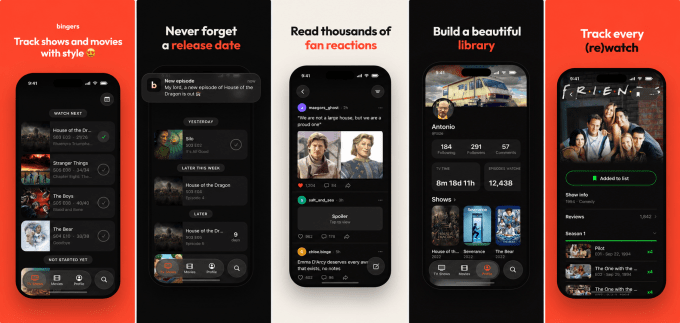
Bingers app

TV Time is going dark. A familiar face is stepping up.

More than 25,000 people have signed a petition begging TV Time to stay alive. But the popular TV and movie tracking app is still shutting down. Its parent company, Whip Media, is pivoting to AI. So TV Time’s community of 26.4 million lifetime installs is about to lose its digital clubhouse.

Enter Antonio Pinto. He’s the French entrepreneur who originally built the app — back when it was called TVShow Time — and sold it to Whipclip in 2016. Now he’s building a new app called Bingers. Think of it as a spiritual successor. A second chance.

“I decided to build the new home where the TV Time community could go,” Pinto wrote on the Bingers website. “I wanted to rebuild all TV Time’s great features, but also fix everything that always bothered me.”

That’s a lot of baggage to carry. But Pinto seems ready.

What Bingers will do differently

TV Time had a serious performance problem. The app loaded slowly. It was expensive to run. Pinto says the premium subscription covered only about 10% of the server costs. That’s a brutal ratio. It’s also a big reason the app is dying.

Bingers is built differently. Pinto claims the architecture keeps server costs low, making the whole thing more sustainable. Users should get faster responses when they mark an episode as watched — even when millions of people hit that button at the same time.

That’s the kind of technical fix that doesn’t make headlines but keeps users sane. Anyone who’s waited five seconds for a checkmark to appear knows the pain.

Import your TV Time data now

Here’s the good news: you don’t have to start from scratch. TV Time users can export their entire viewing history using the app’s GDPR-compliant export tool. That tool will disappear once the app is removed from the App Store and Google Play on July 15.

Bingers already has an archive import tool live on its website. Upload your data now, and your history will be waiting when the app launches. That includes community comments from TV Time — the episode-by-episode chatter that made the app feel like a live watch party.

Pinto says the import will “recreate TV Time’s community comments.” That’s a big deal. Many tracking apps let you log what you watched. Very few let you argue about the finale with strangers.

When can you get Bingers?

The app won’t arrive overnight. Pinto tells TechCrunch that Bingers will hit the App Store and Google Play by the end of July 2026. That’s a long wait. But the waitlist is open now on the Bingers website. Sign up, and you’ll get a notification when it’s ready.

In the meantime, the archive import is already functional. So you can lock in your data and forget about it. When the app finally drops, your history will be there.

Why this matters for TV fans

TV Time wasn’t just a tracker. It was a social network for people who watch too much television. That combination is rare. Most tracking apps are solo experiences. You log your shows, get some stats, move on. TV Time had threads, reactions, inside jokes. It had a culture.

When Pinto heard the app was being wound down, he said he felt sad. “Sad because TV Time was part of my life for so many years. And sad because this community was like my other family. Reading the community reactions after each episode became a ritual for me, and for many others.”

That kind of attachment is hard to replicate. But if anyone can do it, it’s the person who built the original. Bingers might not save every feature. It might not bring back every user. But it gives the community a place to land — and that’s more than most dying apps offer.

If you’re a TV Time user, export your data before July 15. Then join the waitlist. Your viewing history deserves a second act.

Continue Reading

Trending