Connect with us

Artificial Intelligence

You can try quitting AI. But a new survey suggests you probably can’t escape it.

Published

on

AI avoidance

The growing tension between AI use and AI avoidance

More people are trying to cut back on artificial intelligence. But a new report suggests that stepping away from AI entirely may already be off the table.

A survey of 2,055 UK adults found that 42% deliberately limit how much they use AI. Yet 70% of respondents said avoiding exposure to AI would be difficult or impossible — even when they actively wanted less of it. The data paints a stark picture: rejecting a chatbot is easy. Escaping the automated systems embedded in workplace tools, banking apps, or streaming services is not.

Deleting an app like ChatGPT only removes the most obvious form of AI. People have far less control when those systems sit inside software they already depend on for work or daily life.

Why people are setting boundaries

Privacy is the single clearest reason people are drawing lines. Twenty-nine percent of respondents cited concerns about data privacy, security, and compliance — making it the most common motive for limiting AI use.

Another 22% said they simply prefer to keep working the way they already do. Notably, lack of skill wasn’t the main obstacle. Many people understand the technology and still decide it doesn’t belong in their routine. That cuts against the industry’s favorite assumption: that resistance fades once people become familiar with AI. Some users know exactly what these tools offer and still don’t think the tradeoff is worth it.

The findings echo broader worries about AI privacy concerns in consumer tech, where data collection often runs in the background without clear user consent.

Can opting out still count as a real choice?

Consent gets weaker when people can’t tell where AI is operating or what information it’s processing. Choosing not to open ChatGPT is straightforward. Avoiding automated decisions inside another service — like a hiring platform or a credit scoring tool — is much harder.

People can reject the visible tools while hidden systems keep running in the background. A meaningful opt-out would require clear disclosure, usable controls, and an alternative that doesn’t punish anyone for declining. Without those choices, AI exposure becomes the default. Consent then starts looking less like a decision and more like a buried settings menu.

This dynamic is especially troubling in workplace environments, where employees may have no say over the hidden AI systems embedded in productivity software or HR platforms.

What a real opt-out would need

  • Clear, upfront disclosure of where and how AI is used
  • Simple controls that don’t require digging through menus
  • A non-AI alternative that doesn’t penalize the user
  • Guarantees that opting out won’t degrade service quality

Why the backlash may keep growing

Public sentiment is already shifting. The share of UK adults who believe AI carries more risks than benefits rose from 48% in 2023 to 52% in 2026. Those seeing more benefits fell from 38% to 34%. That’s a significant swing in just three years.

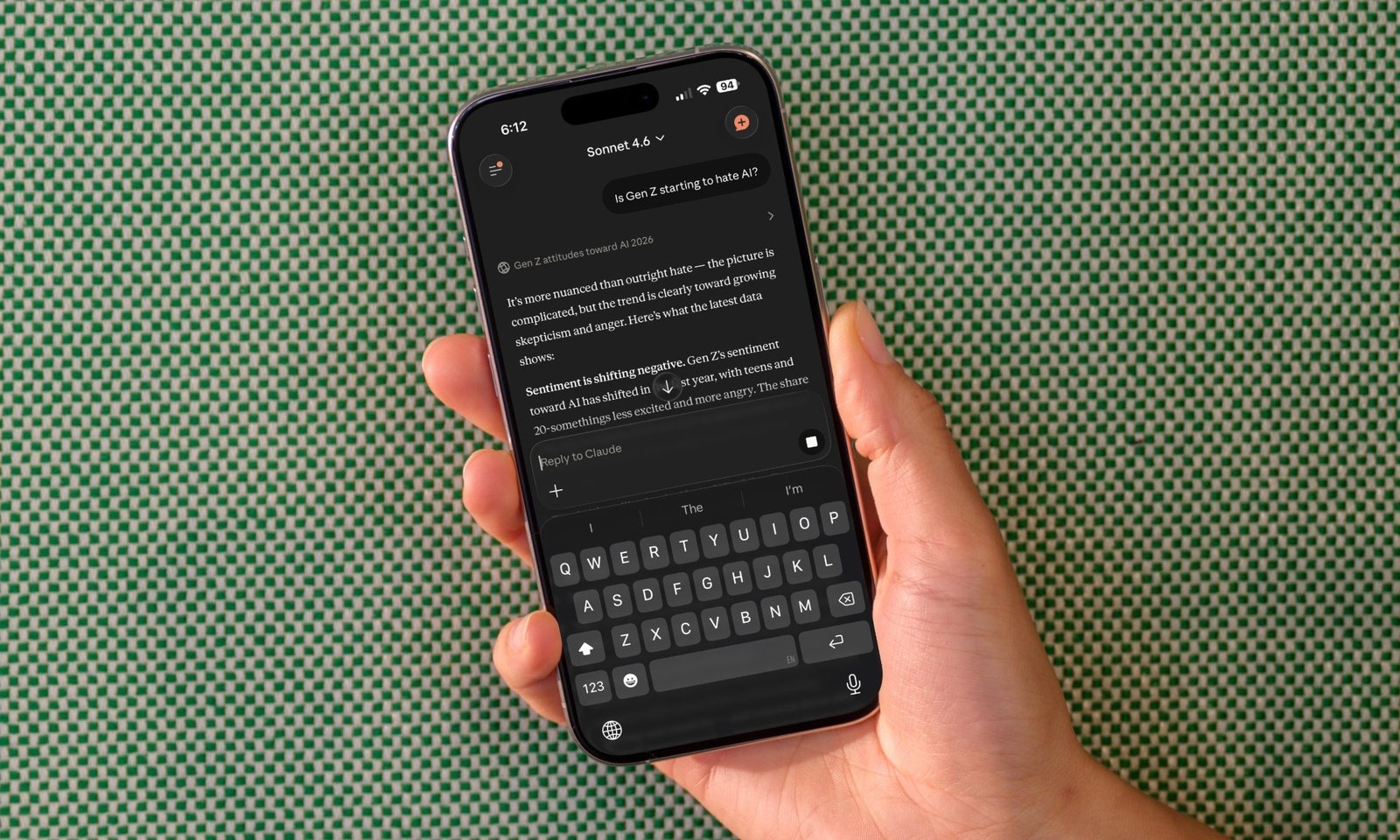
Gen Z makes the picture even messier. Younger adults use AI more often than older generations, but they’re also more likely to restrict it and worry about the risks. They’re the heaviest users — and the most skeptical.

That paradox matters. It suggests that familiarity with AI doesn’t necessarily breed acceptance. In some cases, it breeds caution. The more people understand how these systems work, the more they may question whether the tradeoffs are worth it.

Employers and tech companies now have a blunt warning from this data. Clear disclosure and practical opt-outs may decide whether caution stays manageable or turns into wider rejection. The window to build trust is narrowing.

For now, the message from users is consistent: they want control. And they’re increasingly aware that they don’t have it.

Continue Reading
Click to comment

Leave a Reply

Your email address will not be published. Required fields are marked *

Artificial Intelligence

AMD bets $5 billion on Anthropic: A new AI infrastructure giant emerges

Published

on

AMD Anthropic investment

AMD puts $5 billion on the table for Anthropic

Advanced Micro Devices (AMD) is making a bold move. The chipmaker has agreed to invest up to $5 billion in Anthropic, the startup behind the Claude AI assistant. This isn’t just a financial bet — it’s a sprawling infrastructure deal that could reshape how AI models are trained and deployed.

The agreement covers tens of billions of dollars’ worth of AI systems. Anthropic will deploy up to two gigawatts of computing capacity using AMD’s next-generation Instinct MI450-series accelerators. The first gigawatt is expected to come online in the first half of 2027.

Here’s the twist: AMD’s investment is tied to deployment milestones. If Anthropic hits certain targets, the money flows. Neither company has disclosed what those conditions are, or what happens if delays creep in.

How the deal works — and how it’s different

This isn’t a simple check-writing exercise. The transaction combines an equity investment from AMD with a separate, large hardware order from Anthropic. The companies haven’t said Anthropic must use AMD’s investment to pay for the systems.

It’s a structure AMD has used before — but with a twist. In October, AMD agreed to supply OpenAI with systems supporting up to six gigawatts of capacity. That deal included warrants allowing the ChatGPT developer to acquire roughly 10% of AMD’s stock, vesting in stages based on deployment, commercial, and share-price conditions.

AMD struck a similar deal with Meta in February, covering up to six gigawatts of GPU capacity, with performance-based warrants tied to shipment and purchase targets.

The Anthropic agreement is different. AMD is making a direct equity investment, not issuing warrants. That puts more skin in the game for the chipmaker — and gives Anthropic cash it can use however it sees fit, within the broader partnership.

What Anthropic is actually buying

Anthropic will deploy AMD Helios systems. These aren’t just GPUs — they’re integrated rack-scale platforms combining MI455X accelerators from the Instinct MI450 series, EPYC “Venice” processors, Pensando networking hardware, and ROCm software.

This matters because it’s a full-stack approach. Instead of buying chips and figuring out the rest themselves, Anthropic gets a pre-integrated system designed to work together. AMD chair and CEO Lisa Su called it a “deepened partnership” that brings together Anthropic’s AI leadership with AMD’s high-performance computing.

Anthropic has already been testing AMD’s earlier MI355X accelerators. The new deal scales that relationship dramatically — from evaluation to gigawatt-scale deployment.

Gigawatts: What that number really means

Two gigawatts of power capacity is enormous. For context, Anthropic has separately secured more than 300 megawatts through SpaceX’s Colossus 1 facility in Memphis, which houses over 220,000 Nvidia GPUs. The AMD deployment represents more than six times that power capacity.

But power capacity isn’t the same as computing performance. The two facilities use different hardware and deployment models. AMD executives have said that building one gigawatt of AI infrastructure can cost tens of billions of dollars, depending on the equipment and facilities involved.

Some of the AMD systems will go into Anthropic’s own data centres. Others will be hosted by cloud providers and specialist AI infrastructure companies. AMD and Anthropic are also hunting for operators capable of hosting these massive systems.

Lisa Su noted that gigawatt-scale capacity requires 12 to 24 months of planning before deployment. That’s why the first systems won’t arrive until 2027.

Anthropic’s multi-supplier strategy takes shape

Anthropic is building a diverse compute network. The AMD systems will run alongside infrastructure based on Nvidia GPUs, Amazon Trainium processors, and Google tensor processing units.

Amazon remains Anthropic’s primary cloud and training partner. The startup has secured up to five gigawatts of capacity from Amazon and uses more than one million Trainium2 processors. Trainium3 deployments are planned for 2026.

Anthropic has also locked in multiple gigawatts of next-generation TPU capacity from Google and Broadcom, with deployments expected in 2027. Claude is available through Amazon Web Services, Google Cloud, and Microsoft’s Azure-based Foundry platform.

Anthropic co-founder and chief compute officer Tom Brown explained the logic: “Running across a diversified range of hardware lets us map the right workloads to the right hardware.” He said the AMD partnership gives Anthropic additional capacity while allowing the companies to optimise systems for training and serving Claude.

The company has also agreed to use computing capacity at SpaceX’s Colossus facilities and has discussed leasing infrastructure from Meta. Reuters reported that potential Meta deal could be worth up to $10 billion over two years.

Engineering collaboration and software development

The AMD agreement includes a multi-year engineering programme. The companies will use Claude to optimise workloads for Instinct accelerators and support development of AMD’s ROCm software platform. AMD plans to deploy Claude across its engineering and product-development teams.

This gives Anthropic a dual role: customer of AMD’s infrastructure and participant in developing the software that runs workloads on that infrastructure. It’s a tight feedback loop that could help AMD close the software gap with Nvidia’s CUDA ecosystem.

Market reaction and what comes next

AMD shares rose 2.4% after the agreement was announced. The company’s stock has more than doubled since the start of the year, outperforming the broader Philadelphia Semiconductor Index.

The deal positions AMD as a serious player in the AI infrastructure race, alongside Nvidia’s reported talks about investing up to $30 billion in OpenAI. Chip suppliers are increasingly pairing investments or equity incentives with commercial agreements involving major AI developers.

For Anthropic, the AMD deal provides another pillar in its compute strategy — and signals that the startup is thinking long-term about hardware diversity. “Access to compute is central to keeping Claude at the frontier and meeting demand from our customers,” Brown said. “By partnering with AMD across the stack, we are securing the capacity we need and optimising it for training and serving Claude.”

The real test will come in 2027, when the first gigawatt of AMD-powered infrastructure is supposed to go live. Until then, the industry will be watching — and counting the milestones.

Continue Reading

Artificial Intelligence

Swedish startup Lovable reportedly set to double valuation to $13.2 billion

Published

on

Lovable valuation

A Swedish startup is on the verge of a massive valuation jump

Just six months after being valued at $6.6 billion, Lovable is back at the negotiating table. The Stockholm-based company is reportedly in talks to raise $300 million at a valuation of $13.2 billion — exactly double what it was worth last December, according to a report from Sifted.

If the deal goes through, it would mark one of the fastest valuation doublings in European tech history for a company that hasn’t even turned three.

Who’s leading the round

Menlo Ventures, which announced a fresh $3 billion fund just last month, is expected to lead the new investment, sources told Sifted. The firm has been aggressively backing AI-native companies, and Lovable fits squarely in that thesis.

The round hasn’t closed yet, and terms could still shift. But the rumored numbers suggest serious investor confidence in what Lovable is building.

Vibe coding is the engine

Lovable’s product is a so-called “vibe coding” tool. The concept is simple: instead of writing code line by line, users describe what they want in plain language, and the AI builds the software. It’s aimed at founders, designers, and salespeople who need websites or e-commerce storefronts — not professional developers.

That pitch has clearly resonated. In June, Lovable hit $500 million in annualized revenue run rate. For a company founded in late 2022, that’s an extraordinary number.

Vibe coding is quickly becoming the most lucrative use case for generative AI. Replit, another player in the space, was valued at $9 billion in March. Factory, which helps enterprises build AI agents, raised $150 million at a $1.5 billion valuation in April. And Cursor, which targets developers specifically, was acquired by SpaceX for a staggering $60 billion last month.

Enterprise customers are buying in

Lovable isn’t just for solo founders and freelancers. The company has landed enterprise deals with major names including Workday, Asana, and Nvidia. That mix of SMB and enterprise revenue gives the startup a diversified base — and makes the valuation easier to justify.

It also signals that vibe coding is moving beyond the hype phase. Large organizations are willing to pay for tools that let non-technical employees build software without IT bottlenecks.

What this means for the European tech scene

A $13.2 billion valuation would place Lovable among Europe’s most valuable private tech companies. It would also put pressure on other European AI startups to show similar growth trajectories.

The speed of the valuation increase — from $6.6 billion to $13.2 billion in roughly six months — raises obvious questions about market froth. But Lovable’s revenue numbers are real, and its customer list is growing. For now, investors seem to be betting that the vibe-coding category has legs.

Whether that bet pays off depends on how many businesses actually adopt the tool for mission-critical work, not just quick prototypes. But at $500 million in annualized revenue, Lovable is already proving it can convert interest into cash.

Continue Reading

Artificial Intelligence

I spent a fortune on a Copilot+ PC, and I’ve barely ever touched Microsoft’s AI

Published

on

Copilot+ PC

A dedicated key I never press

There’s a Copilot key on my ASUS Zenbook 14 OLED. Months into ownership, it might be the most ignored button on the entire keyboard. My Zenbook UM3406 runs on AMD’s Ryzen AI 300 series processor, complete with a neural processing unit (NPU) that delivers up to 50 TOPS of AI performance. That makes it a Copilot+ PC — part of what Microsoft once called the new era for Windows.

AI is already woven into my daily work. I use it for research, brainstorming, and untangling complex ideas. But I don’t reach for Microsoft’s built-in assistant. Instead, I rely on ChatGPT, Claude, and Gemini. The Copilot key? It collects dust.

What Copilot+ PC actually means

The name “Copilot+ PC” suggests a machine built around Microsoft Copilot. In reality, the certification mostly describes hardware specs and local Windows features. The NPU inside my Zenbook can accelerate experiences like Windows Studio Effects, Live Captions, improved search, and Recall. But the Copilot chatbot itself requires an internet connection. You can run it on a Mac or in a web browser — not just on Windows PCs. Pressing that special key doesn’t summon an assistant powered by the full 50 TOPS NPU sitting inside my laptop.

Microsoft marketed Copilot+ PCs around a grand reinvention of personal computing — local AI changing how we use Windows. The NPU is there, and the badge proves the machine can handle various AI menus. But very few of those menus address problems I actually face.

Recall: useful but not essential

Recall is probably the most practical of the bunch. It saves snapshots of your activity and helps you recover something you previously saw. If you constantly juggle important files or conversations, it can be a lifesaver. Even so, I haven’t needed it badly enough to let Windows build a searchable history of my screen. Live Captions and Studio Effects are handy in the right circumstances. But they remain occasional utilities, not reasons to rethink how I use my notebook.

Why ChatGPT and Claude win my clicks

I already know where to go for my workflows. ChatGPT is my starting point for broad research and working through ideas. Claude enters the picture when I’m dealing with longer passages. Each service has its limitations, but I’ve grown familiar with their quirks and strengths.

Copilot came bundled with my PC. Until recently, I never gave it a real shot. After trying it out, I understand why I initially brushed it off. Microsoft uses the Copilot name across several different products — the consumer assistant, Microsoft 365 Copilot, GitHub Copilot, and various Windows integrations. Figuring out which Copilot does what can require more effort than opening the tool I already trust.

Microsoft reorganized its Copilot teams this year to create a more coherent experience across consumer and commercial products. That move alone suggests the current structure has become difficult to explain.

Copilot everywhere didn’t make it essential

Microsoft tried to solve the adoption problem through visibility. Copilot appeared everywhere — in Windows, Edge, Office, Paint, Notepad, and other parts of the operating system. PC keyboards gained a dedicated key for the first time in decades.

Microsoft has since started removing or reducing some of those entry points. Even hardware partners have acknowledged the disconnect. Dell said consumers buy newer laptops for tangible improvements like performance and battery life, while AI terminology often leaves them confused. That’s also why I picked my Zenbook: a gorgeous OLED display, thin-and-light design, and reliable battery life.

Even those who try it struggle to stick with it

After I covered Copilot’s low uptake, an author emailed me about his own experience. He had used the service extensively while writing a book, yet updates and policy changes sometimes caused it to reject tasks it had previously completed. He now opens Copilot with one question in mind: “Will it or won’t it?”

To be fair, generative AI services change constantly. Refusals can happen across Copilot, ChatGPT, Claude, and Gemini. But Copilot carries an additional burden because Microsoft presents it as an integrated productivity assistant. Users expect consistency from a tool built directly into their operating system and work software.

Futureproof or just future hype?

I don’t regret buying the Zenbook. It’s a capable laptop, and the NPU may become increasingly useful as more applications run AI workloads locally. Copilot+ certification also provides some reassurance that the machine meets Microsoft’s current baseline for upcoming Windows features. But that sounds like futureproofing — not being handy right now.

Microsoft might move the baseline higher as systems get more advanced and requirements grow. So for now, I’ll keep using the AI tools that already fit my workflow. Though I’ll be giving Copilot a try more often to see where it really makes a difference for me.

Continue Reading

Trending