Why one TV setting never fits every room
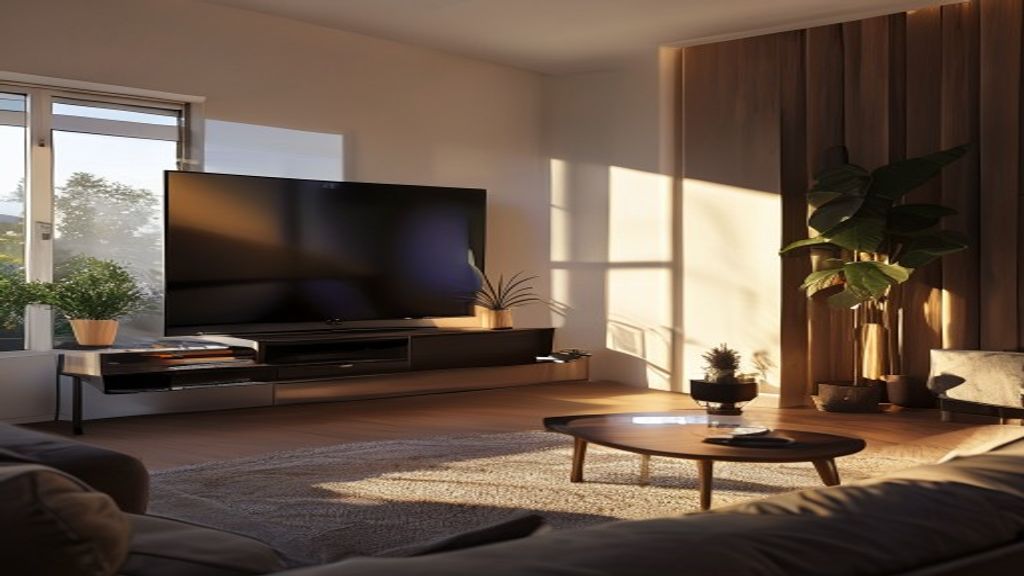
Modern households don’t watch TV the same way anymore. One person might binge a dark thriller at midnight with the lights off. Another catches the morning news with curtains wide open. Kids play games in the afternoon, while someone else streams a bright comedy during dinner. The lighting changes. The viewing angle shifts. The content demands something different every time.
Most TVs just sit there with one static picture mode. You’re left fiddling with brightness, contrast, and backlight settings every time the sun moves or a new show starts. That gets old fast.
Hisense thinks it has a smarter answer: the U6SF MiniLED ULED TV. It’s not the flashiest model in the lineup, but it might be the most practical for real homes.
What makes the U6SF different? MiniLED meets ULED
The U6SF packs two key technologies that usually cost a lot more. MiniLED backlighting packs hundreds of tiny LEDs behind the screen, instead of the usual handful of big ones. That means more zones of local dimming — Hisense claims up to 384 zones on the 75-inch model. Dark scenes stay dark, bright highlights pop, and you don’t get that ugly halo effect around subtitles or stars.
Then there’s ULED, Hisense’s proprietary picture processing. It’s not a display technology itself, but a suite of algorithms that tweak color, contrast, motion, and upscaling in real time. Think of it as the brain behind the MiniLED muscles.
The result? Better black levels than most LCD TVs at this price, and brightness that can actually fight glare from a sunny window. It’s not OLED deep black, but it’s close — without the risk of burn-in or the premium price tag.
Adaptive picture that actually works in your living room
The headline feature here is adaptive picture. The U6SF uses a built-in light sensor to detect the ambient light in the room. Then it automatically shifts the brightness, contrast, and even color temperature to match.
Walk into a bright room — the screen gets punchier and brighter. Dim the lights for movie night — it softens, preserves shadow detail, and reduces eye strain. You don’t touch a single button.
It’s a small thing, but after a week with the TV, you stop noticing the adjustments — because they just feel right. That’s the goal. The TV fades into the background, and you focus on what you’re watching.
Game Mode and VRR for gamers
Gamers aren’t left out. The U6SF includes a dedicated Game Mode that cuts input lag to around 10ms. It also supports Variable Refresh Rate (VRR) up to 60Hz and Auto Low Latency Mode (ALLM). That’s enough for smooth, responsive play on consoles like the PlayStation 5 or Xbox Series X.
It’s not a 120Hz panel, so competitive esports players might want something faster. But for most casual and story-driven games, it handles motion beautifully.
Picture quality: bright, colorful, and surprisingly deep
Out of the box, the U6SF covers 95% of the DCI-P3 color gamut — excellent for an LCD TV at this price. Colors are rich without looking cartoonish. Skin tones stay natural. HDR content from Netflix or Disney+ looks punchy, especially in bright highlights like explosions or sunsets.
Black levels are the real surprise. MiniLED local dimming keeps letterbox bars nearly black in movie mode. You won’t see the grayish glow common on cheaper LED TVs. Shadow detail in dark scenes — like the caves in The Batman — remains visible without crushing.
One caveat: viewing angles are typical VA-panel limited. If you sit more than 30 degrees off-center, contrast drops and colors wash out. That’s a physics limitation, not a Hisense flaw. If your seating is wide, consider a slight angle adjustment or an IPS-based alternative.
Smart platform: Google TV with real apps
The U6SF runs Google TV, which is basically Android TV with a cleaner interface. It’s fast, responsive, and supports all major streaming apps: Netflix, Prime Video, Apple TV+, YouTube, Hulu, Disney+, and more. You also get built-in Chromecast, Google Assistant, and Works with Alexa.
The remote is simple — dedicated buttons for Netflix, YouTube, and Prime Video. No clutter. Voice search works well for finding content across apps.
If you’re already in the Google ecosystem, this TV integrates seamlessly. You can cast from your phone, control smart lights, or ask Google to play a specific show.
Design and connectivity: clean, practical, complete
The U6SF looks understated. Thin bezels, a brushed metal finish, and two slim feet that sit wide. No fancy motorized stand or ambient mode art — just a TV that doesn’t draw attention to itself.
Ports are generous for the price:
- 3x HDMI 2.0 (one with eARC)
- 2x USB 2.0
- Optical audio out
- Ethernet
- RF input for antenna/cable
No HDMI 2.1, so you won’t get 4K at 120Hz. For most households, that’s fine. The eARC port lets you connect a soundbar easily. The built-in speakers are adequate for news and casual viewing, but for movies and music, you’ll want a soundbar or external system.
Who should buy the Hisense U6SF?
This TV is for the family that shares one living room screen. It handles bright afternoons, dim evenings, gaming sessions, and movie marathons without constant manual tweaking. The adaptive picture feature alone justifies the upgrade for anyone tired of squinting or adjusting settings every time the sun moves.
It’s also a strong pick for budget-conscious buyers who want MiniLED performance without the $1,000+ price tag of Samsung Neo QLED or Sony MiniLED models. The 55-inch version often sells around $500-600, making it one of the most affordable MiniLED TVs on the market.
Skip it if you need 120Hz for competitive gaming, or if your seating is extremely wide off-center. Otherwise, the U6SF delivers a genuinely premium experience that adapts to real life — not a lab.







 CyberSecurity4 months ago
 CyberSecurity4 months ago
 CyberSecurity4 months ago
 Social Media4 months ago
 How To3 months ago
 Infosecurity4 months ago
 CyberSecurity4 months ago
 CyberSecurity4 months ago