Connect with us

Social Media

YouTube Gets Specific: New Rules Target AI Slop, Upsetting Videos, and Fake Personas

Published

on

YouTube AI slop

Three strikes against low-quality AI content

YouTube is drawing harder lines around what kind of AI-generated material qualifies for ad revenue. The platform updated its monetization policies on July 16, breaking down what it calls “inauthentic content” into three distinct categories. Any channel leaning too heavily into these types of videos risks losing access to the YouTube Partner Program (YPP).

The move isn’t a total ban on AI content. Far from it. YouTube’s trust and safety chief Matt Halprin made that clear in a recent Creator Insider video. “AI can actually allow people to make a lot of videos,” he said. “Sometimes those videos are great, and it really enhances creativity.”

The problem, he explained, is when creators use the same tools to churn out lookalike videos with no real narrative or original thought. That’s the stuff YouTube wants out of its revenue-sharing program.

Category one: cookie-cutter content and template traps

The first bucket covers generic, repetitive, or template-based videos. Think material cranked out with AI, CGI, or pre-made templates where each video is barely distinguishable from the last. Halprin specifically called out tutorial channels that simply reproduce information already flooding the platform, offering nothing new.

This is the classic definition of content farming — pumping out volume over value. YouTube’s policy now explicitly states that channels built around this approach won’t be monetized.

Category two: upsetting videos designed to manipulate

The second category targets what YouTube calls “off-putting” content. These are videos deliberately designed to distress or emotionally manipulate viewers for clicks. Halprin gave a concrete example: footage of an animal in distress, followed by a staged rescue.

“We’ve heard from our viewers that that’s not something that they like. They find it off-putting. They don’t want to come back to that channel, or maybe even the platform,” Halprin said.

Importantly, this rule applies regardless of whether the video is AI-generated or shot with a phone. If a channel is dedicated to this kind of material, it’s out of YPP.

Category three: AI personas giving advice on sensitive topics

The third bucket is the most directly aimed at generative AI. YouTube is cracking down on channels that use AI personas — digital stand-ins for real people — to discuss sensitive subjects like finance, legal matters, healthcare, and medical issues.

The logic is straightforward: YouTube doesn’t want to incentivize creators who use fake faces to dispense advice that could harm viewers if it’s wrong or misleading. An AI-generated doctor talking about prescription drugs? That’s exactly the kind of content this policy targets.

Why YouTube is tightening the rules now

This isn’t YouTube’s first rodeo with AI policy. The company announced rules around inauthentic content last year. What changed in July was the level of detail. The new guidelines add nuance, giving creators and moderators clearer benchmarks for what crosses the line.

The stakes are high. YouTube now generates more ad revenue than rival streaming platforms and has overtaken Netflix in average daily views worldwide. That puts it in direct competition with TV networks for premium advertising dollars. Allowing the platform to fill up with AI slop would undermine that position.

“The same technology really enables great stuff, but it also enables stuff that’s kind of content farming, and that’s the stuff that we don’t want to have in YPP,” Halprin said.

For creators, the message is clear: AI tools are welcome, but only if they serve genuine creativity. Mass-producing emotionally manipulative or cookie-cutter videos? That path now leads straight out of the Partner Program.

Continue Reading
Click to comment

Leave a Reply

Your email address will not be published. Required fields are marked *

Social Media

The TikTok ban on government phones is over — federal employees can download the app again

Published

on

The short version

The Department of Justice has quietly reversed a 2022 law that barred federal employees from having TikTok on their government-issued phones. A new memo obtained by Reuters confirms the ban is off. The reason? A deal that handed control of TikTok’s U.S. operations to a joint venture backed by Oracle, Silver Lake, and MGX has changed the legal picture.

That means anyone working for an executive branch agency can now download the short-form video app — as long as their specific department allows it and normal workplace rules still apply.

What changed — and why the ban fell apart

The original restriction came from a 2022 law that specifically targeted TikTok on federal devices. Lawmakers cited national security concerns tied to the app’s Chinese parent company, ByteDance. For years, government employees couldn’t install or use the app on work phones, period.

But the DOJ now says that law no longer applies. The key shift: a deal that transferred ownership of TikTok’s U.S. operations to a new joint venture. Oracle serves as the security partner for that venture. ByteDance still holds a 19.9% stake, but control has moved. That structural change, according to the DOJ, makes the old ban obsolete.

The memo reportedly states that President Donald Trump has cleared “employees of Executive Branch agencies” to “download TikTok onto their official devices, subject to the agency’s discretion and consistent with all applicable workplace policies.”

This isn’t the first TikTok flip-flop — and it won’t be the last

It’s been a wild couple of years for TikTok in the U.S. The federal employee ban was just one piece. A broader national ban took effect early last year, threatening to shut the app down for every American user. That law actually kicked in — and TikTok went dark for about a day.

Then Trump stepped in. He delayed enforcement repeatedly and pressured service providers to restore access. The app came back online quickly, but the legal limbo never really ended. This new DOJ memo is the latest twist, not the final chapter.

What the memo actually says

The DOJ’s language leaves room for nuance. Agencies still have discretion. That means the Department of Defense could theoretically say no even if the White House says yes. Individual workplace policies also still apply. So don’t expect every federal employee to suddenly start scrolling through TikTok during lunch breaks — at least not without checking with their IT department first.

The memo reportedly emphasizes that the change is “consistent with all applicable workplace policies.” Translation: your boss can still ban it locally.

Who’s affected — and who isn’t

This reversal applies to executive branch employees. That covers most federal agencies, from the State Department to the EPA. But it does not automatically extend to legislative or judicial branch workers. Congress and the courts have their own rules.

Contractors and consultants who work with the government but aren’t direct employees? That’s a gray area. The memo addresses “employees of Executive Branch agencies” specifically. If you work for a company that holds a federal contract, check your own organization’s policy.

The app itself is also still banned on devices used for classified work. The DOJ memo doesn’t touch that. National security restrictions around sensitive information remain in place.

What happens next

For now, the door is open. Federal employees who want TikTok on their work phones can download it — assuming their agency hasn’t opted out. IT departments across the government are likely scrambling to update their policies.

But the larger battle over TikTok’s future in the U.S. is far from settled. The joint venture with Oracle isn’t a permanent fix. Lawsuits are still pending. And Congress could always pass new legislation.

One thing is clear: the old ban is dead. Whether a new one rises depends on how the next few months play out.

Continue Reading

Social Media

X gets serious about content theft: AI detection, revenue reclamation, and creator suspensions
Published

on

stolen content

X gets serious about content theft: AI detection, revenue reclamation, and creator suspensions

For years, reposting someone else’s viral tweet, video, or meme has been a reliable path to likes, followers, and—since X launched its creator revenue-sharing program—actual money. That ride is now over. X is rolling out a suite of aggressive measures to detect stolen content, redirect payouts back to original creators, and boot repeat offenders from its monetization program entirely.

The platform’s latest weapon is an upgraded version of its Grok AI model. According to Nikita Bier, who works on X’s creator monetization team, the new model can identify duplicated content at three times the rate of the previous version. That means reposted tweets, copied videos, and lifted text posts are far more likely to be flagged—even if the thief tries to disguise them.

How the new detection system works

Grok AI isn’t just looking for exact matches. Bier says the system now catches content that has been lightly altered—watermarks added, intro sequences tacked on, or other superficial edits meant to make stolen material look original. All of those tricks, he explained, will now result in monetized impressions being reassigned to the original uploader instead of the thief.

This extends beyond video. Copies of viral text posts are also being targeted. Bier noted that one of the most commonly stolen phrases on the platform is, “Twitter is like the smoking section of the internet”—proof, he joked, that people still call the app Twitter.

X has already detected 1.5 million stolen posts in its latest detection cycle. Bier didn’t specify the exact timeframe, but the scale suggests the problem is massive. The financial impact is significant too: over $1 million in creator payouts will now be redirected back to the original creators of that stolen content.

Bots and engagement bait are also in the crosshairs

Content theft and engagement manipulation often go hand-in-hand with bot networks. X says it has been ramping up bot enforcement as well. In April, Bier stated the platform was identifying and suspending 208 bots per minute—and that number is still climbing.

Engagement bait—posts that explicitly ask for follows, replies, or likes in exchange for something—is another priority. X’s updated policy says that repeated or intentional attempts to circumvent the new rules will result in removal from the creator program. Specifically, if a user is caught three times or more engaging in practices like saying “I’ll follow everyone who replies,” their account will be removed from monetization and forwarded to the policy team for potential suspension.

Bier has been vocal about engagement bait for a while. He even called out top creator MrBeast for consistently using financial incentives to drive views—a tactic Bier argues undermines genuine organic reach on the platform.

What this means for creators

For original creators who have seen their work reposted by larger accounts without credit or compensation, these changes are a long-overdue win. X’s new video editor and recorder, rolled out earlier this year, was already an attempt to push creators to post original content using X’s own tools. Now the platform is backing that up with enforcement.

But the crackdown also raises questions. How accurate is Grok AI’s detection? False positives could penalize legitimate reposts, quote tweets with commentary, or parody accounts. X hasn’t detailed an appeals process for creators who believe their content was wrongly flagged.

There’s also the question of scale. 1.5 million stolen posts is a lot, but X processes billions of posts daily. The platform will need to keep investing in detection infrastructure to stay ahead of bad actors who are constantly adapting.

A broader industry trend

X isn’t alone in fighting content theft. Instagram, Facebook, and Reddit have all implemented technical measures to discourage reposting without credit. Tools that detect when a user has republished someone else’s work without attribution are becoming standard across major social platforms.

What’s different about X’s approach is the direct financial penalty. By redirecting revenue rather than just removing the stolen post, X creates a tangible cost for thieves and a concrete reward for original creators. That could be a powerful deterrent—if the detection is accurate and consistent.

For now, creators who rely on reposting viral content as a growth strategy will need to rethink their approach. The era of free-riding on someone else’s work for profit on X is ending. The question is whether the platform can execute this crackdown fairly and at scale.

Continue Reading

Social Media

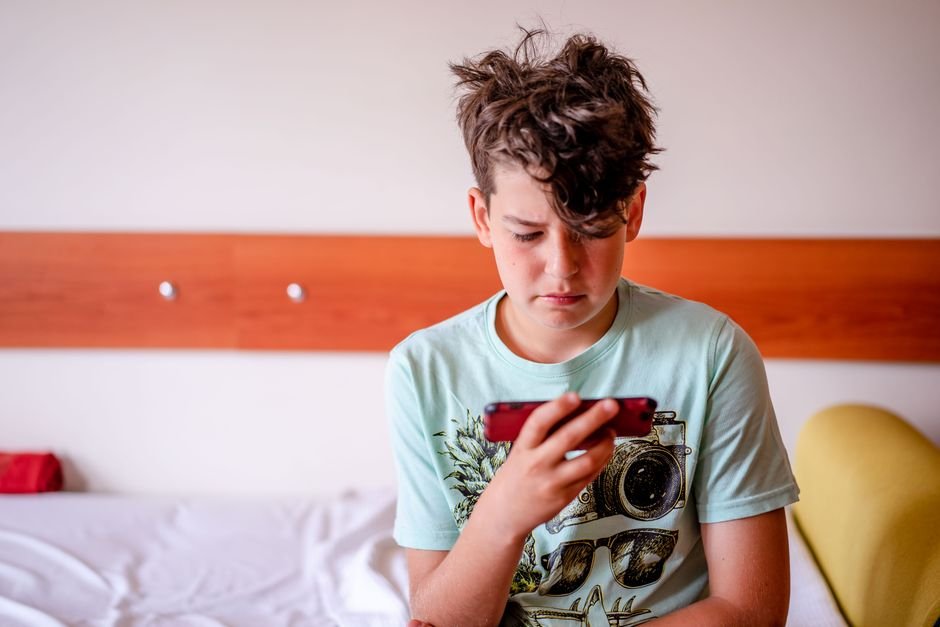
Meta now alerts parents if their teen discussed suicide or self-harm with its AI chatbot
Published

on

Meta AI suicide alerts

New safety feature flags crisis conversations

Meta announced Thursday that it will now send alerts to parents when their teenager discusses suicide or self-harm with the company’s Meta AI chatbot. The move comes as scrutiny intensifies over how generative AI systems handle vulnerable users — especially minors.

The company says it has built a dedicated AI detection system specifically trained to identify when a teen makes a clear reference to hurting themselves. Every flagged chat gets reviewed by a human moderator before any alert is sent to a parent. If the system can’t determine intent, Meta says it will err on the side of caution and notify the parent anyway.

“We understand how distressing these alerts may be for a parent to receive,” Meta wrote in a blog post. “While that means we may sometimes notify parents when there may not be real cause for concern, we feel this is the right starting point.”

Where the alerts are live now

The new notifications are rolling out first for parents who use Instagram Parental Supervision in the United States, the United Kingdom, Australia, and Canada. Meta says the feature will expand to all other countries by the end of the year.

These alerts build on an existing system that already notifies parents when their teen repeatedly searches for suicide or self-harm terms on Instagram. Parents can also already see a summary of the topics their teen discussed with Meta AI over the past week.

Emergency services integration

Meta is also working on the ability to contact emergency services directly if a conversation — whether with a teen or an adult — suggests someone may be at imminent risk of suicide. The company already takes this step when someone posts content indicating self-harm risk on Facebook or Instagram. This update extends the same protocol to AI chatbot conversations.

“We’ll continue to monitor to help make sure we’re in the right place,” Meta said, acknowledging the sensitivity and potential for false positives.

Expanded content restrictions for teens

Separately, Meta announced that its “Limited Content” setting — which allows parents to place teens in a more restrictive Instagram experience — now also applies to Meta AI. The AI chatbot was already programmed to avoid sexual, romantic, or alcohol-related discussions with teens. The Limited Content setting goes further, making the chatbot decline a broader range of potentially inappropriate prompts.

These changes arrive as regulators and parent groups push tech companies to clarify how AI chatbots respond to users in crisis. The liability question is increasingly shaping how AI products are designed and marketed, especially when minors are involved.

What this means for teens and parents

For parents already using Instagram’s supervision tools, the new alerts add another layer of visibility into their teen’s digital life. But the system isn’t perfect. Meta acknowledges that some alerts may be sent when there’s no real cause for concern. The trade-off, the company argues, is better than missing a genuine cry for help.

For teens, the changes mean that certain conversations with Meta AI are no longer private. That’s a significant shift in how the company handles user data — and one that could affect how comfortable young users feel confiding in the chatbot.

Meta says all flagged conversations are manually reviewed before any alert reaches a parent. The company also emphasizes that it is still improving detection accuracy. The system will likely evolve as more data comes in.

The bigger picture: AI safety under the microscope

Meta is not alone in facing questions about AI chatbot safety. Rivals including OpenAI and Google have also faced scrutiny over how their models handle sensitive topics with minors. The challenge is acute: chatbots can seem empathetic and nonjudgmental, which may encourage teens to open up — but also raises the stakes if the AI responds poorly to a crisis.

Meta’s approach — human review, cautious alerting, and emergency service contact — mirrors what some mental health hotlines already do. Whether it’s enough to satisfy regulators remains to be seen.

For now, the company is betting that over-alerting is better than under-alerting. “We feel this is the right starting point,” the blog post reads. Time — and real-world use — will tell if parents and teens agree.

Continue Reading

Trending