Connect with us

Artificial Intelligence

6 Things Gemini Intelligence Is About to Do Across Your Android Devices

Published

on

6 Things Gemini Intelligence Is About to Do Across Your Android Devices

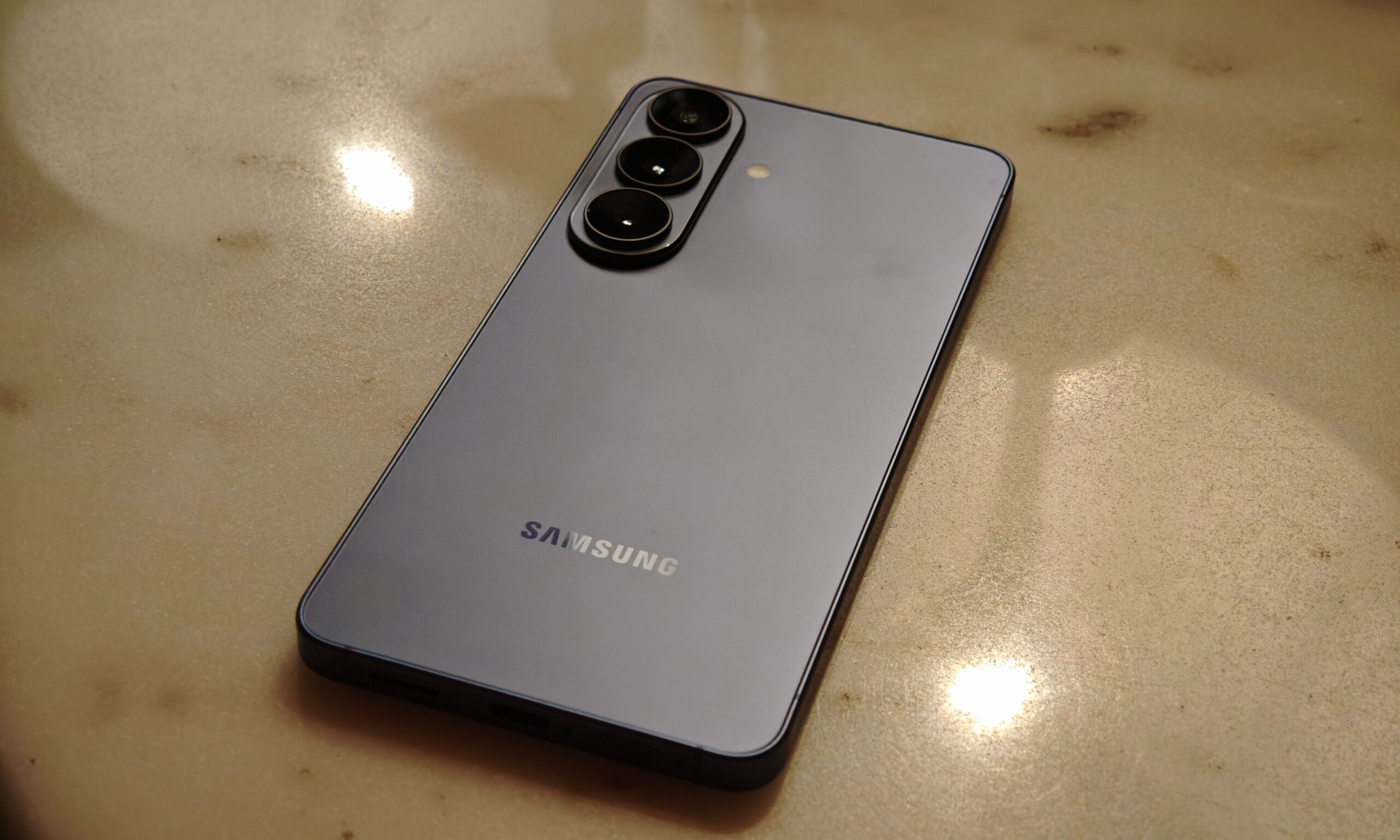
Google is rolling out a major upgrade to its mobile ecosystem, and it revolves around Gemini Intelligence Android. This new layer of artificial intelligence promises to make your phone, watch, car, and even glasses far more proactive. Instead of waiting for commands, your device will anticipate needs, automate tedious tasks, and keep your data private. The first wave hits Samsung Galaxy and Google Pixel devices this summer, with other Android gadgets following later in the year. Here is what you can expect from this intelligent overhaul.

1. A Hands-On Assistant That Acts Without Repeated Prompts

Google is pushing Gemini beyond simple Q&A. With Gemini Intelligence, your phone will handle repetitive steps in everyday tasks, like ordering food or booking a ride. On upcoming devices such as the Samsung Galaxy S26 and Pixel 10, the system already learns from apps you use often.

For example, it can scan your Gmail for a class syllabus, then automatically add required books to your shopping cart. Or it might grab a bike for a spin class without you tapping through multiple screens. Visual context is also key: point your camera at a grocery list or travel brochure, and Gemini will turn it into an actionable task, like building a cart or finding a similar deal online. You stay in control, but the heavy lifting moves to the background.

2. Chrome Becomes a Smarter, More Proactive Browser

Starting in late June, Android users will see Chrome evolve. With Gemini Intelligence Android built directly into the browser, it will no longer just open tabs. Instead, it can summarize articles, extract key points, and compare information across pages automatically.

The standout feature, however, is auto-browse. Chrome can take over tedious online chores like booking appointments or sorting parking reservations. This sounds almost too convenient, but if it works as intended, it could genuinely reduce the effort spent on simple web tasks. Learn more about optimizing Chrome with AI.

3. Smarter Autofill That Understands Context

Android autofill is finally growing up. What used to be a simple shortcut for names and passwords is now powered by Gemini. Your device can understand context and pull relevant information across apps, including Chrome, to fill in those repetitive form fields.

The real win is for long, messy forms on a phone screen. Whether it is address details, booking info, or repetitive sign-ups, Android leans on your connected apps to fill gaps. Importantly, this is fully opt-in. You decide when it steps in, and you can switch it off anytime. This sensible approach respects your personal data while making mobile form-filling far less painful.

4. Voice Typing That Polishes Your Natural Speech

Voice typing on Android has always been useful but messy. Real human speech includes pauses, filler words, and mid-sentence changes. A new feature called Rambler, powered by Gemini, fixes this gap.

Instead of forcing you to speak perfectly, Rambler takes a forgiving approach. Talk naturally, and it intelligently picks out meaningful parts, stitching them into clean, readable messages. It even handles multilingual conversations, switching between English, Hindi, or a mix without issue. Audio is processed in real time for transcription and not stored, easing privacy concerns. This feels like having a patient editor inside your keyboard. Check our guide to mastering voice typing.

5. Widgets That You Build with Natural Language

Android widgets are getting a smart upgrade with Create My Widget. Instead of static blocks, you can now describe what you want in plain language, and Gemini builds a tailored widget. It could be weekly high-protein meal suggestions for your fitness routine, or a weather view showing only wind speed and rain for cycling.

The result is a home screen designed around your actual life. This extends to Wear OS, bringing the right information to your wrist at the right time. It is one of the most practical uses of Gemini Intelligence Android so far.

6. A Visual Makeover That Calms the Chaos

Google is also giving Gemini Intelligence a visual identity built on Material 3 Expressive. This new design language uses animations that guide your attention rather than fight for it. The goal is to calm the chaos modern smartphones tend to create.

What ties everything together is a bigger shift: Gemini Intelligence is not just adding AI features to existing tools. It is reshaping how those tools look, behave, and respond to you. From handling repetitive tasks in the background to building interfaces that adapt to your needs, Google is pushing toward a future where your device feels less like something you operate and more like a partner. If it all comes together, this could be one of those rare Android upgrades that genuinely changes daily use. Explore more Android tips and tricks.

Continue Reading
Click to comment

Leave a Reply

Your email address will not be published. Required fields are marked *

Artificial Intelligence

OpenAI unveils GPT-5.6, its most powerful AI yet — but most people can’t use it

Published

on

GPT-5.6 access limited

OpenAI drops GPT-5.6 — but there’s a catch

OpenAI has officially announced GPT-5.6, its most advanced family of AI models to date. The new lineup includes three distinct models: Sol, the flagship designed for the most demanding workloads; Terra, a balanced model for everyday reasoning tasks; and Luna, a faster, more affordable option for high-volume work.

The company claims GPT-5.6 brings major improvements in coding, scientific reasoning, cybersecurity, biology, and long-running autonomous tasks. Sol, the top-tier model, introduces advanced operating modes like Max for deeper reasoning and Ultra for orchestrating sub-agents across complex workflows.

But here’s the thing: unless you’re one of a handful of approved customers, you won’t be able to try it anytime soon.

Who actually gets to use GPT-5.6?

The biggest story around GPT-5.6 isn’t just the technology — it’s who gets access. As first reported by The Wall Street Journal, the model will initially be available only to a small group of customers approved by the Trump administration while it undergoes additional national security reviews.

OpenAI says this is a temporary measure during the rollout of a new federal oversight framework. The company hopes to make GPT-5.6 broadly available in the coming weeks, but hasn’t shared a specific timeline.

This move follows a pattern. Just weeks ago, the U.S. government forced Anthropic to restrict access to its Claude Mythos 5 and Fable 5 frontier models over national security concerns. While Mythos has since returned for select users, Fable 5 remains locked down to approved U.S.-based entities.

OpenAI is now following a similar playbook.

“As part of our ongoing engagement with the U.S. government, we previewed our plans and the models’ capabilities ahead of today’s launch. At their request, we are starting with a limited preview for a small group of trusted partners whose participation has been shared with the government, before releasing more broadly.” — OpenAI

Safety testing at an unprecedented scale

Beyond government scrutiny, OpenAI is also doubling down on security from a technical angle. Alongside GPT-5.6 Sol, the company says it has deployed its “most robust safety stack yet,” strengthening real-time protections against high-risk cyber activity and repeated misuse attempts.

The model was hardened through extensive human red-teaming and over 700,000 A100 GPU-equivalent hours of automated safety testing before release. That’s a staggering amount of compute dedicated purely to safety.

The geopolitical tightrope of frontier AI

OpenAI also has another reason to proceed cautiously. Earlier this week, Anthropic alleged that Chinese tech giant Alibaba used thousands of user accounts to systematically access Claude and distill its responses to improve the Qwen family of AI models.

Similar allegations have surfaced in the past. They underscore a growing concern: frontier AI models can be copied or exploited before developers can adequately secure them. Whether that’s a direct factor behind OpenAI’s cautious rollout or not, one thing is becoming increasingly clear.

Launching the world’s smartest AI models is no longer just a technical challenge. It’s quickly becoming a geopolitical one.

OpenAI made it clear that it does not believe this kind of government approval process should become the long-term default for releasing frontier AI models. But for now, that’s exactly what’s happening.

What this means for the future of AI access

The limited preview of GPT-5.6 raises important questions. If the U.S. government can restrict access to the most advanced AI models, what does that mean for global competition? For startups that rely on frontier models? For researchers who need access to push science forward?

OpenAI hasn’t answered those questions yet. The company says it will continue working through the required security vetting process before expanding access to GPT-5.6. But without a clear timeline, the rest of us are left waiting.

For now, the GPT-5.6 family — Sol, Terra, and Luna — remains a tantalizing glimpse of what’s possible. Just don’t expect to use it anytime soon.

Continue Reading

Artificial Intelligence

I found these two Prime Day flagship laptop deals for display snobs and practical buyers

Published

on

Prime Day laptop deals

Two flagship laptops, two very different priorities

Amazon Prime Day 2026 is already flooding the front page with discounts. But if you’re shopping for a flagship laptop, the noise gets loud fast. I’ve been scanning the listings all week, and two deals keep rising to the top — not because they’re the cheapest, but because they pass the full checklist: processor, RAM, storage, display quality, seller reputation, and final price.

The Samsung Galaxy Book5 Pro 360 and the Microsoft Surface Laptop are the pair I’d compare before clicking anything else. One is built for people who obsess over screens. The other is for people who just want a reliable, portable machine that works.

Samsung Galaxy Book5 Pro 360: the screen-first flagship

Samsung’s pitch is simple: start with the display, build everything else around it. The Galaxy Book5 Pro 360 packs a 16-inch 3K AMOLED touchscreen with a 120Hz refresh rate, S Pen support, and Dolby Atmos. Inside, there’s an Intel Core Ultra 7 processor, 16GB of RAM, and a 512GB SSD.

Right now, Amazon has it at $1,199.99, which is 40% off the $1,999.99 list price. That’s a steep cut for a 2-in-1 that still feels premium in the hand.

Why the display wins

Our review called the OLED panel excellent — and that’s not hyperbole. Colors pop. Blacks are deep. The 120Hz refresh makes scrolling and inking feel fluid. It’s a convertible, too, so you can fold it into tent, tablet, or presentation mode without adding bulk to your bag. The chassis is thin, reasonably light, and the battery life holds up well for a big-screen 2-in-1.

Where it compromises

No laptop is perfect. The speakers are weak and tinny. The keyboard feels stiff and mushy under your fingers. And if you take this thing outside, the glossy AMOLED screen throws back aggressive reflections. Tablet mode is also awkward — holding a 16-inch screen in your hands isn’t comfortable for long.

So treat this as a display-first buy. If you edit photos, watch movies, or just want a gorgeous canvas for Windows, the screen does the heavy lifting. The rest is good enough.

Microsoft Surface Laptop: the practical clamshell under $1,000

Microsoft’s Surface Laptop takes the opposite approach. It’s a traditional clamshell, no folding tricks, no stylus in the box. But it slips under $1,000 — $984.43, to be exact, down from $1,499.99 (34% off).

This configuration comes with a 13.8-inch touchscreen, a Snapdragon X Plus 10-core processor, 16GB of RAM, and a 512GB SSD. That’s a solid productivity setup for work, school, or travel.

The everyday appeal

The Surface Laptop is smaller and lighter than the Samsung. The keyboard is a genuine pleasure to type on — Microsoft has always done this well. Build quality is tight, battery life is strong, and the footprint fits easily into a backpack or briefcase.

But there’s a catch: Windows on Arm. The Snapdragon chip means some apps won’t run natively. Most common productivity tools work fine, but if you rely on specific legacy software or certain games, check compatibility before you buy. That’s the main thing to verify.

Which Prime Day laptop deal should you buy?

This isn’t a contest with a single winner. It’s about what you need.

  • Choose the Samsung Galaxy Book5 Pro 360 if display quality is your top priority. The 3K AMOLED panel is stunning, the 2-in-1 flexibility is real, and the $1,199 price is fair for a flagship convertible. Just be ready for mediocre speakers and a stiff keyboard.
  • Choose the Microsoft Surface Laptop if you want a clean, portable, everyday machine under $1,000. The keyboard is better, the footprint is smaller, and the battery life is excellent. Just confirm your apps work on Arm first.

Both deals pass the spec check. Neither is a trap. The difference comes down to whether you care more about the screen or the daily driver experience.

Watch out for the fine print

A few reminders before you check out. Make sure the seller is Amazon or a trusted partner — some Prime Day listings come from third-party resellers with questionable return policies. Also, confirm the storage and RAM match what’s advertised; some configurations look similar but ship with less.

For more Prime Day coverage, check out our guide to the best Prime Day laptop deals across all price ranges, or see how the Samsung Galaxy Book5 Pro 360 review compares to other 2-in-1s. And if you’re curious about Snapdragon laptops, our Windows on Arm explainer covers the compatibility landscape.

Continue Reading

Artificial Intelligence

Microsoft Copilot in Excel Gets Smarter: Reusable Skills, Live Data Connectors, and Full Edit Transparency for Finance Teams

Published

on

Microsoft Copilot in Excel Gets Smarter: Reusable Skills, Live Data Connectors, and Full Edit Transparency for Finance Teams

If your daily grind involves endless spreadsheets, repetitive calculations, and manual data entry, there is finally some good news. Microsoft Copilot in Excel has received a significant upgrade designed specifically for finance professionals. The new features focus on three pain points: automating repeatable tasks, pulling live data from trusted sources, and maintaining a clear audit trail of every change made by the AI. This update promises to transform how teams handle financial modeling, closing processes, and variance analysis.

What Are Copilot Skills and How Do They Work?

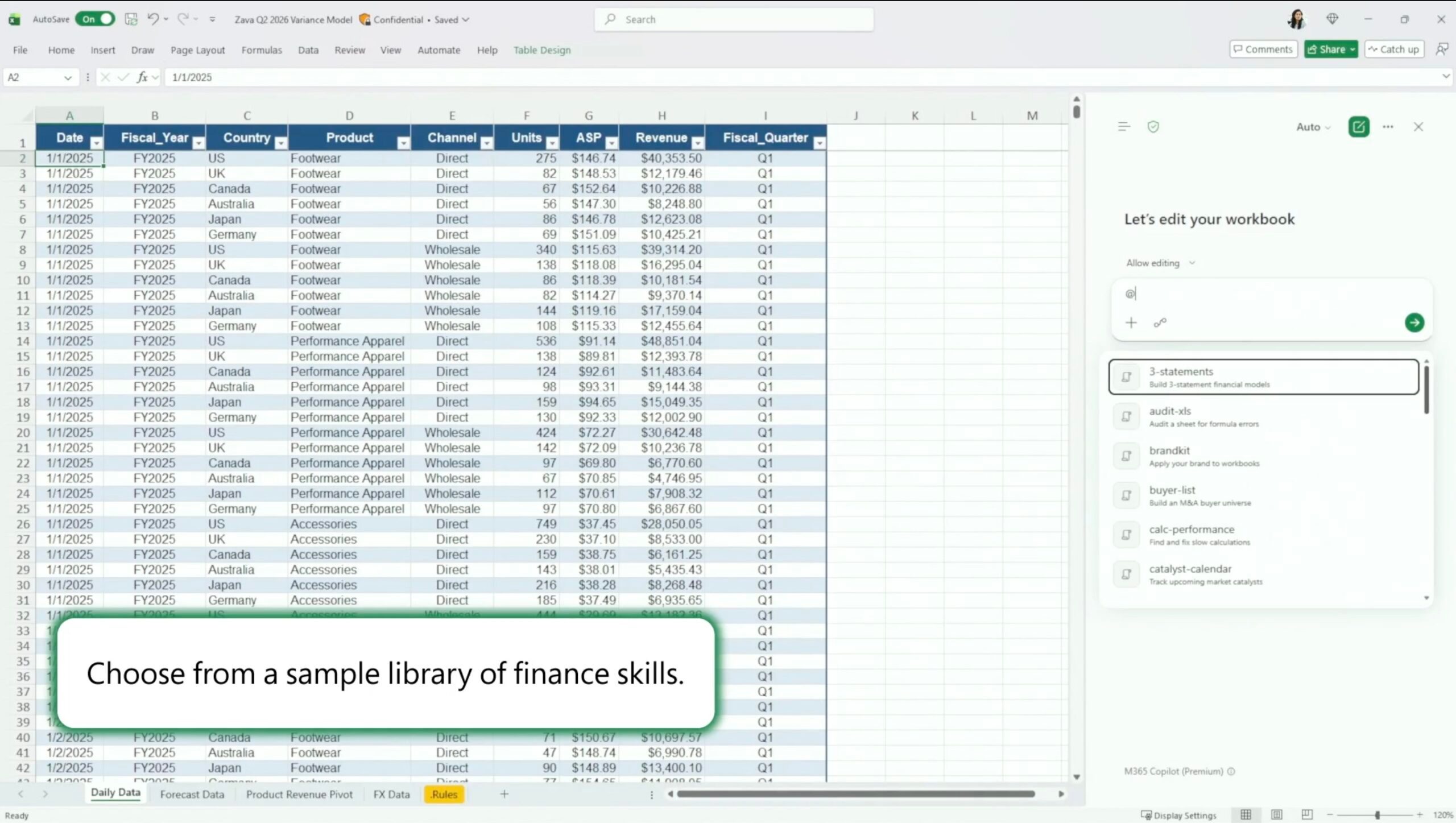
The headline feature of this update is called Skills. Think of it as a way to teach Copilot your specific workflow once, and then reuse it across any workbook. Instead of typing the same detailed prompt every time you need to build a discounted cash flow (DCF) model or compile a monthly report, you simply save a SKILL.md file in OneDrive. From that point on, Copilot follows your instructions, formatting, and structure automatically.

Microsoft also offers prebuilt finance skills for common tasks. For those who need something more tailored, building your own skill is straightforward. Later this year, partners like LSEG, Ramp, Rogo, and Vena will sell their own skills through the Microsoft Marketplace. This ecosystem could turn Copilot into a central hub for specialized financial analysis.

How to Get Started with Custom Skills

To create a custom skill, you write a SKILL.md file that describes the steps, formulas, and outputs you want Copilot to follow. Save it in a designated OneDrive folder, and Copilot will recognize it the next time you open a relevant workbook. This approach eliminates the need to repeat instructions, saving hours each week for finance teams who deal with recurring reports.

Live Data Connectors: Real-Time Numbers Without Copy-Paste

Another major enhancement is the ability to pull live data directly into Excel through new connectors. Microsoft Copilot in Excel now integrates with CB Insights, Daloopa, FactSet, Morningstar, PitchBook, and S&P Global. These join the existing LSEG and Moody’s connectors that were introduced in May. The result is less time spent copying and pasting data from external reports and more time analyzing current numbers.

It is worth noting that some of these connectors require a separate subscription. However, for finance teams that rely on these data sources daily, the convenience and accuracy of live data can justify the cost. This feature ensures that your models are always based on the most recent information, reducing the risk of stale data skewing your analysis.

Full Transparency: Tracking Every Edit Copilot Makes

Trust has always been a challenge when using AI in finance. Microsoft addresses this with a new Plan with Copilot mode. Before Copilot makes any changes, it lays out exactly which ranges, formulas, and assumptions it will touch. You can review and approve these changes before they are applied. After the edits are made, the Show Changes pane clearly distinguishes between changes made by Copilot and those made by human teammates.

This level of transparency builds on Excel’s existing Agent Mode and comes shortly after Microsoft’s acquisition of the finance AI startup Fintool. Together, these moves signal that Microsoft is serious about making AI trustworthy for financial work. For auditors and compliance teams, this traceability is a game-changer.

Availability and Rollout

These updates are live now for Microsoft 365 Copilot customers using Excel on the web, Windows, and Mac. Custom Skills are rolling out to all users over the next month. If you are a finance professional who spends hours in Excel, now is the time to explore these new capabilities. For more on how AI is transforming office productivity, check out our guide on best AI tools for productivity.

In addition, you might want to learn about Microsoft Copilot vs ChatGPT for a broader comparison of AI assistants. And if you are new to Excel automation, our Excel formulas cheat sheet can help you get started.

Overall, this update makes Microsoft Copilot in Excel a more powerful and reliable assistant for finance teams. By automating repetitive tasks, integrating live data, and providing full edit transparency, Microsoft is addressing the core needs of financial professionals. The future of spreadsheet work looks faster, smarter, and more trustworthy.

Continue Reading

Trending