Connect with us

CyberSecurity

Russian APT28 Hackers Hijack Routers in Global Credential Theft Campaign

Published

on

Russian APT28 Hackers Hijack Routers in Global Credential Theft Campaign

A sophisticated Russian cyber-espionage group is conducting a widespread campaign by hijacking internet routers to steal sensitive credentials from targeted organizations. This APT28 router hijack operation, detailed in a new advisory from the UK’s National Cyber Security Centre (NCSC), reveals a methodical approach to digital surveillance and data theft. Consequently, businesses and individuals using common networking equipment are at significant risk.

The Mechanics of the Router Hijack Campaign

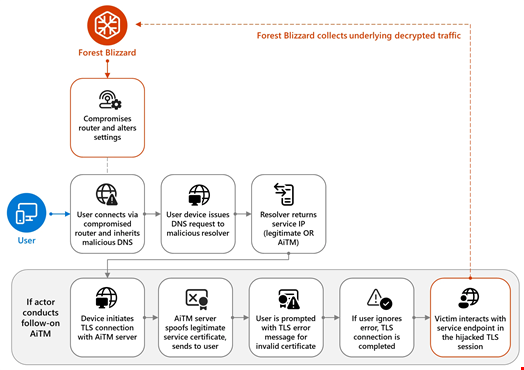
According to the NCSC, the threat actors, identified as APT28, are exploiting vulnerabilities in small office/home office (SOHO) routers. Their goal is to redirect internet traffic through servers they control. This process, known as DNS hijacking, allows them to intercept data flowing from connected devices like laptops and smartphones. Therefore, when a user tries to access a website or service, their request is secretly routed to a malicious server where login credentials can be harvested.

Building on this, the NCSC assesses the initial phase of these operations as “opportunistic.” The hackers cast a wide net to gain visibility on a large pool of potential targets. They then filter these candidates at each stage of their attack chain, ultimately focusing on victims deemed to have high intelligence value. This means that while the initial compromise is broad, the final theft is highly selective.

First Wave: Targeting TP-Link Devices

One distinct activity cluster focuses heavily on TP-Link routers. In this campaign, the hackers modify the router’s DHCP DNS settings to include IP addresses they own. A specific model, the TP-Link WR841N, is likely being exploited using a known vulnerability (CVE-2023-50224). This flaw lets an unauthenticated attacker obtain password credentials via crafted web requests.

Once a router is compromised, every device on its network inherits the malicious DNS settings. This allows APT28 to perform adversary-in-the-middle (AitM) attacks on user sessions. The primary objective is to harvest passwords, OAuth tokens, and other credentials for web and email services. Subsequently, the stolen data can be used for malicious logins from other infrastructure not yet identified by authorities.

Second Wave: Compromising MikroTik and More

In a separate but related cluster, the NCSC observed servers receiving DNS requests from likely compromised MikroTik and TP-Link routers. This campaign involves a more complex forwarding chain, where DNS requests are sent from the initial compromised server to further remote servers controlled by the attackers.

Notably, this infrastructure was used for interactive operations against a small number of MikroTik routers, often located in Ukraine. These targets were likely chosen for their specific intelligence value to the Russian group. This indicates a strategic shift from broad scanning to precise, interactive compromise of high-value assets. For more on defending critical infrastructure, see our guide on essential network security practices.

Who is Behind the APT28 Router Hijack?

The UK government attributes the APT28 router hijack campaign “almost certainly” to Unit 26165 of the Russian General Staff Main Intelligence Directorate (GRU). This unit is also widely known by aliases such as Fancy Bear, Forest Blizzard, and Strontium. Their history includes high-profile attacks like the 2015 cyber-attack against the German parliament and an attempted breach of the Organisation for the Prohibition of Chemical Weapons (OPCW) in 2018.

Microsoft Threat Intelligence, in a separate report, corroborates these findings. They note that APT28 and a sub-group tracked as Storm-2754 have been compromising virtual private servers (VPS) to exploit SOHO routers since at least August 2025. This confirms a sustained, long-term investment in this particular attack vector by a state-sponsored actor.

How to Defend Against Router-Based Attacks

In response to this threat, the NCSC has issued critical mitigation advice. Organizations and individuals must take proactive steps to secure their networks. First and foremost, ensure all routers are running the latest supported firmware and that security updates are applied immediately. Outdated software is the primary entry point for these exploits.

Furthermore, adopting a browse-down network architecture can prevent attackers from easily gaining privileged access to vital assets. This means segmenting your network so that a compromise in one area doesn’t grant access to everything. Additionally, deploying robust endpoint protection, including host-based intrusion detection systems (HIDS), is crucial for spotting malicious activity.

On the authentication front, using multifactor authentication (MFA) universally is one of the most effective ways to neutralize stolen credentials. Even if a password is intercepted, MFA provides a critical second layer of defense. Implementing application allowlisting can also prevent unauthorized software from running on your network. For a deeper dive into authentication security, explore our resource on implementing MFA across your organization.

The Bigger Picture of Cyber Espionage

This campaign is not an isolated incident but part of a continuous trend of state-aligned cyber operations targeting critical infrastructure and sensitive data. The use of commodity hardware like consumer routers provides attackers with a low-cost, high-impact method of establishing a foothold. This APT28 router hijack tactic is particularly insidious because it compromises the very foundation of a network’s trust—its DNS resolution.

As a result, the responsibility for security extends beyond large corporations to include small businesses and even home users who may be unwitting participants in these attack chains. Regular security scans, vigilance for unusual network behavior, and a commitment to basic cyber hygiene are no longer optional. The convergence of geopolitical conflict and cyber warfare means that digital defense is now a universal concern.

CyberSecurity

OpenAI restricts Cyber tool access after criticizing Anthropic for limiting Mythos

Published

on

OpenAI restricts Cyber access after criticizing Anthropic for limiting Mythos

In a surprising turn of events, OpenAI has decided to restrict access to its cybersecurity tool Cyber, despite earlier criticism of rival Anthropic for doing the same with its Mythos tool. This move has sparked debate about consistency and transparency in the AI industry.

The controversy behind OpenAI restricts Cyber access

Just weeks after OpenAI CEO Sam Altman dismissed Anthropic’s decision to limit Mythos as “fear-based marketing,” the company announced it would roll out GPT-5.5 Cyber only to “critical cyber defenders.” Altman confirmed this on X (formerly Twitter) on Thursday, revealing a stark policy reversal.

Critics quickly pointed out the irony. When Anthropic restricted Mythos, Altman called the tactic unnecessary and overblown. Now, OpenAI is following the same playbook, raising questions about double standards in the industry.

How the Cyber tool works and who gets access

OpenAI’s Cyber tool is designed for advanced cybersecurity tasks, including penetration testing, vulnerability identification, and malware reverse engineering. The application process requires users to submit credentials and planned use cases to gain access.

According to OpenAI’s website, the tool aims to help companies find security holes and test defenses. However, the company fears misuse by malicious actors, which is why access is limited.

The Trusted Access for Cyber (TAC) program

OpenAI has introduced the TAC program to verify legitimate users. A spokesperson told TechCrunch that the system has scaled to thousands of verified defenders and hundreds of teams responsible for protecting critical software. These users can access GPT-5.5 for cybersecurity tasks with fewer safeguards.

The TAC program is tiered, meaning that “critical defenders with legitimate defensive use cases” can apply for access to dedicated models like GPT-5.4-Cyber and the forthcoming GPT-5.5-Cyber.

Industry reactions and the Anthropic comparison

When Anthropic restricted Mythos, Altman called the approach fear-based. Some critics agreed, saying Anthropic’s rhetoric was overblown. Ironically, an unauthorized group reportedly gained access to Mythos anyway, undermining the security rationale.

Now, OpenAI faces similar skepticism. Critics argue that restricting access doesn’t prevent misuse but instead limits innovation. Others point out that the move could be seen as a marketing tactic, just as Altman accused Anthropic of doing.

Building on this, OpenAI says it’s working with the U.S. government to expand access. The company plans to identify more users with legitimate cybersecurity credentials, potentially making Cyber more widely available in the future.

What this means for the cybersecurity landscape

OpenAI restricts Cyber access at a time when cybersecurity threats are escalating. The decision highlights the tension between making powerful tools available for defense and preventing their misuse by attackers.

As a result, the industry is watching closely. Will OpenAI’s TAC program succeed where Anthropic’s failed? Or will restricted access lead to similar breaches and criticism?

For now, the focus remains on balancing security with accessibility. Companies like IBM Security and CrowdStrike offer similar tools but with different access models, suggesting there’s no one-size-fits-all solution.

Ultimately, the debate over OpenAI restricts Cyber access reflects broader questions about AI governance. As tools become more powerful, the challenge is to ensure they’re used responsibly without stifling innovation.

Continue Reading

CyberSecurity

International Police Action Takes Down DDoS-for-Hire Services and Arrests Four

Published

on

International Police Action Takes Down DDoS-for-Hire Services and Arrests Four

A sweeping international law enforcement effort has dealt a major blow to DDoS-for-hire services, taking down 53 domains and arresting four individuals suspected of running these illegal operations. Known as Operation PowerOff, the coordinated action involved police and cybersecurity agencies from 21 countries, marking one of the largest crackdowns on the cybercrime ecosystem that enables distributed denial-of-service attacks.

These DDoS-for-hire services, often called booter or stresser platforms, allow even unskilled users to launch devastating attacks on websites, servers, and online services. As a result, businesses and individuals worldwide face significant disruption and financial loss. But this latest operation shows that law enforcement is fighting back hard.

How Operation PowerOff Targeted DDoS-for-Hire Infrastructure

Operation PowerOff focused on dismantling the technical backbone of DDoS-for-hire services. Authorities seized servers, databases, and other infrastructure that made these attacks possible. By cutting off the tools that cybercriminals rely on, the operation prevented countless potential victims from being targeted.

Europol, which coordinated the effort, described DDoS-for-hire attacks as “one of the most prolific and easily accessible trends in cybercrime.” The agency noted that these services lower the barrier to entry, enabling people with little technical know-how to follow step-by-step tutorials and execute powerful cyber-attacks. This makes the disruption of such services a critical priority for global security.

In addition to the domain seizures and arrests, the operation removed over 100 URLs advertising DDoS-for-hire services from search engine results. This proactive measure helps reduce the visibility of these illegal offerings to potential customers.

Over Three Million User Accounts Exposed in the Takedown

One of the most striking outcomes of Operation PowerOff was the seizure of databases containing information on more than three million criminal user accounts. These accounts belonged to individuals who had used or paid for DDoS-for-hire services. Law enforcement agencies are now using this data to send warning emails and letters to those users.

Authorities distributed approximately 75,000 warnings to users, aiming to deter them from future involvement in cybercrime. Additional warnings were posted on cryptocurrency and blockchain platforms, which are often used to pay for hiring DDoS attacks. This multi-pronged approach not only disrupts current operations but also sends a clear message to would-be attackers.

Building on this, the FBI emphasized the importance of partnerships in tackling cyber threats. “Partnerships are critical because there is no one government or private sector entity that can address the range of cyber threats we face alone,” the agency stated. This collaborative spirit was evident in the involvement of 21 nations, including the United States, the United Kingdom, Australia, Japan, and many European countries.

Why DDoS-for-Hire Services Pose a Serious Threat

DDoS-for-hire services have become a persistent menace in the cybersecurity landscape. They allow anyone with a few dollars and an internet connection to launch attacks that can cripple online platforms. These attacks overwhelm servers with traffic, making websites and services inaccessible to legitimate users. For businesses, this can mean lost revenue, damaged reputation, and costly recovery efforts.

Moreover, the ease of access to these services has led to a surge in DDoS attacks across various sectors, from e-commerce and gaming to government and healthcare. By targeting the infrastructure behind these services, Operation PowerOff has disrupted a key enabler of cybercrime.

To protect your organization from such threats, consider implementing robust cybersecurity best practices and monitoring tools. Additionally, staying informed about the latest DDoS attack prevention strategies can help mitigate risks.

Ongoing Efforts and Global Cooperation

Operation PowerOff is not a one-time event. Law enforcement agencies continue to monitor and target DDoS-for-hire services, with the operation still ongoing. The full list of participating countries includes Australia, Austria, Belgium, Brazil, Bulgaria, Denmark, Estonia, Finland, Germany, Japan, Latvia, Lithuania, Luxembourg, the Netherlands, Norway, Poland, Portugal, Sweden, Thailand, the United Kingdom, and the United States.

This broad coalition reflects the global nature of the threat. As cybercriminals operate across borders, so too must the response. By sharing intelligence and resources, these nations are making it harder for DDoS-for-hire services to operate with impunity.

In conclusion, the disruption of DDoS-for-hire services through Operation PowerOff represents a significant victory for cybersecurity. However, the fight is far from over. Businesses and individuals must remain vigilant and adopt proactive measures to defend against DDoS attacks. For more insights on staying safe online, explore our guide on how to protect against cyber attacks.

Continue Reading

CyberSecurity

Hackers Actively Exploit Critical cPanel Vulnerability: Millions of Websites at Risk

Published

on

Hackers Actively Exploit Critical cPanel Vulnerability: Millions of Websites at Risk

A severe security flaw in cPanel and WebHost Manager (WHM) is now under active exploitation by malicious hackers. This cPanel bug exploit allows attackers to bypass login screens and seize full control over web servers. Security researchers warn that tens of millions of websites worldwide could be affected, especially those on shared hosting platforms.

Canada’s national cybersecurity agency has issued an urgent advisory, stating that exploitation is “highly probable.” The vulnerability, tracked as CVE-2026-41940, gives hackers remote, unrestricted access to the administration panel of the software. This means they can manipulate databases, emails, and configurations of any domain hosted on the server.

How the cPanel Vulnerability Works

The cPanel bug exploit specifically targets the authentication mechanism of cPanel and WHM. By sending specially crafted requests, an attacker can bypass the login screen entirely. Once inside, they gain the same high-level privileges as a legitimate administrator.

This is particularly dangerous because cPanel and WHM have deep access to server resources. They manage everything from email accounts to DNS settings and database servers. Consequently, a successful hack can lead to data theft, defacement, or even using the server for further attacks.

cPanel’s maker has urged all customers to apply patches immediately. The bug affects all supported versions of the software, meaning no version is safe without the update.

Web Hosting Companies Respond

Major hosting providers have moved quickly to protect their users. Namecheap, one of the largest domain registrars and hosting companies, temporarily blocked access to customer cPanel panels after learning of the flaw. This gave the company time to patch systems before attackers could exploit the vulnerability.

Similarly, HostGator confirmed it patched its infrastructure and described the bug as a “critical authentication-bypass exploit.” Both companies have advised customers to ensure their own servers are updated if they manage them directly.

KnownHost Reports Early Exploitation Attempts

One hosting provider, KnownHost, found evidence that hackers had been probing the vulnerability for weeks before the public disclosure. CEO Daniel Pearson stated on Reddit that attempts to exploit the bug date back to February 23. The company blocked access to affected systems and applied patches.

Pearson noted that around 30 servers showed signs of unauthorized access attempts out of thousands on the network. However, he emphasized that these were attempts, not full compromises. This indicates that while the cPanel bug exploit is dangerous, swift action can prevent damage.

What You Should Do Now

If you use cPanel or WHM to manage your website, immediate action is critical. First, check with your web hosting provider to confirm they have applied the latest security patches. Many commercial hosts have already done this, but it’s worth verifying.

For those who self-host, update cPanel and WHM to the latest version immediately. The patch addresses CVE-2026-41940 and other related security issues. Additionally, consider enabling two-factor authentication (2FA) for an extra layer of security.

It’s also wise to review server logs for any suspicious activity, especially from February 23 onward. Look for unexpected login attempts or changes to administrative accounts. If you find anything unusual, contact your hosting provider or a security professional.

For more on securing your web server, check out our guide on hardening your cPanel server. You might also find useful information about common web hosting vulnerabilities to stay ahead of threats.

The Bigger Picture: Shared Hosting Risks

This incident highlights a persistent risk in shared hosting environments. When a vulnerability like this cPanel bug exploit is discovered, it can affect thousands of websites on the same server. Hackers can potentially move laterally between accounts, compromising multiple domains at once.

Therefore, website owners should consider isolating their sites with virtual private servers (VPS) or dedicated hosting if security is a top priority. For now, patching remains the most effective defense.

Stay vigilant. The cybersecurity landscape changes rapidly, and proactive measures are your best bet against exploitation.

Continue Reading

Trending