Connect with us

How To

Instagram Notes Evolve: How Prompts, Likes, and Tags Boost Your Social Strategy

Published

on

Instagram Notes Evolve: How Prompts, Likes, and Tags Boost Your Social Strategy

Have you noticed those fleeting thoughts appearing above your Instagram inbox? What began as a simple status update has transformed. Instagram Notes features have expanded significantly, turning casual musings into powerful engagement tools. This evolution represents a strategic shift by Instagram toward more intimate, conversation-driven interactions.

Consequently, understanding these new capabilities is crucial for anyone looking to strengthen their community on the platform. Let’s explore what’s changed and how you can use it to your advantage.

What Are Instagram Notes and Why Do They Matter?

Instagram Notes are ephemeral, text-based snippets that sit prominently in your followers’ Direct Message inbox for 24 hours. Unlike a permanent post or even a Story saved to a highlight, they offer a low-pressure way to share a mood, a song, or a quick question. This means they create a sense of immediacy and exclusivity, as only your mutual followers or Close Friends list can see them.

Building on this, the recent updates have injected new life into the feature. The platform has moved Notes beyond passive broadcasting, making them a two-way street for sparking genuine dialogue.

Breaking Down the New Instagram Notes Features

The latest rollout introduces three core interactive elements designed to foster connection. These additions fundamentally change how users can leverage their Notes.

1. Prompt Your Audience with Questions

Gone are the days of one-sided declarations. Now, you can end your Note with a prompt or a direct question. This simple addition invites your followers to slide into your DMs with a reply, effectively kick-starting a conversation. For instance, instead of just sharing “Listening to my favorite album,” you could ask, “What’s a song that instantly improves your mood?”

This approach turns your Note from a statement into an invitation. Every reply contributes to your overall engagement metrics, making it a valuable tool for creators and brands alike. For more on boosting engagement, check out our guide on editing viral Reels.

2. Express Reactions with Likes and Emojis

Previously, if a follower resonated with your Note, their only option was to send a text reply. Now, they can react with a tap, using a range of emojis similar to how you react to Stories or messages. This provides a quicker, lower-friction way for your audience to show appreciation or relate to your sentiment.

As a result, you receive a notification each time someone reacts, giving you clear, quantifiable feedback on what resonates with your community without the need for a full conversation.

3. Direct Conversations with Mentions

Perhaps the most social update is the ability to tag other users directly within your Note. By using the ‘@’ symbol followed by a username, you can send a notification to a specific follower or friend. This is perfect for asking a question directly to someone, sharing an inside joke, or collaboratively starting a discussion thread.

Therefore, this feature transforms Notes from a broadcast tool into a targeted conversation starter, strengthening individual connections within your broader follower base.

How to Access and Use the Updated Notes

Using these new Instagram Notes features is straightforward, but you need the latest version of the app. If you don’t see the option to add a prompt or tag someone, head to your device’s app store and ensure Instagram is fully updated.

To create a Note, simply navigate to your Direct Message inbox and tap on your own profile picture at the top. From there, you can compose text (up to 60 characters), select a song from Instagram’s music library, or—in a separate update—even add a short video. Before posting, you’ll see new icons to add a prompt, a reaction suggestion, or a mention.

Strategic Advantages of the New Notes

Why should you incorporate these updated Notes into your routine? The answer lies in the quality of engagement. While feed posts and Stories are fantastic for broad reach, Notes foster a more personal, inbox-level connection. They feel less curated and more like a direct line to you.

In addition, their 24-hour lifespan creates urgency. Followers know they have a limited window to join the conversation, which can prompt quicker interactions. This makes Notes an excellent tool for daily check-ins, quick polls, or sharing behind-the-scenes thoughts that don’t warrant a full Story.

For brands and creators, this is a low-effort, high-reward tactic to keep your community active. Pairing a strong feed strategy with interactive Notes can create a more holistic and engaging presence. Discover other ways to customize your presence in our article on Lock Screen productivity hacks.

Looking Ahead: The Future of Casual Social Interaction

Instagram’s investment in Notes signals a clear priority: facilitating authentic, lightweight conversations. In a digital landscape often dominated by polished content and performance pressure, Notes offer a return to simpler, text-based sharing.

This means that users who master this feature can build stronger, more conversational relationships with their audience. The combination of prompts, likes, and tags provides multiple entry points for followers to interact, lowering the barrier to engagement.

Ultimately, the expanded Instagram Notes features are more than just an update; they are a new channel for connection. By embracing their interactive potential, you can turn fleeting thoughts into meaningful conversations and deepen your bond with your community, one 60-character note at a time.

Continue Reading

How To

6 Movies You’ve Already Seen That Are Secretly The Count of Monte Cristo

Published

on

Count of Monte Cristo movies

The revenge plot that refuses to die

Even if you’ve never cracked open the 1844 novel or sat through one of its many adaptations, you know the shape of The Count of Monte Cristo. A young man, full of promise, gets betrayed by people he trusts. He’s thrown into a hellhole, left to rot. Then comes the escape, the hidden treasure, the new identity, and the slow, surgical dismantling of everyone who wronged him.

That formula is so sturdy that filmmakers keep borrowing it — often without a single mention of Alexandre Dumas. Sometimes it’s a coincidence. Often it’s not. Directors know the skeleton works, so they just dress it in different clothes.

Here are six movies that are, whether they admit it or not, The Count of Monte Cristo in disguise.

1. The Shawshank Redemption (1994)

The most obvious one, and the most beloved. Andy Dufresne is Edmond Dantès — a brilliant, innocent man railroaded into prison by a rival’s jealousy. He endures years of brutality, befriends a father figure (Red as a less glamorous Abbé Faria), and quietly digs his way out. The payoff isn’t a treasure chest of gold; it’s a lifetime of savings hidden under a fake name.

The parallel isn’t subtle, and Stephen King has acknowledged the influence. But the movie stands so tall on its own that most viewers never stop to think about the 1840s source material. It’s a revenge story about patience, and patience is the rarest weapon in cinema.

2. Oldboy (2003)

Park Chan-wook’s masterpiece takes the Monte Cristo template and drags it through hell. Oh Dae-su is imprisoned for 15 years without explanation — no trial, no crime, just a hotel room that becomes a cell. When he’s released, he has five days to find out who did this to him and why.

The twist at the end is so devastating that it rewrites everything you thought you knew. But strip that away, and you’ve got Dantès’ arc: wrongful imprisonment, a mysterious benefactor, a single-minded quest for vengeance. The corridor fight scene is iconic, but the structure is pure Dumas.

3. V for Vendetta (2005)

V is Edmond Dantès with a Guy Fawkes mask and a flair for the theatrical. He was betrayed by the state, experimented on, and left for dead in a fire. He emerges with a new identity, a hidden base, and a plan to tear down the entire system that destroyed him.

The difference is scale. Dantès wants to punish specific men; V wants to topple a fascist government. But the bones are identical — the wronged prisoner becomes something more than human, and the revenge becomes a public spectacle. It’s a political thriller built on a personal grudge, and that’s exactly what makes it work.

4. The Lion King (1994)

Wait. Stick with me here.

Simba is Dantès, exiled from his kingdom after a betrayal he didn’t deserve. Scar is Fernand Mondego — the jealous rival who engineers the downfall and steals the prize. The difference is that Simba doesn’t plan a meticulous revenge; he just comes home and takes back what’s his.

But the emotional core is the same. The hero loses everything, lives in obscurity, then returns transformed — older, wiser, and ready to confront the past. Add Timon and Pumbaa as the comic-relief version of Faria’s mentorship, and you’ve got a children’s movie that’s secretly a 19th-century revenge novel. Shakespeare did the same thing with Hamlet, so Disney clearly has a type.

5. The Count of Monte Cristo (2002)

Okay, this one isn’t secret. It’s literally the same story. But it deserves a mention because it’s the rare adaptation that actually understands the assignment.

Jim Caviezel plays Dantès with a simmering rage that never quite boils over, and Guy Pearce makes Fernand a genuinely hateable villain. The movie streamlines the novel mercilessly — the Abbé Faria’s role is compressed, the treasure is found in a single scene, and the revenge is more physical than psychological. But it captures the spirit: the transformation from naive sailor to cold, calculating aristocrat.

If you’ve only seen the 2002 version, you’ve seen the skeleton. The book adds layers of patience and cruelty that no two-hour film can contain.

6. John Wick (2014)

This one’s a stretch, but hear me out. John Wick is a man who had everything — love, peace, a quiet retirement — and lost it all to a betrayal. The theft of his car and the killing of his dog aren’t just random acts of violence; they’re the destruction of his last connection to his wife. That’s his trigger.

What follows is a rampage, not a careful plan. But the underlying structure is Monte Cristo: the wronged man who was once feared, now returned to exact a terrible price. The difference is that Dantès uses intelligence and money; Wick uses guns and a bulletproof suit. Both are unstoppable forces, and both are driven by grief dressed as vengeance.

It’s not a perfect parallel, but it shows how far the template can stretch. Action movies about revenge don’t need to be subtle about their influences — they just need to make you feel the weight of the wrong.

Why this story never gets old

Dumas understood something that most writers miss: revenge is only satisfying when the hero earns it. Dantès spends years in prison, years planning, years executing. The payoff isn’t just the punishment of his enemies — it’s the transformation of himself.

That’s why these movies work. Whether it’s Andy Dufresne crawling through a sewer or Simba climbing Pride Rock, the audience has watched the hero suffer, grow, and change. The revenge is the reward for that patience.

So the next time you watch a film about a betrayed man who returns from the dead to settle scores, you’re watching The Count of Monte Cristo. The name might change, but the story never does.

Continue Reading

Social Media

Hold Up, There’s a New Twitter in Town — And It’s Called Twitter.now

Published

on

Twitter.now social network

A Familiar Name, A Different Game

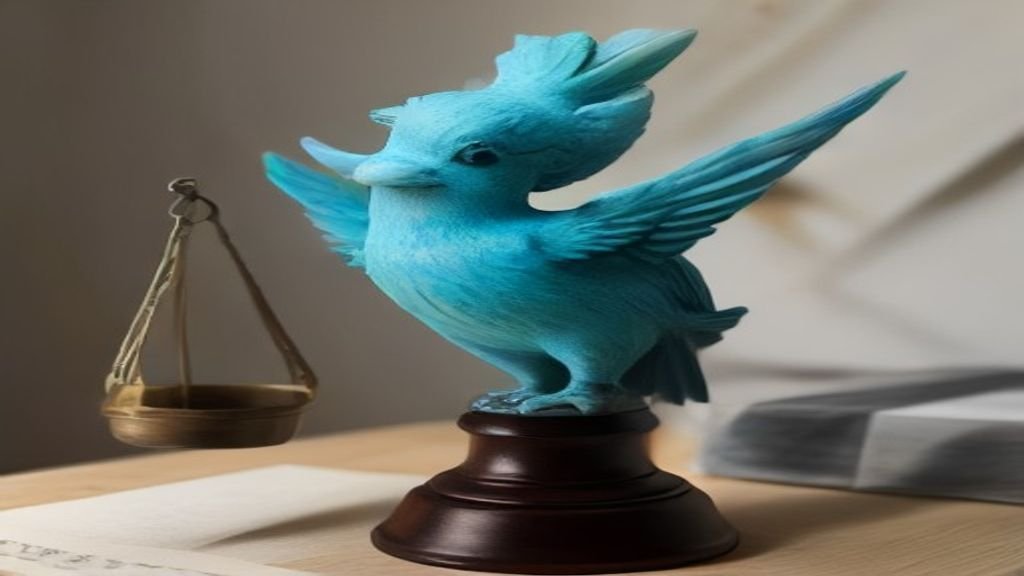
You read that right. There’s a new social network called Twitter.now on the block, and it’s being operated by a startup called Operation Bluebird. The founding team includes Stephen Coates, who once served as Twitter’s trademark counsel. That’s a detail that matters — because this isn’t just another microblogging clone. It’s a direct shot at the legacy of the bird.

According to Ars Technica, X Corp. sued the company last year, asking a Delaware judge to block Operation Bluebird from launching a platform called Twitter. But Operation Bluebird fired back, arguing that X had effectively abandoned trademarks like “Twitter” and “Tweet” when it rebranded to X in 2023. The case is still winding through the courts.

What Is Twitter.now, Exactly?

Coates laid out the vision in a LinkedIn post. “When X Corp. retired the Twitter brand, we saw an opportunity to build something new: a public square organized around trust, transparency, and user choice.” He was careful to distance the project from the old platform. “Twitter.now is not an attempt to recreate the old platform. We are building a different service, with trust signals that provide context for what users see and tools that allow people—not an opaque algorithm—to decide how much credibility and noise reach their feeds.”

Right now, the site is in testing. Early access costs $20. That’s a pay-to-play model, which is a bold move in a world where most social networks are free and ad-supported. But Operation Bluebird is betting that people will pay for something they can trust.

VERA: The AI That Grades Your Posts

The centerpiece of Twitter.now is an AI system called VERA. According to the company’s home page, VERA gauges posts, checks claims, and gives users the source of those claims, plus context. It then attaches a trust score to each piece of content. You’ll be able to set your preferred trust score threshold, and posts that fall below it get filtered out of your feed.

That’s an intriguing idea, but it raises a big question: who decides what’s trustworthy? The company says VERA is transparent about its reasoning, showing users the sources behind a claim. But AI moderation has a spotty track record, and the stakes are high.

VERA 2.0 Is Coming

Operation Bluebird told TechCrunch that VERA is currently in its initial version. “VERA 2.0, with expanded capabilities, is on the near-term roadmap, where the user will be able to set their app to only see posts above the threshold they choose,” the company said in an emailed statement. So the current version is just a taste of what’s planned.

The Moderation Minefield

Here’s the thing about social networks: moderation is a nightmare. As user numbers ramp up, platforms often find themselves forced to choose sides. The original Twitter had to navigate that minefield for years before Elon Musk took over. Bluesky has faced its own criticism lately for moderation missteps. And now Twitter.now is stepping into the same arena, armed with an AI that claims to solve the problem.

Will VERA actually work? That’s the million-dollar question. Trust scores are a noble concept, but they can be gamed. Bad actors could flood the system with fake sources, or the AI could develop blind spots. The company seems aware of this, which is why VERA 2.0 is on the roadmap. But in the fast-moving world of social media, a near-term roadmap can feel like a lifetime.

What’s at Stake in the Trademark Fight

The legal battle with X Corp. is still unresolved. X’s lawsuit sought an injunction to stop Operation Bluebird from using the Twitter name. Operation Bluebird’s defense hinges on the idea that X abandoned the trademark when it rebranded. That’s a clever argument, but it’s not a slam dunk. Trademark law is messy, and X has deep pockets.

If Operation Bluebird loses, the whole project could be dead on arrival. If it wins, we could see a wave of “retro” platforms trying to resurrect old brand names. Either way, this is a case worth watching.

Will Anyone Actually Pay $20?

That’s the other big question. Twitter.now is asking users to pay $20 for early access, and eventually a subscription fee. In a world where free Twitter alternatives like Bluesky and Threads exist, that’s a tough sell. But there’s a niche of users who are desperate for a platform that feels safe and credible. If VERA delivers on its promise, those users might be willing to open their wallets.

Operation Bluebird is positioning itself as the anti-algorithm, pro-user-choice network. It’s a compelling pitch, but the proof will be in the product. And right now, the product is still in testing.

The Bottom Line

Twitter.now is a bold experiment. It’s betting that trust can be quantified, that users want control over their feeds, and that people will pay for a better experience. The team has the legal chops — Coates knows trademark law inside out. But they’re up against a giant in X Corp., and the history of social media is littered with well-intentioned startups that couldn’t scale moderation.

Still, you have to admire the audacity. In a landscape dominated by a few big players, here’s a startup that’s willing to take on the legacy of Twitter, name and all. Whether it succeeds or crashes, it’s going to be interesting to watch.

If you’re curious, you can sign up for early access now. Just be prepared to pay $20 and to be patient while the kinks get worked out. And keep an eye on that Delaware courtroom — the next chapter of this story might be written there.

Continue Reading

How To

Android Phones Used to Be Made of Metal. Here’s Why Glass Took Over.

Published

on

glass replaced metal phones

Cast your mind back to 2012. The Android market was a very different place. Flagship phones were mostly plastic, sure, but then the metal wave hit. HTC led the charge with its iconic One series, and for a few years, aluminum was the material of choice for anyone who wanted a premium feel. Even budget phones like the HTC One V had metal bodies. Then, almost overnight, glass took over. What happened?

The Metal Era: A Quick Love Story

Metal felt like a revelation. It was cool to the touch, rigid, and gave a phone a sense of permanence that cheap polycarbonate just couldn’t match. Apple was doing the same with its iPhones, and the industry followed. The HTC One M7, with its zero-gap aluminum unibody, was a design masterpiece. It felt like a precision instrument.

But metal had a dirty little secret. It was a nightmare for antennas. Radio waves don’t pass through metal easily, which is why you saw those ugly plastic lines on the back of iPhones and HTC phones. It was a compromise, a visible scar on an otherwise beautiful design.

The Wireless Charging Problem

The real killer, though, was wireless charging. Qi wireless charging, which uses magnetic induction, simply doesn’t work through a solid slab of aluminum. The metal blocks the magnetic field. As wireless charging moved from a niche feature to a must-have, phone makers faced a choice: keep the metal and skip the feature, or switch materials.

They chose glass. It’s not because glass is better — it’s because glass is transparent to radio waves and magnetic fields. That one property solved two problems at once. It allowed for wireless charging and gave designers freedom with antennas, since the glass back doesn’t interfere with signal.

5G Made It Worse (for Metal)

Then came 5G. The new networks use a wider range of frequencies, including mmWave, which is even more easily blocked by metal. Designing a 5G phone with a metal unibody would have required so many antenna cutouts that the phone would look like a patchwork quilt. Glass, again, came to the rescue. It’s almost invisible to these signals.

So, the shift to glass wasn’t about aesthetics. It was physics. It was about keeping the phone slim while still delivering the features people demanded.

What We Lost (and Gained)

Let’s be honest: we lost something. Metal phones felt more durable. A drop that would shatter a glass back often just dented aluminum. And glass is a fingerprint magnet. You know the drill — you pull your phone out, and it’s covered in smudges within seconds.

But we gained wireless charging, which is genuinely convenient. And glass also allowed for better phone camera design, since the camera bump could be integrated more cleanly. Plus, glass can be colored and finished in ways metal can’t, giving us those gorgeous gradient finishes that were all the rage a few years ago.

Today, some brands are experimenting with ceramic and even titanium frames, like on the iPhone 15 Pro. But the back? Still glass. The physics haven’t changed.

So, Is Glass Here to Stay?

Probably. Unless someone invents a material that’s transparent to radio waves, scratch-resistant, and shatterproof — which doesn’t exist yet. Until then, we’re stuck with glass, cases, and the occasional heart-stopping moment when your phone slips from your hand.

It’s a trade-off, but it’s one the industry made willingly. The next time you set your phone on a wireless charger, you can thank the engineers who decided that a little fragility was worth the convenience. And if you’re feeling nostalgic for the metal era, you’re not alone. But don’t hold your breath for a comeback — the physics of wireless charging and 5G aren’t going anywhere.

Continue Reading

Trending