Connect with us

Artificial Intelligence

Google’s New $99 Home Speaker Brings 360-Degree Sound and Gemini AI to Every Room

Published

on

Google’s New $99 Home Speaker Brings 360-Degree Sound and Gemini AI to Every Room

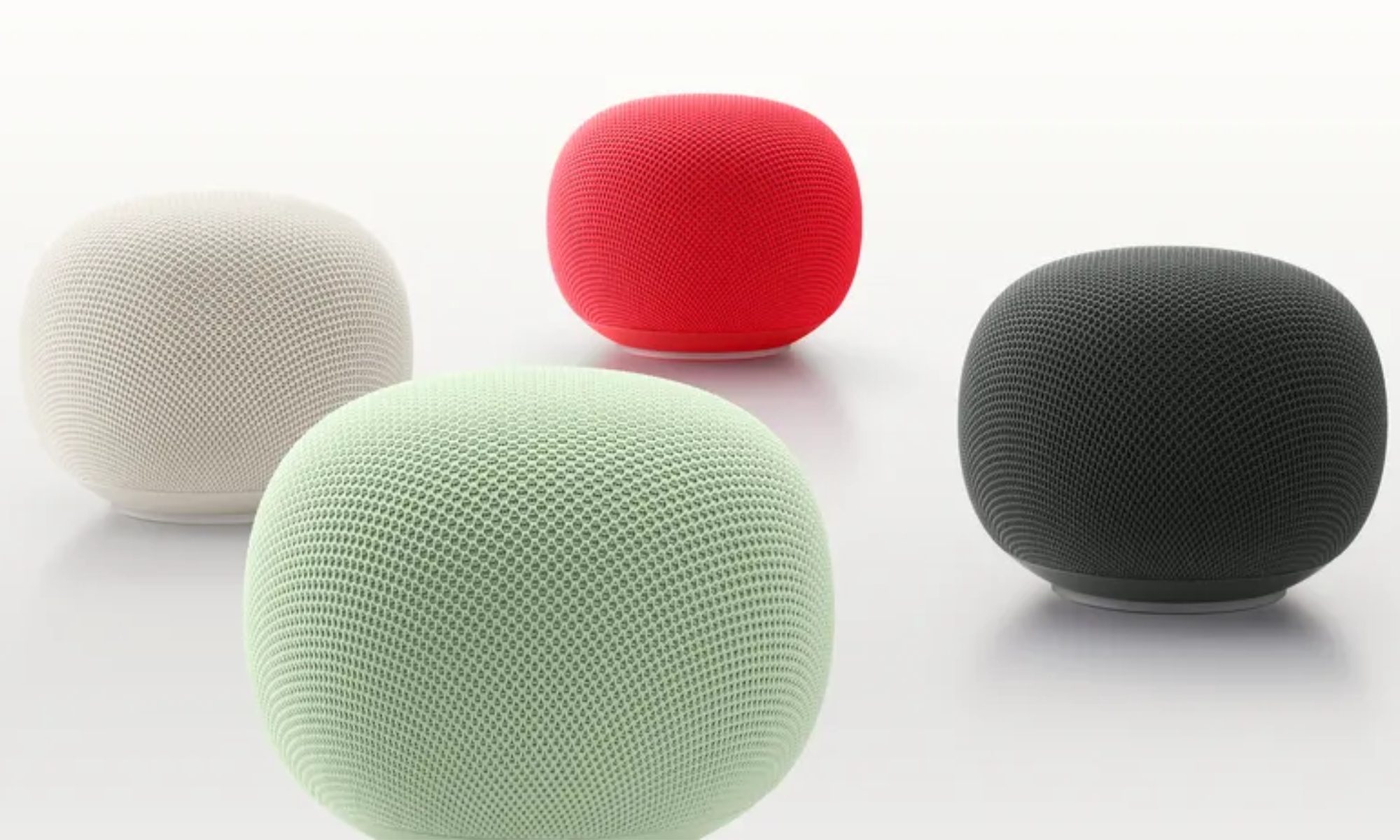
After a six-year hiatus, Google has finally refreshed its smart speaker lineup with the all-new Google Home Speaker. Priced at just $99, this device is available for pre-order starting today and will hit shelves on June 25, 2026. The big story here is the integration of Gemini, Google’s conversational AI assistant, which transforms how you interact with the speaker.

Instead of barking out rigid commands, you can now hold natural, multi-step conversations. Ask about the weather, follow up with a question about traffic, and then request a playlist — all in one fluid exchange. This is a major leap forward for the smart speaker category.

What Does the Google Home Speaker Sound Like?

Under the hood, the Google Home Speaker packs a 58mm full-range driver that delivers 360-degree audio. That driver is twice as large as the one found in the Nest Mini, resulting in significantly richer bass and fuller sound. The speaker fires sound in all directions, filling a room evenly rather than directing audio at a single point.

You can pair two units for a stereo setup or link them with a Google TV Streamer to create a spatial surround sound home theater. A subtle light ring beneath the speaker glows when Gemini is listening, thinking, or responding — a cleaner design than the hidden dots on the Nest Audio.

Smart Home and Privacy Features

This speaker also acts as a Matter controller, meaning it can directly manage compatible smart home devices without needing extra hubs. A physical privacy switch on the bottom lets you disable the microphones instantly, giving you peace of mind when needed.

Available in four colors — Porcelain, Hazel, Jade, and Berry — the speaker offers something for every decor. Notably, Jade and Berry are exclusive to the US market.

Which AI Features Require a Subscription?

Here’s where things get a bit complex. The free version of Gemini on the Google Home Speaker handles basic conversations, smart home control, and general queries. But the standout features that truly differentiate this device from competitors are locked behind a monthly subscription called Google Home Premium.

For $10 per month (Standard) or $20 per month (Premium), you unlock Gemini Live for free-flowing conversations, Camera History Search to ask what your Nest cameras captured, and Home Briefs for a daily summary of activity around your house. Every purchase includes a six-month trial of Home Premium Standard, but after that, it’s a recurring cost to consider.

This subscription model is reminiscent of other AI-powered devices, but it does raise the total cost of ownership. If you’re already invested in the Google ecosystem, the enhanced features may justify the expense.

How Does It Compare to the Nest Audio?

Compared to the Nest Audio, the new Google Home Speaker offers a larger driver, better bass, and the transformative Gemini AI layer. The Nest Audio was a solid speaker, but it lacked the conversational smarts that Gemini brings. For users who want a more intuitive, hands-free experience, the upgrade is significant.

However, the subscription requirement for advanced AI features means the Nest Audio remains a viable option for those who don’t need premium perks. The Google Home Speaker is clearly aimed at users who want the latest AI capabilities and are willing to pay for them.

Is the Google Home Speaker Worth It?

At $99, the Google Home Speaker is competitively priced for what it offers: 360-degree audio, Matter smart home control, and Gemini AI. The six-month free trial gives you time to evaluate the premium features, but the ongoing subscription cost is a factor to weigh.

If you value natural conversations with your smart speaker and want a device that doubles as a smart home hub, this is a compelling choice. For budget-conscious buyers or those satisfied with basic voice commands, the Nest Audio still holds its own. Either way, Google has re-entered the smart speaker market with a strong contender.

For more insights on smart home tech, check out our guide on best smart speakers of 2026 and tips for optimizing your Google smart home.

Continue Reading
Click to comment

Leave a Reply

Your email address will not be published. Required fields are marked *

Artificial Intelligence

Stop Making Boring Slides: Google Vids Now Offers Free AI Avatars for Everyone

Published

on

Stop Making Boring Slides: Google Vids Now Offers Free AI Avatars for Everyone

Presentations are about to get a serious upgrade. Google Vids AI avatars are now available for free to anyone with a personal Google account in the US. This means you can turn dull slides into engaging video presentations without ever stepping in front of a camera.

Starting today, free users get ten monthly video generations. These can be split between avatar creations and clips powered by Veo, Google’s advanced video generation model. The rollout will expand to more regions later this summer, so global access is on the horizon.

What Can You Do with Google Vids AI Avatars?

The new feature lets you choose a default avatar from Google’s curated gallery. Alternatively, you can build a custom one using Nano Banana 2, a tool that gives you more control over the avatar’s appearance. Scripts and voiceovers now support 24 languages. This means the same avatar can pitch your product in English one day and switch to Arabic or Vietnamese the next.

If you have already built decks in Google Slides, Vids will convert that presentation into a storyboard. It then writes a script for an avatar to deliver on screen. This eliminates the need to repeat the same pitch across different time zones.

Paid Tiers Offer More Options

Don’t want a face on screen? Paid users on AI Pro, Ultra, and Business or Enterprise tiers can swap in an AI voiceover instead. This feature now supports eight languages, including Japanese, Korean, Spanish, and French. Paid Veo users also get extended limits with Veo 3.1 in Vids, breaking past the old eight-second clip limit. This allows for longer stories without scenes losing consistency halfway through.

Upcoming Features: Emotion Steering and More

Later this summer, an Emotion Steering feature will roll out to both free and paid users. This tool lets you adjust how an avatar or AI voiceover delivers a message. The tone will better match your intent, whether you want a serious pitch or a lighthearted introduction.

Emotion Steering builds on the existing Direct Avatars feature. Direct Avatars already lets you place an avatar into a scene and have it walk, talk, and interact with objects just by typing a prompt. This combination of tools makes video creation more intuitive than ever.

Why Google Vids AI Avatars Are a Game Changer for Presentations

With free avatars, multilingual voiceovers, emotion controls, and longer AI-generated videos, Google Vids lets you create professional content without the time and cost of traditional video production. This is particularly valuable for small businesses, educators, and freelancers who need high-quality video content on a budget.

For more tips on improving your presentations, check out our guide on creating engaging slides. You can also learn about other AI tools that can boost your productivity.

Continue Reading

Artificial Intelligence

TikTok feeds show 3 times more AI slop than YouTube, study reveals

Published

on

TikTok feeds show 3 times more AI slop than YouTube, study reveals

If your TikTok feed feels like a parade of surreal, obviously fake videos, you are not imagining things. A recent investigation by Kapwing reveals that 59% of videos shown to a brand-new TikTok account are AI slop—algorithmically generated content that often lacks real-world grounding. That figure is roughly three times higher than what Kapwing found when it ran the same test on YouTube.

This means that for every ten videos you scroll past on TikTok, nearly six are produced by artificial intelligence rather than human creators. The finding raises serious questions about platform quality, content authenticity, and the future of organic discovery.

How bad is TikTok’s AI slop problem compared to YouTube?

Kapwing created fresh accounts on both platforms and manually reviewed the first 500 videos served to each one. On TikTok, 294 of those 500 videos were AI-generated. On YouTube, only 104 of the first 500 Shorts qualified as AI slop, putting that platform’s rate at 21%.

Building on this, the scale becomes staggering when you consider that TikTok had already labeled 1.3 billion videos as AI-generated by November. Kapwing also manually inspected over 10,000 TikTok videos across 20 content categories to understand where AI slop tends to cluster most heavily.

As a result, the study provides one of the most detailed maps yet of how algorithmically generated media infiltrates social feeds. It suggests that TikTok’s recommendation engine actively amplifies low-effort, AI-produced content—perhaps because such videos are cheap to produce and easy to scale.

Which TikTok categories are flooded with AI slop

Children’s content topped every category, with 57% of the 2,000 videos sampled turning out to be AI-generated. The worst single tag was #cartoonkids, where 97 out of 100 featured videos were artificial. This is especially concerning given that young audiences may not recognize the difference between real and generated imagery.

Science and Education, Health, and History followed close behind, each landing between 33% and 35% AI slop. These are categories where animation and voiceover narration tend to replace real demonstration, making it easier for AI tools to produce passable but misleading content.

On the other end, Fashion, Music, and Fitness were nearly untouched, each sitting below 2%. That is likely because those formats rely heavily on real, on-camera presence—a human face, a live performance, or a physical demonstration that AI still struggles to fake convincingly.

Why does AI slop concentrate in certain niches?

The pattern suggests that AI-generated videos thrive where visual authenticity is less critical. In educational or historical content, viewers often prioritize information over production realism. Meanwhile, fashion and fitness audiences expect to see real bodies and real products, creating a natural barrier against AI fakery.

Therefore, if you want to avoid AI slop, you might shift your scrolling toward categories that demand human presence. Alternatively, you can use TikTok’s built-in tools to dial back AI content in your feed—though the default settings still lean heavily toward algorithmically generated material.

What can viewers do about the flood of AI content?

Even though TikTok has rolled out features for users to reduce AI content recommendations, this study suggests that what shows up by default remains saturated with AI slop. For now, the burden of filtering slop from substance largely falls on the viewer.

However, there are practical steps you can take. First, actively follow human creators whose work you trust. Second, use the “Not interested” feedback option on suspicious videos. Third, check account bios and video descriptions for AI disclosure labels. If a channel posts dozens of videos daily with no visible human effort, it is almost certainly an AI mill.

For a deeper look at how algorithms shape your feed, read our guide on how to clean your social media algorithm. You might also find our analysis of AI content detection tools compared helpful for spotting fake videos faster.

In the end, the Kapwing study serves as a wake-up call. AI-generated videos are not a fringe phenomenon—they are becoming the default on some platforms. Staying informed and intentional about what you watch is the only reliable defense.

Continue Reading

Artificial Intelligence

Android 17 Is Here: Everything New in Google’s Latest OS for Pixel Phones

Published

on

Android 17 Is Here: Everything New in Google’s Latest OS for Pixel Phones

After months of speculation and two major keynote events in May 2026, Google has officially released Android 17 for its Pixel lineup. The stable build is now rolling out to devices ranging from the Pixel 6 series to the latest Pixel 10 series. If you are a Pixel owner, the update is ready for download today.

This release packs a host of features that were first teased at The Android Show and Google I/O. However, those hoping to get their hands on the new Gemini Intelligence will have to wait a bit longer—Google says it will arrive later this summer on select advanced devices. For now, let’s dive into what Android 17 offers at launch.

Core Android 17 Features: Bubbles and Screen Reactions

The most immediately useful addition to Android 17 is a feature called Bubbles. This tool lets you access your favorite apps in a floating window that hovers over other content. When minimized, it appears as a small circular icon on the screen. To use it, simply long-press an app icon and select the Bubble option. It is ideal for quick two- or three-app workflows, allowing you to switch between them with a single tap. On foldables and tablets, Bubbles dock into a dedicated bar at the bottom of the display.

Another standout feature is Screen Reactions. This tool records your phone’s screen and your face simultaneously using the front-facing camera. It is designed primarily for content creators who want to make reaction videos without needing a separate editing app. This is a smart addition for social media enthusiasts and influencers.

Gaming, Security, and Performance Upgrades

Android 17 also brings improvements for gamers. Foldable devices now support a 50/50 layout where the game appears on the top half of the screen and a dynamic gamepad sits below. Google has also optimized memory management to reduce frame drops and stutters during demanding gaming sessions.

Security receives a meaningful upgrade with several new controls. Temporary location permissions allow you to grant location access for a limited time. Contact-level sharing lets you share specific contacts instead of your entire address book. The Mark as Lost feature in the Find Hub now locks your phone via biometrics, preventing anyone from unlocking or resetting it with a passcode.

Google has also introduced PIN guessing caps, with longer wait times between failed attempts. Rounding out the update are hidden app names on the home screen, a dedicated volume slider for your AI assistant (Gemini on Pixel phones), expanded Parental Controls across all Android devices, and app memory limits that preserve system resources.

When Will Other Brands Get Android 17?

Pixel phones are the first to receive the Android 17 update. However, other manufacturers are expected to announce their own versions in the coming weeks. For example, Samsung is rumored to launch One UI 9 at the second Galaxy Unpacked event of the year, reportedly scheduled for July 22, 2026. Brands like OnePlus will likely follow soon after.

If you own a Pixel device, you can check for the update by going to Settings > System > System update. For more tips on managing your device, see our guide on optimizing Pixel battery life. Additionally, you might want to explore the best camera settings for Pixel phones in 2026 to make the most of your device.

In conclusion, Android 17 delivers a solid mix of productivity tools, security enhancements, and gaming optimizations. While the Gemini Intelligence feature is still on the horizon, the current build offers plenty of reasons to update your Pixel phone today.

Continue Reading

Trending