The 600-Mile Promise That Changes Everything
Range anxiety. It’s the single biggest reason millions of drivers still refuse to go electric. You’ve heard the complaints: charging takes too long, stations are too sparse, and winter range drops like a stone. Hyundai thinks it has the answer, and it’s not a bigger battery.
The Korean automaker is working on an extended-range electric vehicle (EREV) that targets a staggering 600 miles of driving range. That’s roughly double what most mainstream EVs offer today. For context, a Tesla Model 3 Long Range manages about 341 miles. The Hyundai Ioniq 6? Around 361. This new platform would blow both out of the water.
And here’s the kicker: it doesn’t rely on a massive, expensive battery pack to get there.
What Exactly Is an EREV?
An EREV sits in a clever middle ground between a pure battery-electric vehicle and a plug-in hybrid. The wheels are always driven by an electric motor. The gasoline engine, when present, never directly powers the wheels. Instead, it acts as a generator, spinning to recharge the battery while you drive.
Think of it as a mobile power plant on wheels. You get the instant torque and silent operation of an EV, but with a gas tank as a safety net. When the battery depletes, the engine kicks in to keep you moving. No charging stops, no anxiety, just miles.
This isn’t a new concept. The original Chevrolet Volt used this architecture over a decade ago. But Hyundai is taking the idea to an entirely new scale, aiming for a combined range that makes even the longest road trips feel trivial.
How It Differs From a Traditional Hybrid
It’s easy to confuse an EREV with a standard hybrid like the Toyota Prius. The key difference is the battery capacity. A conventional hybrid has a tiny battery and can only travel a mile or two on electric power alone. An EREV like Hyundai’s will offer a substantial all-electric range—likely 90 to 100 miles—before the generator even needs to wake up.
For daily commuting, you’d rarely burn a drop of gasoline. The engine only fires up on longer journeys, acting as a range extender rather than a primary power source.
Why 600 Miles Matters More Than You Think
Charging infrastructure is improving, sure. But it’s still far from perfect. Even with fast chargers popping up everywhere, a cross-country trip in a pure EV requires planning. You need to map out charging stops, hope stations are functional, and budget extra time for the process. A 600-mile range changes that calculus entirely.
Consider this: the average American drives about 40 miles per day. A 600-mile range means you could theoretically drive for two weeks without charging or refueling. For road trips, you could drive from New York to Chicago, from Los Angeles to Denver, or from Miami to Atlanta—all on a single tank and charge.
This isn’t just about convenience. It’s about removing the psychological barrier that keeps people in gasoline cars. When you know you can drive 600 miles without stopping, the fear of being stranded evaporates.
Hyundai’s EREV Strategy: What We Know So Far
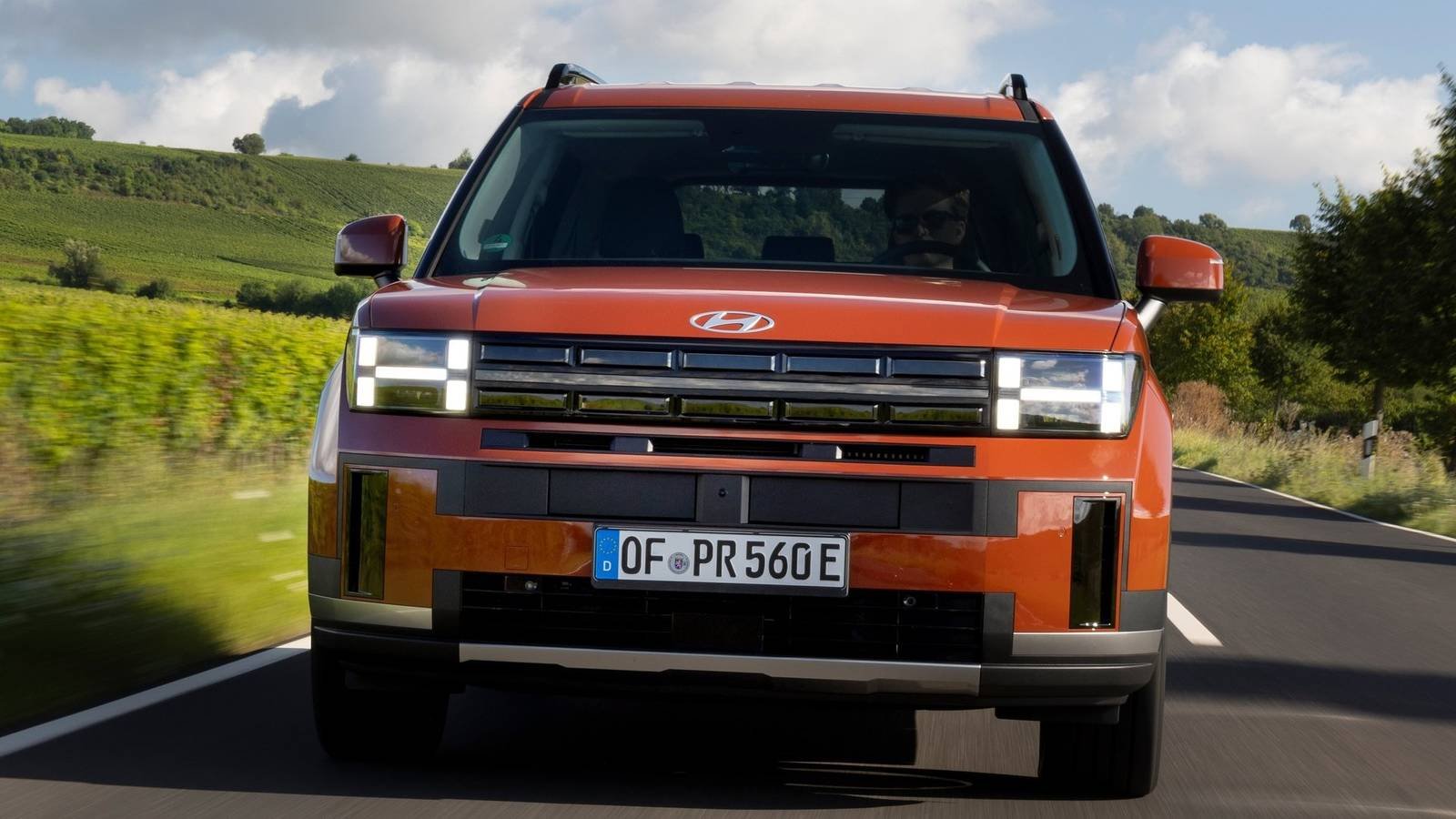
Hyundai has been tight-lipped on specifics, but the company confirmed that the EREV platform is under active development. The technology is expected to debut in the next few years, likely first appearing in larger vehicles like SUVs where range is a premium concern.
The company’s approach is pragmatic. Instead of chasing ever-larger battery packs—which add weight, cost, and environmental impact—Hyundai is betting on a more efficient total system. The EREV architecture allows for a smaller battery, reducing the vehicle’s carbon footprint during production while still delivering exceptional range.
It’s a smart play for a market that’s growing increasingly skeptical of EV practicality. While some automakers are doubling down on pure electric, Hyundai is offering a bridge—a vehicle that satisfies both the desire for electric driving and the need for gasoline-like range.
Potential Challenges Ahead
No technology is without its drawbacks. An EREV is more mechanically complex than a pure EV, with both an electric motor and a gasoline engine to maintain. There’s also the question of emissions. While the generator runs efficiently, it still burns fuel, producing tailpipe emissions that pure EVs avoid entirely.
And then there’s the market perception problem. Some environmental advocates view EREVs as a compromise—a half-step that doesn’t fully commit to electrification. Hyundai will need to convince buyers that this isn’t a step backward, but rather a smarter way forward.
What This Means for the EV Market
If Hyundai delivers on its 600-mile promise, the ripple effects will be significant. Rivals like Toyota and Honda, who have been cautious about full electrification, would suddenly look prescient. Pure EV makers like Tesla might face new pressure to improve their range numbers or drop prices.
More importantly, it could finally win over the skeptics—the millions of drivers who say they’d consider an EV “once the range is good enough.” At 600 miles, the range is more than good enough. It’s better than most gasoline cars on the road today.
The question now is execution. Can Hyundai build this at scale? Can it keep the price competitive? And will the driving experience feel as refined as a pure EV? If the answers are yes, this could be the vehicle that finally convinces the mainstream to make the switch.
For more on how Hyundai is reshaping its electric lineup, check out our breakdown of Hyundai’s electric vehicle lineup for 2026. And if you’re weighing the pros and cons of different powertrains, our guide to EREV vs PHEV vs BEV explains the differences in plain English.







 CyberSecurity7 months ago
 How To6 months ago
 How To6 months ago
 How To4 months ago
 How To5 months ago
 How To7 months ago

 How To6 months ago