Connect with us

Artificial Intelligence

AI and vibe coding are flooding app stores with games. Quality is another story.

Published

on

AI vibe coding

181,000 new mobile games in six months — and counting

If your app store feels more crowded than ever, you’re not imagining it. Research firm ATTN Economy tracked a staggering 181,000 mobile game launches in the six months leading up to May 2026. That’s a 118% jump on iOS and a 73% surge on Android compared to the same stretch last year.

The culprit? AI vibe coding. This growing trend lets people with zero programming experience use generative AI tools to build and ship games without writing a single line of code. The barrier to entry has cratered. But the rewards? They’re still flowing to the usual giants.

Vibe coding: easier to build, harder to win

Vibe coding sounds like a democratizing force — and in some ways it is. But the productivity gains are surprisingly small. A former executive at French mobile gaming studio Voodoo told the Financial Times that AI shaved development time from roughly 14 days to 10 days. Useful? Sure. Transformative? Not quite.

The real story is in the numbers. In 2025, the top 1% of game publishers controlled $75.6 billion in revenue. The remaining 99% split just $6.1 billion between them. That elite tier also accounted for nearly 80% of all worldwide downloads. Vibe coding may have opened the door, but the incumbents have money, talent, and decades of player data. Newcomers are walking through that door into a room where the furniture is bolted down.

The indie developer dream is still a mirage

You’d think easier development would lift indie creators. It hasn’t. The same structural forces that made mobile gaming a winner-take-most market are still in play. Big companies dominate discovery, advertising budgets, and cross-promotion networks. A solo developer with an AI-generated game might publish in hours, but getting anyone to download it is a different fight entirely.

This isn’t a level playing field. It’s a field where the goalposts keep moving.

What the data says about who wins

  • Top 1% of publishers: $75.6 billion revenue in 2025
  • Bottom 99%: $6.1 billion combined
  • Top tier: nearly 80% of all global downloads

Trust in generative AI is collapsing inside the industry

While the number of games explodes, the people who make them are losing faith. A GDC Festival of Gaming report found that one in four gaming employees has been laid off in the past two years. Sentiment has shifted hard: 52% of gaming professionals now view generative AI as harmful to the industry, up from just 18% in 2024.

That’s a stunning reversal. Two years ago, AI was seen as a helpful tool. Now a majority of insiders think it’s doing damage. The flood of new titles hasn’t created more jobs — it’s coincided with massive layoffs. Speed and volume are up. Stability and trust are down.

More games, but are they any good?

Quantity has never equaled quality. The app stores are filling up with titles that feel generic, derivative, or just plain broken. AI can generate assets, write dialogue, and even design simple mechanics. What it can’t do is replicate the human instinct that makes a game feel special — the weird idea, the unexpected twist, the emotional beat that lands.

For players, this means more choices but not necessarily better ones. You’ll scroll through dozens of lookalike games before finding something that sticks. The signal-to-noise ratio is getting worse.

Vibe coding is a real phenomenon. It’s producing real games. But the industry’s real problems — concentration of wealth, layoffs, declining trust, and creative stagnation — aren’t solved by lowering the barrier to entry. They might even be amplified.

Continue Reading
Click to comment

Leave a Reply

Your email address will not be published. Required fields are marked *

Artificial Intelligence

Your mom gets a call that you’ve been kidnapped. The voice sounds exactly like yours. That’s the new AI scam Savi is fighting.

Published

on

AI scam protection

The call that launched a startup

Two years ago, Patrick Coughlin’s mother received a terrifying phone call. The caller ID showed her daughter’s number. A woman’s voice — unmistakably her daughter’s — screamed, “Mom, they’ve got me.” Then a man demanded $1,200, threatening to kill the daughter in a Walmart parking lot.

Coughlin’s mom kept her composure. She hung up, called her daughter, and confirmed she was safe. The entire kidnapping was an AI-generated hoax. The scammer had cloned the daughter’s voice from a few seconds of audio, spoofed her number, and even referenced the specific Walmart she shopped at — information scraped from social media.

Patrick Coughlin, then a senior vice president at Cisco, was shaken. “What has fundamentally changed in the cybercriminal economy that we can now deploy the same sophistication aimed at governments and Fortune 500 companies against ordinary consumers?” he recalls thinking.

The answer, he realized, was cheap, powerful AI. And it led him and his brother Ryan to launch Savi Security, a startup that aims to do for personal safety what antivirus software did for computers: give regular people a real-time defense against AI-powered scams.

How AI changed the fraud game — and why Savi matters now

Before generative AI, running a voice-cloning scam on a random family wasn’t worth the effort. It required deep research, expensive equipment, and technical skill. Criminals reserved those tools for high-value targets: executives, government officials, wealthy individuals.

That calculus has flipped. “You can clone a voice off three seconds of audio from a public social media post,” Coughlin says. A parent filming a kid’s soccer game and uploading it to Facebook has just handed scammers the raw material for a convincing kidnap call.

The Federal Trade Commission reported that Americans lost $3.5 billion to imposter scams in 2025 — triple the 2020 figure. And it’s not just older generations getting fleeced. Research from Malwarebytes shows Gen Z is actually targeted more often with text scams than any other demographic, and falls for them about 25% of the time.

“AI has made fraud accessible,” Coughlin says. “We’re creating fraudsters because we’re lowering the barrier to deceiving people.”

What Savi’s app actually does

Savi launched its iOS and Android app on Tuesday, backed by $7 million in seed funding led by Acrew Capital, with participation from Magnify Ventures, TTCER, and Resolute Ventures. The app screens texts, emails, voicemails, and incoming calls for signs of a scam.

That feature set overlaps with existing tools from companies like Malwarebytes. But Savi’s standout feature is live-call monitoring. During a suspicious phone conversation, a user can tap to add Savi’s AI as a silent listener. The software analyzes the call in real time, listening for behavioral patterns and linguistic tells that indicate fraud — without the user having to hang up and check a report.

The company tested its detection model by launching a free, anonymous website called Scam Wise. Users upload suspicious texts, emails, or images. No registration required. In four months, Scam Wise received 50,000 submissions, and is now growing by about 10,000 submissions per week. That data feeds directly into Savi’s AI training pipeline.

Under the hood, Savi primarily uses Google’s Gemini model, but the system is built on an AI gateway that lets it switch to voice-specific or other models as needed.

Pricing that covers the whole family

Savi’s pricing model is unusual. It costs $8 per month, or $63 per year, and covers an unlimited number of family members. One plan protects a person’s kids, spouse, parents, and that tech-averse uncle. The primary account holder can add anyone and manage their security settings centrally.

The logic is simple: scammers target the most vulnerable person in a family, not just the most tech-savvy one. A single compromised relative can cause havoc — financial loss, emotional trauma, or worse.

Real-time defense against a new generation of fraud

Coughlin sees Savi as a modern equivalent of the antivirus software that became essential in the 1990s. The threat landscape has shifted from malicious code to malicious AI-generated content. The defense needs to be equally adaptive and real-time.

“The same AI tools that let scammers clone voices and fabricate emergencies can be used to detect them,” he says. Savi’s AI looks for inconsistencies in language, emotional manipulation patterns, and the kind of pressure tactics that legitimate callers rarely use.

The startup’s timing is fortuitous. As AI voice cloning tools become more accessible — some require just a few seconds of audio and cost pennies per use — the number of plausible-sounding scam calls is exploding. The FTC data suggests the problem is accelerating, not plateauing.

The bottom line

Savi isn’t the only company working on AI scam detection, but its focus on live-call intervention and family-wide coverage sets it apart. The founders’ background helps: Patrick spent years in national cyber defense and later built cloud security products at Splunk and Cisco; Ryan worked on consumer products at Apple and Spotify.

Their mother’s close call was a wake-up call — not just for their family, but for an industry that has largely left consumers to fend for themselves against AI-powered fraud. Savi’s bet is that most people would pay $8 a month for a tool that quietly listens for the scam before they fall for it.

Given that the average victim of an imposter scam lost hundreds of dollars in 2025, that arithmetic may be easy to justify.

Continue Reading

Artificial Intelligence

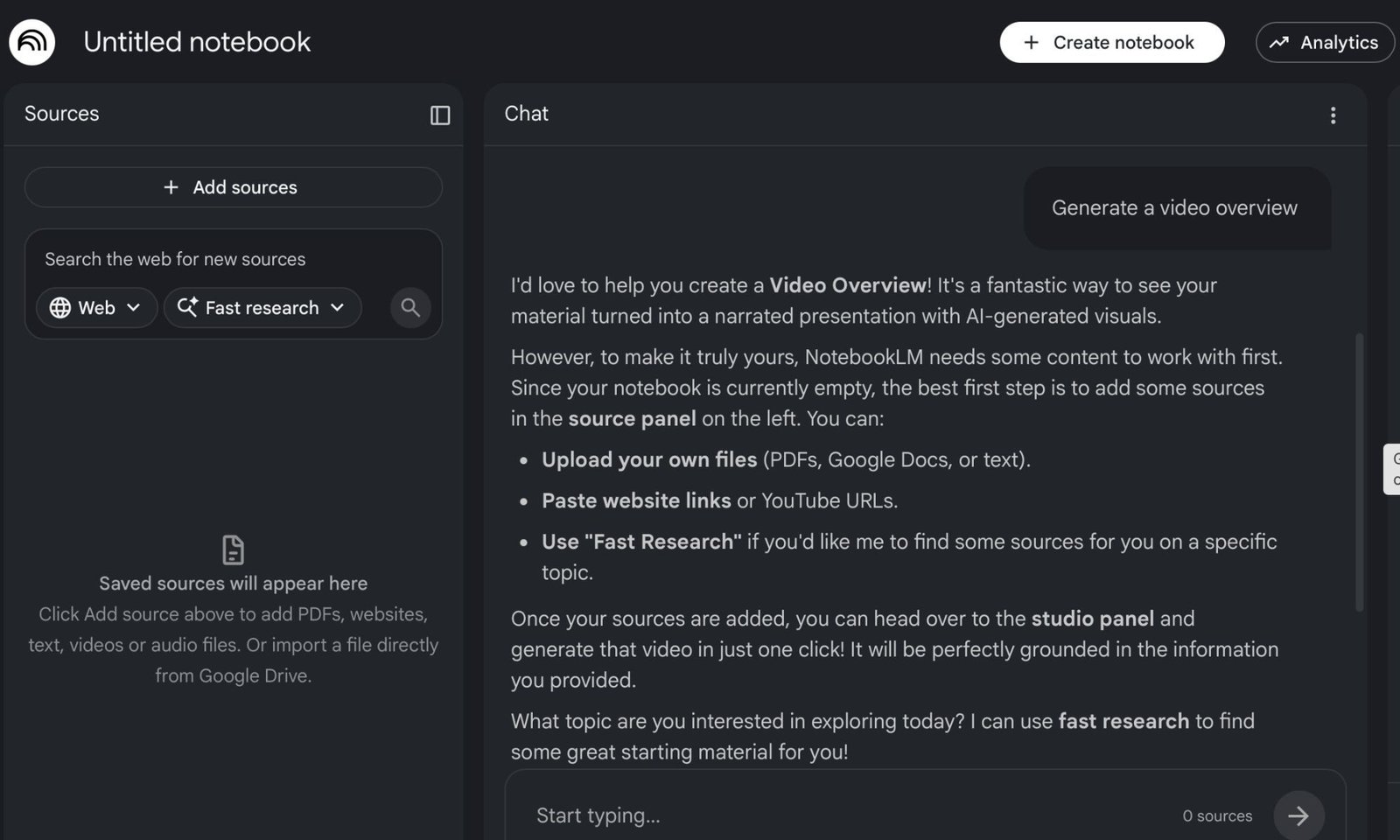
NotebookLM’s 60-second videos turned my doomscrolling curse into something useful

Published

on

NotebookLM short videos

I finally found a short video my brain thanks me for

Short videos have colonized every corner of the internet. You scroll past them on X, lose half an hour on Instagram, binge them on YouTube, and now even Netflix has a bite-sized feed. So when Google announced it was bringing the format to NotebookLM, my reaction was equal parts surprise and inevitability.

Here’s the pitch: NotebookLM short videos turn dense documents and complicated sources into 60-second vertical clips that explain key ideas. Instead of staring at a wall of text, you get a quick visual walkthrough of whatever concept you’re wrestling with.

I’ve always found that if something is explained visually, it sticks. Reading the same paragraph three or four times? Not so much. If I’d had NotebookLM back when I was grinding through my university psychology thesis, I’d have happily watched a handful of one-minute videos instead of digging through dozens of pages every time I needed a refresher.

How I tested it — and what my nephew taught me

That thought crystallized when I showed the feature to my nephew. He’s been enjoying school holidays, but next week he walks back into class and straight into a test. Over the last few days, he’s been staring at his pile of notes, growing more anxious about how he’ll finish revising everything.

I asked him: “Why don’t you upload your notes to NotebookLM and see if it can explain them back as short videos?”

You could almost see the stress ease a little. Suddenly, revision felt approachable. It’s obviously too early to say whether it’ll improve his grades — the feature has only just rolled out — but if it helps him understand a topic faster and makes studying feel less overwhelming, that’s already a win.

And this isn’t just for students. Creators making educational or faceless content spend hours turning research papers, PDFs, reports, and long notes into something people will actually watch. If NotebookLM can handle the first draft of that process by creating a concise visual overview, that’s a lot of time saved.

We’ve optimized our brains for 60 seconds — and that’s fine

Here’s the uncomfortable part. The reason I instantly liked this feature is probably the same reason it exists in the first place: my attention span just isn’t what it used to be. When Google says it can turn dense notes into a 60-second video, my first reaction is, “Honestly, I’d use that.”

The irony isn’t lost on me. We’ve trained our brains to expect information in bite-sized pieces, and now we’re building tools that fit how we consume content. It’s a little circular, if you think about it.

But I’d still call this a net positive. If those same 60 seconds that I would’ve spent mindlessly scrolling can instead help me understand a concept, revise a chapter, or finally make sense of something I’ve been putting off — I’ll happily take that trade. It’s like doomscrolling but make it educational.

What you get with Short Video Overviews

Google is rolling out Short Video Overviews to NotebookLM AI Pro and AI Ultra subscribers on both mobile and the web. I got early access, and after spending some time with it, I can already see myself using it far more often than I expected.

There are a couple of limitations for now. The feature currently works only with English-language sources, so if your notes or documents are in another language, you’ll have to wait a little longer. The good news is that Google will likely expand language support over time, just as it has with many of its other AI features.

Will free users get access?

If you’re a free NotebookLM user, don’t worry — you haven’t been left out. Google has confirmed that this feature will be available to free users soon. So even if you can’t try it today, it probably won’t be long before you’re turning your own notes into bite-sized lessons too.

What this means for the way we learn

We’ve officially optimized our brains for 60 seconds. The question is whether that’s a bug or a feature. NotebookLM’s answer is clear: lean into it. Give people the short-form content they’re already wired for, but make it actually useful.

I’ve been guilty of doomscrolling more than I’d like to admit. But if I’m going to keep watching short videos anyway, I’d much rather a few of them actually make me smarter. NotebookLM’s Short Video Overviews don’t solve the attention span crisis — but they do offer a genuinely clever workaround.

Next time you’re staring at a pile of notes or a dense research paper, try throwing it into NotebookLM. You might just find that 60 seconds of vertical video teaches you more than an hour of re-reading ever did.

Continue Reading

Artificial Intelligence

How to shrink the token budget without shrinking the team

Published

on

shrink token budget

Jensen Huang’s warning for engineers who don’t use enough AI

Nvidia CEO Jensen Huang has a blunt metric for judging whether an engineer earns their keep: token consumption. Speaking on the All-In Podcast at the close of GTC 2026, Huang said if a $500,000 engineer’s annual AI token usage falls below half their salary, “I am going to be deeply alarmed.” The company is targeting a $2 billion yearly token bill for its engineering force.

That stark math reflects a shift already underway across corporate America. Money that once went to salaries is flowing to API calls. The four largest hyperscalers have guided roughly $700 billion in combined 2026 capital expenditure — nearly double last year. Meanwhile, outplacement firm Challenger, Gray & Christmas reports AI is the most-cited reason for US job cuts for a record fourth consecutive month.

An internal Meta memo obtained by Reuters described May’s elimination of 8,000 roles as necessary to offset the company’s massive investments, even as revenue grew 33% that quarter. These aren’t survival layoffs. They’re financing decisions.

But there’s a problem: the financing hasn’t delivered returns. Gartner surveyed 350 executives at companies with over $1 billion in revenue, all deploying AI agents or automation. Roughly 80% had cut headcount with no correlation to improved returns. Analyst Helen Poitevin’s verdict was blunt: “Workforce reductions may create budget room, but they do not create return.”

Uber learned the token side of that lesson the hard way. In December, the company gave 5,000 engineers AI coding tools. By April, it had exhausted its entire 2026 AI budget. Chief Operating Officer Andrew Macdonald admitted that despite 70% of committed code being AI-generated, the connection to anything customers notice is missing: “That link is not there yet.”

Put those two failures side by side and the real problem emerges. Companies treated the token bill as fixed and the workforce as flexible. The opposite is true. Payroll cuts happen once and take institutional knowledge with them. A token budget, it turns out, bends in half a dozen places — if anyone bothers to engineer it.

Where the token budget bends

The cheapest fix is also the least glamorous: stop paying to process the same text repeatedly. Prompt caching, now standard across major API providers, cuts the cost of repeated input by up to 90% under Anthropic’s and OpenAI’s published pricing. Static content like system instructions and reference documents gets processed once and reread at a fraction of the rate.

Security firm ProjectDiscovery documented raising its cache hit rate from 7% to 84% by restructuring prompts. That single engineering exercise cut total LLM spend by 59% to 70% while serving 9.8 billion tokens from cache. It recovered more budget than most AI-attributed layoff rounds save.

Route work to the right-sized model

The next lever is routing work to the appropriate model. Providers’ own price lists show flagship models costing five times their smaller siblings per token. Yet plenty of production workloads send routine classification and summarization to the most expensive tier by default. Batch processing adds a further 50% discount for anything that doesn’t need a real-time answer.

Retrieval-augmented generation attacks the problem from another angle by sending the model only the relevant slice of a knowledge base rather than the whole thing. Prompt compression trims the redundant examples that inflate every call. Open-weight models reduce costs further still, handling routine workloads at a fraction of frontier API prices for teams willing to manage the infrastructure.

These measures are simply the AI equivalent of turning off the lights in empty rooms. Uber’s $1,500 monthly cap per engineer — imposed after the April overrun — is early evidence that spending discipline arrives eventually. The companies getting ahead are simply choosing it before the budget forces it.

The other half of the fix is human

Optimizing the token bill only matters if the savings go somewhere productive. The strongest evidence points at people. Poitevin’s research found the organizations that improved ROI were those using AI to amplify their workforce rather than replace it.

Klarna ran the controlled experiment on everyone’s behalf. It replaced roughly 700 customer service roles with an OpenAI-powered assistant — and then watched customer satisfaction fall. Chief Executive Sebastian Siemiatkowski told Bloomberg what few executives admit aloud: “The result was lower quality, and that’s not sustainable.”

The fintech now runs a blended model, with AI absorbing routine volume while rehired humans handle everything requiring judgment. Gartner expects the pattern to spread, predicting that by 2027 half the companies that cut customer service staff for AI will rehire them.

The junior engineer problem

There’s one workforce investment the optimization logic makes urgent rather than optional. Stanford University’s Institute for Human-Centered AI found employment for software developers aged 22 to 25 fell nearly 20% from 2024 levels even as older cohorts grew. That means companies are removing the training ground for the senior engineers they’ll need directing all these systems in five years.

A business that has just engineered 60% off its token bill has the budget room to keep hiring at the bottom rung. Whether it does is a leadership decision, not a financial one.

Huang’s provocation will keep echoing through earnings calls, and the capex numbers will keep climbing. The companies that come out ahead won’t be the ones that spent the most on tokens or cut the most people to afford them. They’ll be the ones that noticed the token budget was the flexible line all along, squeezed it with engineering rather than headcount, and spent the difference on the people who make the tokens worth anything.

Continue Reading

Trending