Connect with us

Social Media

Build an AI Creative Director in Claude: Turn Voice Memos Into a Full Content Engine

Published

on

AI creative director

Why You Need an AI Creative Director (Even If You’re Solo)

You’ve got ideas. Lots of them. But between recording a voice memo and actually publishing a polished newsletter, a video script, and a carousel — something always breaks. The spark fades. The formatting eats your morning. The post never ships.

That’s the real problem most creators face. Not a lack of ideas. A lack of systems.

An AI creative director built inside Claude can close that gap. It takes one raw voice note and turns it into a thread, a newsletter, a video script, and a carousel — all from a single source. Here’s how to build yours.

What an AI Creative Director Actually Does

Think of it as a layer between your brain and your publishing calendar. You speak. It listens. Then it produces.

The system works like this: you record a voice journal entry — maybe two minutes of rambling about a lesson you learned or a trend you spotted. Claude transcribes it, extracts the core narrative, and then repurposes that narrative into multiple formats, each tailored to a specific platform.

That’s the whole trick. One source. Many outputs. No creative team required.

The Core Components

To build this, you’ll need three things:

  • A transcription tool — anything that turns your voice memo into text (Whisper, Otter, or even your phone’s built-in dictation).
  • Claude with a custom system prompt — this is your creative director. It holds your brand voice, your content pillars, and your formatting rules.
  • A workflow trigger — a simple routine. Record. Paste. Review. Publish.

Once those are in place, you’re not starting from a blank page anymore. You’re starting from your own thinking.

Step 1: Define Your Brand Voice and Content Pillars

Before you let Claude loose on your voice notes, you need to give it guardrails. A creative director who doesn’t know your voice is just a chatbot with delusions of grandeur.

Start by writing a short brand brief. Include:

  • Your tone (e.g., “conversational but sharp,” “optimistic and practical”)
  • Your audience (who they are, what they struggle with)
  • Your content pillars (3–5 recurring topics you want to be known for)
  • Your formatting preferences (short paragraphs? bullet points? no emojis?)

Paste this brief into a dedicated Claude project. This becomes your system prompt. Every time you feed it a voice note, it will filter your thinking through that lens.

The result? Consistency. Not just across one post, but across every platform you publish on.

Step 2: Turn a Voice Memo Into a Master Narrative

Here’s where the magic happens. You record a voice note — maybe you’re walking your dog and you crack a new angle on an old problem. You transcribe it and paste it into Claude.

Your prompt might look like this:

“You are my AI creative director. Here is a raw voice memo. Extract the core idea, the key examples, and the actionable takeaway. Then rewrite it as a clean, structured narrative in my brand voice.”

Claude will do the heavy lifting: cutting the rambling, finding the throughline, and turning your scattered thoughts into a tight, readable story. That narrative becomes your master asset.

You review it. Edit it. Approve it. Then — and only then — do you ask for the derivatives.

Step 3: Generate Platform-Specific Content From One Source

Now the fun part. With your approved narrative in hand, you prompt Claude to produce each format. You can do this in one go, or one at a time. Here’s what the output looks like for each channel:

Thread for X (Twitter)

  • Hook line that stops the scroll
  • 5–7 short, punchy points
  • A call-to-action at the end

Newsletter

  • Subject line with a curiosity gap
  • Expanded narrative with subheadings
  • A personal aside or story

Video Script

  • Cold open (first 5 seconds)
  • Story arc with a problem-solution structure
  • Verbal call-to-action

Carousel (LinkedIn or Instagram)

  • Title slide with a bold claim
  • 5–7 slides, each with one key point
  • A final slide with a question or takeaway

Each format gets its own prompt. Each prompt references the master narrative. You’re not asking Claude to invent — you’re asking it to adapt.

That distinction matters. It’s the difference between content that feels generic and content that feels like you.

Step 4: Review, Edit, and Add the Human Touch

Here’s the part people skip: the edit. Claude is fast, but it’s not you. It doesn’t know that inside joke with your audience. It doesn’t know that one anecdote that always lands.

So read every draft like a human. Cut what feels off. Add a personal detail. Tighten the language where Claude got wordy. This is where your creative director earns its keep — not by replacing you, but by giving you a first draft that’s 80% done.

That 20% you add? That’s your voice. That’s what makes it yours.

Building the System Is Easier Than You Think

You don’t need a complex tech stack. You don’t need to code. You need a transcription tool, a Claude project with your brand brief, and a repeatable routine.

Start small. Pick one platform. Record a voice note tomorrow, run it through the system, and publish the result. Then add a second platform. Then a third.

The goal isn’t to automate your creativity. It’s to remove the friction between having an idea and sharing it with the world. And honestly? That’s a creative director’s real job.

If you want to dig deeper into content repurposing workflows or Claude prompting strategies, we’ve got you covered. But the fastest way to learn is to build. So go record that voice memo.

Continue Reading

Social Media

From Gems to Employees: How to Turn AI Tools Into Autonomous Workers

Published

on

autonomous AI employees

The Weekend Is Almost Here: Don’t Miss This AI Roundup

Friday’s looming. You’ve got one foot out the door, but before you log off, there’s a batch of AI intel worth your attention. Save it for later if you must — just don’t skip it.

This week’s edition zeroes in on three areas that matter if you’re building a serious AI workflow: converting Google Gems and custom GPTs into reusable Skills, training autonomous AI employees that actually meet your standards, and the latest industry moves from Gemini and others.

What Are Gems and GPTs — and Why Convert Them?

You’ve probably tinkered with custom GPTs in ChatGPT or played with Gems in Gemini. They’re handy, sure. But they’re also siloed. A GPT lives inside ChatGPT; a Gem stays in Gemini. That’s fine for personal use, but it falls apart when you want a consistent process across your whole operation.

The fix? Turn them into Skills. A Skill is a packaged, reusable capability that any AI agent can call on — regardless of the underlying model. Think of it as the difference between hiring a freelancer who only works in one app and hiring someone who can plug into your entire tech stack.

This isn’t just a nice-to-have. If you’re serious about building autonomous AI employees, Skills are the building blocks. They let you standardize how your AI handles specific tasks, so you’re not reinventing the prompt wheel every Monday morning.

How the Conversion Works

  • Audit what you have: List every custom GPT and Gem you’ve created. Which ones actually save time?
  • Extract the core logic: Strip away the interface and isolate the instructions, knowledge files, and workflow steps.
  • Repackage as a Skill: Define clear inputs and outputs. A Skill should be callable by any agent, not tied to a chat window.

It sounds technical, but the payoff is real. Once your best prompts become Skills, they’re versionable, shareable, and — crucially — usable inside automated pipelines.

Training AI Employees That Match Your Standards

Here’s the uncomfortable truth: most people’s AI assistants are mediocre because they’re trained by accident, not by design. You let the model guess what “good” looks like. Then you’re surprised when the output is generic.

Training an autonomous AI employee is different. You’re not just writing a prompt — you’re onboarding someone. That means setting expectations, providing examples of excellent work, and establishing guardrails for when things go sideways.

Start with a single role. Pick one repetitive task — say, drafting client emails or summarizing industry reports. Build a Skill for it, then train the agent on your feedback loop. Show it what a 9-out-of-10 response looks like. Correct it when it drifts. Over time, it gets faster and sharper.

And here’s the key: it works while you sleep. That’s the whole point of autonomous. You set the standard, the AI meets it, and you’re not in the loop for every single output.

A Simple Training Framework

  1. Define the role: Write a one-paragraph job description for your AI employee.
  2. Give it a Skills stack: Assign the Skills it needs to do the job.
  3. Run a pilot: Test on low-stakes tasks first. Measure accuracy, not speed.
  4. Iterate: Feed corrections back into the Skill definitions.

Done right, you’ll have a workforce that scales without headcount. That’s not sci-fi — it’s just good process design.

Industry News: Gemini and the Wider AI Landscape

Meanwhile, the big players aren’t standing still. Gemini has been rolling out updates that blur the line between chatbot and coworker. New capabilities are pushing toward longer context windows, better tool use, and more reliable multi-step reasoning.

What does that mean for you? The gap between consumer AI and enterprise AI is shrinking. Tools that felt experimental six months ago are now production-ready. But that also means the bar for differentiation is higher. Anyone can chat with a bot. Few can deploy a fleet of autonomous AI employees that actually deliver.

The winners this year won’t be the ones with the fanciest models. They’ll be the ones who figured out how to turn AI into a repeatable, trainable workforce. That starts with Skills — and ends with results.

So before you head out for the weekend, ask yourself: are you still playing with AI, or are you actually putting it to work?

Continue Reading

Social Media

Judge Hands X a Split Verdict in Trademark Fight With Twitter Rival Tweet.app

Published

on

Tweet.app trademark ruling

A Startup Built on Trademark Scraps

Most social media startups begin with a big idea. Operation Bluebird began with a legal loophole. The Virginia-based company, founded by two lawyers, launched with the explicit goal of picking up the trademarks Elon Musk discarded when he renamed Twitter to X. Its homepage doesn’t hide this. It says the company wants to go back and grab what Musk dropped when he “threw the bird away on his way out.”

That’s not your typical mission statement. But it might be a clever one.

On Wednesday, a federal court in Delaware delivered a split ruling in the trademark fight between X Corp. and Operation Bluebird. Judge Colm F. Connolly granted X’s request for a preliminary injunction on eight Twitter-related marks. That means the startup can’t call itself Twitter.now. The core “Twitter” name stays with X, at least for now.

But here’s the twist. The judge denied X’s motion regarding two other marks: the word “tweet” and the Twitter bird logo. He wrote that Operation Bluebird was “likely to succeed in proving both that X Corp. discontinued the bona fide use of the Tweet mark and Bird logo and that it intends not to resume the use of the marks.”

In plain English: X gave up on those words and images. The public kept using them, and now a rival can too.

The Lawyers Behind the ‘Tweet’ Revival

Operation Bluebird isn’t run by Silicon Valley dreamers. It’s led by Michael Peroff, an Illinois-based attorney, and Stephen Coates, who once worked as a trademark lawyer at Twitter. Their legal pedigree makes their claim of wanting to build a fresh social network feel a bit thin. The real prize here is likely the trademarks themselves, which carry value independent of any actual product.

Still, the startup is going through the motions. It has rebranded its website as Tweet.app and opened its doors to early testers. The company told TechCrunch that more than 172,000 people requested a handle before launch. That number probably reflects lingering public affection for the Twitter brand — a name the startup can no longer use.

There’s a catch, though. To reserve a handle and join, users must pay $20. That fee likely helps cover the mounting legal bills.

What the Judge Actually Decided

This ruling isn’t final. It’s a preliminary injunction, which means the court is weighing the likelihood of success on the merits. Judge Connolly sided with X on the eight marks tied directly to the Twitter name. He sided with Operation Bluebird on the Tweet mark and the bird logo.

The case will now proceed to a full trial to determine whether X retains any rights to the Twitter marks, given that the company now operates under the X banner in most places.

For now, the practical outcome is this:

  • X keeps exclusive rights to the “Twitter” name.
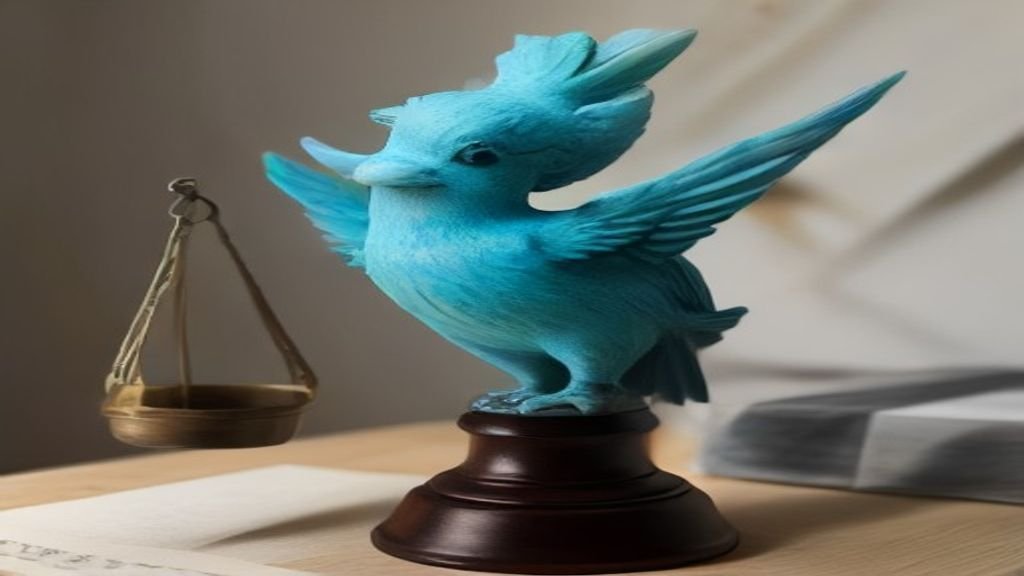
  • Operation Bluebird can use the word “tweet” and the bird logo.
  • The startup must rebrand away from Twitter.now.

A Question of Abandonment

The core legal question is whether X abandoned these marks through non-use. In trademark law, abandoning a mark means discontinuing its use with no intent to resume. Musk’s aggressive rebrand to X in 2023 left the word “tweet” and the bird logo in limbo. The company kept the Twitter handle on its own platform but stopped using the bird in most official capacities.

Coates, now president of Operation Bluebird, framed the ruling as a victory for the public. “They kept the word. They let go of the bird, and they let go of the tweet,” he wrote in an announcement shared via email with TechCrunch. “A tweet was never a corporation. It’s one person saying something. That word survived three years of a company trying to replace it, because the public declined to stop using it. We think that tells you who it belongs to.”

That’s a poetic argument. Whether it holds up in court remains to be seen.

What This Means for X and Its Rivals

For X, this ruling is a mixed bag. It protects the core Twitter trademark, which the company still uses in some contexts. But it opens the door for competitors to use the word “tweet” and the bird imagery — elements that remain culturally significant even if X has moved on.

For anyone tracking Elon Musk’s X rebrand and its legal fallout, this case is worth watching. It could set a precedent for how courts treat abandoned trademarks in the fast-moving world of social media. If X loses the full case, it might have to accept that the bird and the tweet belong to the public now.

The startup’s approach is unusual, but it’s not without precedent. Companies have long scooped up abandoned trademarks and repurposed them. The difference here is scale: Twitter’s marks are among the most recognized in internet history.

For now, Tweet.app lives. Twitter.now is dead. And the bird, it seems, has found a new perch.

Continue Reading

Social Media

Is AI Making It So Anyone Can Run Effective TikTok Ads?

Published

on

AI TikTok ads

The Learning Curve That Used to Stop Everyone

Let’s be honest: TikTok Ads Manager has never been friendly to newcomers. Between campaign structures, ad groups, bidding strategies, and pixel setup, the platform’s backend feels like a control panel for a spaceship you never learned to fly. For small business owners and solo marketers, that steep learning curve has been a silent killer of ad budgets — and of ambition.

But something shifted recently. TikTok has been quietly rolling out AI-powered tools that promise to flatten that curve. The question is no longer whether AI can help you run ads. It’s whether the help is good enough to trust with real money.

What Exactly Is TikTok’s AI Ad Stack?

TikTok’s push into artificial intelligence isn’t one tool — it’s a suite. Three pieces stand out for marketers: Agentic Hub, Symphony Creative Studio, and the increasingly automated optimization features inside Ads Manager itself.

Agentic Hub: Your New Campaign Manager

Agentic Hub is TikTok’s attempt at an AI campaign manager. Instead of manually configuring every setting, you describe your goal — say, “drive app installs for a fitness tracker under $2 per install” — and the system assembles the campaign structure for you. It picks targeting, sets budgets, and even suggests creative angles.

For a beginner, that’s a massive time-saver. For an experienced marketer, it’s a starting point that still needs human judgment. The AI doesn’t know your brand voice or your seasonal promotions. It knows patterns.

Symphony Creative Studio: AI That Makes the Video

Then there’s Symphony Creative Studio. This tool generates video ads from text prompts, product URLs, or even existing assets. You can feed it a product page, and it spits out multiple ad variations — different hooks, different music, different pacing.

The output isn’t always perfect. Sometimes the AI misses cultural nuance or produces something oddly generic. But for testing purposes, it’s a goldmine. You can throw five AI-generated creatives against one professionally produced video and let the data decide.

Does AI Actually Make Ads More Effective?

Here’s where things get interesting. Running an ad is one thing. Running an effective ad is another. The source material points to a crucial distinction: AI tools lower the barrier to entry, but they don’t guarantee results.

TikTok’s algorithm has always rewarded engagement signals — watch time, shares, comments. AI can optimize for those signals, but it can’t manufacture a product people don’t want. In other words, AI handles the mechanics. You still handle the meaning.

What AI does do well is remove the friction that stops beginners from even trying. Instead of spending three days learning how to set up a conversion pixel, you can launch a campaign in an afternoon. That speed lets you iterate faster, and iteration is where real learning happens.

Practical Tips for Using AI in Your TikTok Ads

If you’re ready to test these tools, here’s a practical approach that balances automation with human oversight:

  • Start with a small budget. Give the AI room to experiment without risking your whole monthly ad spend. $50–$100 per day is enough to gather meaningful data.
  • Use Symphony for creative testing. Generate 5–10 variations of your core message. Let the platform’s algorithm find the winner.
  • Review Agentic Hub’s targeting choices. The AI might default to broad audiences. That’s fine for awareness, but if you’re selling something niche, tighten it manually.
  • Check your pixel and events. AI optimization depends on accurate conversion data. If your tracking is broken, the AI is flying blind.
  • Keep a human in the loop. Set aside time weekly to review performance. AI can tell you what’s working, but it won’t tell you why your Friday promo outperformed your Tuesday one.

What This Means for Small Businesses and Freelancers

For years, running effective TikTok ads was a job skill. Agencies charged thousands for campaign management because the knowledge barrier was real. AI is eroding that moat.

Now, a local bakery owner can describe their goal in plain English and have a campaign live within the hour. A freelance social media manager can serve five clients with ad accounts they’d previously have outsourced. That’s not hype — that’s the direction the platform is heading.

Still, effectiveness isn’t guaranteed. The source material wisely notes that AI tools are “not a magic wand.” They work best when paired with clear objectives, decent creative input, and someone who checks the numbers.

The Bottom Line on AI TikTok Ads

So, can anyone run effective TikTok ads now? Almost. The tools are there. The learning curve has been substantially lowered. But the word “effective” still depends on a few things AI can’t do for you: knowing your audience, crafting a message that resonates, and having a product worth buying.

If you’re a beginner, start small. Use TikTok AI ad tools to get your first campaign off the ground, but don’t expect to set it and forget it. The marketers who win with AI will be the ones who treat it as an accelerator, not a replacement for thinking.

And if you’re already running ads, the smartest move might be to let AI handle the busywork while you focus on the creative strategy that no algorithm can replicate.

Continue Reading

Trending