Connect with us

How To

Chat Rooms Find Friends App: Your Gateway to Global Connections and Online Chatting

Published

on

Chat Rooms Find Friends App: Your Gateway to Global Connections and Online Chatting

In an increasingly digital world, the desire for meaningful connection remains fundamental. The Chat Rooms Find Friends App emerges as a modern solution, designed to bridge geographical gaps and facilitate genuine interactions. This platform transforms how people approach online friendship, offering structured environments for conversation and community.

What is the Chat Rooms Find Friends App?

Essentially, this application serves as a dedicated social hub. It provides users with virtual rooms where they can engage in text-based conversations, participate in group discussions, and initiate private chats. Unlike sprawling, unfocused social networks, it creates targeted spaces for those specifically seeking new acquaintances and cultural exchange.

Therefore, its core appeal lies in intentionality. Users join not just to scroll, but to actively communicate. The app’s design prioritizes discovery, allowing you to filter and find individuals or groups based on shared interests, location, or language.

Key Features That Redefine Online Chatting

So, what sets this platform apart? Let’s examine its primary functionalities.

Free and Accessible Communication

First and foremost, the app removes financial barriers. All core chatting features are completely free. You can send unlimited messages, join multiple rooms, and start conversations without worrying about subscription fees or in-app purchase pressures. This commitment to accessibility is a cornerstone of its design philosophy.

Global Video Calling Capabilities

Building on text chat, the app integrates seamless video calling. This means you can transition from typing to face-to-face conversation with users from any country. The feature supports cross-border connections, making the world feel significantly smaller and more intimate.

Structured Chat Rooms for Every Interest

Instead of one chaotic feed, the Chat Rooms Find Friends App organizes interactions into themed rooms. You might find a room for movie enthusiasts, language learners, travel fans, or local city groups. This structure helps users quickly find like-minded people, fostering more relevant and engaging discussions from the start.

How to Start Making Friends on the Platform

The process is streamlined for ease of use. After downloading and installing the app, you create a basic profile. This typically involves choosing a display name and optionally adding interests. Crucially, the app then presents you with a list of active chat rooms and user recommendations.

Next, you simply enter a room that appeals to you. A friendly “hello” is often all it takes to begin a dialogue. The environment is built for low-pressure interaction, encouraging users to take the first step. Many rooms have regulars and moderators who help welcome newcomers, smoothing the initial social hurdle.

Safety and Community Guidelines

Importantly, the app operates with clear rules to ensure a respectful environment. It is intended for users aged 18 and over. Strict policies prohibit nudity, hate speech, harassment, and any form of offensive content. Violations can lead to permanent account suspension.

Consequently, users are encouraged to report any suspicious or uncomfortable behavior. This shared responsibility helps maintain the platform’s integrity, making it a safer space for genuine friendship-building compared to unmoderated alternatives. For more on digital safety, explore our guide on secure online communication practices.

The Verdict: Is This App Right for You?

If you’re looking to expand your social circle beyond physical boundaries, this app offers a compelling tool. It is particularly valuable for individuals in new cities, those with niche hobbies, or anyone curious about different cultures. The room-based system provides more focus than typical social media, leading to deeper conversations.

However, as with any online platform, realistic expectations are key. Meaningful friendships require time and mutual effort, regardless of the medium. This app provides the introduction; building the connection remains in your hands.

Ultimately, the Chat Rooms Find Friends App successfully addresses a modern need. It combines the spontaneity of chat rooms with the intent of friendship apps, creating a unique hybrid for the digital age. By lowering barriers to conversation, it opens doors to thousands of potential connections waiting just a click away. Ready to explore other ways to connect? Check out our review of top social discovery platforms for more options.

Continue Reading
Click to comment

Leave a Reply

Your email address will not be published. Required fields are marked *

How To

Why I ditched Windows copy for large files — and the tool I trust now

Published

on

Windows file copy

The moment I stopped trusting Windows file copy

It started with a 12 GB video project. I dragged it from one internal SSD to another — a simple operation, right? Windows popped up its usual blue progress bar, estimated “about 3 minutes,” then stalled at 87% for nearly twenty. The estimate jumped to 40 minutes. Then it froze entirely. I had to kill Explorer and start over. That was the last straw.

For small stuff — a few screenshots, a Word doc — Windows copy is fine. It works. You don’t think about it. But the moment you push it past a couple of gigabytes, the cracks show. The progress bar lies. The speed tanks. And sometimes, the whole operation silently fails, leaving you with a half-copied file and no error message.

I’m not alone. Ask any video editor, developer, or data hoarder: Windows file copy for large transfers is a gamble you don’t want to take.

What actually goes wrong under the hood

Windows uses a single-threaded, buffered I/O model for standard copy operations. That sounds technical, but the practical result is simple: it doesn’t handle big, sustained reads and writes well. The system tries to cache everything in RAM, which works fine for small files. For a 50 GB archive, though, the cache fills up, the disk thrashes, and the UI becomes unresponsive.

There’s also the checksum problem. Windows doesn’t verify data integrity during a copy. A single bit flip from a slightly flaky SATA cable? You’ll never know — until the file won’t open on the destination drive. Microsoft has improved things with Robocopy in PowerShell, but the default drag-and-drop experience hasn’t changed in a decade.

What I switched to — and why it’s night and day

After that frozen 12 GB transfer, I started testing alternatives. I needed something that could handle multi-gigabyte files, resume after an interruption, and actually show me honest progress. After trying a handful of tools, I settled on one: TeraCopy.

TeraCopy is not new — it’s been around for years. But it solves the core problem. It uses its own buffering, separate from Windows, and it processes files in a way that doesn’t lock up the Explorer interface. You can keep working while it runs. More importantly, it verifies checksums after every copy. If a byte got mangled, you’ll know immediately.

Real-world speed difference

I tested it with a 25 GB folder of mixed media files — video, audio, raw photos. Windows copy averaged around 110 MB/s, with frequent dips to 30 MB/s. The whole thing took about 4 minutes and 20 seconds. Same files, same drives, using TeraCopy: steady 180 MB/s, completed in 2 minutes 35 seconds. That’s nearly 40% faster, with no stuttering.

And when I unplugged the USB drive mid-transfer (accidentally, I swear), Windows threw a generic error and I had to start over. TeraCopy paused, I reconnected, and it resumed from where it left off. That alone saves hours over a year.

Other tools worth considering

TeraCopy isn’t the only option. If you prefer open-source software, FastCopy (for Windows) is a solid choice. It’s less polished but equally reliable. It gives you fine-grained control over buffer size and read/write priorities. For Mac or Linux users, rsync is the gold standard — it’s command-line only, but it handles huge transfers, incremental backups, and integrity checks better than anything else.

There’s also Robocopy, which ships with Windows. It’s powerful, but it’s a command-line tool with a steep learning curve. Most people won’t want to memorize flags like /R:3 /W:10 just to copy a folder. TeraCopy gives you that same reliability in a simple window with a progress bar you can actually trust.

When Windows copy is still fine

Let’s be fair. If you’re moving a few hundred megabytes of documents or images, Windows copy works. The overhead of a third-party tool isn’t worth it. But the moment you’re dealing with files over 2–3 GB, or batches of files totaling more than 10 GB, the risk of a stalled or corrupted transfer goes up fast.

I still use Windows copy for quick, small jobs. But for anything substantial — a game install, a video project, a backup archive — I open TeraCopy first. It’s a small habit that’s saved me hours of frustration and at least one corrupted project file.

If you’ve ever watched that blue progress bar freeze at 99% and wondered if your data is safe, you already know: the default tool isn’t good enough. There are better options. Pick one.

Continue Reading

Social Media

TV Time is shutting down. Its original founder is building Bingers, a new home for TV fans

Published

on

Bingers app

TV Time is going dark. A familiar face is stepping up.

More than 25,000 people have signed a petition begging TV Time to stay alive. But the popular TV and movie tracking app is still shutting down. Its parent company, Whip Media, is pivoting to AI. So TV Time’s community of 26.4 million lifetime installs is about to lose its digital clubhouse.

Enter Antonio Pinto. He’s the French entrepreneur who originally built the app — back when it was called TVShow Time — and sold it to Whipclip in 2016. Now he’s building a new app called Bingers. Think of it as a spiritual successor. A second chance.

“I decided to build the new home where the TV Time community could go,” Pinto wrote on the Bingers website. “I wanted to rebuild all TV Time’s great features, but also fix everything that always bothered me.”

That’s a lot of baggage to carry. But Pinto seems ready.

What Bingers will do differently

TV Time had a serious performance problem. The app loaded slowly. It was expensive to run. Pinto says the premium subscription covered only about 10% of the server costs. That’s a brutal ratio. It’s also a big reason the app is dying.

Bingers is built differently. Pinto claims the architecture keeps server costs low, making the whole thing more sustainable. Users should get faster responses when they mark an episode as watched — even when millions of people hit that button at the same time.

That’s the kind of technical fix that doesn’t make headlines but keeps users sane. Anyone who’s waited five seconds for a checkmark to appear knows the pain.

Import your TV Time data now

Here’s the good news: you don’t have to start from scratch. TV Time users can export their entire viewing history using the app’s GDPR-compliant export tool. That tool will disappear once the app is removed from the App Store and Google Play on July 15.

Bingers already has an archive import tool live on its website. Upload your data now, and your history will be waiting when the app launches. That includes community comments from TV Time — the episode-by-episode chatter that made the app feel like a live watch party.

Pinto says the import will “recreate TV Time’s community comments.” That’s a big deal. Many tracking apps let you log what you watched. Very few let you argue about the finale with strangers.

When can you get Bingers?

The app won’t arrive overnight. Pinto tells TechCrunch that Bingers will hit the App Store and Google Play by the end of July 2026. That’s a long wait. But the waitlist is open now on the Bingers website. Sign up, and you’ll get a notification when it’s ready.

In the meantime, the archive import is already functional. So you can lock in your data and forget about it. When the app finally drops, your history will be there.

Why this matters for TV fans

TV Time wasn’t just a tracker. It was a social network for people who watch too much television. That combination is rare. Most tracking apps are solo experiences. You log your shows, get some stats, move on. TV Time had threads, reactions, inside jokes. It had a culture.

When Pinto heard the app was being wound down, he said he felt sad. “Sad because TV Time was part of my life for so many years. And sad because this community was like my other family. Reading the community reactions after each episode became a ritual for me, and for many others.”

That kind of attachment is hard to replicate. But if anyone can do it, it’s the person who built the original. Bingers might not save every feature. It might not bring back every user. But it gives the community a place to land — and that’s more than most dying apps offer.

If you’re a TV Time user, export your data before July 15. Then join the waitlist. Your viewing history deserves a second act.

Continue Reading

How To

Excel has a paintbrush button most users never click — here’s what it actually does

Published

on

Excel paintbrush button

That tiny paintbrush icon in Excel? It’s not just decoration

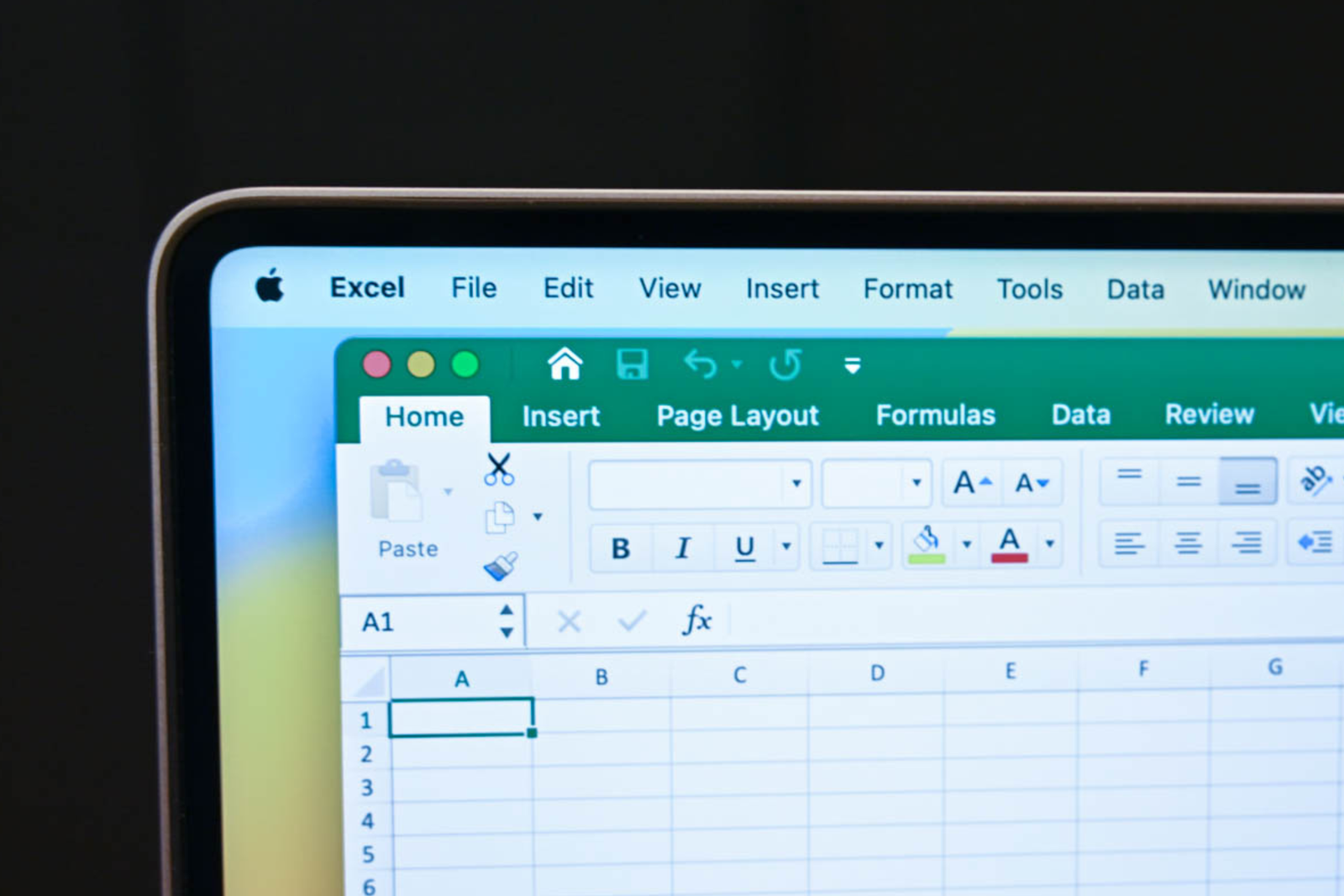
Open any spreadsheet in Microsoft Excel, and you’ll spot a small paintbrush sitting in the Clipboard group on the Home tab. Most people scroll right past it. They click Copy, they click Paste, maybe they dabble with Bold or Fill Color. But that brush? It sits there, untouched, day after day.

That’s a shame — because the Format Painter (its official name) is one of the fastest ways to clean up a messy spreadsheet. It copies formatting — font, size, color, borders, number formats — from one cell and slaps it onto another. No menus. No manual re-setting. One click, and your sheet looks consistent.

Here’s exactly how it works, and why you should start using it today.

What the Excel paintbrush button actually does

The Format Painter copies the look of a cell — not its value. Think of it as a formatting clone stamp. Select a cell that has the formatting you like, click the paintbrush, then click the target cell. Instantly, the target inherits the font, alignment, border style, number format, and fill color from the source.

It works on ranges, too. Select a formatted range, click the brush, then select a target range of the same size. Everything transfers. This is a godsend when you’ve spent ten minutes perfecting a header row and need to apply the same style to the rest of the table.

One important detail: the Format Painter does not copy the cell’s content. Only the formatting. Your data stays put.

How to use the Format Painter (single use vs. multiple use)

There are two ways to use the paintbrush, and they behave differently.

Single-use mode

Click the cell with the formatting you want to copy. Click the paintbrush icon once (it lights up). Then click the destination cell. The brush deactivates automatically. You’re done. This is the quickest way to fix one or two cells.

Locked-on mode

Double-click the paintbrush icon. It stays active, even after you paste formatting onto a cell. You can click cell after cell, or drag across multiple ranges, and each one gets the same formatting. To turn it off, press the Esc key or click the paintbrush icon again.

This locked mode is perfect for applying a consistent style across an entire worksheet — say, making every subtotal row bold with a light yellow fill.

Keyboard shortcut for the paintbrush (power users, take note)

If you prefer keeping your hands on the keyboard, Excel offers a shortcut: Ctrl + Shift + C to copy formatting, then Ctrl + Shift + V to paste it. Yes, it’s the same logic as copy-paste values, but for formatting only.

This shortcut works across worksheets and even between open workbooks. Select a formatted cell in Sheet1, hit Ctrl + Shift + C, switch to Sheet2, select a cell, and hit Ctrl + Shift + V. No mouse required.

It’s a small trick, but once it becomes muscle memory, you’ll wonder how you lived without it.

When the Format Painter saves you real time

Here are a few scenarios where the paintbrush really shines:

  • Merging data from different sources. You import a CSV, and the formatting is a disaster. Use the Format Painter to copy the style from a properly formatted sheet onto the raw data. Everything snaps into alignment in seconds.
  • Building dashboards. You design one KPI card perfectly — font, border, conditional formatting. Double-click the brush, then click each of the other KPI cells. Consistent formatting across the board, instantly.
  • Applying number formats. You have a cell formatted as currency with two decimal places. You need five other cells to match. Click the formatted cell, click the brush, then select the five target cells. No need to open the Format Cells dialog.
  • Copying conditional formatting. Yes, the Format Painter can copy conditional formatting rules. If you’ve set up a color scale or data bar on one range, you can paint it onto another range. The rules adapt to the new range automatically.

What the paintbrush does NOT do (common misconceptions)

The Format Painter is powerful, but it has limits. It does not copy column widths or row heights. If your source column is 20 pixels wide and your target column is 50, the target stays at 50. You’ll need to adjust column widths separately.

It also doesn’t copy merged cell structures. If you’ve merged A1 through C1, painting that formatting onto another cell won’t merge the target cells. You still have to merge manually.

And finally, it won’t copy data validation or cell comments. Those are separate properties that live outside the formatting layer.

Why most users ignore it — and why they shouldn’t

The paintbrush sits in plain sight, but it’s easy to overlook. The icon is small. The tooltip says “Format Painter,” which sounds technical. And many users simply never explore the Home tab beyond Copy, Paste, and Bold.

But here’s the thing: formatting is often the most tedious part of working with spreadsheets. Data entry is straightforward. Formulas are logical. But making a sheet look professional — consistent fonts, aligned columns, clear borders — that’s where time disappears. The Format Painter is a direct solution to that pain point.

If you spend more than 10 minutes a week formatting cells, learning this one tool will save you hours over a year. It’s not flashy. It’s not new. It’s just a brush. But it’s one of the most useful buttons Excel has ever shipped.

Next time you open a spreadsheet, try it. Select a cell you like, click the brush, and click another cell. You’ll see the formatting jump across. Then try double-clicking the brush. You’ll wonder why you never clicked it before.

Continue Reading

Trending