Connect with us

Artificial Intelligence

Everything New Coming to CarPlay in iOS 27: Video Apps, Siri AI, and More

Published

on

Everything New Coming to CarPlay in iOS 27: Video Apps, Siri AI, and More

Apple’s WWDC 2026 keynote focused heavily on Siri AI and Apple Intelligence, but CarPlay didn’t get left behind. In fact, CarPlay iOS 27 introduces a surprising number of upgrades, many of which were quietly detailed in a developer-only video. As a daily CarPlay user, I can tell you—some of these features are long overdue, while others perfectly complement the broader iOS 27 redesign. Here’s a complete rundown of what’s coming to your dashboard this fall.

Video Playback Apps in CarPlay iOS 27

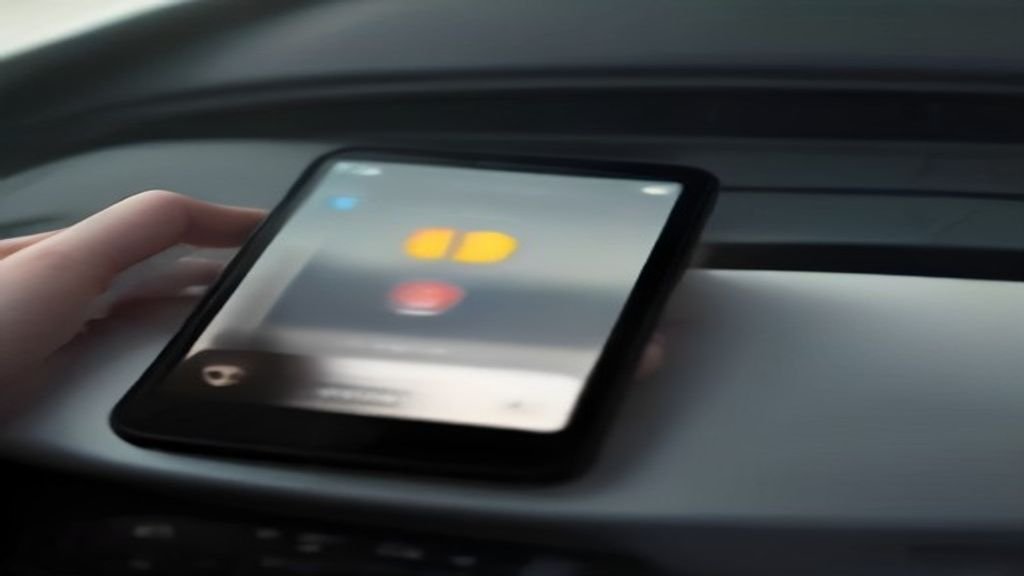
Perhaps the biggest news is that CarPlay iOS 27 finally supports full video playback apps. Developers can now build video streaming services directly into the car interface. While CarPlay gained AirPlay video casting last year, this update allows native video playback from apps like YouTube and potentially Netflix.

However, there’s a catch: videos only play when the car is parked. Additionally, automakers must specifically enable this feature, meaning not every vehicle will support it immediately. Still, for road trips or charging stops, this is a welcome addition.

Audio Scrubbing and a Persistent MiniPlayer

One of the most requested features finally arrives: audio scrubbing. In the Now Playing screen, you can now drag the horizontal progress bar to jump to any point in a song or podcast. No more frustration when trying to skip intros or replay a favorite part.

Building on this, CarPlay iOS 27 introduces a persistent MiniPlayer in the top-right corner of the dashboard. It shows album art and basic playback controls, so you can see what’s playing and skip tracks without leaving navigation. This is a small change that makes a big difference in daily use.

Improved GPS Accuracy and Heading Detection

GPS and heading accuracy get a quiet but crucial upgrade. Apple has refined how CarPlay tracks your direction and position, aiming to fix issues like the car icon spinning at stoplights or navigation rerouting you down the wrong street. While not flashy, this improvement enhances reliability significantly.

Furthermore, wireless CarPlay connections are now more stable. Apple promises fewer mid-drive drops, clearer voice calls, and better audio quality after calls end. For anyone who has struggled with wireless instability, this is a much-needed fix.

New Developer Tools and Siri AI Integration

Developers gain new app templates, support for Live Activities (from iOS 16.1), and widgets from any app. This means you could display a live sports score on your CarPlay screen without opening the app. Additionally, new APIs enable conversational voice apps, including AI chatbot integrations.

Speaking of AI, Siri AI finally comes to CarPlay with iOS 27. Powered by Gemini, it handles natural follow-up questions—ask for a restaurant, then ask its closing time without repeating the context. Conversations are stored in the iPhone’s Siri app, marked with a car icon for CarPlay queries. Note: Siri AI requires an iPhone 15 Pro or newer.

Visual Refresh and New Wallpapers

CarPlay gets a subtle visual update with 14 new wallpapers in the Celosia style, shared with macOS 27. Liquid Glass elements reflect your chosen transparency level, while app icons gain refractive layers for added depth. The design language remains familiar, but the polish is noticeable.

In summary, CarPlay iOS 27 delivers meaningful upgrades across the board—from video apps and audio scrubbing to Siri AI and better GPS. For more on iOS 27, check out our complete iOS 27 guide or WWDC 2026 highlights. The stable release arrives this fall, and it’s shaping up to be a solid update for CarPlay users.

Continue Reading
Click to comment

Leave a Reply

Your email address will not be published. Required fields are marked *

Artificial Intelligence

AI Is Coming for Jobs. The Question Is Whether Governments Are Paying Attention.

Published

on

AI Is Coming for Jobs. The Question Is Whether Governments Are Paying Attention.

Every week, headlines announce another round of layoffs tied to artificial intelligence. Entry-level coding roles vanish. Customer service centers shrink. The pattern is clear, yet the response from policymakers remains muted. AI job disruption is no longer a distant forecast—it is happening now. But are governments prepared for what comes next?

Marco Riedesser, an entrepreneur from Innsbruck, Austria, doesn’t think so. He builds hardware for a living. His background includes laser-based training systems for defense and industrial automation at Controlino. More recently, he launched Friend, a physical AI companion. He is no Luddite. Yet his warnings about AI job disruption carry weight because they come from someone who understands technology deeply.

“We should probably start planning,” he says. That simple statement frames a much larger debate.

Why This Wave of Automation Feels Different

Historically, technological revolutions created new jobs to replace old ones. The Industrial Revolution eliminated many manual roles but spawned entirely new industries. Farm automation pushed workers into factories. Later, digital tools reshaped office work. Each time, the economy adapted.

Riedesser argues that AI may break this pattern. “I don’t yet see the same scale of replacement jobs appearing on the other side,” he explains. A company that cuts 7,000 employees will not hire 7,000 AI compliance specialists. The math simply does not add up. This makes AI job disruption structurally different from past shifts.

The pain will hit hardest at the entry level. For decades, young people were told to learn to code. Now Riedesser advises his own nephew not to assume coding is a safe bet. Entry-level programming work is already eroding. Even senior developers are shifting from writing code line by line to directing AI agents. The role is becoming that of a director, not a coder.

Which Jobs Are Most Vulnerable?

Not all professions face the same risk. Jobs requiring physical contact, human trust, or craft will endure. A carpenter still builds kitchens. A hairdresser still relies on personal relationships. People will always prefer human interaction in certain settings, even when technology can technically do the job.

However, the list of vulnerable categories is broad. Customer service, call centers, sales support, transportation, factory work, and entry-level software development are major pathways into employment. These are not niche sectors. They are the backbone of the modern economy.

AI is not arriving alone. Robotics is advancing in parallel. Autonomous driving systems, factory automation, and physical robots are already reshaping industries. The disruption will not stay confined to software.

Governments Must Step Up

This is where the conversation shifts from technology to policy. Riedesser believes governments need to start planning for large-scale disruption now—not after a crisis erupts. “Waiting until people are angry enough to storm data centers is not a plan,” he warns.

His solution points toward some form of universal basic income (UBI). That idea sounds radical in the United States, where work, income, and identity are deeply intertwined. In Europe, social safety nets and a stronger tradition of government intervention make UBI more palatable. The cultural divide will shape how each region responds to AI job disruption.

For the U.S., the transition may be harder. The self-reliant, capitalist ethos is a powerful tradition. But it becomes a difficult framework when the economy needs far fewer workers in once-stable careers. Policymakers must consider new models for income, purpose, and social stability.

As governments begin to address AI workforce transitions, they will need to balance innovation with human welfare. The alternative is social unrest, loss of purpose, and widespread mental health challenges.

Rethinking Purpose Beyond Work

The conversation is not purely apocalyptic. Riedesser sees another possibility: AI could reduce the pressure of survival. People may no longer need to define their worth entirely through their jobs. Younger generations already push back against 60-hour workweeks and constant hustle culture. Maybe they are not lazy. Maybe they see something the rest of us are late to understand.

Riedesser has practiced karate for over 30 years. He emphasizes the importance of purpose outside of work. If technology changes the economics of employment, society must also rethink meaning, ambition, and impact. This is a much bigger conversation than whether AI can write code or answer customer calls.

His company Friend reflects this philosophy. The device is designed to challenge users, not flatter them. “A real friend challenges you,” he says. That may be the right metaphor for the entire AI debate. We do not need technology that merely flatters us. We also do not need panic. We need a serious, adult conversation about what happens if AI really does change work at the scale many experts now predict.

Riedesser may be wrong about the timing or severity. History may surprise us again by creating new kinds of work we cannot yet imagine. But he is almost certainly right about one thing: waiting until the disruption is obvious is not a plan. For more insights on preparing for AI-driven economic shifts, experts urge immediate action.

The value of conversations like this lies not in providing neat answers. They raise harder questions than they answer. And that is exactly why we should be asking them now.

Continue Reading

Artificial Intelligence

Google Sues Scammers Using Gemini AI to Power Massive Phishing Operation

Published

on

Google Sues Scammers Using Gemini AI to Power Massive Phishing Operation

That unexpected text about an unpaid toll or a delayed package might feel familiar—but it’s no longer just a lone scammer’s trick. Google has filed a lawsuit against a cybercrime network that used its own Gemini AI to build convincing phishing websites, targeting millions of users worldwide. This marks a significant escalation in how artificial intelligence is being weaponized for fraud.

How Gemini AI Fueled a Phishing Empire

According to Google’s complaint, the operation—dubbed the Outsider Enterprise—coordinated through Telegram and distributed phishing kits to criminals globally. They used Gemini AI to create fake websites impersonating trusted brands like Google, YouTube, and the US Postal Service. The AI allowed them to generate hundreds of imposter sites at a scale previously impossible.

In just two weeks ending June 1, Android users flagged 55,000 suspicious texts. The group sent 2.5 million messages containing links to fake websites, creating over 9,000 fraudulent URLs. The FBI estimates the operation stole 3.87 million credit card numbers across dozens of countries, with total losses reaching $1.9 billion since July 2023.

Why AI Makes Scams Harder to Spot

Traditional phishing often relied on poorly written messages or obvious fake logos. However, Gemini AI enabled the scammers to generate polished, context-aware content that mirrors legitimate communications. This means that even savvy users might fall for a well-crafted text about an expiring rewards point or a delivery update.

As a result, the line between genuine and fraudulent messages is blurring. For more on how to protect yourself, check our guide on spotting AI-powered scams.

Google’s Legal and Technical Counterattack

Google is asking a New York federal court to shut down the Outsider Enterprise entirely. The company is working with the FBI and carriers like AT&T, T-Mobile, and Verizon to block these texts before they reach your phone. Google’s built-in messaging defenses already intercept over 10 billion malicious messages every month.

Additionally, Android’s scam detection tool flags suspicious calls and contacts in real time. However, Google argues that legal action alone won’t suffice. The company is pushing for seven bipartisan bills in Congress to make these protections permanent, given that AI has made the threat effectively limitless.

What This Means for Everyday Users

For the average person, the takeaway is clear: never click on links in unsolicited texts, even if they look legitimate. Verify with the official website or app directly. Google’s lawsuit is a strong step, but individual vigilance remains crucial.

Building on this, the case highlights a broader trend: AI tools can be used for both good and harm. While Google aims to protect users, the same technology that powers helpful features can be twisted by bad actors. For a deeper dive into AI security, read our analysis on AI security trends.

The Future of Phishing: AI Arms Race

This lawsuit is just the beginning. As AI becomes more accessible, we can expect more sophisticated scams. Google’s response—combining legal action, technical defenses, and legislative advocacy—sets a precedent for how tech companies might fight back.

In the meantime, stay cautious. If a text seems too urgent or too perfect, it probably is. The fight against AI-powered fraud is ongoing, and everyone has a role to play.

Continue Reading

Artificial Intelligence

Windows 11 Adds Shared Audio: Stream Music to Two Bluetooth Devices at Once

Published

on

Windows 11 Shared Audio: Stream to Two Bluetooth Devices at Once

Microsoft is rolling out a new feature for Windows 11 Shared Audio, which allows one compatible PC to send the same sound to two wireless accessories simultaneously. This upgrade is currently in preview and promises to make shared listening experiences much simpler.

Imagine watching a movie on a plane with a friend, each using your own earbuds, or studying together while sharing a playlist without handing over a single pair of headphones. That is exactly the scenario Microsoft aims to solve with this Bluetooth LE Audio-based capability. Older Bluetooth headphones lack the broadcast support required, so you will need modern LE Audio gear to take advantage.

How Windows 11 Shared Audio Works

The system relies on Bluetooth LE Audio technology to transmit one audio stream from the PC to two separate output devices. A new Quick Settings tile in Windows 11 lets users select paired accessories and start the sharing session directly from the same panel. According to Microsoft, the interface shows two connected devices in a dedicated window, with a single control to begin sharing. This design makes the process feel closer to joining a Wi-Fi network than navigating through old audio menus.

Supported accessories already include the Samsung Galaxy Buds2 Pro, Galaxy Buds3, Galaxy Buds3 Pro, Sony WH-1000XM6, and recent LE Audio-capable hearing aids from ReSound and Beltone. Classic Bluetooth headphones will not work here, so upgrading your audio gear may be necessary.

Which PCs and Devices Support Shared Audio

The PC side is the bigger filter for now. Microsoft lists several Surface Laptop and Surface Pro models with Qualcomm Snapdragon X chips as supported today, provided they have the required Bluetooth and audio driver updates. More machines are in the preview path, including 12-inch Surface Pro models, Samsung Galaxy Book4 Edge, Galaxy Book5 360, Galaxy Book5 Pro, and Galaxy Book5 Pro 360. You should not expect the tile to appear on every Windows 11 laptop after a regular update.

There is also a firmware step for headphones and earbuds. Microsoft recommends using the accessory maker’s app to confirm LE Audio is enabled and the latest firmware is installed. If listed gear does not show up, removing and re-pairing it may help. For more tips on optimizing your audio devices, check out our guide on how to pair Bluetooth headphones with Windows 11.

When Can Users Try It?

Shared Audio is still an Insider preview feature, so check eligibility before hunting for the setting. You will need a listed Windows 11 Copilot+ PC, the right Insider build, current drivers, and two LE Audio accessories. When everything lines up, the Shared Audio tile should appear in Quick Settings. Microsoft has also been improving the preview with per-accessory volume sliders and a taskbar indicator while sharing is active.

Most users should wait for wider device support. People with the right hardware can try it now through the Insider path, and the Quick Settings tile is the clearest sign that the PC is ready. For a broader look at Windows 11 audio improvements, see our article on Windows 11 audio settings guide.

In conclusion, Windows 11 Shared Audio is a neat upgrade that enhances how you share sound with others. Although it is limited to specific hardware for now, the feature points to a future where dual audio streaming becomes standard. Keep an eye on official updates from Microsoft for a wider release date.

Continue Reading

Trending