Connect with us

How To

Galaxy phones have a one-handed mode that actually works—it’s just buried where nobody looks

Published

on

The feature you didn’t know your Galaxy phone already had

You’ve probably fumbled with your Samsung Galaxy phone while holding a coffee cup or a grocery bag. The screen is huge, your thumb can’t reach the top corner, and you end up dropping something. There’s a fix built into the phone—but Samsung buried it so deep that most users never find it.

Galaxy one-handed mode isn’t new. It’s been around for years, quietly sitting in the Accessibility menu. But unlike the half-baked “reachability” gestures on other phones, Samsung’s version actually works. You just have to know where to look.

Where Samsung hid one-handed mode

Open Settings on any recent Galaxy phone (S21, S22, S23, S24, or the new S25 series). Scroll down to Accessibility, then tap Interaction and Dexterity. Buried at the bottom of that submenu, you’ll find One-handed mode.

It’s a long path for something that should be a quick toggle. Samsung One UI settings have grown more cluttered with every Android update, and this feature got lost in the shuffle. Once you find it, though, you can turn it on with a single switch.

Two ways to trigger it

After enabling one-handed mode, you can choose your trigger method. The default is Gesture: swipe down diagonally from either bottom corner of the screen. The second option is a double-tap the Home button (if you’re using the old three-button navigation).

I recommend the gesture. It’s faster and doesn’t interfere with normal swipes. Once triggered, the entire screen shrinks to about 60% of its original size, shifted toward whichever thumb you used. The top half of the display becomes reachable. Tap anywhere outside the shrunken area to restore full screen.

Why this beats Apple’s Reachability

Apple’s iPhone Reachability feature pulls the top half of the screen down—but it only works on the bottom half of the display. You still have to stretch your thumb for notifications or buttons near the middle. Samsung’s approach is different: it shrinks the entire UI into a compact window that you can reposition.

That matters when you’re trying to tap a small link at the very top of a webpage. With Reachability, that link moves to the middle of the screen. With Galaxy one-handed mode, it moves to the bottom third. Your thumb doesn’t have to travel as far.

It’s a small difference, but after a week of using it, you’ll wonder how you managed without it.

Good Lock makes it even better

Samsung’s Good Lock app (available in the Galaxy Store) offers a module called One Hand Operation+. This is the pro version of the built-in mode. It lets you assign custom gestures to the left and right edges of the screen—swipe and hold, swipe diagonally, or swipe in a specific pattern.

With One Hand Operation+, you can trigger one-handed mode with a single swipe from the edge, without going through the Accessibility menu at all. You can also adjust the size of the shrunk window, the timeout duration, and whether the keyboard shrinks too.

It’s free, it’s official, and it transforms the feature from “hidden gem” to “daily driver.” Samsung Good Lock customization is worth exploring if you want to fine-tune your phone’s behavior.

One-handed mode on older Galaxy phones

If you’re using a Galaxy S20 or older, the feature works slightly differently. On One UI 2.x and earlier, one-handed mode is in Settings > Advanced Features instead of Accessibility. The trigger gesture is the same, but the visual effect is a bit clunkier—the screen shrinks but leaves a black border around it.

On newer phones (One UI 5.0 and later), the transition is smoother, and the shrunk window blends into the background. The feature also works in landscape mode, which is handy for one-thumb typing while holding the phone sideways.

Check your software version in Settings > About Phone > Software Information. If you’re on One UI 4.0 or newer, you have the modern version.

Bottom line: turn it on now

Galaxy one-handed mode isn’t a gimmick. It’s a genuinely useful tool that Samsung forgot to promote. The company stuffed it into a submenu of a submenu, and most users never see it. That’s a shame, because it solves a real problem: big phones are hard to use with one hand.

Go into your settings right now. Enable it. Spend five minutes practicing the gesture. You’ll save yourself countless stretches and drops over the life of your phone.

And if you want more control, grab Good Lock from the Galaxy Store. The One Hand Operation+ module turns a good feature into a great one. Your thumbs will thank you.

Continue Reading
Click to comment

Leave a Reply

Your email address will not be published. Required fields are marked *

How To

Ford issues massive Mustang recall, but the reason why is bizarre

Published

on

Ford Mustang recall

Ford recalls nearly 90,000 Mustangs over a seat belt glitch that sounds like a prank

It’s not every day that a recall makes you do a double-take. But Ford’s latest move — pulling almost 90,000 Ford Mustangs off the road — has owners scratching their heads. The problem? A seat belt buckle that might not actually buckle.

According to documents filed with the National Highway Traffic Safety Administration (NHTSA), certain 2024 through 2026 Mustang coupes and convertibles were built with a front seat belt buckle that can fail to latch. Even when you think you’re clicked in, the buckle might not be fully engaged. That means in a crash, the belt could come undone. It’s the kind of defect that sounds almost too strange to be real — until you read the fine print.

Ford says the issue traces back to a manufacturing hiccup at a supplier plant. A specific batch of buckle assemblies didn’t meet specs. The result? A buckle that feels like it’s locked but isn’t. Drivers might not notice anything wrong until it’s too late.

Which Mustangs are affected and what Ford is doing about it

The recall covers 89,513 Mustangs in the United States, plus another 9,000 or so in Canada and Mexico. That’s a big chunk of the pony car’s recent production. Affected models were built between December 2023 and April 2026 at Ford’s Flat Rock Assembly Plant in Michigan.

Ford’s fix is straightforward: dealers will replace both front seat belt buckle assemblies — driver and passenger — free of charge. Owners don’t need to do anything except wait for a letter. Notifications are expected to hit mailboxes starting August 18, 2026. If you’re impatient or worried, you can check your car’s VIN on the NHTSA recall website right now.

A bizarre defect with real consequences

This isn’t a software glitch or a loose bolt. It’s a buckle that fails at its only job: keeping you strapped in. Ford’s own investigation found that the buckle’s internal locking mechanism can be misaligned. Push the latch plate in, and it might click — but not lock. The spring-loaded catch simply doesn’t engage.

Imagine driving down the highway, hit the brakes hard, and your seat belt suddenly goes slack. That’s the nightmare scenario Ford is trying to prevent. While the company says it’s not aware of any accidents or injuries linked to the defect, the potential is obvious. A seat belt that unbuckles on impact is no seat belt at all.

For context, seat belt recalls are rare but not unheard of. What makes this one stand out is the sheer weirdness of the failure. Usually, recalls involve parts that break or wear out. This one involves a part that was never right from the start.

What Mustang owners should do right now

If you own a 2024, 2025, or 2026 Ford Mustang, here’s the short version:

  • Check your VIN on Ford’s recall portal or the NHTSA site.
  • If your car is included, schedule an appointment with a Ford dealer. The fix takes about an hour.
  • In the meantime, test your seat belt. Buckle up, then give the belt a sharp tug. If it releases, drive carefully to the dealer.

Ford says parts are available now, so there shouldn’t be a long wait. And because this is a safety recall, the repair is free — no questions asked.

Why this recall matters beyond Mustang owners

This isn’t just a headache for Mustang fans. It’s a reminder that even the most fundamental safety systems can have hidden flaws. Seat belts have been mandatory in U.S. cars since 1968. They’re simple, proven, and usually bulletproof. But when a supplier cuts a corner or a QC check misses a bad batch, the result can be a recall that sounds like a bad joke.

Ford has been here before. The automaker issued a similar recall in 2023 covering certain Ford Bronco Sport and Escape models for seat belt buckles that could fail to latch. That recall affected about 34,000 vehicles. This Mustang recall is nearly three times larger.

For now, the advice is simple: check your VIN, test your buckle, and get it fixed. It’s a bizarre problem with a straightforward solution. And if you hear a click that doesn’t feel right, trust your gut — and your seat belt.

Continue Reading

Social Media

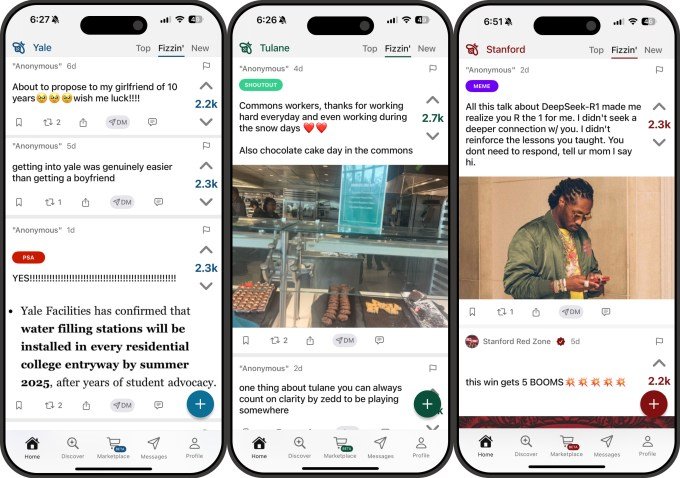
Fizz lawsuit takes a turn: Startup accuses VC of leaking secrets to rival Sidechat

Published

on

Fizz lawsuit VC secrets

Fresh allegations in an old feud

The legal battle between two anonymous college social apps just got a lot messier. Fizz, the Stanford-born platform where students gossip and network without using their real names, has accused a venture capitalist of playing both sides — and leaking the startup’s private playbook to its direct competitor, Sidechat.

In a new court filing reviewed by TechCrunch, Fizz claims that Jerry Lu, a partner at Seattle-based venture firm Maveron, met with Fizz’s founders under the pretense of exploring an investment. Instead, the startup alleges, Lu turned around and handed over confidential business details to Sidechat’s parent company, Flower Ave Inc.

The filing drops a bomb on a question that haunts every founder who pitches VCs: How safe is the sensitive data you share during fundraising?

What Fizz says Lu took — and where it went

Fizz’s founders, Teddy Solomon and Ashton Cofer, sat down with Lu in March 2022. According to the complaint, they shared non-public information about everything from user metrics and campus-launch strategies to the company’s ambassador program and product roadmap. Standard stuff for a pitch meeting — if you trust the person across the table.

The filing includes a screenshot of a text message showing Lu passing notes to Flower after that meeting. Fizz claims Lu continued feeding Sidechat information about the startup’s fundraising efforts and other strategic matters long after the initial conversation.

Lu eventually invested in Sidechat’s second seed round in October 2023, per PitchBook data. But Fizz’s lawyers argue he was coordinating with Sidechat as early as 2022 — well before that formal investment.

A mutual acquaintance and a leaked investor deck

The allegations don’t stop with Lu. Fizz also names Jack Burlinson, described as a mutual acquaintance of the founders and Lu, who allegedly shared Fizz’s investor deck and its fall summary for investors with Lu. That information, Fizz claims, then traveled directly to Sidechat.

Burlinson reached out to TechCrunch separately to push back. He said he had “no knowledge that Sidechat existed until this article” and that Lu approached him under false pretenses, claiming he wanted to invest in Fizz. “Jerry collected this information from me under false pretenses,” Burlinson wrote.

Neither Lu nor Maveron responded to requests for comment. Fizz declined to comment on the record.

Sidechat’s new owners say they inherited the mess

Kyle Venn, CEO of both Yik Yak and Sidechat, told TechCrunch that the alleged events happened long before his team acquired Sidechat in 2025. “No one on today’s operating team was involved,” Venn said via email. He stressed that the filing contains allegations, not court findings, and that Sidechat will address the matter through the legal process.

Venn added: “We’re currently focused on making a great product, not suing other apps.”

Flower Ave Inc. acquired Yik Yak, a once-dominant anonymous app, back in 2023. The company now runs both Yik Yak and Sidechat under Venn’s leadership.

Why this case matters for every startup founder

The Fizz lawsuit highlights a structural vulnerability in the venture capital model. Founders routinely hand over detailed financials, growth metrics, and product roadmaps during fundraising. They do it because they have to. But the system relies on a handshake-level assumption: that investors won’t shop that intel to portfolio companies or rivals.

This isn’t the first time that assumption has cracked. Several high-profile disputes in recent years have centered on VCs allegedly sharing confidential data. But the Fizz case is unusually vivid — a text-message screenshot, a named partner at a well-known firm, and a direct pipeline to a competitor.

Fizz originally sued Sidechat in 2023 over a laundry list of alleged dirty tricks: disrupting campus launches, spreading false rumors about hackers accessing Fizz’s data, filing fake spam reports to Instagram, and even paying students to delete the Fizz app. Lu wasn’t named in that original complaint. The new filing adds an insider-trading-style twist to an already bitter rivalry.

What happens next

The case is still in discovery. Fizz’s lawyers are likely to push for more communications between Lu, Maveron, and Sidechat’s previous owners. Sidechat’s new management will try to distance itself from actions taken before the acquisition. And Lu — unless he breaks his silence — will face questions about whether a standard pitch meeting turned into something far less ethical.

For founders watching from the sidelines, the lesson is uncomfortable but clear: Trust, but verify. And maybe think twice before sharing your full product roadmap with a VC who hasn’t committed.

Continue Reading

How To

This forgotten Netflix superhero movie will bring you back to the genre’s golden age

Published

on

forgotten Netflix superhero movie

In the 2010s, superheroes were box office gold. Even Captain Marvel — a character few knew before 2019 — sailed past a billion. Guardians of the Galaxy, literally a talking raccoon and a tree, became a household name. Fast forward to 2026, and the landscape has shifted dramatically. Supergirl can’t break even. The once-unstoppable genre is reeling. But buried in the Netflix catalog is a film that reminds you why we fell in love with capes and powers in the first place: Project Power.

What is Project Power?

Released in 2020, Project Power dropped at a weird time — mid-pandemic, when theaters were shuttered and streaming was the only game in town. It didn’t get the blockbuster rollout it deserved. The premise is lean and mean: a mysterious pill, called Power, gives whoever takes it a random superpower for five minutes. Some people turn into living bombs. Others get stretchy limbs. One unlucky guy just combusts on the spot. No two doses are the same. It’s a clever setup that bypasses the usual origin-story slog.

Why it captures the golden age magic

The film stars Jamie Foxx as a former soldier searching for his daughter, Joseph Gordon-Levitt as a New Orleans cop, and Dominique Fishback as a street-smart dealer. The chemistry crackles. But what really sells it is the grounded, gritty tone. This isn’t a world-saving epic. It’s a street-level thriller about addiction, family, and the cost of power. That intimacy — that sense that the stakes are personal, not planetary — is what defined the genre’s best early entries, from Unbreakable to the first Iron Man.

The pill mechanic is pure fun

Every power sequence feels fresh because you never know what you’ll get. A dealer pops a pill and turns into a walking furnace. A junkie crumbles into dust. Compare that to the formulaic CGI slugfests of later Marvel entries. Project Power remembers that superheroes should be fun. It’s unpredictable. It’s dangerous. It’s the kind of movie where a normal guy with a badge has to outthink a guy who can turn his skin to diamond.

Why it was forgotten

Timing is everything. Project Power landed in August 2020, buried under pandemic news and competing with The Old Guard (another Netflix superhero film) for attention. Critics were kind but not effusive — it sits at a solid 60% on Rotten Tomatoes. Without a theatrical run, it lacked the water-cooler moment that superhero movies thrived on. Plus, it never got a sequel, despite a cliffhanger ending that teased more. In the streaming era, if you don’t get a Part 2, you get buried in the algorithm.

How it holds up in 2026

Watching it now, the film feels almost nostalgic. The 2010s were a time when superhero movies could take risks. Netflix’s superhero movie slate was experimental — Project Power, The Old Guard, Bright. They weren’t all hits, but they tried new things. Today, the genre is in retrenchment mode. Studios are playing it safe, chasing proven IP. Project Power stands out because it doesn’t care about setting up a universe. It just wants to tell a tight, 110-minute story with a killer soundtrack (the needle drops are flawless) and a villain you actually understand.

A perfect entry point

If you’re burned out on three-hour epics and multiverse lore, this is your antidote. No homework required. No post-credits scene that teases a movie two years out. Just a cop, a father, and a teenager trying to survive one night in New Orleans. It’s lean, mean, and deeply rewatchable.

Where to watch and what to watch next

Project Power is still streaming on Netflix. If you dig it, pair it with 2010s superhero movies that aged well like Chronicle or Upgrade. For something lighter, try Shazam!. But for a shot of pure, unadulterated golden-age energy, you can’t beat this forgotten gem. Pop the pill. You’ve got five minutes.

Continue Reading

Trending