Connect with us

Artificial Intelligence

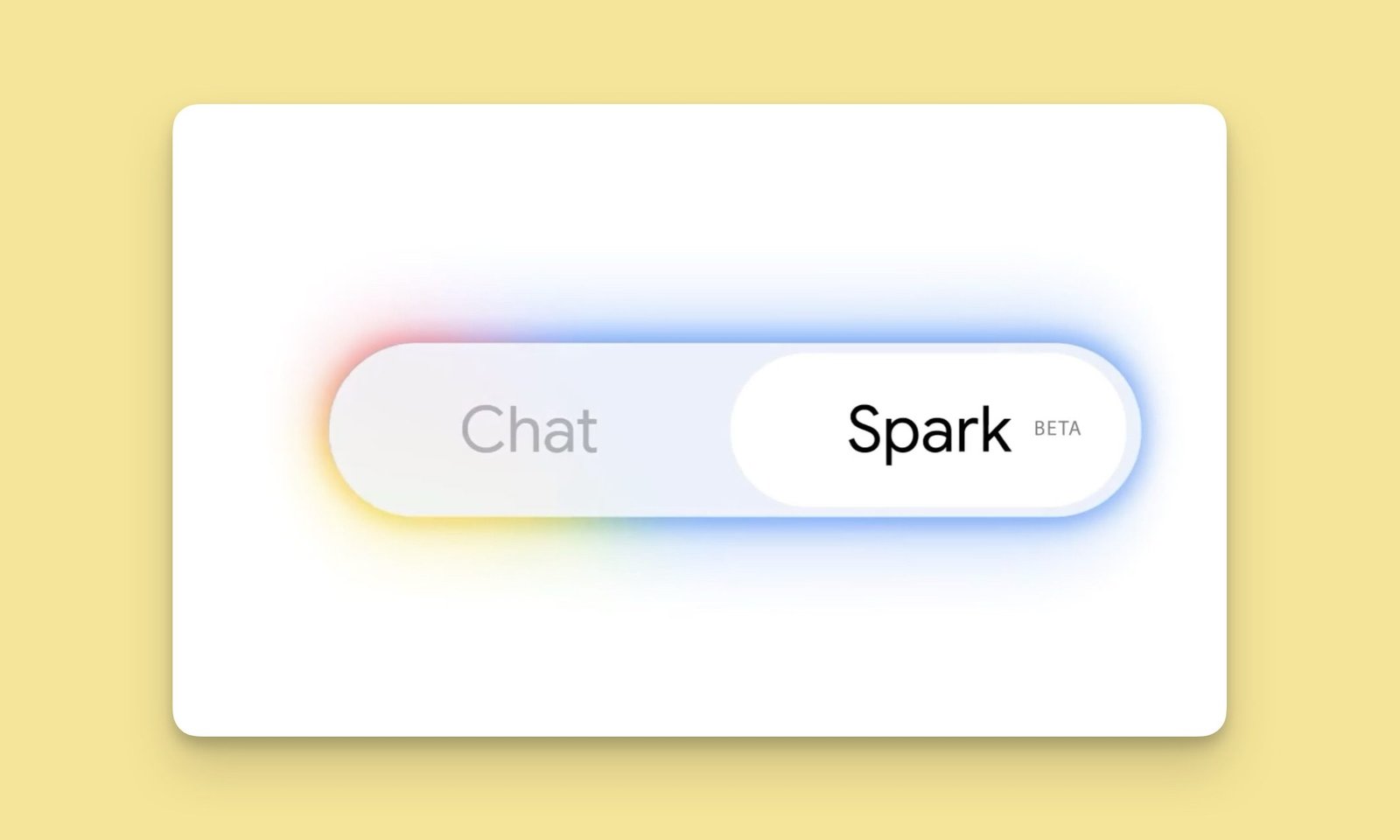
Gemini Spark lands on the Mac, and it wants to tackle your chores while you relax

Published

on

Gemini Spark on Mac

Google’s assistant finally breaks out of the chat bubble

Google just dropped a hefty update for Gemini Spark, and for Mac users, it’s the one they’ve been waiting for. The assistant is no longer confined to a browser tab or a phone screen. It now lives inside the dedicated Gemini macOS app — and it can touch your files.

That’s the headline. But dig a little deeper, and there’s more: deeper app connections, remote tasking from your phone, and a new monitoring feature that watches the web for you. Let’s walk through what actually changes.

What can Spark do on your Mac now?

The biggest shift is that Spark can finally step outside the chat window. On the Mac app, it can directly interact with your desktop files and folders. Got a Downloads folder that looks like a digital crime scene? You can ask Spark to sort every document, image, and PDF into properly named folders. It does it in seconds.

It also plays nice with Google Workspace. Ask it to build a budget spreadsheet from the latest invoices sitting on your hard drive, and it will — then schedule monthly updates on its own. Google is careful to note that Spark only touches files you explicitly allow. No unfettered access. You stay in control.

Remote tasking: send a command from your phone, Spark does the work on your Mac

Soon, you’ll be able to fire off a task from your phone and let Spark execute it on your Mac while you’re away. Think of it like Claude’s Cowork feature, but baked into Google’s ecosystem. You’re on the train, you remember a report needs formatting — one command, and Spark handles it on your desktop back home.

Which apps does Spark connect to?

Spark now links directly to Google Tasks and Google Keep. That means you can turn a messy Keep note into a structured action list without copy-pasting anything. The assistant also gains integrations with five new services: Canva, Dropbox, Instacart, OpenTable, and Zillow Rentals.

So you can ask Spark to design a party flyer in Canva, share a file from Dropbox, book a dinner table via OpenTable, or order groceries through Instacart — all from the same chat. According to Google, these connections roll out over the next week on web and mobile. The macOS versions follow shortly after.

Real-time monitoring: Spark watches the web for you

This one is quietly powerful. Spark can now track topics and react to events as they happen. Want to know the moment a stock hits a certain price? Or get a highlight reel after a football match ends? Spark monitors the web and sends you a notification instantly.

It’s not just a passive search. It’s a live lookout. You set the conditions, Spark does the watching. No more refreshing pages every five minutes.

Is Gemini Spark finally a do-it-all assistant?

Between the Mac app’s file-handling ability, the expanded app integrations, and the real-time tracking, Spark is quietly maturing into something close to a universal assistant. It’s not perfect — the remote tasking is still rolling out, and some integrations may take time to feel smooth. But the direction is clear: Google wants Spark to handle the busywork so you don’t have to.

Give it a spin. See if it actually cleans up that Downloads folder. And if it does, you might just find yourself relaxing while Spark does the chores.

Continue Reading
Click to comment

Leave a Reply

Your email address will not be published. Required fields are marked *

Artificial Intelligence

America’s first autonomous ground vehicles are already fighting in Ukraine—here’s what they’ve learned

Published

on

autonomous ground vehicles

More than 100 American self-driving ATVs have been quietly operating in Ukraine for nine months

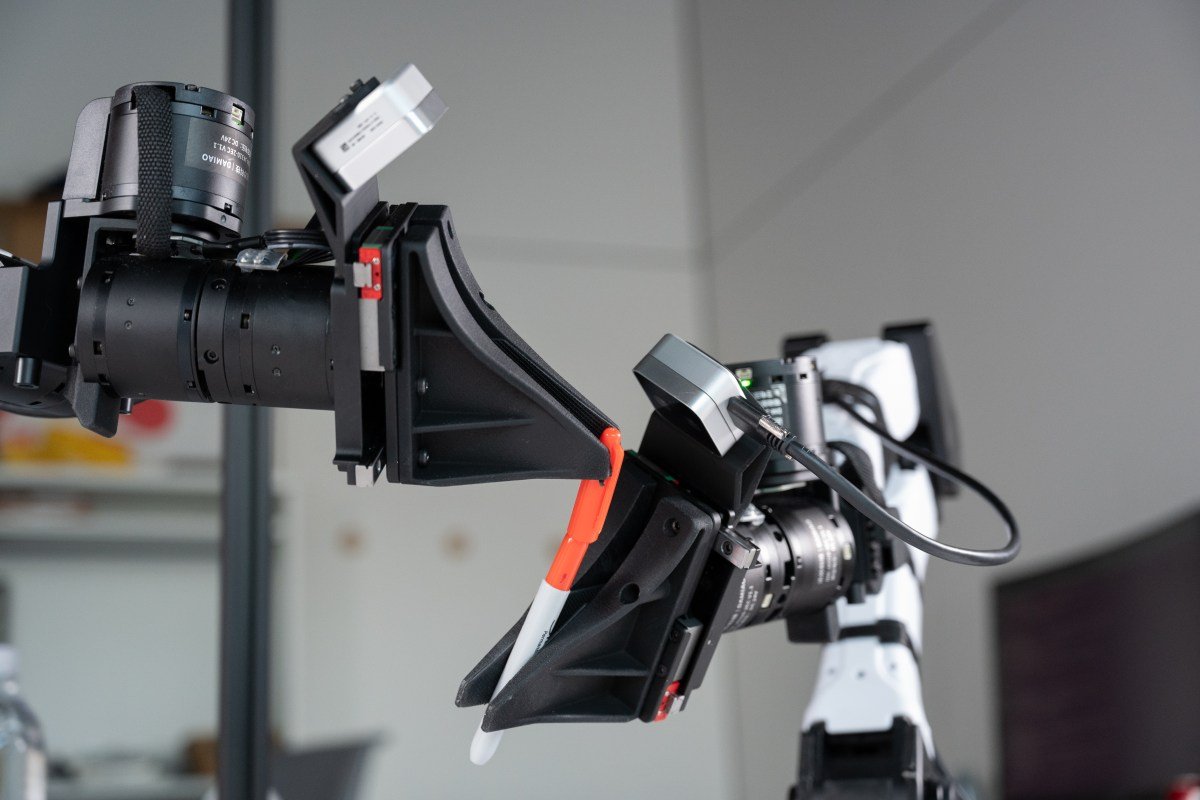
The first major deployment of U.S.-built autonomous ground vehicles in active combat is happening right now—in Ukraine. Forterra, a California-based developer of self-driving technology, revealed that over 100 of its Lancer vehicles have been moving supplies, evacuating wounded soldiers, and navigating some of the most dangerous terrain on earth since last October.

Scott Sanders, Forterra’s chief growth officer and a former U.S. Marine officer, told TechCrunch the experience is a brutal reality check. “I believe this to be true of every defense technology that’s ever been created—until you hit the realities of combat, you’re just not going to know,” he said.

The vehicles are funded by U.S. defense dollars, part of a broader push to modernize the American military through support for Ukraine’s resistance against Russian forces. While aerial drones have dominated headlines, the surveillance threat they create has driven Ukrainian commanders to seek ground-based autonomy too.

Why ground robots matter when drones rule the sky

Sergeant Major Corey Wilkens, who leads a U.S. Army program developing autonomous vehicles and tactics, put it bluntly: “There’s nowhere to hide.” He explained that soldiers on the ground are extremely vulnerable to first-person view drones, artillery, mortars, and other attacks. That makes unmanned ground vehicles (UGVs) a critical tool for keeping troops out of harm’s way.

Ukraine has been building its own battery-powered UGVs, but they max out at around 250 kilograms of cargo. Forterra’s Lancer, built on a Polaris ATV chassis with a custom sensor and compute stack, runs on gasoline and can haul 750 kilograms. That extra capacity makes a real difference.

“The bottom line is that this UGV for logistics and just maintaining our defense is the most important UGV in Ukraine,” a Ukrainian soldier who works with the vehicles told TechCrunch. (His identity is withheld for security reasons.) “It’s fucking fantastic, and we are dying to get more.”

2,500 miles, 1,100 missions, 52 casualty evacuations

The numbers tell a powerful story. Since arriving in Ukraine last October, Forterra’s Lancers have driven over 2,500 miles across more than 1,100 missions. They’ve carried 777,440 pounds of cargo total and completed 52 casualty evacuations. Some vehicles have been lost—typically when they get stuck in deep mud or difficult terrain, becoming sitting targets for Russian forces.

Those losses hurt, but they’ve also taught Forterra hard lessons about electronic warfare, remote software updates, maneuvering in extreme conditions, and keeping machines running under fire. The company, which has raised over $500 million in venture funding from investors like XYZ Venture Capital and Moore Strategic Partners, is now better positioned to compete for major national security contracts.

Teleoperation still rules the battlefield

Here’s the honest part: Ukrainian soldiers are mostly teleoperating the vehicles in combat zones. The machines are too valuable to risk on full autonomy, and the technology isn’t ready for the chaos of war. The vehicles can navigate diverse terrain on their own, but they can’t yet identify unexpected enemy forces and react appropriately.

“We actually need to be able to respond to the enemy threats, live, while it’s in front of the enemy, which the autonomy doesn’t know how to do yet,” the Ukrainian soldier explained.

The hard road to full battlefield autonomy

Forterra has been working on autonomous vehicles for 20 years. The company is now trying to blend classical self-driving car algorithms with newer generative AI that can handle generalized, unpredictable situations. One major bottleneck: gathering the right data.

“There’s a lot of things you have to do that aren’t available in an open source model because they’re not things that humans do, whether that’s figuring out how to navigate a minefield or operating a weapon system,” Sanders said. “You need to be able to turn the dials and some things more of a classical robotics approach, and then leverage AI where you need to.”

Competitors are chasing similar goals. Scout AI raised $100 million earlier this year to train foundation models for military platforms including UGVs. Startups like Field AI and Overland AI are also trialing unmanned ground vehicles with the U.S. military.

What American troops can learn from Ukraine’s war

Scott Philips, Forterra’s chief innovation officer, visited a Ukrainian unit’s operations center—an area within range of Russian attacks. That hands-on visit earned him respect from the soldiers he met.

“What struck me most was seeing exactly where the seams are: which steps are still manual, where data has to be re-entered or re-verified by hand, and where the team has already found ways to automate or speed things up,” Philips said. “That’s the kind of ground truth you can’t get from a slide deck.”

American military leaders are convinced the time for ground autonomy is now. “Ground autonomy is achievable now and we’ve seen it,” Wilkens said.

The price problem: cheaper UGVs needed for mass deployment

One clear message from Ukrainian troops: Make it cheaper. Forterra’s Lancers are already relatively affordable because they use Polaris’ commercial supply chain, but they’re still too expensive to deploy as freely as drones. “Attrition is just a fact of this battlefield, and we have lost a few at this point, and it hurt, and we need more, and therefore we need them cheaper,” the Ukrainian soldier said.

That cost challenge will shape the next generation of military autonomous vehicles. For now, the Lancers are proving that ground robots can survive combat—and that there’s still a long way to go before they fight on their own.

Continue Reading

Artificial Intelligence

Your keyboard just got a lot smarter: Acti turns the space bar into an AI agent

Published

on

AI keyboard Acti

Your keyboard is about to do a lot more than type

For nearly two decades, the smartphone keyboard has done one thing: let you tap letters to form words. Autocorrect got better. Predictive text got creepily accurate. But fundamentally, the keyboard remained a passive input tool — a flat grid of keys waiting for your fingers.

A Singapore-based startup called Acti looked at that static slab of glass and asked a simple question: why can’t the keyboard actually do things? After seeing a demo of the new AI keyboard Acti, it’s clear the idea has real traction.

Acti — short for “action” — just launched on both iOS and Android. It’s what the company calls an “agentic keyboard.” That’s a buzzwordy way of saying it doesn’t just predict your next word. It can perform tasks inside the apps you already use: messages, email, social media, you name it.

How the ActiBar replaces the space bar

The centerpiece of the app is the ActiBar. It replaces your standard space bar. Tap it to type as usual. But hold it down, and something different happens.

Let’s say a friend texts asking where you are. You type the location into the chat, then hold the ActiBar. The keyboard finds that location and drops a map pin straight into the conversation. No app switching. No copy-paste dance.

The same trick works for sports scores, restaurant recommendations, or nearby events. Acti even generates live mini-apps inside the chat so the other person can browse results without leaving the conversation.

It doesn’t stop at the space bar. You can assign actions to any key. Hold N to pull up a specific Notion doc and drop it into your chat. Hold L to fetch a LinkedIn profile when someone mentions a name. The keyboard becomes a launchpad for your most-used tools.

Custom shortcuts you can build with plain English

Acti also lets users create their own shortcuts, which the company calls Skills. You describe what you want in plain language — “find the nearest coffee shop and share the address” — and the keyboard builds the action for you. No coding required.

These Skills can stay private or be shared with the community. Over time, the library of user-built shortcuts could become a powerful resource, much like shortcut communities for apps like WhatsApp or Telegram.

The app is designed to be local-first. That means your personal data — contacts, messages, documents — stays on your device unless you explicitly use a feature that needs cloud access. For privacy-conscious users, that’s a meaningful distinction in the age of always-on AI assistants.

Pricing and availability

Acti is free to download and use for basic features. The company plans to introduce subscriptions for premium capabilities down the line, though no pricing has been announced yet.

It’s worth noting that Acti isn’t doing anything technically revolutionary. Other AI agents — from Google’s Gemini to Microsoft’s Copilot — can perform similar tasks. What makes the AI keyboard Acti stand out is its placement. It lives inside the keyboard, the one screen element you already interact with hundreds of times a day. You don’t have to switch apps, open a sidebar, or remember a voice command. You just hold a key.

Is this the future of smartphone input?

The smartphone keyboard has been ripe for reinvention for years. Third-party keyboards like SwiftKey and Gboard added swiping, GIF search, and clipboard history. But none of them turned the keyboard into an active agent. Acti is the first to treat the keyboard not as a passive input surface, but as a command center.

Whether users will actually retrain their muscle memory to hold the space bar instead of just tapping it remains to be seen. But the demo suggests that once you get used to it, the friction of jumping between apps for simple tasks starts to feel archaic.

For now, Acti is available on the iOS App Store and Google Play Store. If you’ve ever wished your keyboard would just do something instead of waiting for you to type it, this is worth a download.

Continue Reading

Artificial Intelligence

Your mom gets a call that you’ve been kidnapped. The voice sounds exactly like yours. That’s the new AI scam Savi is fighting.

Published

on

AI scam protection

The call that launched a startup

Two years ago, Patrick Coughlin’s mother received a terrifying phone call. The caller ID showed her daughter’s number. A woman’s voice — unmistakably her daughter’s — screamed, “Mom, they’ve got me.” Then a man demanded $1,200, threatening to kill the daughter in a Walmart parking lot.

Coughlin’s mom kept her composure. She hung up, called her daughter, and confirmed she was safe. The entire kidnapping was an AI-generated hoax. The scammer had cloned the daughter’s voice from a few seconds of audio, spoofed her number, and even referenced the specific Walmart she shopped at — information scraped from social media.

Patrick Coughlin, then a senior vice president at Cisco, was shaken. “What has fundamentally changed in the cybercriminal economy that we can now deploy the same sophistication aimed at governments and Fortune 500 companies against ordinary consumers?” he recalls thinking.

The answer, he realized, was cheap, powerful AI. And it led him and his brother Ryan to launch Savi Security, a startup that aims to do for personal safety what antivirus software did for computers: give regular people a real-time defense against AI-powered scams.

How AI changed the fraud game — and why Savi matters now

Before generative AI, running a voice-cloning scam on a random family wasn’t worth the effort. It required deep research, expensive equipment, and technical skill. Criminals reserved those tools for high-value targets: executives, government officials, wealthy individuals.

That calculus has flipped. “You can clone a voice off three seconds of audio from a public social media post,” Coughlin says. A parent filming a kid’s soccer game and uploading it to Facebook has just handed scammers the raw material for a convincing kidnap call.

The Federal Trade Commission reported that Americans lost $3.5 billion to imposter scams in 2025 — triple the 2020 figure. And it’s not just older generations getting fleeced. Research from Malwarebytes shows Gen Z is actually targeted more often with text scams than any other demographic, and falls for them about 25% of the time.

“AI has made fraud accessible,” Coughlin says. “We’re creating fraudsters because we’re lowering the barrier to deceiving people.”

What Savi’s app actually does

Savi launched its iOS and Android app on Tuesday, backed by $7 million in seed funding led by Acrew Capital, with participation from Magnify Ventures, TTCER, and Resolute Ventures. The app screens texts, emails, voicemails, and incoming calls for signs of a scam.

That feature set overlaps with existing tools from companies like Malwarebytes. But Savi’s standout feature is live-call monitoring. During a suspicious phone conversation, a user can tap to add Savi’s AI as a silent listener. The software analyzes the call in real time, listening for behavioral patterns and linguistic tells that indicate fraud — without the user having to hang up and check a report.

The company tested its detection model by launching a free, anonymous website called Scam Wise. Users upload suspicious texts, emails, or images. No registration required. In four months, Scam Wise received 50,000 submissions, and is now growing by about 10,000 submissions per week. That data feeds directly into Savi’s AI training pipeline.

Under the hood, Savi primarily uses Google’s Gemini model, but the system is built on an AI gateway that lets it switch to voice-specific or other models as needed.

Pricing that covers the whole family

Savi’s pricing model is unusual. It costs $8 per month, or $63 per year, and covers an unlimited number of family members. One plan protects a person’s kids, spouse, parents, and that tech-averse uncle. The primary account holder can add anyone and manage their security settings centrally.

The logic is simple: scammers target the most vulnerable person in a family, not just the most tech-savvy one. A single compromised relative can cause havoc — financial loss, emotional trauma, or worse.

Real-time defense against a new generation of fraud

Coughlin sees Savi as a modern equivalent of the antivirus software that became essential in the 1990s. The threat landscape has shifted from malicious code to malicious AI-generated content. The defense needs to be equally adaptive and real-time.

“The same AI tools that let scammers clone voices and fabricate emergencies can be used to detect them,” he says. Savi’s AI looks for inconsistencies in language, emotional manipulation patterns, and the kind of pressure tactics that legitimate callers rarely use.

The startup’s timing is fortuitous. As AI voice cloning tools become more accessible — some require just a few seconds of audio and cost pennies per use — the number of plausible-sounding scam calls is exploding. The FTC data suggests the problem is accelerating, not plateauing.

The bottom line

Savi isn’t the only company working on AI scam detection, but its focus on live-call intervention and family-wide coverage sets it apart. The founders’ background helps: Patrick spent years in national cyber defense and later built cloud security products at Splunk and Cisco; Ryan worked on consumer products at Apple and Spotify.

Their mother’s close call was a wake-up call — not just for their family, but for an industry that has largely left consumers to fend for themselves against AI-powered fraud. Savi’s bet is that most people would pay $8 a month for a tool that quietly listens for the scam before they fall for it.

Given that the average victim of an imposter scam lost hundreds of dollars in 2025, that arithmetic may be easy to justify.

Continue Reading

Trending