Connect with us

Artificial Intelligence

America’s first autonomous ground vehicles are already fighting in Ukraine—here’s what they’ve learned

Published

on

autonomous ground vehicles

More than 100 American self-driving ATVs have been quietly operating in Ukraine for nine months

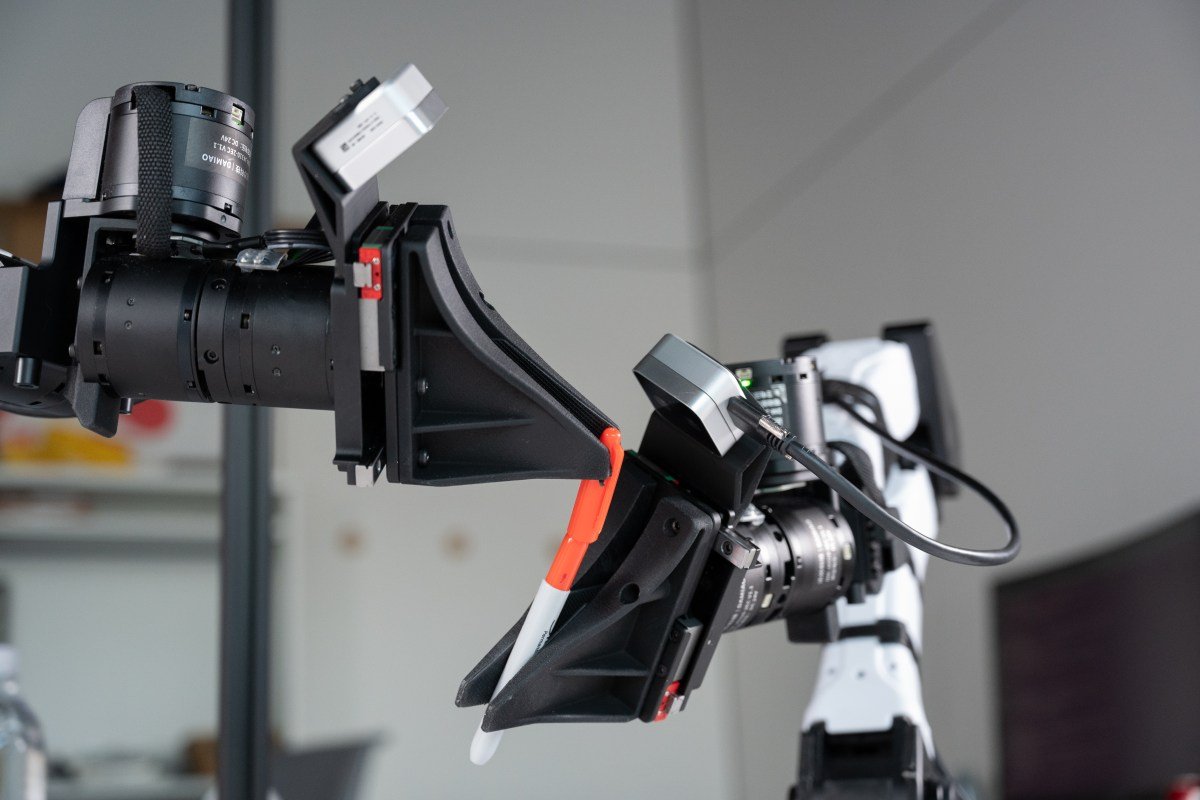
The first major deployment of U.S.-built autonomous ground vehicles in active combat is happening right now—in Ukraine. Forterra, a California-based developer of self-driving technology, revealed that over 100 of its Lancer vehicles have been moving supplies, evacuating wounded soldiers, and navigating some of the most dangerous terrain on earth since last October.

Scott Sanders, Forterra’s chief growth officer and a former U.S. Marine officer, told TechCrunch the experience is a brutal reality check. “I believe this to be true of every defense technology that’s ever been created—until you hit the realities of combat, you’re just not going to know,” he said.

The vehicles are funded by U.S. defense dollars, part of a broader push to modernize the American military through support for Ukraine’s resistance against Russian forces. While aerial drones have dominated headlines, the surveillance threat they create has driven Ukrainian commanders to seek ground-based autonomy too.

Why ground robots matter when drones rule the sky

Sergeant Major Corey Wilkens, who leads a U.S. Army program developing autonomous vehicles and tactics, put it bluntly: “There’s nowhere to hide.” He explained that soldiers on the ground are extremely vulnerable to first-person view drones, artillery, mortars, and other attacks. That makes unmanned ground vehicles (UGVs) a critical tool for keeping troops out of harm’s way.

Ukraine has been building its own battery-powered UGVs, but they max out at around 250 kilograms of cargo. Forterra’s Lancer, built on a Polaris ATV chassis with a custom sensor and compute stack, runs on gasoline and can haul 750 kilograms. That extra capacity makes a real difference.

“The bottom line is that this UGV for logistics and just maintaining our defense is the most important UGV in Ukraine,” a Ukrainian soldier who works with the vehicles told TechCrunch. (His identity is withheld for security reasons.) “It’s fucking fantastic, and we are dying to get more.”

2,500 miles, 1,100 missions, 52 casualty evacuations

The numbers tell a powerful story. Since arriving in Ukraine last October, Forterra’s Lancers have driven over 2,500 miles across more than 1,100 missions. They’ve carried 777,440 pounds of cargo total and completed 52 casualty evacuations. Some vehicles have been lost—typically when they get stuck in deep mud or difficult terrain, becoming sitting targets for Russian forces.

Those losses hurt, but they’ve also taught Forterra hard lessons about electronic warfare, remote software updates, maneuvering in extreme conditions, and keeping machines running under fire. The company, which has raised over $500 million in venture funding from investors like XYZ Venture Capital and Moore Strategic Partners, is now better positioned to compete for major national security contracts.

Teleoperation still rules the battlefield

Here’s the honest part: Ukrainian soldiers are mostly teleoperating the vehicles in combat zones. The machines are too valuable to risk on full autonomy, and the technology isn’t ready for the chaos of war. The vehicles can navigate diverse terrain on their own, but they can’t yet identify unexpected enemy forces and react appropriately.

“We actually need to be able to respond to the enemy threats, live, while it’s in front of the enemy, which the autonomy doesn’t know how to do yet,” the Ukrainian soldier explained.

The hard road to full battlefield autonomy

Forterra has been working on autonomous vehicles for 20 years. The company is now trying to blend classical self-driving car algorithms with newer generative AI that can handle generalized, unpredictable situations. One major bottleneck: gathering the right data.

“There’s a lot of things you have to do that aren’t available in an open source model because they’re not things that humans do, whether that’s figuring out how to navigate a minefield or operating a weapon system,” Sanders said. “You need to be able to turn the dials and some things more of a classical robotics approach, and then leverage AI where you need to.”

Competitors are chasing similar goals. Scout AI raised $100 million earlier this year to train foundation models for military platforms including UGVs. Startups like Field AI and Overland AI are also trialing unmanned ground vehicles with the U.S. military.

What American troops can learn from Ukraine’s war

Scott Philips, Forterra’s chief innovation officer, visited a Ukrainian unit’s operations center—an area within range of Russian attacks. That hands-on visit earned him respect from the soldiers he met.

“What struck me most was seeing exactly where the seams are: which steps are still manual, where data has to be re-entered or re-verified by hand, and where the team has already found ways to automate or speed things up,” Philips said. “That’s the kind of ground truth you can’t get from a slide deck.”

American military leaders are convinced the time for ground autonomy is now. “Ground autonomy is achievable now and we’ve seen it,” Wilkens said.

The price problem: cheaper UGVs needed for mass deployment

One clear message from Ukrainian troops: Make it cheaper. Forterra’s Lancers are already relatively affordable because they use Polaris’ commercial supply chain, but they’re still too expensive to deploy as freely as drones. “Attrition is just a fact of this battlefield, and we have lost a few at this point, and it hurt, and we need more, and therefore we need them cheaper,” the Ukrainian soldier said.

That cost challenge will shape the next generation of military autonomous vehicles. For now, the Lancers are proving that ground robots can survive combat—and that there’s still a long way to go before they fight on their own.

Continue Reading

Artificial Intelligence

Google’s Gemini Notebook Now Lets You Cite Books You Own — Here’s How It Works

Published

on

Gemini Notebook Expert Intelligence

Google’s Notebook AI Just Got Smarter — With Your Bookshelf

If you’ve ever wished your AI assistant could quote directly from a cookbook you own, or pull a specific argument from a biography sitting on your digital shelf, here’s the news you’ve been waiting for.

Google is rolling out a new capability for Gemini Notebook (the tool formerly known as NotebookLM) called Expert Intelligence. The name sounds fancy, but the idea is simple: instead of only drawing from documents you upload or pages you link, the AI can now tap into digital books you’ve actually purchased from the Google Play Books library.

That’s right — your personal library becomes a source. No more copy-pasting excerpts or hoping the AI finds a relevant PDF. If you own the book, you can cite it directly.

How Expert Intelligence Works in Practice

Let’s say you’re planning a week of dinners built entirely around chicken and spinach. Instead of scouring the web, you can ask Gemini to pull recipes from a Martha Stewart cookbook you own. The AI will search the text, pull relevant passages, and cite them as sources.

But it doesn’t stop at recipes. You can turn any owned book into a variety of formats:

  • Infographics — visual summaries of key concepts from the book.
  • Audio Overviews — listen to a conversational recap of the material.
  • Quizzes — test your understanding based on the book’s content.

It’s a natural extension of what NotebookLM already does with uploaded sources, just with a much more curated pool of knowledge.

Not a Free-for-All: Sharing Has Limits

Here’s a catch that’s worth knowing before you get too excited. If you create a shared notebook and add a book as a source, your collaborators can’t just freeload off your purchase. They’ll need to own or buy their own copy of the book to fully use Expert Intelligence. Google’s being careful about copyright, and that’s probably wise.

Which Publishers Are On Board?

The feature launches with a solid lineup of major publishers. We’re talking Bloomsbury, De Gruyter Brill, Johns Hopkins University Press, Macmillan Publishers, O’Reilly Media, and Penguin Random House. All told, that’s over 100,000 titles available from day one.

That’s a big deal for students, researchers, and lifelong learners who already rely on NotebookLM for organizing their research.

Free Book Offer — But Act Fast

To kick things off, Google is giving away one free book to users in the US. The catch? It’s “while supplies last,” so you’ll want to check the app sooner rather than later if you’re interested.

It’s a smart marketing move, honestly. Get people hooked on the feature with a freebie, and they’ll likely buy more books to keep using it.

What About the Main Gemini App and Search?

Right now, Expert Intelligence is available only in the Gemini Notebook app and its web dashboard. But Google has confirmed it’s planning to bring the feature to the core Gemini app and AI mode in Search down the road.

That expansion could be huge. Imagine asking Gemini in Search to explain a concept “according to this book” and getting a cited answer pulled straight from the text. It’s a glimpse of where AI-assisted research is heading.

Featured Notebooks: Extra Insights from Authors

Beyond the book-citing feature, Google has partnered with a handful of authors to create Featured Notebooks. These offer additional insights that go beyond what’s in the book itself — think of them as bonus material, but integrated right into your research workflow.

It’s a nice touch that adds value for readers who want more context or behind-the-scenes thinking from the authors they admire.

Why This Matters for Your Research Workflow

If you’re already using NotebookLM for projects, this is a meaningful upgrade. You no longer have to juggle between your book library and your notes app. The books you own become part of your AI-powered research stack.

That said, it’s not a replacement for critical thinking. The AI is still pulling from what it finds, and you should always verify the context. But as a starting point for essays, reports, or even just personal learning, it’s a powerful tool.

For more on how to get the most out of Google’s AI tools, check out our guide on using NotebookLM for research and our rundown of Google AI features for productivity.

So, is Expert Intelligence worth trying? If you own books on Google Play Books and you’re already in the Notebook ecosystem, absolutely. Just remember to check the free book offer before it runs out.

Continue Reading

Artificial Intelligence

Google Dreambeans AI app: Your personalized daily feed is now free — here’s how it works

Published

on

Dreambeans AI app

Google just made Dreambeans free — what changed?

Google has quietly dropped the paywall on Dreambeans, the Dreambeans AI app that curates a personalized daily feed of stories just for you. Starting now, any Google Account holder in the US can try it without spending a dime. The news first surfaced via 9to5Google, and it’s a significant shift from the app’s earlier rollout.

Dreambeans first appeared in June, but only for Google AI Ultra subscribers. Later, it expanded to AI Pro users. Now? It’s open to everyone. That’s a big deal for anyone curious about AI-driven content discovery but not ready to pay for a subscription.

Setup isn’t instant, though. Google says it takes about a day for the app to generate your first set of stories. The app itself is available on both Android and iOS, so you can start the process on your phone and check back tomorrow morning.

How the Dreambeans AI app builds your daily feed

Think of Dreambeans as a hyper-personal version of Google Discover, but smarter. With your permission, it taps into several Google services to understand what you care about. Here’s the breakdown:

  • Gmail and Workspace — Provides real-world context like receipts, bookings, or an upcoming flight.
  • Google Photos — Picks up on the people and places you frequently capture.
  • Calendar — Notes events and appointments that might spark story ideas.
  • YouTube — Tracks your active hobbies and viewing habits.
  • Search history — Flags interests you’re just beginning to explore.

Every morning, the app stitches these data points into a fresh batch of story suggestions. That could be a hike worth trying, a new restaurant in your neighborhood, or an event happening nearby. It’s not just generic content — it’s tailored to your life.

Custom artwork, not stock photos

One of the coolest touches? Each story comes with custom artwork generated by the Nano Banana image generator. Instead of boring stock photos, you get illustrated scenes that often depict you and people you know. It adds a personal, almost whimsical feel to the feed.

More Google Labs experiments worth trying

Dreambeans isn’t the only experiment coming out of Google Labs lately. If you run a small business, Pomelli can now build your entire brand identity from scratch — from your color palette to a full working website. That’s a serious time-saver for entrepreneurs who don’t have design skills.

For music lovers, ProducerAI lets you describe a song idea and walk away with actual beats, album art, and even a music video to match. It’s a wild tool for hobbyists and creators alike.

If you’re a student, there’s another perk worth noting. Google is offering a free year of Gemini AI Pro through a new student hub. That’s a smart move if you want to test premium AI features before committing to a subscription elsewhere.

Is Dreambeans the next big thing in AI feeds?

Honestly, it’s too early to say. But the move to make it free suggests Google is serious about gathering user feedback and refining the product. The AI feed space is getting crowded, with competitors like Microsoft and various startups pushing their own personalized content engines.

What sets Dreambeans apart is the depth of integration. It’s not just scraping public data — it’s reading your inbox and your photo library. That’s powerful, but it also raises privacy questions. You’ll need to weigh the convenience against the data access.

For now, if you’re in the US and curious, it’s worth giving it a shot. The setup takes a day, but the payoff is a feed that actually feels like it knows you.

Continue Reading

Artificial Intelligence

Sony Music, Warner Chappell sue Anthropic, accusing AI lab of ‘brazen’ copyright theft

Published

on

Sony Music Warner Anthropic lawsuit

Publishers take Anthropic to court over training data

Sony Music Publishing, Warner Chappell, and a coalition of other music publishers have filed a lawsuit against Anthropic and its co-founders, Dario Amodei and Benjamin Mann. The complaint, lodged late Friday in the U.S. District Court for the Northern District of California, accuses the AI lab of running a “brazen campaign of illegally torrenting, scraping, and downloading copyrighted works.”

This is more than a routine licensing dispute. The publishers are alleging what they call “blatant theft” — that Anthropic used thousands of copyrighted songs, lyrics, and sheet music to train its Claude AI models without permission or payment.

Anthropic isn’t staying quiet. “We disagree with the publishers’ claims and we intend to defend ourselves robustly in court,” a spokesperson told TechCrunch in an emailed statement.

Not the first IP fight for Anthropic

This isn’t Anthropic’s first rodeo in court over intellectual property. Some of the same lawyers behind this case previously represented Concord Music Group and Universal Music Group in a January lawsuit. They also led the Bartz v. Anthropic case, where a group of authors accused the company of using copyrighted books to train Claude.

In the Bartz case, a judge ordered Anthropic to pay $1.5 billion. The ruling was nuanced: using copyrighted works to train AI was deemed legal, but obtaining that content through piracy was not. That distinction matters here.

What’s different this time?

The new lawsuit is notably broader than its predecessors. It accuses Anthropic of “flagrant piracy” through illegal torrenting to secure millions of copies of books — including works containing lyrics and sheet music. The publishers argue this wasn’t just a copyright gray area; it was outright theft on a massive scale.

Legal experts will likely debate whether this case breaks new ground or simply extends the arguments from Bartz. Either way, the music industry is clearly drawing a line in the sand.

Why the music industry is pushing back

For publishers, the stakes couldn’t be higher. If AI companies can freely train on copyrighted music without compensation, the value of their catalogs could plummet. Lyrics, after all, are the backbone of countless streaming services, karaoke apps, and print publications.

This lawsuit isn’t just about money. It’s about control — who gets to decide how creative works are used in the age of generative AI.

What happens next

Anthropic has vowed to fight the claims. The company’s defense will likely hinge on the same arguments that partially succeeded in Bartz: that training on copyrighted material is transformative and should be allowed under fair use.

But the piracy angle complicates things. Torrenting, even for AI training, carries a different legal weight than simply scraping publicly available data. If the publishers can prove Anthropic knowingly engaged in illegal downloads, the court may not be sympathetic.

This case is one to watch. It could set a precedent for how AI companies source their training data — and whether the music industry can demand a slice of the AI pie.

For more on how AI is reshaping creative industries, check out our piece on AI music generation copyright issues and how AI companies handle licensing disputes.

Continue Reading

Trending