Connect with us

How To

Google Maps isn’t just GPS: These are the 3 features you should start using

Published

on

Google Maps hidden features

Google Maps is more than a navigation app

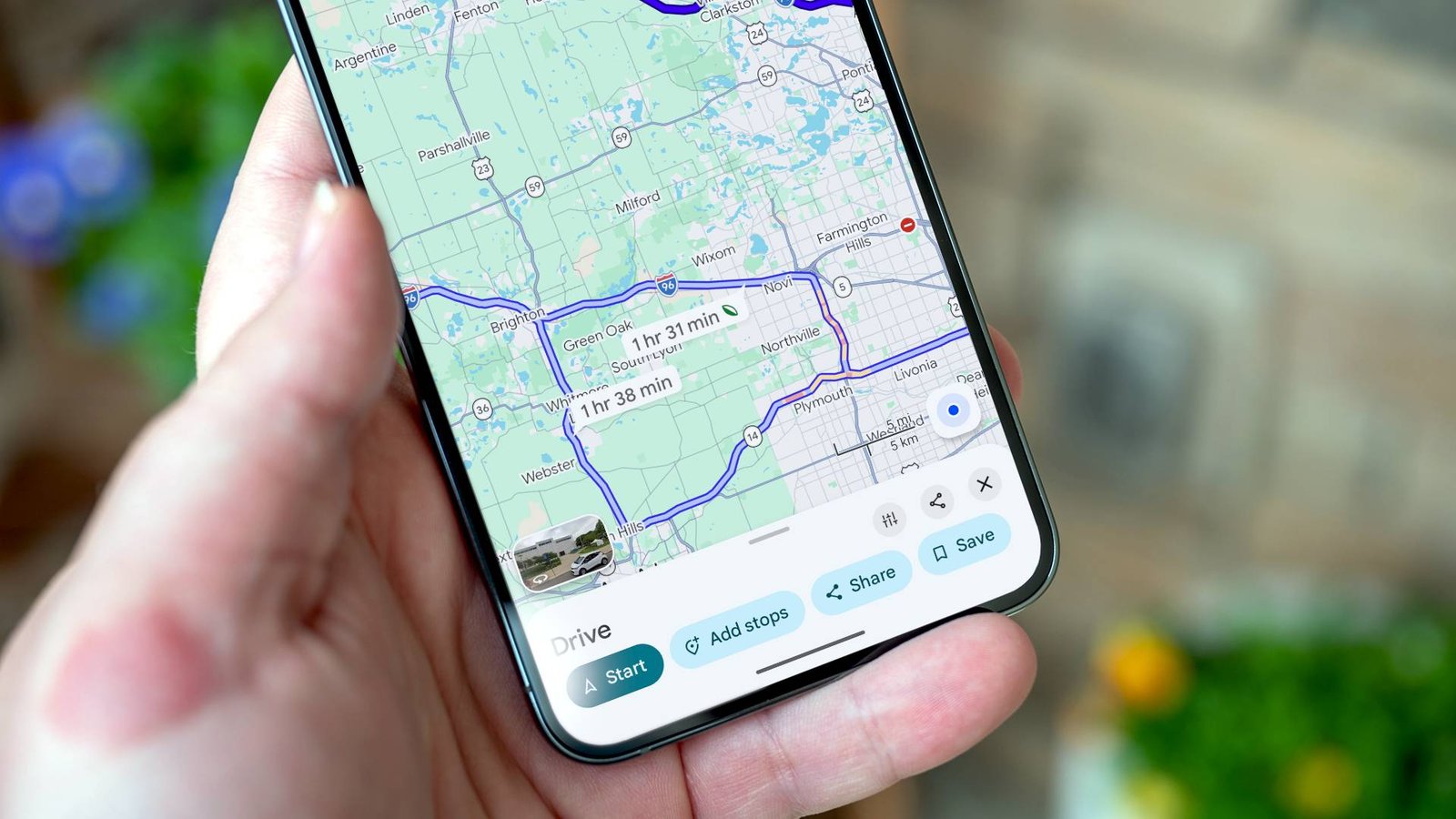
Most people treat Google Maps as a simple GPS tool. You type an address, hit start, and follow the blue line. That’s it. But the app has quietly become one of the most feature-packed tools on your phone — and most of us never touch 90% of what it offers.

I’ve spent years testing navigation apps and writing about them. And honestly? Google Maps still surprises me. Every few months, I stumble onto a feature I didn’t know existed. These three, though, are the ones I think everyone should be using right now.

1. Offline maps for when you lose signal

You’re driving through a remote area. Your signal drops. The map freezes. Panic sets in. This is the classic Google Maps nightmare — and it’s completely avoidable.

Google Maps lets you download entire regions for offline use. Before a trip, just search for the area you’ll be in, tap the name at the bottom, and hit “Download.” The app saves the map to your phone, and you can navigate without a data connection.

This works for walking, driving, and even transit directions. The downloaded maps don’t expire for 30 days, and you can update them anytime. For anyone who hikes, road-trips, or travels internationally, this is the single most useful Google Maps hidden feature.

How to download offline maps

  • Open Google Maps and search for a city or region.
  • Swipe up on the bottom card and tap “Download.”
  • Adjust the area rectangle if needed, then tap “Download” again.

That’s it. Next time you’re underground or in the mountains, your map still works.

2. Location sharing for peace of mind

Sharing your real-time location isn’t just for stalkers and suspicious partners. It’s genuinely useful. Let’s say you’re meeting friends at a festival, or you’re walking home late at night. A quick location share lets someone know exactly where you are — without a single phone call.

Google Maps has a built-in location sharing feature. You choose who to share with and for how long (15 minutes, an hour, or indefinitely). The other person gets a link and can watch your little blue dot move in real time. It works across Android and iOS, and it’s more reliable than texting your whereabouts every half hour.

For parents of teenage drivers, this is a lifesaver. For anyone coordinating meetups in crowded places, it beats “I’m by the big tree” every time.

How to share your location

  1. Tap your profile picture in the top right.
  2. Select “Location sharing.”
  3. Choose a contact and set the duration.

You can stop sharing at any moment. No awkward explanations needed.

3. Real-time transit info and live traffic updates

Here’s the thing about Google Maps that most people forget: it’s not just about getting from point A to point B. It’s about getting there the smart way. The app pulls live traffic data constantly, and it reroutes you automatically when a faster option appears.

But transit users get an even better deal. Open the transit layer, and you’ll see bus and train times updated in real time. Delays, cancellations, crowdedness — it’s all there. You can even see which exit to take at a station before you arrive. That’s the kind of detail that saves you ten minutes of wandering around underground.

For drivers, the traffic layer is just as valuable. Before you leave, glance at the map. Red lines mean trouble. Google Maps will suggest an alternative route before you even ask. It’s not perfect, but it’s far better than relying on radio traffic reports from 20 minutes ago.

Why these features matter more than you think

Look, I get it. Most people open Google Maps, navigate, and close the app. That’s fine. But the difference between a good navigation experience and a great one often comes down to these small tools.

Offline maps save you from dead zones. Location sharing gives you and your loved ones peace of mind. Live traffic and transit data turn a stressful commute into something almost manageable. None of these require a subscription or a special setup. They’re already in the app, waiting.

If you’re looking for more ways to get the most out of your phone, check out our guide on essential Android settings to change right now or learn how to customize your iPhone’s control center for faster access to the tools you use daily.

Final thoughts on Google Maps features

Google Maps has evolved far beyond its GPS roots. It’s a travel planner, a safety tool, and a traffic predictor all in one. The three features above are just the start — there are dozens more hiding in the app’s menus.

So next time you’re stuck waiting for a friend or sitting in traffic, open Google Maps and poke around. You might just find a feature that changes how you get around. And if you do, you’ll wonder why you didn’t start using it sooner.

Continue Reading
Click to comment

Leave a Reply

Your email address will not be published. Required fields are marked *

How To

Never Plug These Appliances Into a Smart Plug — It’s a Bigger Risk Than You Think

Published

on

smart plug safety

Smart Plugs Are Handy — But Not Universal

Smart plugs are one of the cheapest ways to make an old device feel new. Plug in a lamp, a fan, or a string of holiday lights, and suddenly you’ve got app control and voice commands for less than the cost of a nice dinner out.

But just because a device can plug into one doesn’t mean it should. In fact, some appliances can overload a smart plug, causing overheating, short circuits, or even fires. The risk is real, and it’s often overlooked.

Here’s what you need to know before you start smartening up every outlet in your home.

Know Your Smart Plug’s Limits

Most standard smart plugs are rated for 15 amps and 1,800 watts. That sounds like a lot, but it’s not unlimited. High-draw appliances like space heaters, air conditioners, and refrigerators can easily exceed that, especially on startup.

When a motor starts, it draws a surge of current — often two to three times its running wattage. A refrigerator, for example, might run at 600 watts but spike to 1,200 or more when the compressor kicks in. If you add that to anything else on the same circuit, you’re asking for trouble.

Check the wattage on the appliance label. If it’s close to or above the smart plug’s rating, don’t use it.

Appliances You Should Never Plug Into a Smart Plug

Some devices are simply too risky. Here’s the list of what to avoid:

  • Space heaters and other heating appliances: They draw massive current and are a leading cause of house fires. Smart plugs can’t handle the load, and the heat can damage the plug itself.
  • Refrigerators and freezers: Besides the startup surge, a power cut can leave your food spoiling if the smart plug doesn’t restore power properly. Plus, the compressor can be damaged by frequent on/off cycling.
  • Air conditioners and dehumidifiers: These have large motors that draw high current. Smart plugs aren’t designed for that kind of sustained load.
  • Microwaves and toaster ovens: High wattage and heat. The plug can melt or catch fire.
  • Hair dryers and curling irons: They pull 1,500 watts or more. Not safe.
  • Power strips and extension cords: Plugging a smart plug into a power strip — or vice versa — can overload the circuit and is a fire hazard.

Why These Appliances Are Dangerous

The problem isn’t just wattage. Smart plugs are small devices with limited heat dissipation. When you push high current through them, they heat up. Over time, that heat can degrade the internal components, leading to arcing and fires.

Also, many smart plugs are made with plastic housings that can melt. A smart plug fire risk isn’t just theoretical — there have been recalls and reports of incidents.

What You Can Safely Plug In

Don’t throw away your smart plugs just yet. They’re perfect for low-power devices:

  • Lamps and LED bulbs
  • Fans (small ones, not industrial)
  • Phone chargers
  • Televisions and entertainment centers
  • Coffee makers (with a timer, not left on)
  • String lights and holiday decorations

These draw minimal wattage and won’t stress the plug. You can even use smart plugs to automate your morning routine — coffee starts brewing before you wake up, lights turn on at sunset, and fans shut off when you leave.

Smart Plug Safety Tips to Follow

If you’re going to use smart plugs, do it right. Here are a few rules of thumb:

  • Always check the wattage rating on both the plug and the appliance.
  • Never daisy-chain smart plugs or connect them to extension cords.
  • Keep smart plugs away from water and heat sources.
  • Inspect plugs regularly for signs of discoloration or melting.
  • Use a smart plug with a built-in fuse or surge protector for extra safety.
  • If a plug feels hot to the touch, unplug it immediately and stop using it.

These smart plug safety tips can prevent most problems before they start.

The Bottom Line

Smart plugs are a great entry into home automation, but they’re not a one-size-fits-all solution. For high-power appliances, leave them on a standard wall outlet and skip the smart features. Your safety — and your home — are worth more than the convenience.

When in doubt, check the manual or consult an electrician. A little caution goes a long way.

Continue Reading

Social Media

Snap CEO dodges Specs preorder questions on earnings call

Published

on

Specs smart glasses

Investors wanted numbers. They got a vision.

Snap CEO Evan Spiegel spent Monday’s Q2 earnings call talking about the future of Specs, the company’s long-awaited smart glasses. What he didn’t do? Give investors any concrete details about preorder demand.

That’s notable, given the device’s September launch event is just weeks away.

When pressed on how early orders are tracking, Spiegel deflected. “What we’re hearing from folks is really that they want to try Specs,” he told investors. “It’s obviously a high consideration purchase at $2,195.”

That price point is the elephant in the room. It’s more than six times the cost of most Meta Ray-Ban smart glasses, which start around $350. It’s cheaper than Apple‘s Vision Pro at $3,500, but that’s a low bar. The real question is whether consumers will pay premium-device money for a first-generation wearable from a company better known for filters than hardware.

The “try before you buy” problem

Spiegel’s core argument is that Specs is a product people need to experience in person. “Developers and folks who are familiar with the platform really understand it and understand the technical leaps we’ve made with this generation,” he said. “I think for the broader public and consumers, it’s going to be really important for folks to go hands-on.”

That’s a reasonable stance for a $2,195 gadget. But it also means Snap is betting heavily on its launch event to generate the kind of buzz that translates into orders. A demo can win people over. A spec sheet, apparently, cannot.

Spiegel acknowledged as much: “Our upcoming launch event will be an important sort of starting point for that consumer-oriented journey.”

Why go it alone?

Investors didn’t just want preorder numbers. They also pushed Spiegel on the broader strategy. Why is Snap, a company with a market cap dwarfed by its rivals, trying to build the next computing platform on its own? Why not partner with someone bigger?

Spiegel’s answer was part confidence, part history lesson. He reminded investors that Snap was a late entrant in social media, competing against established players like Facebook and Instagram. “We had to really innovate to continue to grow,” he said. “What’s so unique about this opportunity for us is really that we’re a first mover, and that really plays to our strengths as an innovator.”

The implication is clear: in social, Snap was the underdog. In smart glasses, it’s the pioneer. And being first, Spiegel argues, is where the company shines.

The technical hurdle is real

He also pushed back on the idea that building Specs is just another hardware project. “I think what some folks maybe don’t understand yet, especially because Specs are so new and we’re really the first mover in this category, is how difficult the product is to execute from a technical perspective,” Spiegel said.

That’s a fair point. Snap has spent more than a decade developing this device, unveiling the current generation in June. The engineering challenges — optics, battery life, weight, processing power — are substantial. But investors are less interested in the difficulty than in the payoff.

Mass-market adoption is years away

When asked about product-market fit, Spiegel offered a sobering timeline: don’t expect Specs to hit the mainstream until closer to the end of the decade. “I think things, for example, like weight and cost are going to have to come down to see unit volumes really meaningfully pick up,” he said.

Translation: this is a long game. Snap is positioning Specs as a platform play, not a quick-hit product. The company’s bet is that developers will build the ecosystem that makes the glasses indispensable — and that Snap’s head start will matter once the market matures.

“We do have, I think, a real advantage here in that developers have been building on the Specs platform now for several years,” Spiegel added.

What to watch at the September launch

Spiegel’s non-answers may frustrate investors, but they also set the stage for the launch event. Here’s what matters:

  • Preorder numbers: If Snap shares any early demand figures, that will move the stock. If it stays quiet, expect more questions.
  • Developer momentum: The quality of third-party apps will signal whether the platform has legs.
  • Pricing strategy: Any hints of a cheaper model or carrier subsidies could change the conversation.
  • Competitive response: Meta and Apple aren’t standing still. Their next moves will shape the market.

For now, Snap is asking the market to trust its vision. That’s a harder sell than a spec sheet — but it’s the only one Spiegel is offering. If you’re tracking the broader smart glasses market trends, this launch is the one to watch. And for context on how Snap’s strategy compares to rivals, check out our breakdown of Meta Ray-Ban vs. Apple Vision Pro.

Continue Reading

How To

5 New Movies to Watch This Week: Kevin Hart, a Horror Hit, and More (July 20-26)

Published

on

new movies to watch

It’s a packed week for streaming premieres

If you’ve been scrolling through your apps wondering what to press play on, the week of July 20-26 has some genuinely strong options. Three major platforms are rolling out original films, and one of the year’s most talked-about horror movies just landed on Peacock.

Here’s the short version: Curry Barker’s Obsession is now streaming. Kevin Hart has a new comedy on Netflix. And an animated favorite returns on Apple TV+. Let’s break down all five picks.

1. Obsession (Peacock)

This is the one everyone’s been whispering about. Obsession, directed by Curry Barker, finally hit Peacock last week after months of festival buzz. It’s an innovative horror film that bends genre rules, and it’s already being called one of 2026’s most distinctive releases.

Barker, who built a following with his short films on YouTube, brings a fresh voice to the horror space. The movie doesn’t rely on cheap jumpscares. Instead, it builds dread through atmosphere and a genuinely unsettling performance from its lead. If you’re a horror fan who’s tired of the same old tropes, this one’s for you.

Why it’s worth your time

  • It’s a bold, original vision from a director to watch.
  • Peacock subscribers already have access — no extra rental fee.
  • It’s the kind of film that sparks conversation long after the credits roll.

2. Kevin Hart’s new comedy (Netflix)

Netflix is betting big on Kevin Hart this week with a brand-new original comedy. The film, which premieres July 22, pairs Hart with a supporting cast that knows how to land a punchline. Expect the usual Hart energy — fast talk, big physical comedy, and a heartwarming core that sneaks up on you.

It’s not trying to reinvent the genre. But it’s exactly the kind of crowd-pleasing entertainment that makes a Friday night easy. If you’ve liked Hart’s previous Netflix collaborations, this one fits right in.

What to know before you watch

The runtime is a tight 98 minutes, which is a plus for a comedy. No filler, just jokes and a predictable-but-comfortable plot. Perfect for background viewing or a family movie night.

3. The animated favorite (Apple TV+)

Apple TV+ is bringing back a beloved animated character in a new feature that drops this week. The film leans into nostalgia but adds enough modern storytelling to keep younger viewers engaged. It’s a visual treat — the animation quality is stunning, with vibrant colors and expressive character design.

This one’s a safe bet for parents looking for something the whole family can enjoy without cringing. There’s genuine wit in the script, and the voice cast delivers.

4. A hidden gem on Paramount+

Paramount+ is premiering an original that hasn’t gotten as much hype as the others — and that’s a shame. It’s a small-scale drama with a big emotional payoff. The performances are understated, and the direction is patient, letting scenes breathe.

If you’re in the mood for something quieter than a Kevin Hart comedy, this is your pick. It’s the kind of movie that reminds you why you love cinema in the first place.

5. One more for the weekend

Rounding out the list is a documentary that’s been making waves on HBO Max. It’s a deep dive into a cultural phenomenon that you probably have an opinion about, even if you didn’t know it. The archival footage alone is worth the watch.

Documentaries can sometimes feel like homework. This one doesn’t. It’s paced like a thriller, with revelations that land like plot twists.

How to decide what to watch

Still stuck? Here’s a quick cheat sheet:

  • Want to be scared? Go with Obsession on Peacock.
  • Need a laugh? Kevin Hart’s Netflix comedy is your safest bet.
  • Family movie night? The Apple TV+ animated feature wins.
  • In the mood for something deep? Check out the Paramount+ drama.
  • Prefer reality? The HBO Max documentary is a must.

And if you’re looking for more streaming suggestions, check out our guide to the best Netflix originals this month or the top horror movies on Peacock right now.

Happy watching. Let me know in the comments which one you picked.

Continue Reading

Trending