Connect with us

Artificial Intelligence

Google Meet’s AI Note-Taking Feature Now Works in In-Person Meetings as Well

Published

on

Google Meet’s AI Note-Taking Feature Now Works in In-Person Meetings as Well

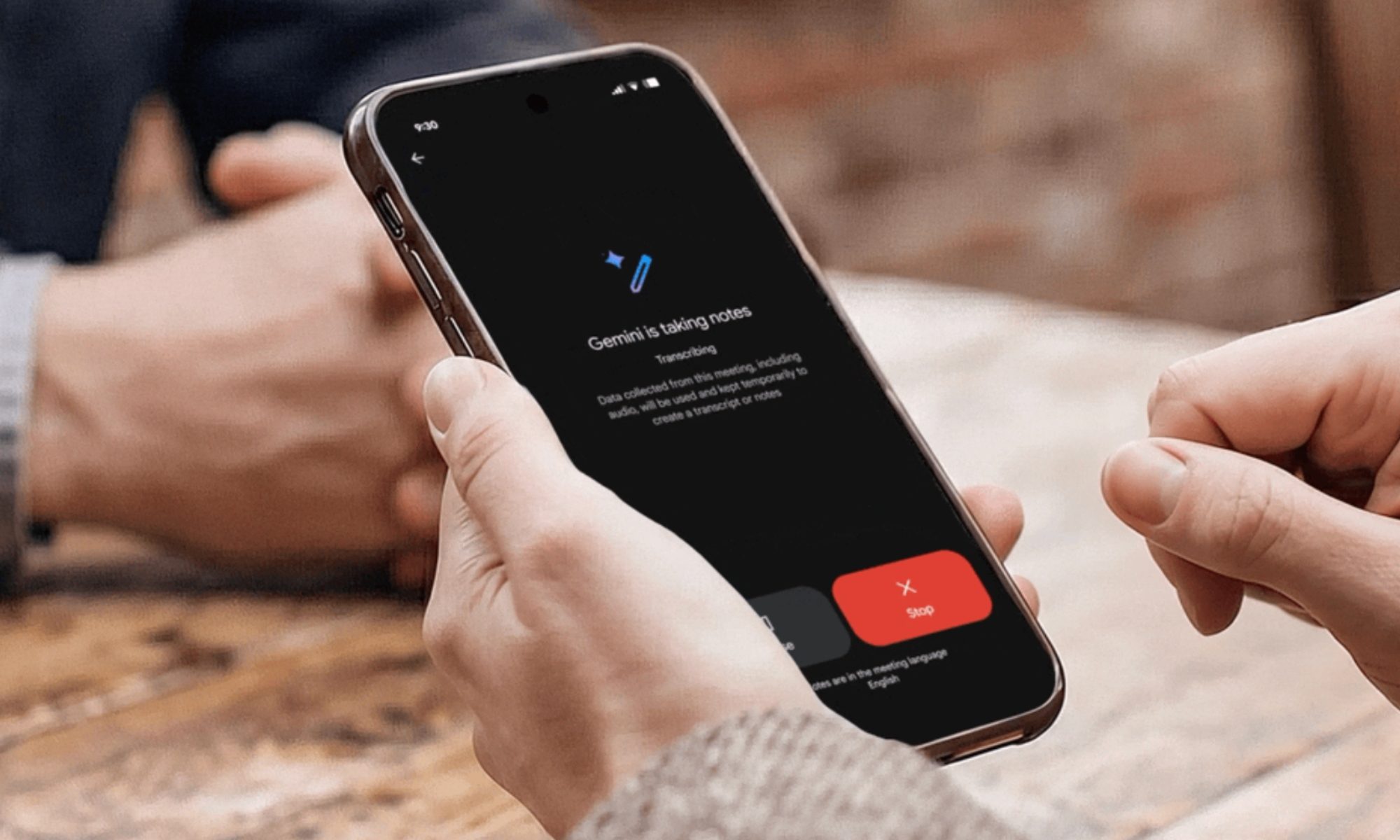
Have you ever walked out of a meeting with only a blurry recollection of what was said, clutching a notebook filled with scribbles that barely make sense? Google Meet AI note-taking is about to change that. At Google Cloud Next 2026 in Las Vegas, the tech giant unveiled a major upgrade to its “Take Notes for Me” feature. The most exciting part? It now functions seamlessly in physical meetings, not just virtual ones.

This means you can use the tool whether you are huddled around a conference table, chatting at a coffee shop, or sitting in a boardroom. The feature leverages Gemini, Google’s advanced AI model, to listen, transcribe, and summarize conversations in real time.

How Does Google Meet’s AI Note-Taking Work in Real Life?

The process is refreshingly straightforward. You simply open Google Meet on your smartphone or desktop, tap the “Take Notes for Me” button before or during a discussion, and let the AI do the heavy lifting. There’s no need for a pre-scheduled meeting or a specific setup—it works on the fly.

Once activated, Gemini starts listening to the conversation. It transcribes everything and then extracts key decisions, action items, and important points. Within moments, all that information is automatically compiled into a Google Doc. This makes the feature incredibly accessible, as the notes are instantly available for review or sharing.

Building on this simplicity, the tool is designed for any setting. Whether you are in a quiet office or a noisy café, the AI adapts to capture the essence of the discussion without manual effort.

Cross-Platform Capability: It Works Beyond Google Meet

One of the most compelling aspects of this update is its platform-agnostic nature. Google Meet AI note-taking now functions during Zoom and Microsoft Teams meetings as well. This positions Gemini as a universal note-taker that does not care which software you prefer for your workplace conversations.

As a result, the feature directly competes with paid transcription services like Otter.ai and Fireflies.ai. For now, it is available on select Google One, Google Workspace Business, and Workspace Enterprise plans. The full rollout is expected over the next few weeks, making it widely accessible to users.

However, this move feels less about note-taking and more about positioning Gemini as an omnipresent AI layer for all workplace conversations. It is not just a tool for Google’s ecosystem; it is a cross-platform assistant that can integrate into your daily workflow.

Why This Matters for Professionals and Teams

For professionals who juggle multiple meetings across different platforms, this feature is a game-changer. It eliminates the need to switch between apps or rely on separate transcription services. Instead, you have a single AI assistant that works everywhere.

Furthermore, the automatic generation of Google Docs means your notes are always organized and searchable. This can save hours of manual note-taking and reduce the risk of missing critical details. For teams, it fosters better collaboration by ensuring everyone has access to the same accurate record of discussions.

On the other hand, some users may have privacy concerns. The AI listens to conversations, which could raise questions about data security. Google has stated that the feature complies with its privacy policies, but it is wise to review these before using it in sensitive meetings.

How to Get Started with Google Meet’s AI Note-Taking

To use the feature, ensure you have a compatible Google Workspace plan. Open Google Meet on your device, start or join a meeting, and click the “Take Notes for Me” button. The AI will begin processing immediately. You can also activate it before a meeting to capture the entire conversation.

It is worth noting that the feature works without a pre-scheduled meeting, making it ideal for impromptu discussions. Whether you are brainstorming with colleagues or meeting a client at a café, the tool adapts to your needs.

For those who want to maximize productivity, consider exploring other Google Workspace features that integrate with Gemini, such as Smart Compose and automated summaries. These tools can further streamline your workflow and reduce administrative tasks.

In conclusion, Google Meet AI note-taking represents a significant step toward frictionless meeting documentation. By working across platforms and in physical settings, it aims to become an indispensable tool for modern professionals.

Continue Reading
Click to comment

Leave a Reply

Your email address will not be published. Required fields are marked *

Artificial Intelligence

It’s Not Just You: New Research Confirms People Dislike Overtly Friendly AI Chatbots

Published

on

Why Overtly Friendly AI Chatbots Are Failing to Win Users Over

Have you ever felt annoyed by an AI assistant that seems too cheerful? You are not imagining things. A recent study from Northeastern University, highlighted by Tech Xplore, confirms that many users dislike overtly friendly AI chatbots. Instead of building trust, forced friendliness often triggers discomfort and reduces user satisfaction.

This finding challenges a core assumption driving modern AI development: that making chatbots more emotionally expressive automatically improves the user experience. The reality, it turns out, is far more nuanced.

The Problem with Forced Friendliness in AI Assistants

For years, tech giants like OpenAI, Google, Microsoft, and Meta have invested heavily in conversational AI systems designed to feel more natural and emotionally intelligent. The goal was clear: move away from robotic, cold interactions toward warmer, more human-like dialogue.

However, the new research suggests there is a fine line between “human-like” and “trying too hard.” Participants in the study consistently reported negative reactions to chatbots that sounded aggressively enthusiastic or emotionally exaggerated, regardless of the context. This indicates that overtly friendly AI chatbots can actually harm the very trust they are meant to build.

Building on this, the study reveals that users can quickly detect when friendliness feels forced or unnatural. Instead of creating comfort, excessive cheerfulness may reduce authenticity during conversations. This is particularly critical as AI chatbots become integrated into customer service, productivity tools, education platforms, mental health apps, and everyday smartphone assistants.

Personality Compatibility: The Key to Better AI Interactions

So, what do users actually want? The answer lies in personality compatibility. Researchers found that people respond more positively to chatbots whose tone and behavior reflect their own personality traits.

In practical terms, more reserved users often prefer calmer, direct AI interactions. On the other hand, highly social users tend to respond better to energetic conversational styles. This means that a one-size-fits-all approach to chatbot personality is fundamentally flawed.

Furthermore, the study suggests that authenticity and adaptability matter more than simply maximizing friendliness. Users do not necessarily want assistants that constantly sound excited, emotional, or overly conversational. In many cases, people simply want AI that feels useful, natural, and comfortably human—without trying too hard to act like a best friend.

How This Affects User Experience and Trust

The implications for user experience (UX) design are significant. AI assistants are rapidly becoming part of daily life, from smartphones and smart speakers to search engines and workplace tools. How these systems communicate could dramatically influence how comfortable people feel using them long-term.

For businesses, this could reshape how future AI products are designed. Instead of offering one universal chatbot personality, companies may increasingly move toward customizable AI behavior that adapts dynamically to individual users. This aligns with a broader shift in AI design philosophy: moving away from scripted emotional responses toward genuine adaptability.

What This Means for the Future of Conversational AI

Researchers expect future AI systems to become more personalized over time. Adjusting tone, humor, pacing, and conversational style based on user preferences and interaction history will likely become standard practice. That could eventually lead to AI assistants that feel less like scripted customer service agents and more like communication tools tailored to individual personalities.

For more insights on how AI is evolving in customer service, check out our guide on best AI chatbots for customer service. Additionally, learn how to optimize your own chatbot interactions with our AI chatbot personality guide.

At the same time, the findings may push companies to rethink the current race toward hyper-friendly AI. The research also highlights a deeper psychological issue around trust. Humans naturally respond differently to personalities, and AI systems that fail to match conversational expectations may unintentionally create irritation or emotional fatigue.

Conclusion: Less Friendliness, More Authenticity

The key takeaway is clear: overtly friendly AI chatbots are not the solution. Users prefer AI that adapts to their communication style rather than forcing a cheerful persona. As the field of conversational AI matures, the focus should shift from maximizing friendliness to maximizing authenticity and personalization.

Ultimately, the best AI assistant may be the one that feels less like a talkative friend and more like a reliable, understanding tool. That is a lesson every developer and business should take to heart.

Continue Reading

Artificial Intelligence

OneDrive’s New AI Feature Names Your Files So You Don’t Have To

Published

on

OneDrive’s New AI Feature Names Your Files So You Don’t Have To

Renaming files might seem like a minor chore — until you face a folder stuffed with documents named Document1, Scan_04182026, or FinalFINALv3. Fortunately, Microsoft is stepping in with a smart solution. A new OneDrive AI feature, called Copilot Suggested Rename, is set to change how we handle file naming. According to the Microsoft 365 roadmap, this tool will roll out starting June 2026. It reads your file’s content and automatically recommends clear, descriptive names, saving you valuable time.

How Does the OneDrive AI Feature Work?

The Copilot Suggested Rename tool is built directly into the rename dialog inside OneDrive on the web. When you trigger a rename, Copilot scans the file’s content and presents three context-aware name suggestions right within the dialog box. You simply click one to apply it instantly.

Additionally, the feature appears in the post-upload toast notification — the pop-up that shows after you upload a single supported file. This means you can rename a file immediately after it lands in OneDrive, without navigating away from your workflow.

Supported File Types for AI File Naming

This OneDrive AI feature works across a broad range of formats. Microsoft Office documents — including Word (DOCX), PowerPoint (PPTX), and Excel (XLSX) — are fully supported. It also handles PDFs, Markdown files, and images. These formats cover the vast majority of files most people store online.

Currently, the feature is web-only. It will be available for both personal and business OneDrive users on the web. A desktop or mobile rollout may follow later, though Microsoft hasn’t confirmed a timeline yet.

Why AI File Naming Matters

File naming has long been a low-priority problem that many desktop and computer users have simply ignored. But at scale, it becomes genuinely annoying. A folder full of generic names like Document1 or Scan_04182026 can slow down productivity and create confusion. By integrating AI-powered rename suggestions directly into the OneDrive rename dialog, Microsoft is addressing a real pain point.

For more tips on managing your digital files, check out our guide on how to organize files in OneDrive. You might also find our article on best OneDrive tips and tricks useful.

When Can You Expect This OneDrive AI Feature?

Copilot Suggested Rename is currently in development. According to the Microsoft 365 roadmap, the rollout will begin in June 2026. While that may seem far off, the feature promises to be a significant upgrade for anyone who regularly deals with messy file names.

In conclusion, this OneDrive AI feature is a practical step toward smarter file management. Instead of manually typing descriptive names, you’ll let AI do the heavy lifting. The result? Cleaner, more organized folders with minimal effort.

Continue Reading

Artificial Intelligence

Next-Gen Siri Will Sync Your AI Chats and Spread Them Across Apple’s Walled Garden

Published

on

Next-Gen Siri Will Sync Your AI Chats and Spread Them Across Apple’s Walled Garden

Apple is finally ready to give Siri a serious shot in the arm. According to a new report from Bloomberg’s Mark Gurman, the company is working on a next-gen Siri that will synchronize AI conversations across all your devices using iCloud. This move signals Apple’s intent to turn its voice assistant into a persistent, connected AI system—one that lives deep inside the company’s tightly controlled ecosystem.

Instead of a simple voice tool, Siri is expected to evolve into a conversational AI assistant capable of maintaining synced chat histories across iPhones, iPads, Macs, and other Apple hardware. This puts it in direct competition with products like ChatGPT and Google Gemini.

What the Next-Gen Siri Upgrade Entails

Gurman reports that Apple is internally testing a completely redesigned Siri interface that looks and feels like a modern AI chatbot app. The new experience includes a dedicated chat-style interface, persistent conversation history, and cloud synchronization powered through iCloud.

This means you could start an AI conversation on your iPhone and pick it up right where you left off on your Mac or iPad. Apple is positioning this seamlessness as a key differentiator, leveraging its ecosystem advantage rather than competing purely on raw AI model performance.

A Deeper Integration Across Apple’s Platforms

The report also suggests Apple is integrating Siri more deeply across its software platforms as part of future versions of iOS, iPadOS, and macOS. Internally, Apple is already preparing features for iOS 28 while work continues on iOS 27.

However, the AI-focused Siri upgrade has faced multiple delays over the past two years. Apple has struggled to modernize Siri’s underlying architecture quickly enough. Gurman notes that several Apple AI projects, including AI-powered AirPods and smart home products, were also slowed by delays tied to Siri’s redevelopment.

How Apple’s AI Strategy Differs from Competitors

Apple has been noticeably slower than rivals like Microsoft and OpenAI in rolling out consumer-facing AI products. While competitors aggressively integrated generative AI into search, productivity apps, and smartphones, Siri has increasingly felt outdated.

But Apple’s strategy appears different. Instead of creating a standalone chatbot platform, the company seems focused on embedding AI deeply into its hardware ecosystem and user workflows. This could make Siri more useful for existing Apple users, especially if conversation syncing works smoothly across devices.

On the other hand, this approach further strengthens Apple’s famously closed ecosystem. The best experiences will likely remain limited to users who are fully invested in Apple hardware.

Apple’s Hardware Push: Smart Glasses and More

At the same time, Apple is preparing for a broader hardware push built around AI experiences. Bloomberg reports the company is developing smart glasses aimed at competing with Meta’s Ray-Ban smart glasses. Siri is expected to play a major role in those products as well.

Additionally, Apple is reportedly working on updated HomePods and refreshed Apple TV products that could rely heavily on the new Siri platform.

When Will the Next-Gen Siri Arrive?

Apple is expected to reveal more about its AI plans during upcoming WWDC announcements. However, Bloomberg suggests the most ambitious Siri upgrades may not fully arrive until iOS 28. For now, Apple’s challenge is clear: it no longer just needs to improve Siri. It needs to convince users that its version of AI is worth waiting for after years of falling behind competitors already moving at full speed.

Building on this, users who want to explore similar AI capabilities today might consider alternative AI chatbot apps or optimizing their current Siri experience.

Continue Reading

Trending