Connect with us

Artificial Intelligence

Google Nest Cameras Now Recognize Your Pets by Name: Inside the New Pet Memory Feature

Published

on

Google Nest Cameras Now Recognize Your Pets by Name: Inside the New Pet Memory Feature

Your smart home cameras are about to get a lot more personal with your four-legged family members. Google has rolled out a new capability called Google Nest Pet Memory, a feature powered by its Gemini AI that lets indoor Nest cameras and select Gemini-enabled cameras recognize individual pets by name. Instead of just alerting you to motion, your camera can now tell you exactly which furry friend walked through the living room.

How Pet Memory Works with Google Nest Cameras

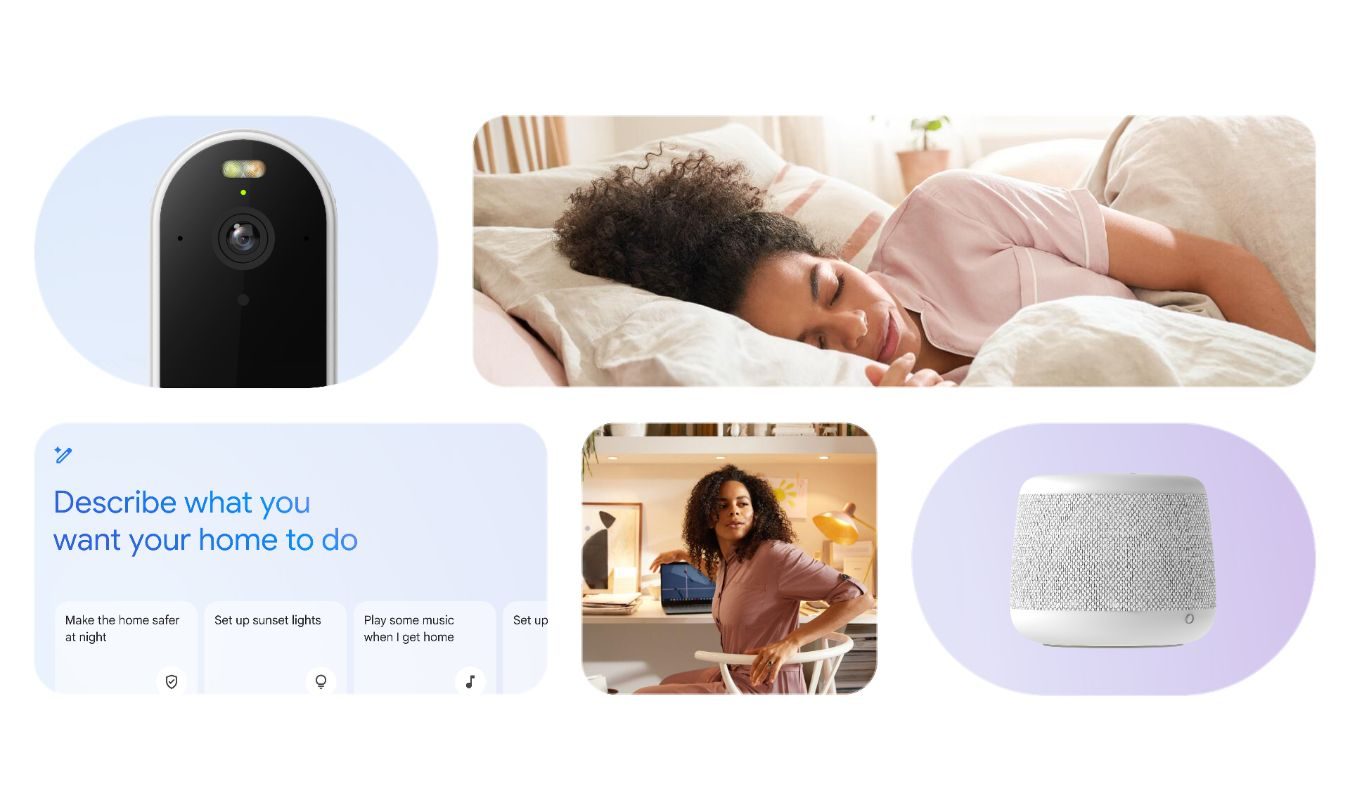
This new pet recognition camera function is part of Google’s broader push to make its smart home ecosystem more intelligent. To get started, you need to provide the system with specific details about your pet through the Ask Home feature. This includes the pet’s name and type—like “Whiskers, cat” or “Buddy, dog.”

Once configured, the Gemini for Home AI processes video feeds from compatible cameras. When a known pet triggers motion detection, you receive a tailored alert. Instead of a generic notification, you might see: “Buddy entered the kitchen” or “Whiskers is on the sofa.” This saves you from having to open a live feed or scrub through hours of footage just to identify which animal caused the commotion.

Google states that Pet Memory is designed to reduce misidentifications. For households with multiple pets, this specificity is a major advantage. The system can distinguish between a cat and a dog, and even between two similar-looking cats, provided the initial setup is accurate.

Cost and Requirements for Google Home Premium

Pet Memory isn’t a free add-on. It requires the Advanced plan of Google Home Premium, which is the company’s paid smart home subscription tier. This means the feature is tied to a monthly or annual fee, adding to the ongoing cost of owning Google’s smart home devices.

Currently, the feature works with indoor Nest cameras and select third-party cameras that have Gemini AI built in. Google has not yet provided a full list of every supported camera model or a regional rollout timeline. Before enabling Pet Memory, check your camera’s eligibility, ensure you have access to Ask Home, and verify that your subscription plan includes the Advanced tier.

Privacy and the Broader Context of Pet AI

Google isn’t the first company to bring AI-powered pet recognition to security cameras. Amazon’s Ring introduced a similar feature called Search Party, which uses AI to help find missing dogs by scanning participating outdoor Ring cameras. However, Ring’s rollout sparked significant privacy backlash. Search Party was enabled by default on eligible cameras, and a 2026 Super Bowl ad promoting the feature intensified public concern. The controversy grew to the point where Amazon’s Ring ended a planned partnership with Flock Safety, a law enforcement technology company.

Google’s approach is notably narrower. Pet Memory is confined to a user’s own supported indoor cameras and only activates after the owner manually adds pet details through Ask Home. There is no default-on setting, and the feature does not share data with neighbors or law enforcement. Still, the comparison highlights a critical tension: camera AI feels helpful when it tells you what your dog did while you were away, but it becomes sensitive when it identifies what lives inside your home.

What to Consider Before Enabling Pet Memory

Before you dive in, there are a few practical considerations. First, confirm that your Nest camera or Gemini-enabled camera is supported. Second, ensure you have the Google Home Premium Advanced plan. Third, think about who else has access to the camera alerts—if you share your Google Home account, everyone with access will see pet-specific notifications. Finally, weigh whether the convenience of named pet alerts justifies the subscription cost.

For pet owners who want to reduce false alarms and get more useful notifications, Google Nest Pet Memory offers a clear upgrade. But like all AI features in the home, it comes with trade-offs in privacy and cost. Read more about smart home privacy best practices and compare the best pet cameras of 2025.

Continue Reading
Click to comment

Leave a Reply

Your email address will not be published. Required fields are marked *

Artificial Intelligence

Google Play Books Introduces AI Reading Companion That Remembers Where You Left Off

Published

on

Google Play Books Introduces AI Reading Companion That Remembers Where You Left Off

Have you ever picked up a novel after a long break, only to spend the first ten pages trying to recall who’s who? Google believes it has a solution with its latest update to Google Play Books. The company is rolling out a new AI reading companion called Book Insights, designed to keep you immersed without flipping back through chapters.

What Is the Book Insights Feature?

Book Insights is an AI-powered tool that integrates directly into the Google Play Books app. Its standout element is the “Catch me up” button, which generates a quick recap of what you’ve already read. This means you can jump back into a story after days or even weeks away, without skimming old chapters to remember plot points. The feature feels tailor-made for sprawling fantasy series, mystery novels, or any book interrupted by real life.

How Does the AI Reading Companion Work?

When you open a book after a pause, simply tap the “Catch me up” button. The AI scans your reading history and produces a concise summary of key events, characters, and developments. No more flipping back through chapters to jog your memory. This functionality is particularly useful for readers juggling multiple books or those who take breaks during long reads. The AI reading companion learns from your progress, ensuring the recap is always relevant to where you left off.

Ask Questions and Highlight Passages

Google isn’t stopping at summaries. Readers can highlight passages and ask questions about characters, themes, or context as they continue reading. Think of it as having a book club companion available on demand—except it won’t spoil the ending or go off on tangents. This interactive layer transforms the reading experience, making it more engaging and accessible. For example, if you forget why a character made a certain decision, you can ask the AI for clarification without leaving the page.

Why This Matters for Readers

Forgetting plot details is one of the biggest reasons people abandon books midway through. A quick recap or character explanation could be enough to keep someone turning pages instead of giving up entirely. The AI reading companion addresses this pain point directly, offering a practical solution that enhances reading retention. Building on this, the feature reflects a broader trend of AI being woven into everyday apps. While many companies focus on flashy assistants, Google is targeting a specific problem: helping people stay immersed in what they’re already doing.

As a result, Book Insights could be genuinely useful for casual readers and bookworms alike. It eliminates the frustration of re-reading sections, saving time and mental energy. Additionally, the tool encourages deeper engagement by allowing readers to explore themes and character arcs on demand. This means that even dense literary works become more approachable, reducing the intimidation factor of complex narratives.

Availability and Initial Rollout

Book Insights starts rolling out today in Google Play Books. Initially, it will be available for select English-language titles, including thousands of books that can be read for free. If it works as advertised, it might end up being one of Google’s more practical AI additions yet. However, the long-term success will depend on how well the AI handles diverse genres and writing styles. For now, early adopters can test the feature and provide feedback, which will likely shape future updates.

For more on how AI is transforming digital reading, check out our guide to AI-powered reading tools. You can also explore the best ebook apps for 2025 to see how Google Play Books compares. Finally, read about Google’s other AI features to understand the broader strategy behind Book Insights.

The Bottom Line

Google’s AI reading companion is a smart addition to Play Books, addressing a common frustration with a simple, effective solution. By providing instant recaps and interactive Q&A, it helps readers stay engaged and finish more books. Whether you’re a fantasy fan or a mystery lover, this feature could make your reading sessions smoother and more enjoyable. Give it a try the next time you pick up a book after a break—you might be surprised how much time it saves.

Continue Reading

Artificial Intelligence

Martin Scorsese officially joins the AI camp — but it’s not what anyone expected

Published

on

Martin Scorsese officially joins the AI camp — but it’s not what anyone expected

Hollywood’s complicated relationship with artificial intelligence just took a surprising turn. Martin Scorsese, the legendary 83-year-old director behind classics like Goodfellas, Raging Bull, and The Departed, has signed on as a partner and adviser to Black Forest Labs, a fast-growing AI image generation startup. This move, reported by The New York Times, comes at a time when the industry remains deeply divided over AI’s role in creative work.

Scorsese used the company’s technology during preproduction for an upcoming film. He released a video from his New York office explaining his enthusiasm. For an industry that only three years ago went on strike partly over AI protections, this is a remarkable shift in tone.

How Scorsese uses AI — and why it matters

Scorsese is using AI exclusively for storyboarding, the process of visually mapping out scenes before cameras roll. He explained that for 70 years, he has drawn his own storyboards, but always struggled to communicate exactly what he sees in his head to his cinematographer, production designer, and art director. Black Forest Labs’ technology, which builds on open AI models called FLUX, helped him solve that problem.

As a result, the director can now translate his vision more precisely. This means that Martin Scorsese AI storyboarding is not about replacing human creativity — it’s about enhancing the director’s ability to collaborate. The startup, a 70-person company based in Freiburg, Germany, is currently valued at around $3.25 billion. Its technology already powers image features inside Adobe, Canva, Microsoft, and Meta.

Hollywood warms up to AI despite lingering protests

Scorsese isn’t alone. Plenty of other big names are moving in the same direction. Amazon MGM Studios recently unveiled three AI-generated animated series for children. Meanwhile, Netflix is building an internal studio called INKubator to produce AI-generated animated content. Val Kilmer’s likeness is also being brought back using AI technology in the upcoming film As Deep as the Grave. An AI actress named Tilly Norwood is already making waves in Hollywood, with her very existence sparking fierce debate about where the industry is headed.

However, not everyone is convinced. Steven Spielberg voiced strong concerns publicly, making clear he opposes AI replacing human creativity in filmmaking. Seth Rogen and Guillermo del Toro also pushed back on AI at Cannes. The debate is far from settled, but Scorsese’s endorsement suggests the conversation has moved well past if and firmly into how.

The bigger picture: AI as a tool, not a replacement

Building on this trend, what Scorsese’s partnership reveals is that AI can serve as a powerful assistant rather than a competitor. For directors who struggle to visualize scenes or communicate complex ideas, AI-driven storyboarding offers a bridge. This approach does not eliminate jobs — it changes the workflow. In fact, many in the industry are now asking: can Martin Scorsese AI storyboarding become a standard practice for filmmakers everywhere?

On the other hand, the ethical concerns remain. Could AI eventually replace human actors or writers? The strikes of 2023 highlighted these fears. Yet, as companies like Black Forest Labs grow, the line between tool and threat continues to blur. For more on how AI is reshaping creative industries, check out our guide to AI creative tools.

What this means for the future of filmmaking

Ultimately, Scorsese’s move signals a pragmatic shift. Instead of resisting AI, major filmmakers are experimenting with it. This could lead to faster preproduction, more detailed storyboards, and richer visual storytelling. But it also raises questions about copyright, originality, and the soul of cinema. As the Martin Scorsese AI storyboarding trend grows, the industry will need to find a balance between innovation and tradition.

For now, the director’s endorsement gives AI a new level of credibility. If an Oscar-winning filmmaker like Scorsese can embrace this technology, others may follow. To learn more about AI in entertainment, visit our analysis of AI trends in film. The conversation is evolving, and Hollywood is watching closely.

Continue Reading

Artificial Intelligence

Asus Zenbook 14 Gets a Splash of New Colors, and Hopefully, a MacBook Neo-Tier Price, Too

Published

on

Asus Zenbook 14 New Colors Steal the Show at Computex 2026

At Computex 2026, Asus unveiled a refreshed version of its popular Zenbook 14, and this time, the big news isn’t just about processors or AI chips. Instead, the company is betting on aesthetics. The new Asus Zenbook 14 new colors—Arctic Blue, Komodo Coral, and Zabriskie Beige—bring a fresh, vibrant look to the ultraportable market. Most AI laptops still stick to muted grays and silvers, but Asus is taking a bolder approach. This could position the Zenbook 14 as a serious MacBook Neo alternative, especially if the pricing lands right.

Asus hasn’t confirmed a price yet, but the hope is that this laptop will compete at a MacBook Neo-tier price, making its design a bonus rather than a luxury tax. For now, the Zenbook 14 checks all the premium boxes: a lightweight 1.1kg chassis, OLED display options, and support for Copilot+ PC features. Let’s dive into what makes this laptop stand out.

Why the Asus Zenbook 14 New Colors Matter

Most AI PCs still look like they’re designed to disappear in an office supply closet. The Zenbook 14 pushes the other way, using softer nature-inspired finishes to feel less anonymous. Asus lists a ceramic-style Ceraluminum lid, a metal body, a 16:10 OLED display, full I/O, a larger touchpad, and an easy-lift hinge. The tone-on-tone color treatment extends across the lid, logo, chassis, and keyboard—not just the top cover.

This is a clear departure from the restrained design language of Apple’s MacBook Air. While Apple has restraint, Asus is offering range. That advantage only holds if the Zenbook 14 lands at a price that makes the design feel like a bonus instead of a luxury tax. Therefore, the Asus Zenbook 14 new colors could be a key differentiator in a crowded market.

AI Hardware and Performance: More Than Just a Pretty Face

Under the hood, the Zenbook 14 offers processor choices spanning Intel, AMD, and Snapdragon. The Snapdragon version uses a Snapdragon X processor with a 45 TOPS NPU, while the broader lineup can reach up to 50 TOPS depending on configuration. This puts the machine in Copilot+ PC territory, giving it enough hardware for on-device AI features.

Battery life is the more useful everyday claim. Asus lists more than 21 hours of use, fast charging, and an all-in-one adapter. These features matter more in a backpack than broad promises about smarter workflows. Additionally, the OLED display helps a lot. Asus lists a 16:10 panel with an 88% screen-to-body ratio on the Qualcomm model, aiming the machine at people who want a compact laptop without giving up a premium screen.

Is the Zenbook 14 a True MacBook Neo Alternative?

The Apple comparison is hard to avoid, but Asus has a cleaner lane than chasing the MacBook Air. The MacBook Neo alternative label fits if Asus can deliver a lightweight, long-lasting laptop with a vibrant design at a competitive price. As of now, the Zenbook 14 doesn’t need to beat the MacBook Air at being a MacBook Air. It needs to feel different, stay light, last long, and come in low enough that the bolder design feels like a smart buy.

Asus hasn’t provided the most important buyer detail yet. There’s no confirmed price in the supplied information, and availability isn’t pinned down beyond the broader Computex announcement. This makes any MacBook Neo-tier price comparison more hope than verdict for now. However, a 1.1kg OLED laptop with real color options, Copilot+ PC hardware, and long battery claims has a clear lane if Asus avoids premium-for-premium’s-sake pricing.

Final Thoughts: What to Watch For

For those considering an OLED ultraportable laptop, the Zenbook 14 is a strong contender. Watch for regional pricing, configuration splits, and whether every color comes to major markets. If Asus gets the pricing right, this could be one of the most compelling lightweight laptop 1.1kg options of the year.

For more on the latest in computing, check out our Computex 2026 coverage and best ultraportable laptops guide.

Continue Reading

Trending