Connect with us

Artificial Intelligence

Google’s Gemini Can Now Comb Through Your Gmail Inbox While You Work in Drive

Published

on

Google’s Gemini Can Now Comb Through Your Gmail Inbox While You Work in Drive

Google is taking its AI assistant deeper into the workplace. With a fresh update, users can now pull Gmail conversations directly into Ask Gemini in Drive. This means the AI can analyze emails, documents, and folders all in one place. The Gemini Gmail Drive integration is designed to save time and reduce the hassle of switching between apps.

Rolling out to eligible Google Workspace and Google AI subscribers, the feature lets you ask complex questions without leaving Drive. Instead of manually hunting through your inbox and files, you can feed entire email threads into Gemini alongside your documents. The result? Context-aware answers that pull from everything relevant.

How Gemini Turns Drive Into a Smarter Workspace

Until now, Ask Gemini in Drive mostly relied on files and folders for reference. The new update changes that by adding Gmail threads as a source. Gemini can now analyze conversations, attached documents, and related Drive files together. Google describes this as an “immersive workspace” built for deep focus and multi-turn conversations.

For example, you could ask Gemini to summarize a long email chain, cross-reference information between a document and an inbox thread, or quickly surface decisions buried across multiple conversations. This makes Drive far more useful as a productivity hub. Instead of treating Gmail and Drive as separate services, Gemini turns them into one searchable knowledge base. Professionals can manage projects faster, especially when critical details are scattered across documents and long email chains.

Building on this, the AI assistant can help with tasks like drafting replies based on past conversations or finding attachments mentioned in emails. It’s a significant step toward a unified workplace experience.

Privacy and Security: What You Should Know

While the convenience is clear, the feature also raises fresh concerns. Giving an AI assistant access to your inbox—even temporarily—can make some users uneasy. Google says the functionality only works when you intentionally add Gmail threads as sources. It’s not automatically combing through your emails without your permission.

However, the feature is enabled by default if Gemini for Workspace in Drive is already turned on by administrators. End users must also have Workspace smart features enabled to use Ask Gemini in Drive. This means that in some organizations, the AI might already have the green light to access inbox data. For sensitive workplace communication, this could be a sticking point.

Google emphasizes that the goal is to provide “a complete view of business context” for more accurate AI responses. But for users wary of AI’s reach, it’s worth checking your admin settings. You can read more about managing your Google Workspace privacy to stay in control.

Availability and Rollout Details

The rollout began on June 3, 2026, and is gradually expanding over a period of up to 15 days. The feature is available for Business Standard and Plus, Enterprise Standard and Plus, Google AI Pro and Ultra, AI Expanded Access, and select Education plans. If you’re on a personal Google account, you won’t have access yet.

This update comes as tech giants race to embed AI into workplace software. Microsoft has been pushing similar capabilities through Copilot across Outlook and Office. Google, meanwhile, is steadily embedding Gemini into every corner of Workspace. The competition is heating up, and users are reaping the benefits—but also facing new questions about data privacy.

For a deeper look at how AI is reshaping productivity tools, check out our guide on maximizing AI in the workplace. And if you’re curious about alternative approaches, see how Microsoft Copilot compares to Gemini.

Final Thoughts

The Gemini Gmail Drive integration is a powerful addition for Workspace users. It streamlines research, saves time, and makes Drive a true command center. But with great power comes great responsibility. Make sure your team’s settings align with your privacy standards. As AI becomes more embedded in our daily tools, staying informed is the best defense against unexpected data access.

Continue Reading
Click to comment

Leave a Reply

Your email address will not be published. Required fields are marked *

Artificial Intelligence

Google is quietly buying Android app code from developers to supercharge its AI coding models

Published

on

Google is quietly buying Android app code from developers to supercharge its AI coding models

Google has started reaching out to a select group of Android developers with an unusual proposal: cash for their code. As first reported by 404 Media, the tech giant is inviting certain Google Play developers to join what it calls a “confidential content offer pilot.” The email frames the deal as a straightforward revenue opportunity, stating that participants can “get paid for sharing the code powering your apps, as well as your archived projects.”

But is this really just about giving developers extra income? The fine print tells a different story.

What Google really wants: training data for AI coding models

On the surface, the offer seems generous. Google assures developers they retain full intellectual property rights, and the license is non-exclusive. However, a link buried in the email leads to a page titled “partnerships to improve our AI products.” There, Google openly states it is paying for “non-public content in a range of media formats” to enhance its artificial intelligence models.

Connecting the dots is straightforward. Google’s Gemini has made impressive strides in image and text generation, but its coding capabilities lag behind competitors. Meanwhile, Anthropic has ridden the success of Claude Code to a valuation higher than OpenAI. OpenAI itself launched its own Codex app, targeting developers directly. At the recently concluded Google I/O, the company showcased its Antigravity 2.0 IDE, which can create entire apps from scratch.

This means that Google is eager to train its AI with real-world code to close the gap. Buying actual app code from developers is a fast track to improving its coding tools without having to scrape the web or rely solely on synthetic data.

Is there anything wrong with this approach?

At first glance, the deal appears fair. Developers keep their intellectual property, the license is non-exclusive, and they get paid. That’s a far cry from the practices of many AI companies that have trained models on hundreds of thousands of books and online publications without permission or compensation.

However, the lack of transparency in Google’s email is worth scrutinising. Framing an AI data acquisition program as a simple “revenue opportunity” without explicitly mentioning artificial intelligence feels like the company is hoping developers won’t ask too many questions. This is a common tactic in the tech industry, where companies often downplay the ultimate use of data to avoid pushback.

Building on this, the long-term impact on developers could be significant. Once Google trains its models on real app code, those same AI tools might eventually replace the need for human developers in certain tasks. While the immediate payment is welcome, developers may be helping to build the very tools that could reduce their future earning potential.

How Google’s pilot compares to industry trends

Google is not alone in seeking high-quality code for AI training. Companies like OpenAI and Anthropic have long used public code repositories, but they also rely on proprietary data. Google’s approach is more direct: it is paying developers for access to private, non-public code that is likely cleaner and more structured than what is available on the open web.

This strategy could give Google an edge in the race to build the best AI coding assistant. The company’s Gemini model has been criticised for being behind in code generation compared to Claude Code and ChatGPT’s Codex. By acquiring real-world code, Google can fine-tune its models to handle a wider variety of programming languages, frameworks, and real-world use cases.

Nevertheless, the ethical implications are complex. While developers are compensated, the lack of clarity in the initial email could erode trust. Google would be wise to be more upfront about the purpose of the pilot, especially given the growing scrutiny around AI training data practices.

What developers should consider before signing up

If you are an Android developer who receives this email, there are several factors to weigh. First, the payment terms: how much is Google offering, and is it a one-time payment or ongoing? Second, the scope of the license: while non-exclusive, what exactly can Google do with your code? The email does not specify whether Google can use the code to train models that compete directly with your own apps.

Third, consider the competitive landscape. By sharing your code, you might be helping Google build a tool that could make your own skills less valuable in the long run. That said, for many independent developers, the immediate cash injection could be a lifeline.

For more insights on how AI is reshaping the developer landscape, check out our guide on AI coding tools in 2025 and learn about Android development trends.

Final thoughts: a calculated move in the AI arms race

Google’s confidential content offer pilot is a calculated move in the ongoing AI arms race. It is not inherently unethical — the company is offering payment, respecting intellectual property, and being transparent in its linked terms. However, the lack of upfront disclosure about AI training in the email itself raises eyebrows.

As AI coding tools become more sophisticated, the value of human-written code may shift. For now, developers have a choice: take the money and help train the next generation of coding assistants, or keep their code private and watch from the sidelines. Either way, the landscape is changing fast.

Continue Reading

Artificial Intelligence

Coursera Launches AI-Powered Short-Form Feed: The TikTokification of Education

Published

on

Coursera Launches AI-Powered Short-Form Feed: The TikTokification of Education

Online learning giant Coursera is reimagining digital education with a bold new feature: an AI-driven, scrollable feed of short-form video lessons. This move directly mirrors the addictive, recommendation-based design of platforms like TikTok and Instagram Reels. The Coursera short-form AI feed curates bite-sized clips, explainers, and mini-lessons tailored to each user’s interests, career goals, and learning history. Instead of committing to hour-long courses, learners can now dip into quick, snackable content designed to spark curiosity and fit into busy schedules.

This shift signals a major transformation in the online education landscape. By prioritizing personalization and microlearning, Coursera aims to tackle two persistent challenges: low course completion rates and the intimidation factor of lengthy certification programs. But can this TikTok-inspired approach truly enhance learning, or will it simply turn education into another endless scrolling habit?

How the AI-Powered Feed Works

The new feature operates much like a social media timeline. Users swipe through a continuous stream of short educational videos, each lasting just a few minutes. The AI engine analyzes user behavior—what they watch, skip, or finish—to refine recommendations in real time. Topics span coding, business, AI, data science, personal development, and productivity.

According to Coursera, the system adapts based on engagement patterns, surfacing content that users are more likely to complete or explore further. This approach lowers the barrier for newcomers who might feel overwhelmed by traditional long-form courses. In essence, the feed acts as a discovery tool, guiding users toward subjects they may eventually want to study in depth.

Building on this, the platform uses AI to align content with individual career aspirations and learning habits. Rather than offering a one-size-fits-all homepage, the feed evolves dynamically, ensuring that every swipe feels relevant and timely.

Why Short-Form Learning Matters Now

Online education exploded during the pandemic, but retention rates have remained stubbornly low. Many users sign up for courses but never complete them. The Coursera short-form AI feed directly addresses this by making learning feel less daunting and more integrated into daily routines.

Younger audiences, in particular, have gravitated toward short-form video as their primary medium for consuming information. Platforms like YouTube Shorts and TikTok have already reshaped how people discover everything from cooking hacks to financial advice. Educational platforms are now following suit, betting that bite-sized content can improve accessibility without sacrificing depth.

However, this trend raises critical questions. Critics warn that optimizing education for shrinking attention spans may oversimplify complex subjects. While microlearning can boost initial engagement, it may not replace the deep concentration required for mastering advanced topics. The challenge lies in balancing accessibility with intellectual rigor.

AI Personalization: The Engine Behind the Feed

At the heart of this innovation is sophisticated AI personalization. Coursera’s algorithms analyze not just what users watch, but how they interact with content—pausing, rewatching, or skipping. This data feeds a continuous feedback loop that sharpens recommendations over time.

The company is betting heavily on this technology to differentiate its platform. By offering a highly tailored experience, Coursera hopes to increase user retention and encourage deeper exploration. The feed is designed to serve as an entry point, nudging learners toward full courses and certification programs after they’ve built confidence through short clips.

For more on how AI is reshaping digital platforms, check out our guide on AI personalization trends in 2025.

The Role of Microlearning in Modern Education

Microlearning—delivering content in small, focused bursts—is not new, but its integration with AI-driven feeds represents a leap forward. Studies suggest that short, repeated learning sessions can improve knowledge retention compared to marathon study sessions. Coursera’s approach combines this science with the addictive mechanics of social media, creating a powerful tool for habit formation.

Nevertheless, the effectiveness of this model depends on content quality. If the feed prioritizes viral appeal over educational value, it risks diluting the learning experience. Coursera insists that its AI curates from a library of vetted academic and professional resources, but the ultimate test will be user outcomes.

What This Means for the Future of Education

The launch of this AI-powered feed reflects a broader industry shift toward personalized, on-demand learning. As algorithms become more adept at predicting user needs, the line between entertainment and education may blur further. This could democratize access to knowledge, making it easier for anyone to learn new skills on their own terms.

However, the move also invites scrutiny. Will learners truly engage with substantive material, or will they gravitate toward the most entertaining clips? The risk of creating a “scrollable classroom” is real, where depth is sacrificed for dwell time. Educators and platform designers must collaborate to ensure that short-form content serves as a gateway, not a substitute, for meaningful study.

For insight into other platforms embracing similar strategies, read our analysis of short-form video in education.

Conclusion: A Step Forward or a Distraction?

Coursera’s AI-driven short-form feed is a bold experiment in reimagining online learning. By borrowing from social media’s playbook, it aims to make education more engaging, accessible, and personalized. The early signs are promising: lower barriers to entry, higher engagement, and a more intuitive discovery process.

Yet the ultimate measure of success will be learning outcomes. If the feed can guide users toward deeper study without sacrificing intellectual depth, it could set a new standard for digital education. If not, it risks becoming just another distraction in an already crowded attention economy. Either way, the Coursera short-form AI feed marks a pivotal moment in how we think about teaching and technology.

Continue Reading

Artificial Intelligence

Why Meta’s Muse Spark AI May Take Longer to Reach Your Apps Than Expected

Published

on

Why Meta’s Muse Spark AI May Take Longer to Reach Your Apps Than Expected

Meta has been making bold claims about its artificial intelligence capabilities for years. Yet according to recent reports, the company’s next-generation AI model—codenamed Muse Spark—is facing significant delays. The Wall Street Journal has revealed that Meta repeatedly pushed back the release of this flagship model, citing performance issues and internal debates about its competitiveness.

These Muse Spark AI delays come at a critical time. The tech giant has invested billions in AI infrastructure and positioned itself as a major player in the generative AI race. But the setbacks suggest that building a truly competitive AI system is harder than the company anticipated.

What Is Muse Spark and Why Does It Matter?

Muse Spark was designed to be Meta’s most advanced multimodal AI system yet. The model was expected to handle text, images, reasoning, and even app-level interactions at a much higher level than current Meta AI offerings. According to internal plans, the company intended to release Muse Spark to developers, allowing third-party apps to build AI-powered tools around it.

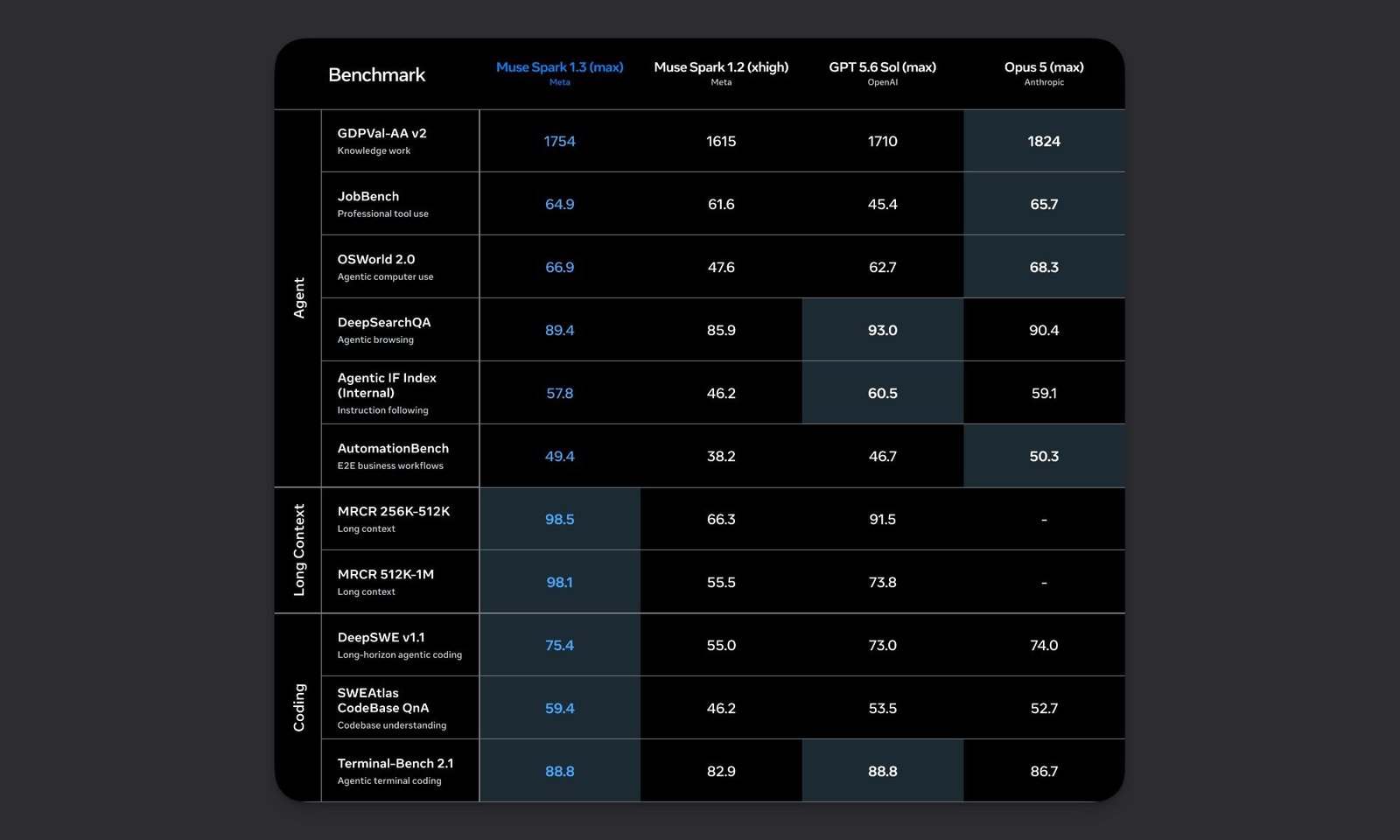
However, engineers and executives within Meta have grown increasingly concerned. The model reportedly still falls short of rivals like OpenAI, Google, and Anthropic in key areas, including reasoning quality and overall performance consistency. This has led to repeated delays as the team tries to close the gap.

As a result, users should not expect Muse Spark to appear in their Instagram, WhatsApp, or Facebook apps anytime soon. The timeline remains uncertain, and the company has not officially confirmed a release date.

Internal Struggles and the Competitive Landscape

Meta’s AI ambitions are running into a harsh reality. The company has spent the last two years aggressively integrating AI assistants across its ecosystem, including Facebook, Instagram, WhatsApp, Messenger, and even hardware like Ray-Ban smart glasses. Yet despite this aggressive rollout, the next major leap appears to be slipping further behind schedule.

The delays highlight just how brutally competitive the generative AI race has become. Companies are no longer simply building chatbots. They are competing to create AI systems capable of replacing search engines, powering operating systems, automating workflows, and eventually becoming full digital assistants. Meta CEO Mark Zuckerberg has repeatedly emphasized AI as one of the company’s biggest long-term priorities, with tens of billions of dollars spent on chips, data centers, and infrastructure.

Nevertheless, rivals are moving extremely quickly. OpenAI continues expanding ChatGPT’s ecosystem, Google is deeply integrating Gemini into Android and Workspace, and Anthropic is increasingly attracting enterprise customers. Each delay gives these competitors more time to strengthen their ecosystems and user habits.

What the Delay Means for Everyday Users

For the average person, the Muse Spark AI delays mean that the advanced AI experiences Meta hinted at may take longer to materialize across its apps. This is significant because Meta’s ecosystem gives it something few competitors have: billions of active users already using its platforms daily. A successful AI rollout inside Meta apps could dramatically reshape how people search, message, create content, shop, and interact online.

At the same time, the delays reveal a broader reality about the AI industry right now. Building large AI models is one thing. Shipping reliable, scalable, consumer-ready AI products is something entirely different. Meta is learning the same lesson facing much of the tech industry: in AI, hype moves faster than products.

For more insights on how AI is shaping social media, check out our guide on AI trends in social platforms. If you are curious about the broader impact of generative AI, read our analysis on the generative AI race.

What Happens Next for Meta and Muse Spark

Meta has not officially confirmed a release timeline for Muse Spark, and the company may continue refining the model before exposing it to external developers. The bigger risk for Meta is timing. AI competition is moving at an unusually aggressive pace, and every delay gives rivals more time to strengthen their ecosystems and user habits.

For now, Meta’s AI ambitions remain massive. But if the reports are accurate, the company is learning that even with billions of dollars, building a world-class AI model takes time—and patience. Users should keep an eye on Meta’s developer conferences and official announcements for any updates on Muse Spark’s release.

In the meantime, the company will likely focus on improving its existing AI features across its apps. Whether that will be enough to keep pace with OpenAI and Google remains to be seen.

Continue Reading

Trending