Connect with us

How To

How to Download Books to a Kindle Fire in 2025: A Complete Guide

Published

on

How to Download Books to a Kindle Fire in 2025: A Complete Guide

Reading every day is a fantastic habit, but purchasing books can quickly drain your wallet. Fortunately, you can download books to a Kindle Fire without spending a fortune. With a few straightforward techniques, you can fill your digital library with both new releases and timeless classics. This guide walks you through every reliable method available in 2025.

Using the Amazon Store Directly on Your Kindle Fire

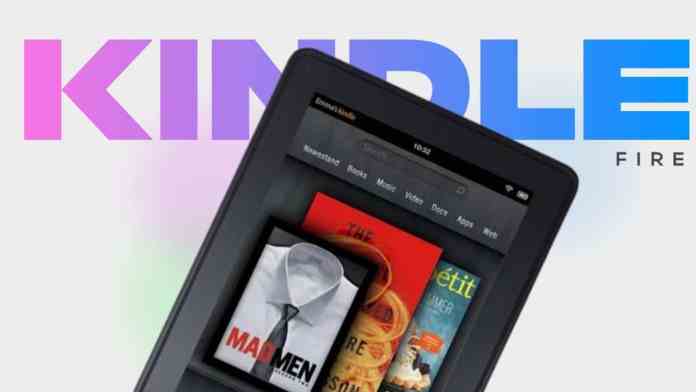
The most straightforward way to get content is through the built-in Amazon Store. It comes pre-installed on every Kindle Fire, offering millions of titles, many of which are free.

Step-by-Step: Buying or Borrowing from Amazon

First, turn on your device and connect to a Wi-Fi network. From the Home screen, tap the Books tab at the top. Next, select the Store option to browse the catalogue. You can search for a specific author or browse categories like “Top 100 Free.”

When you find a promising title, tap the cover to open its details page. Here, you will see the price, user ratings, and a brief description. Many books offer a “Try a Sample” feature, letting you read the first chapter for free. If you are an Amazon Prime member, look for the “Borrow for Free” badge. To complete the purchase or borrow, simply tap Buy or Borrow. The file will begin downloading instantly.

To start reading, return to the Books tab on your Home screen. Tap the cover of your newly acquired book, and it will open immediately. This method is undeniably the simplest way to download books to a Kindle Fire.

Downloading Books via Your Computer or Laptop

Another reliable approach involves using a computer. This method is particularly useful if you prefer browsing on a larger screen.

How to Send Books from a Web Browser

Open your preferred web browser and go to Amazon.com. Sign in with your Amazon credentials. Use the search bar at the top to look for Kindle books, or click on the Kindle tab to explore genres like fiction, non-fiction, or bestsellers.

Once you select a book, click on it to see the price, customer reviews, and a summary. Before clicking the orange Buy button, ensure your Kindle Fire is selected in the “Deliver to” dropdown menu. After the purchase, the book is sent directly to your Amazon cloud library.

On your Kindle Fire, connect to the internet and open the Books tab. Pull down to refresh your library, and the new title will appear. Tap it to start the download. This computer-based workflow is ideal for those who manage their digital library from a desktop.

Borrowing Free eBooks with the Libby App

For readers who want to access thousands of titles without paying a cent, the Libby app is a game-changer. It connects directly to your local library’s digital collection.

Setting Up Libby on Your Kindle Fire

First, you need a library card. Visit your local library in person or check if they offer online registration. Once you have your card number and PIN, download the Libby app from the Amazon Appstore on your Kindle Fire. Open the app and follow the on-screen prompts to add your library card.

After linking your account, tap the library icon to browse the collection. You can search by author, title, or genre. When you find a book you want, tap Borrow. If it is currently checked out, tap Place Hold and wait for an email notification.

To read the borrowed book on your Kindle, tap Read With Kindle. This will open Amazon’s website in your browser. Confirm the delivery by clicking Get Library Book. Finally, open the Books tab on your Kindle Fire and refresh the page. The book will appear, ready to read. Most titles are returned automatically after the due date, so you never have to worry about late fees.

Alternative Sources for Free Kindle Books

Beyond Amazon and Libby, several other platforms provide free content legally.

Amazon’s Top 100 Free List

Amazon updates a daily list of free bestsellers. Navigate to the Kindle Store and search for “Top 100 Free.” Authors often offer the first book in a series for free to attract readers. Be aware that some free books end on a cliffhanger, encouraging you to purchase the next volume.

Public Domain Websites

Books with expired copyrights are in the public domain. Websites like Project Gutenberg and ManyBooks offer thousands of classics by authors like Jane Austen and Mark Twain. You can download these in Kindle Fire PDF or MOBI format. After downloading, transfer the file to your device using a USB cable or the Send to Kindle email feature.

Email Alert Services

Platforms such as BookBub and Free Booksy send daily newsletters featuring discounted and free Kindle books. Sign up, select your favourite genres, and receive curated lists directly in your inbox. This saves you time searching manually.

Sending Personal PDFs to Your Kindle Fire

If you have documents, notes, or eBooks in PDF format, you can easily transfer them. Connect your Kindle Fire to a computer using a USB cable. Unlock the screen, and your device will appear as a drive on your PC. Drag and drop the PDF files into the Documents folder. After safely ejecting the device, tap the Docs tab on your Kindle Fire to find your files. This method is perfect for personal use or sharing reading material.

Building on these methods, you now have a complete toolkit to download books to a Kindle Fire in 2025. Whether you prefer the Amazon Store, library apps, or public domain archives, each approach is safe, legal, and budget-friendly. Start exploring today and enjoy unlimited reading without breaking the bank.

Continue Reading
Click to comment

Leave a Reply

Your email address will not be published. Required fields are marked *

Social Media

Bluesky’s active user base is shrinking as its focus expands beyond the app

Published

on

Bluesky user decline

The post-election bump has faded

Bluesky rode a wave of discontent out of X in late 2024. Millions signed up after the U.S. elections, eager for a decentralized alternative. But two years on, the numbers tell a sobering story.

According to digital intelligence firm Similarweb, Bluesky’s mobile app had 10.4 million monthly active users worldwide in June 2026. That’s down 27.2% year-over-year. Daily active users fell even harder — 25.6% year-over-year in July, landing around 3 million.

These are not just post-election jitters. The app has lost more than half its monthly active users since its late-2024 peak. Quarterly averages dropped from roughly 22.1 million in Q4 2024 to 10.7 million in Q2 2026. That’s a 52% decline.

So what happened? Some of those who fled X simply didn’t stick around. The initial surge was real, but retention has been the challenge.

Quality over quantity: the committed core

Here’s the silver lining. The people who stayed are actually engaged. Bluesky’s stickiness rate — the ratio of daily to monthly active users — held at roughly 29% in June. That’s about the same as Threads, Meta’s X competitor.

This suggests Bluesky isn’t a ghost town. It’s a smaller, more loyal community. For a platform built on principles rather than scale, that might be enough.

But is it? The company’s public stats claim nearly 46 million registered users. Yet it doesn’t share daily or monthly active figures. Similarweb’s data fills that gap — and it’s not pretty.

Pivoting beyond the app: the AT Protocol bet

New CEO Toni Schneider isn’t panicking. And here’s why: Bluesky’s future may not be the Bluesky app at all.

The company is increasingly focused on the AT Protocol — the underlying infrastructure that powers Bluesky and now a growing ecosystem of third-party apps. Projects like BlackSky and Eurosky are gaining traction. Video-focused Skylight has found early adopters. The company even launched Attie, an AI-powered research tool.

This is a strategic shift. Instead of competing head-to-head with X or Threads for every user, Bluesky is betting that the protocol becomes the backbone for a new wave of social apps. If that happens, the app’s declining numbers matter less.

Private data support is also on the roadmap. That could attract a different type of user — people more interested in closed communities than public squares.

What the data doesn’t show

One fear was that Bluesky’s losses meant a return to X. Similarweb says no. X’s mobile monthly active users were down 3% year-over-year in June. Daily active users fell 7% in July to 123.7 million.

X is still huge, though — around 302 million monthly active users on mobile as of June 2026. Web visits actually grew 5.3% year-over-year to 4.7 billion in July.

So people aren’t rushing back to X. They’re just… leaving Bluesky.

Threads is the real winner

If anyone’s benefiting from Bluesky’s slide, it’s Threads. The Meta-owned app’s daily active users jumped 21.3% year-over-year to 147 million in July 2026. Website visits soared 112% to 471.6 million.

It’s unclear whether Threads is stealing Bluesky’s disenchanted users or attracting people who never used a Twitter-like service. Either way, the momentum is unmistakable.

For Bluesky, the question is whether a protocol-first strategy can sustain the company while the flagship app shrinks. It’s a risky bet. But with a loyal core and a growing developer ecosystem, it’s not a crazy one.

The next year will tell whether Bluesky becomes the decentralized social network that powers a new generation of apps — or just a footnote in the Twitter wars.

Continue Reading

How To

Before Android Conquered the World, Samsung Had Its Own Phone OS — and It Almost Worked

Published

on

Samsung Bada OS

The Forgotten Rival: Samsung’s Bada Operating System

In February 2010, Samsung unveiled the Wave — a sleek, ambitious phone running a homegrown operating system called Bada. Five weeks later, the company dropped the Galaxy S, powered by Android. Both devices shared eerily similar flagship specs: the same 1GHz Hummingbird processor, a 5-megapixel camera, and a 1,500mAh battery. The Wave even hit European shelves first and introduced Samsung’s now-legendary Super AMOLED display technology.

It’s easy to forget now, but for a brief moment, Samsung’s Bada OS looked like a genuine contender. Not a side project. Not a placeholder. A real rival to Google’s rising empire.

What Made Bada Different? A Bet on Samsung’s Own Ecosystem

Bada — Korean for “ocean” or “sea” — wasn’t a Linux fork like Android. Samsung built it on its own kernel, with a proprietary framework designed to give the company total control. Developers wrote apps in C++ or web technologies, and Samsung pushed its own app store, Samsung Apps, as the hub for downloads.

The strategy made sense. Samsung was already the world’s largest phone maker by volume. Why hand the software margins and user data to Google when you could own the whole stack? The Wave S8500 showcased that vision: a metal unibody, a gorgeous Super AMOLED screen, and a UI that felt snappy and modern for 2010.

The Wave’s Spec Sheet: Impressive for Its Time

  • Processor: 1GHz ARM Cortex-A8 (Hummingbird)
  • Display: 3.3-inch Super AMOLED, 480×800
  • Camera: 5MP with 720p video recording
  • Battery: 1,500mAh — decent for the era
  • Storage: 8GB internal, expandable via microSD

Reviewers praised the Wave’s build quality and screen. It genuinely felt like a flagship. But the cracks were already forming.

Why Bada Lost the Smartphone War

Bada’s fatal flaw wasn’t hardware — it was momentum. Android’s app ecosystem exploded in 2010 and 2011. Samsung’s own Galaxy line, running Android, quickly outsold the Wave. Developers flocked to where users were, and users flocked to where apps were. It’s a classic chicken-and-egg problem, and Bada never cracked it.

Samsung also hedged its bets. The company kept releasing Bada phones — the Wave II, Wave 3, and others — but never committed fully. Meanwhile, the Galaxy S series became a global phenomenon. By 2012, Samsung had quietly merged Bada into Tizen, another homegrown OS project that never took off in phones.

The final Bada phones shipped in 2013, and Samsung shuttered the platform’s support in 2014. Bada wasn’t a failure in the technical sense — it was a failure of strategy. Samsung wanted to keep its options open, but that caution cost it the chance to build a true third ecosystem alongside iOS and Android smartphone history.

The Super AMOLED Legacy: Bada’s Gift to the Galaxy

One thing Bada left behind: the Super AMOLED display. The Wave was the first phone to feature it, and the technology became a cornerstone of Samsung’s later success. Every Galaxy flagship since has leaned on AMOLED screens, and Samsung’s display division now dominates the market — even supplying panels to Apple.

So Bada’s DNA lives on, just not in the way Samsung intended. The software died, but the hardware innovation it debuted became a billion-dollar business.

What If Bada Had Won? A Counterfactual Worth Pondering

Imagine a world where Samsung bet everything on Bada. No Galaxy S launch in 2010. No Android partnership. Samsung would have had to build a full app ecosystem from scratch — maps, payments, messaging, cloud services. That’s a massive lift, and Google had a decade head start with search, Gmail, and YouTube integrations.

Realistically, Bada was always a long shot. But it wasn’t a joke. Nokia’s Symbian was crumbling, and BlackBerry was bleeding market share. The smartphone market in 2010 was still fluid. A few different decisions — more developer incentives, earlier global carrier deals, a unified flagship push — could have changed the trajectory.

Instead, Samsung chose pragmatism. It rode Android to become the world’s top phone maker, and Bada became a footnote in Samsung’s smartphone evolution. The Wave is now a collector’s item, a curious relic of a road not taken.

Lessons from Bada for Today’s Tech Giants

The Bada story isn’t just nostalgia. It’s a case study in platform economics. Owning the OS gives you control, but only if you can attract developers and users simultaneously. Google did it with open-source Android and free services. Samsung, despite its manufacturing muscle, couldn’t replicate that network effect.

Today, companies like Huawei are trying similar plays with HarmonyOS. The same challenges apply: app ecosystems, developer trust, and carrier relationships. Bada’s failure shows that hardware alone never wins a platform war.

For Samsung, the lesson was clear: sometimes the best move is to join the winning team, even if you don’t own the field. The Galaxy S series proved that choice right, and Bada remains a fascinating “what if” — a smartphone OS history lesson that still resonates a decade later.

Continue Reading

Social Media

Build an AI Creative Director in Claude: Turn Voice Memos Into a Full Content Engine

Published

on

AI creative director

Why You Need an AI Creative Director (Even If You’re Solo)

You’ve got ideas. Lots of them. But between recording a voice memo and actually publishing a polished newsletter, a video script, and a carousel — something always breaks. The spark fades. The formatting eats your morning. The post never ships.

That’s the real problem most creators face. Not a lack of ideas. A lack of systems.

An AI creative director built inside Claude can close that gap. It takes one raw voice note and turns it into a thread, a newsletter, a video script, and a carousel — all from a single source. Here’s how to build yours.

What an AI Creative Director Actually Does

Think of it as a layer between your brain and your publishing calendar. You speak. It listens. Then it produces.

The system works like this: you record a voice journal entry — maybe two minutes of rambling about a lesson you learned or a trend you spotted. Claude transcribes it, extracts the core narrative, and then repurposes that narrative into multiple formats, each tailored to a specific platform.

That’s the whole trick. One source. Many outputs. No creative team required.

The Core Components

To build this, you’ll need three things:

  • A transcription tool — anything that turns your voice memo into text (Whisper, Otter, or even your phone’s built-in dictation).
  • Claude with a custom system prompt — this is your creative director. It holds your brand voice, your content pillars, and your formatting rules.
  • A workflow trigger — a simple routine. Record. Paste. Review. Publish.

Once those are in place, you’re not starting from a blank page anymore. You’re starting from your own thinking.

Step 1: Define Your Brand Voice and Content Pillars

Before you let Claude loose on your voice notes, you need to give it guardrails. A creative director who doesn’t know your voice is just a chatbot with delusions of grandeur.

Start by writing a short brand brief. Include:

  • Your tone (e.g., “conversational but sharp,” “optimistic and practical”)
  • Your audience (who they are, what they struggle with)
  • Your content pillars (3–5 recurring topics you want to be known for)
  • Your formatting preferences (short paragraphs? bullet points? no emojis?)

Paste this brief into a dedicated Claude project. This becomes your system prompt. Every time you feed it a voice note, it will filter your thinking through that lens.

The result? Consistency. Not just across one post, but across every platform you publish on.

Step 2: Turn a Voice Memo Into a Master Narrative

Here’s where the magic happens. You record a voice note — maybe you’re walking your dog and you crack a new angle on an old problem. You transcribe it and paste it into Claude.

Your prompt might look like this:

“You are my AI creative director. Here is a raw voice memo. Extract the core idea, the key examples, and the actionable takeaway. Then rewrite it as a clean, structured narrative in my brand voice.”

Claude will do the heavy lifting: cutting the rambling, finding the throughline, and turning your scattered thoughts into a tight, readable story. That narrative becomes your master asset.

You review it. Edit it. Approve it. Then — and only then — do you ask for the derivatives.

Step 3: Generate Platform-Specific Content From One Source

Now the fun part. With your approved narrative in hand, you prompt Claude to produce each format. You can do this in one go, or one at a time. Here’s what the output looks like for each channel:

Thread for X (Twitter)

  • Hook line that stops the scroll
  • 5–7 short, punchy points
  • A call-to-action at the end

Newsletter

  • Subject line with a curiosity gap
  • Expanded narrative with subheadings
  • A personal aside or story

Video Script

  • Cold open (first 5 seconds)
  • Story arc with a problem-solution structure
  • Verbal call-to-action

Carousel (LinkedIn or Instagram)

  • Title slide with a bold claim
  • 5–7 slides, each with one key point
  • A final slide with a question or takeaway

Each format gets its own prompt. Each prompt references the master narrative. You’re not asking Claude to invent — you’re asking it to adapt.

That distinction matters. It’s the difference between content that feels generic and content that feels like you.

Step 4: Review, Edit, and Add the Human Touch

Here’s the part people skip: the edit. Claude is fast, but it’s not you. It doesn’t know that inside joke with your audience. It doesn’t know that one anecdote that always lands.

So read every draft like a human. Cut what feels off. Add a personal detail. Tighten the language where Claude got wordy. This is where your creative director earns its keep — not by replacing you, but by giving you a first draft that’s 80% done.

That 20% you add? That’s your voice. That’s what makes it yours.

Building the System Is Easier Than You Think

You don’t need a complex tech stack. You don’t need to code. You need a transcription tool, a Claude project with your brand brief, and a repeatable routine.

Start small. Pick one platform. Record a voice note tomorrow, run it through the system, and publish the result. Then add a second platform. Then a third.

The goal isn’t to automate your creativity. It’s to remove the friction between having an idea and sharing it with the world. And honestly? That’s a creative director’s real job.

If you want to dig deeper into content repurposing workflows or Claude prompting strategies, we’ve got you covered. But the fastest way to learn is to build. So go record that voice memo.

Continue Reading

Trending