How To
I Almost Skipped Hulu’s Best Hitman Drama Because It’s Only 30 Minutes. That Was a Mistake.
Published
5 minutes agoon

The Runtime That Almost Fooled Me
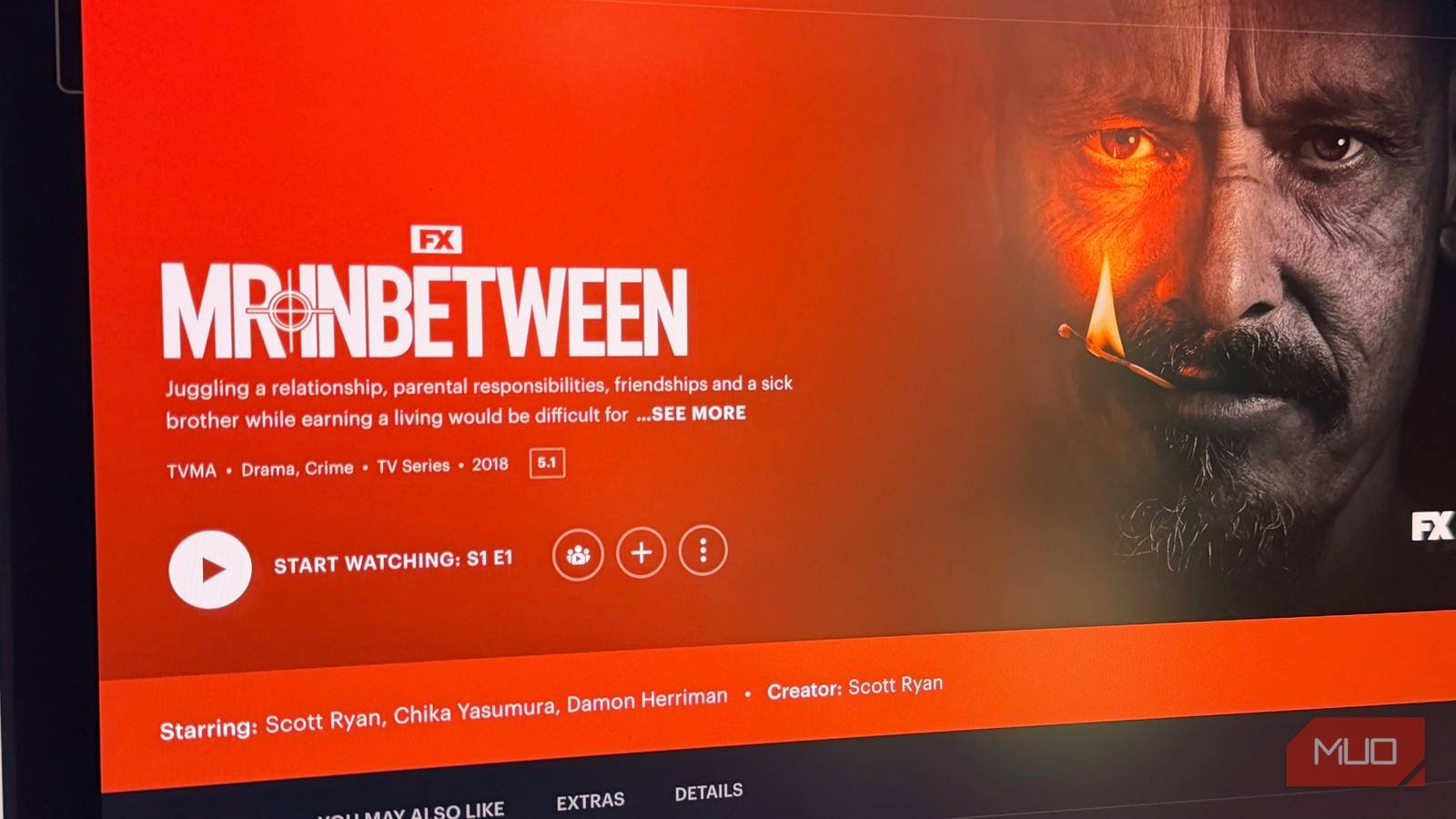
I nearly skipped Hulu’s Mr Inbetween because the episode length looked like a typo. Twenty-five minutes? That’s barely enough time to boil pasta, let alone build a crime saga. Every prestige drama I actually finish runs 50 minutes or more — AMC’s Breaking Bad, HBO’s The Sopranos. Those shows need the extra minutes to let tension simmer before the violence boils over.
But Mr Inbetween isn’t those shows. It’s leaner, meaner, and somehow more human. The show’s 98% audience score on Rotten Tomatoes isn’t a fluke — it’s a signal that short-form crime can hit harder than anything with a bloated episode count.
What Is Mr Inbetween, Exactly?
Created by and starring Scott Ryan, Mr Inbetween follows Ray Shoesmith — a Melbourne-based hitman who’s also a devoted father, a loyal friend, and a man with a surprisingly fragile moral code. He’s not a slick assassin in a tailored suit. He’s a bloke who wears flannel shirts, drives a beat-up car, and still shows up to his daughter’s school play even after a bloody job.
The show ran for three seasons on FX, but it found a second life on Hulu, where new viewers are binge-discovering it. Each episode clocks in around 25–30 minutes — a deliberate choice that forces the writing to cut every ounce of fat.
Why the Short Episodes Work
Most crime dramas pad their runtimes with moody shots of city skylines or extended dialogue scenes that go nowhere. Mr Inbetween doesn’t have that luxury. Every scene has to earn its place. A conversation about parenting might end with a sudden, brutal beating. A quiet moment at a funeral can pivot into a darkly comic exchange.
That compression creates a rhythm you don’t see elsewhere. The show trusts you to keep up. It doesn’t explain Ray’s moral contradictions — it just shows them, one 25-minute chunk at a time.
The 98% Audience Score Isn’t the Whole Story
Critics loved Mr Inbetween too — it holds a 95% critic score on Rotten Tomatoes — but the audience number is the one that matters. A 98% audience score means real viewers, not just paid critics, are finishing the series and recommending it to friends. That’s rare for a show this violent and this quiet at the same time.
Part of the appeal is Scott Ryan’s performance. He wrote the character based on a real hitman he met in his twenties, and it shows. Ray isn’t a cartoon villain or a tortured antihero in the mold of Walter White. He’s just a bloke doing a terrible job, and the show never lets you forget the cost.
How Does It Compare to Other Hitman Dramas?
If you’ve watched Barry on HBO, you’ll notice some DNA in common — a hitman trying to balance violence with a normal life. But Mr Inbetween is grittier and more grounded. There’s no acting class subplot. Ray’s attempts at normalcy are smaller: a date, a school meeting, a favor for his brother.
Compared to John Wick’s action spectacle, this is the anti-glamour take. The fights are clumsy, desperate, and over in seconds. The show isn’t interested in cool choreography. It’s interested in what violence does to a person who tries to compartmentalize it.
Should You Watch Mr Inbetween on Hulu?
If you’re burned out on 10-episode seasons that feel like 20, Mr Inbetween is the cure. You can finish the entire series in a weekend — it’s just 26 episodes total. That’s less commitment than a single season of most streaming dramas.
Here’s who should hit play:
- Fans of Barry or Fargo who want something darker and more realistic.
- Viewers who prefer character studies over plot-twist machines.
- Anyone who thinks crime dramas have gotten too long and self-important.
Don’t let the 30-minute runtime fool you. Mr Inbetween is a complete, satisfying story that respects your time — and then uses every second of it to make you feel something.
You may like
Social Media
Is AI Making It So Anyone Can Run Effective TikTok Ads?
Published
20 hours agoon
September 5, 2026
The Learning Curve That Used to Stop Everyone
Let’s be honest: TikTok Ads Manager has never been friendly to newcomers. Between campaign structures, ad groups, bidding strategies, and pixel setup, the platform’s backend feels like a control panel for a spaceship you never learned to fly. For small business owners and solo marketers, that steep learning curve has been a silent killer of ad budgets — and of ambition.
But something shifted recently. TikTok has been quietly rolling out AI-powered tools that promise to flatten that curve. The question is no longer whether AI can help you run ads. It’s whether the help is good enough to trust with real money.
What Exactly Is TikTok’s AI Ad Stack?
TikTok’s push into artificial intelligence isn’t one tool — it’s a suite. Three pieces stand out for marketers: Agentic Hub, Symphony Creative Studio, and the increasingly automated optimization features inside Ads Manager itself.
Agentic Hub: Your New Campaign Manager
Agentic Hub is TikTok’s attempt at an AI campaign manager. Instead of manually configuring every setting, you describe your goal — say, “drive app installs for a fitness tracker under $2 per install” — and the system assembles the campaign structure for you. It picks targeting, sets budgets, and even suggests creative angles.
For a beginner, that’s a massive time-saver. For an experienced marketer, it’s a starting point that still needs human judgment. The AI doesn’t know your brand voice or your seasonal promotions. It knows patterns.
Symphony Creative Studio: AI That Makes the Video
Then there’s Symphony Creative Studio. This tool generates video ads from text prompts, product URLs, or even existing assets. You can feed it a product page, and it spits out multiple ad variations — different hooks, different music, different pacing.
The output isn’t always perfect. Sometimes the AI misses cultural nuance or produces something oddly generic. But for testing purposes, it’s a goldmine. You can throw five AI-generated creatives against one professionally produced video and let the data decide.
Does AI Actually Make Ads More Effective?
Here’s where things get interesting. Running an ad is one thing. Running an effective ad is another. The source material points to a crucial distinction: AI tools lower the barrier to entry, but they don’t guarantee results.
TikTok’s algorithm has always rewarded engagement signals — watch time, shares, comments. AI can optimize for those signals, but it can’t manufacture a product people don’t want. In other words, AI handles the mechanics. You still handle the meaning.
What AI does do well is remove the friction that stops beginners from even trying. Instead of spending three days learning how to set up a conversion pixel, you can launch a campaign in an afternoon. That speed lets you iterate faster, and iteration is where real learning happens.
Practical Tips for Using AI in Your TikTok Ads
If you’re ready to test these tools, here’s a practical approach that balances automation with human oversight:
- Start with a small budget. Give the AI room to experiment without risking your whole monthly ad spend. $50–$100 per day is enough to gather meaningful data.
- Use Symphony for creative testing. Generate 5–10 variations of your core message. Let the platform’s algorithm find the winner.
- Review Agentic Hub’s targeting choices. The AI might default to broad audiences. That’s fine for awareness, but if you’re selling something niche, tighten it manually.
- Check your pixel and events. AI optimization depends on accurate conversion data. If your tracking is broken, the AI is flying blind.
- Keep a human in the loop. Set aside time weekly to review performance. AI can tell you what’s working, but it won’t tell you why your Friday promo outperformed your Tuesday one.
What This Means for Small Businesses and Freelancers
For years, running effective TikTok ads was a job skill. Agencies charged thousands for campaign management because the knowledge barrier was real. AI is eroding that moat.
Now, a local bakery owner can describe their goal in plain English and have a campaign live within the hour. A freelance social media manager can serve five clients with ad accounts they’d previously have outsourced. That’s not hype — that’s the direction the platform is heading.
Still, effectiveness isn’t guaranteed. The source material wisely notes that AI tools are “not a magic wand.” They work best when paired with clear objectives, decent creative input, and someone who checks the numbers.
The Bottom Line on AI TikTok Ads
So, can anyone run effective TikTok ads now? Almost. The tools are there. The learning curve has been substantially lowered. But the word “effective” still depends on a few things AI can’t do for you: knowing your audience, crafting a message that resonates, and having a product worth buying.
If you’re a beginner, start small. Use TikTok AI ad tools to get your first campaign off the ground, but don’t expect to set it and forget it. The marketers who win with AI will be the ones who treat it as an accelerator, not a replacement for thinking.
And if you’re already running ads, the smartest move might be to let AI handle the busywork while you focus on the creative strategy that no algorithm can replicate.
How To
This Tiny eReader Made Me Realize We’re Finally in a Post-Kindle World
Published
22 hours agoon
September 5, 2026
The Kindle’s Long Reign
For over a decade, Amazon Kindle has been the default eReader. Its name became synonymous with digital reading, much like Band-Aid did for bandages or Photoshop for photo editing. If someone said they were reading on a Kindle, you assumed they meant an Amazon device. That assumption is no longer safe.
A few weeks ago, I got my hands on a compact eReader from a lesser-known brand. It wasn’t the latest Oasis or Paperwhite. It was smaller, lighter, and frankly, more portable than anything Amazon currently sells. After using it daily, I’ve come to a conclusion: the eReader market has finally diversified enough to challenge the king.
What Makes This Tiny eReader Different
The device in question measures just six inches diagonally. It fits in a shirt pocket, no problem. The build quality feels premium, with a matte finish that resists fingerprints. But the real story is what’s under the hood.
Unlike many budget readers, this one runs a clean version of Android. That means you’re not locked into one bookstore. You can load the Kindle app, Kobo, Libby, or even side-load your own EPUBs without any hassle. For readers who’ve felt trapped by Amazon’s walled garden, that’s a liberating thought.
Battery life is another surprise. I’ve been using it for two weeks on a single charge, reading about an hour a day. The E Ink display is sharp, with adjustable warm light for nighttime sessions. It’s not a revolutionary spec sheet, but the execution feels thoughtful.
Portability Without Sacrifice
Most eReaders claim to be portable, but this one actually delivers. It weighs less than 150 grams. I forgot it was in my jacket during a long flight. The screen is large enough for comfortable reading, yet the device disappears into a bag or even a large pocket.
That portability changes how you use it. I found myself grabbing it for quick reading sessions — waiting in line, riding the subway, or during a lunch break. With a bigger Kindle, I often left it at home because it felt like an extra thing to carry. This tiny reader removed that excuse.
The Rise of Kindle Alternatives
Amazon isn’t sitting still, of course. The Kindle Paperwhite remains a solid choice, and the Scribe targets note-takers. But the competition has caught up in ways that matter.
Brands like Kobo, PocketBook, and Boox now offer devices that rival or exceed Kindle’s features. Many support more open formats, which is a huge deal for anyone who buys books outside Amazon’s ecosystem. Some even have physical page-turn buttons, a feature Amazon dropped years ago and many readers still miss.
You can also find waterproofing, expandable storage, and better typography controls on non-Kindle devices. The gap in hardware quality has closed. What remains is the ecosystem advantage — and that’s shrinking.
Why the eReader Market Is Finally Shifting
The shift isn’t just about hardware. It’s about reading habits. People are more aware of where they buy their books and how they store them. Concerns about DRM and ownership have pushed some readers toward open platforms.
Libraries are another factor. Apps like Libby make borrowing digital books easy, but Kindle’s library integration is clunky in some regions. Competitors have made borrowing a first-class feature. That’s a practical advantage, not a niche one.
Price also matters. This tiny eReader cost less than a Paperwhite, and it didn’t lock me into ads or a specific store. For budget-conscious readers, that’s a compelling argument.
What to Look For in a Kindle Alternative
- Open file format support (EPUB, PDF, MOBI)
- Adjustable front light and warm lighting
- Battery life of at least two weeks
- Physical buttons for page turns (if you prefer them)
- Waterproofing for bath or pool reading
- Access to multiple bookstores or library apps
That list isn’t exhaustive, but it covers what most readers actually need. The days of accepting whatever Amazon gives you are over.
Is the Post-Kindle World Here?
Not entirely. Amazon still dominates in market share, and the Kindle brand carries enormous weight. But the cracks are showing. A tiny eReader from a challenger brand convinced me that consumers now have real choices — and that’s the definition of a post-Kindle world.
If you’re in the market for a new eReader, don’t default to the big name. Consider what you value: portability, openness, or price. The best device for you might not have the Amazon logo on it.
That’s a good thing. Competition breeds innovation, and readers are the ultimate winners. I’ll be keeping this little device close — and watching what comes next.
Social Media
TikTok’s comment sections just got a whole lot more interactive
Published
1 day agoon
September 5, 2026
Sound was always the point. Now it’s in the comments too.
For years, TikTok’s comment section was a place to drop a quick thought or a meme. It did the job — but it never felt like part of the show. That’s changing now.
The platform announced a wave of new comment tools on Thursday, and the headline act is TikTok voice comments. Instead of typing, you can record a message up to a minute long and pin it under any video. Tap the microphone icon in the comment box, talk, and post. Anyone who scrolls by can tap to listen.
“Sound and music have shaped TikTok from the very beginning, turning songs into trends and audio clips into jokes shared across the app,” the company wrote in a blog post. “Now, we’re bringing that same energy to the comment section.”
It’s a logical move. TikTok already runs on audio — viral sounds, voiceovers, and those oddly satisfying whisper videos. Extending that into the comments makes the whole feed feel more alive, less like a message board and more like a conversation.
What’s actually new in the comment box
Voice is the big one, but it’s not the only trick TikTok is adding. Here’s the full rundown:
- Voice comments — record up to 60 seconds of audio under any video. Rolling out globally over the next month, but only to users 18 and older.
- Comment polls — creators can attach a poll to their own videos, with up to five options and a set voting window. Previously limited to some accounts, now it’s worldwide.
- Photo carousel comments — you can now drop up to nine images in a single comment, where before it was one at a time. Global rollout over the next month.
- Live Photo comments — upload a moving image that plays a quick burst of motion before settling into the full photo. Available globally now.
Why TikTok is turning comments into a messaging app
Look at these features side by side and you’ll notice something: they look a lot like the tools you’d find in a chat app. Voice notes, polls, photo sharing — that’s the vocabulary of WhatsApp and iMessage, not your typical social feed.
That’s not an accident. TikTok wants people to stay longer, comment more, and come back to check replies. A voice note feels more personal than a typed reply. A poll invites participation instead of passive scrolling. Photo carousels give commenters a reason to show off, not just speak.
The company is betting that if comments feel like a conversation with friends, users will treat the app less like a broadcast channel and more like a place to hang out.
Moderation: voice comments aren’t a free-for-all
Audio comments raise an obvious question: what stops someone from recording something hateful or harassing? TikTok says it’s on that.
A spokesperson told TechCrunch that voice comments fall under the same Community Guidelines as everything else on the platform. The moderation system combines human reviewers with automated tools, including speech-to-text transcription, to catch and remove policy violations. So yes, they’re listening — or at least, their software is.
Who gets access first
Voice comments aren’t hitting everyone at once. The rollout spans the next month, and it’s restricted to users 18 and up. That age gate is a clear nod to safety concerns — minors are more vulnerable to audio-based harassment or inappropriate content, and moderating voice at scale is harder than filtering text.
Photo carousel comments are also rolling out gradually. Live Photo comments, meanwhile, are already available everywhere.
What creators should do with polls and voice notes
If you’re a creator, these tools are worth experimenting with. Polls are the most obvious win — ask viewers to vote on your next video idea, pick an outfit, or decide what you should cook. The results show up right in the comment section, which turns a passive audience into active participants.
Voice comments, on the other hand, are a chance to add personality. A quick vocal reaction to a comment can feel more genuine than a typed reply. Think of it as a mini-podcast tucked into your comment thread.
For everyday users, the takeaway is simpler: your comments no longer have to be text. You can react with your voice, share a burst of photos, or start a poll of your own — well, if you’re the video’s creator, anyway.
The bigger picture: engagement is the currency
TikTok’s algorithm rewards interaction. More comments, more replies, more time spent — all of it feeds the recommendation engine. By making comments richer and more interactive, TikTok is essentially giving users more reasons to engage, and giving itself more signals to work with.
It’s a smart cycle. The more tools people have to talk, the more they talk. The more they talk, the longer they stay. And the longer they stay, the more ads TikTok can serve. That’s the business model, and it’s working.
So next time you’re scrolling and see a microphone icon in the comment box, don’t be shy. Record something. Start a poll. Drop a Live Photo. The comment section just became a stage of its own.
For more on how to get the most out of your feed, check out our guide to TikTok engagement strategies and the latest on TikTok algorithm updates.

I Almost Skipped Hulu’s Best Hitman Drama Because It’s Only 30 Minutes. That Was a Mistake.

G7 Tells the World to Speed Up the Quantum-Safe Encryption Transition

OpenAI Puts $1 Billion on the Table to Arm Critical Services with AI Defenses
Trending
CyberSecurity6 months agoLeakBase Data Breach Forum Seized in Major Europol Operation
How To5 months agoThe Truth About Fast Charging Apps for Android: Can They Speed Up Your Battery?
CyberSecurity6 months agoZero-Day Attacks Hit Record High as Enterprise Software Becomes Prime Target
CyberSecurity6 months agoRussian Hackers Target WhatsApp and Signal in Global Espionage Campaign
Social Media6 months agoYouTube Live Streaming API: A Developer’s Guide to Managing Live Broadcasts
Video4 months agoSamsung One UI 8.5 Official Update Is Here: Release Timeline, Eligible Devices & Key Features
Infosecurity6 months agoCybersecurity Communication: Why Fear-Based Messaging Fails and What Works
CyberSecurity6 months agoContextCrush Vulnerability: How a Trusted AI Tool Became an Attack Vector