Connect with us

Artificial Intelligence

Siri’s iOS 27 Rebirth: Auto-Delete Perk for AI Chats Puts Privacy First

Published

on

Siri’s iOS 27 Rebirth: Auto-Delete Perk for AI Chats Puts Privacy First

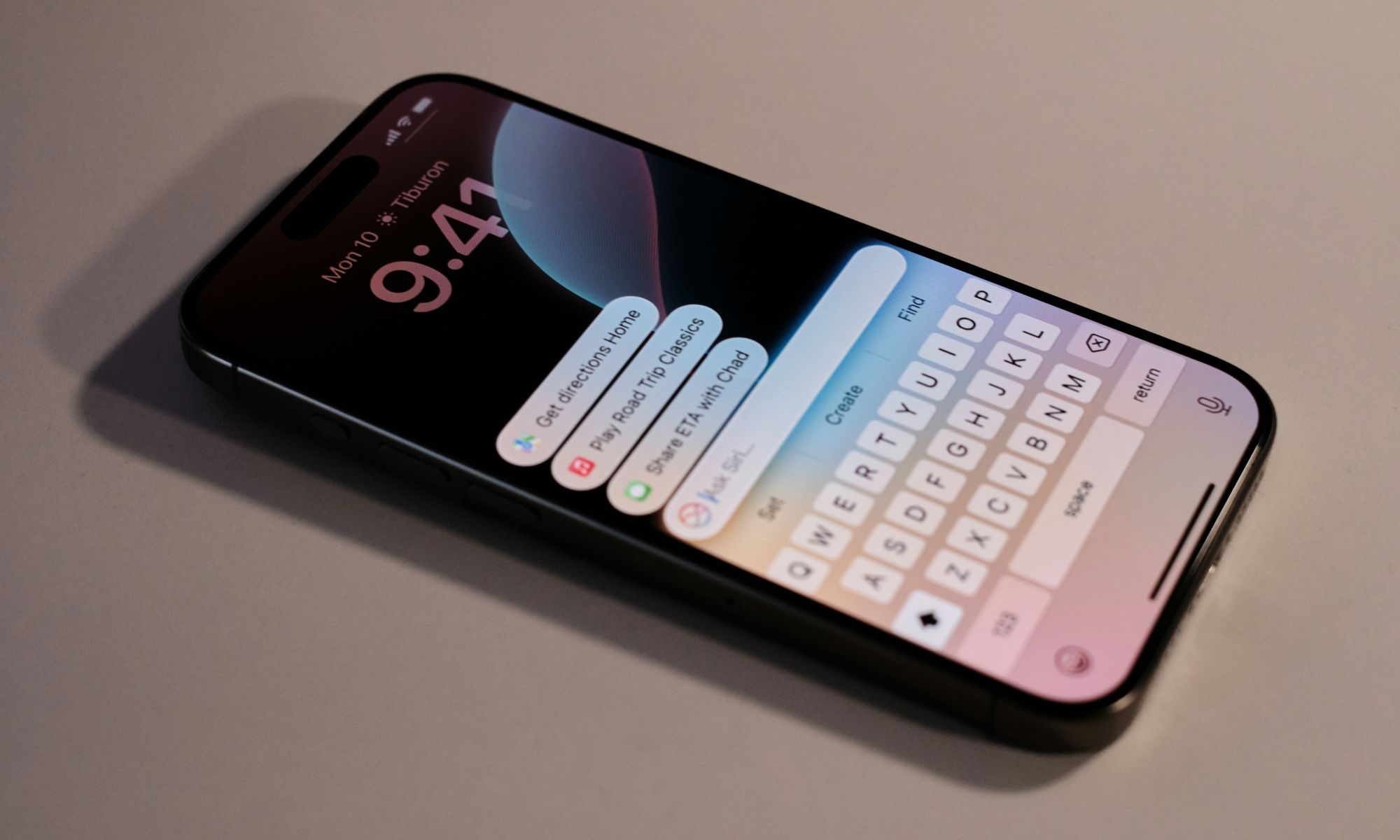
Apple is preparing a major overhaul of Siri in iOS 27, and one rumored feature could change how users think about AI privacy: an auto-delete feature for Siri conversations. According to a recent report from Mark Gurman’s Bloomberg newsletter, the company is designing a redesigned Siri with a dedicated chatbot interface. Unlike rivals such as ChatGPT and Gemini, Apple may make privacy controls a core part of the experience rather than an optional setting.

This move signals a strategic shift for Apple. The company wants Siri to compete with modern AI chatbots, but without adopting the same data collection practices that many competitors rely on. As a result, the auto-delete feature for Siri could become a key differentiator in the AI assistant market.

How the Auto-Delete Feature for Siri Conversations Works

The reported feature would allow users to automatically delete Siri conversations after 30 days, one year, or keep them permanently. This approach mirrors the auto-delete system already available in Apple’s Messages app. For users, this means greater control over how long AI conversations are stored and how much personal interaction history remains accessible.

Building on this, Apple’s implementation appears more cautious than many chatbot platforms. Most AI chatbots retain conversation histories indefinitely for personalization and model training. However, Apple is reportedly building tighter limits around memory retention and user data handling.

Apple Rebuilds Siri Around AI Conversations

The update is expected to transform Siri from a basic voice assistant into a more conversational AI system. Reports suggest iOS 27 will introduce the first standalone Siri app, allowing users to interact with Siri more like a chatbot instead of relying only on voice commands.

A new Search or Ask mode may also allow users to switch between traditional search and AI conversations more seamlessly. Siri is reportedly gaining the ability to store conversational context and remember previous interactions—something competing AI assistants already rely on heavily.

Nevertheless, Apple’s approach remains distinct. While competitors often focus on model size and advanced reasoning, Apple could instead position Siri as the safer AI assistant for mainstream users.

Privacy Becomes Apple’s Main AI Differentiator

Apple has spent years positioning privacy as one of its biggest competitive advantages. That strategy helped distinguish the company from ad-driven rivals like Google and Meta, but it has also slowed Apple’s AI progress compared to OpenAI, Anthropic, and Google.

Now, Apple appears to be trying to balance both goals: offering a more capable AI assistant while maintaining stricter controls around user information. According to the report, Apple’s AI system will still emphasize on-device processing and Private Cloud Compute infrastructure. At the same time, the company may rely more heavily on Google’s Gemini infrastructure behind the scenes to improve Siri’s capabilities.

This creates an unusual position for Apple. The company wants Siri to compete with modern AI chatbots, but without fully adopting the same data collection practices that many competitors rely on.

Why the Auto-Delete Feature Matters for Users

Most AI chatbot platforms already offer temporary or incognito chat modes, but these are usually optional settings users must manually enable. Apple’s reported approach appears different because the company may integrate privacy controls directly into the core Siri experience.

For users, this could mean more control over how long AI conversations are stored and how much personal interaction history remains accessible. At the same time, Apple may also use privacy as a way to soften criticism around Siri’s slower AI rollout.

In addition, the auto-delete feature for Siri could help Apple avoid the kind of privacy scandals that have plagued other AI companies. By making auto-delete a default option, Apple is signaling that user trust is non-negotiable.

What Happens Next with Siri and iOS 27

Apple is expected to reveal more details about Siri’s redesign and iOS 27 during WWDC later this year. Reports suggest the upgraded assistant could initially launch in beta form following delays to Apple’s broader AI roadmap.

If successful, Siri’s redesign may mark Apple’s biggest AI shift in years—one where privacy becomes just as important as intelligence itself. For those interested in Apple’s broader AI privacy strategy, this development is worth watching closely.

Ultimately, the auto-delete feature for Siri could set a new standard for AI chatbot privacy. As AI assistants become more integrated into daily life, features like automatic deletion may become the norm rather than the exception.

Continue Reading
Click to comment

Leave a Reply

Your email address will not be published. Required fields are marked *

Artificial Intelligence

Google’s Rambler Could Finally Make Voice Typing Worth Using

Published

on

Google’s Rambler Could Finally Make Voice Typing Worth Using

For years, voice typing has felt like a compromise. You speak clearly, avoid backtracking, and hope the phone catches every word. But real conversations are messy. They include ums, ahs, repeated phrases, and sudden corrections. That is why many users, including myself, rarely rely on speech-to-text for serious messages. However, Google’s new Rambler feature for Gboard aims to change that by using Gemini AI to transform natural, imperfect speech into polished, concise text. This could be the breakthrough that makes Google Rambler voice typing a daily habit.

Why Traditional Voice Typing Falls Short

Standard dictation tools are built for accuracy. They capture exactly what you say, which sounds ideal. But here is the catch: people do not speak in neat, ready-to-send sentences. We pause, restart, and add filler words. A voice note can carry that chaos because tone and pacing add meaning. A text message cannot.

As a result, voice typing often produces clunky, awkward drafts that require heavy editing. That defeats the purpose. You might as well have typed from scratch. This is especially frustrating on large smartphones, where reaching across a wide keyboard is a struggle. Typing one-handed while holding a coffee or carrying a bag leads to typos and short replies. Voice typing should have solved this, but it rarely does.

Building on this, Rambler takes a different approach. Instead of focusing on word-for-word accuracy, it prioritizes intent and clarity. It listens to your natural flow—including self-corrections and repeated words—and then distills the core message into clean text. That is a subtle but powerful shift.

How Rambler Handles Real Speech Patterns

Google describes Rambler as a feature that “turns natural spoken thoughts into concise text.” It is designed to handle the way people actually talk: with ums, ahs, restarts, and mid-sentence corrections. Rather than reproducing every stumble, it extracts the essential meaning and presents it in a way that still sounds like you.

This means you can speak freely without worrying about perfect grammar or linear sentences. You can double back, change your mind, or add a thought halfway through. Rambler will smooth out the rough edges while preserving your voice. For anyone who has ever dictated a message and then spent two minutes fixing it, this is a welcome change.

Moreover, Rambler is part of the broader Gemini intelligence on Android, which means it benefits from Google’s advanced language models. The feature is built directly into Gboard, making it accessible without switching apps or learning new commands.

Multilingual Support: A Game-Changer for Bilingual Speakers

One of the most exciting aspects of Rambler is its multilingual capability. Many bilingual speakers naturally mix languages in conversation—English with Hindi, Spanish with English, or Arabic with French. Standard voice typing struggles with this code-switching. It might get individual words right, but it loses the rhythm and flow.

Rambler, however, uses Gemini’s multilingual model to switch between languages within a single message. Google has demonstrated examples like English mixed with Hindi, and the feature is available from launch. This is not just a nice addition; it is a practical necessity for millions of users who do not think or text in one language alone.

If Rambler can preserve that natural, mixed-language flow while cleaning up filler and corrections, it becomes far more useful than a generic “make this sound professional” AI button. It respects how people actually communicate.

Will Rambler Replace Typing?

Despite its promise, Rambler still has to prove it is faster and more convenient than typing. Many people already type quickly on their phones. Others prefer sending voice notes. And some simply do not want to talk to their phone in public, no matter how smart the transcription gets.

There is also the question of privacy. Google states that audio is only used for real-time transcription and is not stored or saved. The phone will also show when Rambler is active. Still, trust takes time to build. For Rambler to become a daily habit, it must be fast, low-effort, and reliable every time.

That said, the potential is clear. By removing the pressure to speak perfectly, Google Rambler voice typing could finally make dictation feel natural. For more on how AI is reshaping mobile tools, check out our guide on AI-powered phone features you should try. And if you are curious about Gboard updates, read our overview of what’s new in Gboard.

Final Thoughts: A Smarter Approach to Speech-to-Text

Voice typing has always been a feature that works just well enough to be useful, but not often enough to be reliable. Rambler changes the equation by focusing on meaning rather than exact words. It embraces the messiness of real speech and turns it into something clean and readable.

Whether you are a fast typer, a voice note lover, or someone who avoids dictation altogether, Rambler offers a compelling reason to give voice typing another try. It may not replace keyboards entirely, but it could make one-handed replies, quick messages, and multilingual conversations far less frustrating.

For more insights on mobile productivity, see our article on how to type faster on your phone.

Continue Reading

Artificial Intelligence

Gemini Intelligence Has Strict Requirements, and Your Phone May Not Qualify

Published

on

Google’s latest artificial intelligence platform, Gemini Intelligence, is generating significant buzz in the Android ecosystem. Unveiled during the recent Android Show, this advanced AI system promises to transform how users interact with their smartphones. However, there is a major caveat: not every high-end device will support it. In fact, some of the newest foldables from both Google and Samsung might be left out.

The Gemini Intelligence requirements are far more stringent than typical software updates. This is not a simple feature drop; it demands specific hardware and a long-term commitment to software updates. As a result, many current-generation phones could be incompatible, even those with flagship status.

Hardware Demands: More Than Just a Powerful Chip

To run Gemini Intelligence, a phone needs a top-tier chipset, at least 12GB of RAM, support for AI Core, and Gemini Nano v3 or newer. This immediately creates a problem for several devices launched in 2024 and early 2025. For example, the Pixel 9 series and the upcoming Samsung Galaxy Z Fold 7 reportedly still run Gemini Nano v2, which does not meet the criteria.

Beyond raw power, Google also requires devices to promise at least five Android OS upgrades and six years of security patches. Quality standards tied to system stability and crash rates add another layer of exclusivity. This means that even if a phone has the right processor, it might still fall short if the manufacturer cannot guarantee long-term support.

The RAM Requirement: A Glimpse into Google’s AI Strategy

One of the most striking aspects of the Gemini Intelligence requirements is the insistence on a minimum of 12GB of RAM. This is a bold move, especially considering leaks suggesting the base Pixel 11 might ship with only 8GB. If these AI requirements are accurate, those earlier rumors may not tell the full story. It would be inconsistent for Google to heavily market advanced on-device AI while simultaneously lowering memory capacity on its own flagship phones.

For more on how AI is reshaping mobile hardware, check out our guide on AI smartphone features.

Which Devices Are Likely to Qualify?

Looking ahead, the Pixel 10 series and the Oppo Find X9 lineup are expected to be designed with these AI requirements in mind from the start. These devices will likely feature the necessary hardware and software support to run Gemini Intelligence out of the box. Samsung’s upcoming foldables, such as the Galaxy Z Fold 7, may also be updated to meet the criteria, but that is not guaranteed.

Building on this, the feature list is expected to expand significantly across 2026 Android flagships. However, the situation remains slightly fluid. Google’s documentation specifically mentions support for Gemini Nano’s Prompt API rather than directly confirming whether older devices are permanently excluded. Therefore, there is still a possibility that some phones could gain compatibility later through future Android updates or backend upgrades.

Interested in how other brands are handling AI? Read our analysis on Samsung’s AI update strategy.

What This Means for Android Users

For consumers, these Gemini Intelligence requirements signal a shift in the smartphone market. On-device AI is no longer an optional extra; it is becoming a core feature that dictates hardware choices. If you are planning to buy a new Android phone in the next year, paying attention to the RAM and chipset will be more important than ever.

As a result, the gap between premium and mid-range devices may widen. Only phones with 12GB of RAM and the latest Gemini Nano version will unlock the full potential of Google’s AI. For now, Google says Gemini Intelligence will first arrive on Pixel and Samsung Galaxy devices later this year. Until then, the Android community will be watching closely to see which devices make the cut.

For a deeper dive into the technical side, explore our article on on-device AI explained.

Continue Reading

Artificial Intelligence

Gemini Intelligence Has Strict Hardware Demands: Will Your Phone Qualify?

Published

on

Gemini Intelligence Has Strict Hardware Demands: Will Your Phone Qualify?

Google’s new Gemini Intelligence platform is creating a buzz across the Android ecosystem. However, not every high-end smartphone will be able to run it. The company has set stringent Gemini Intelligence requirements that go far beyond typical software updates. As a result, even some of the latest foldables from Google and Samsung may be left out. This shift signals a new era where AI capabilities dictate hardware choices.

What Are the Official Gemini Intelligence Requirements?

According to Google’s documentation, running Gemini Intelligence isn’t as simple as downloading an update. The platform demands a flagship-grade chipset, a minimum of 12GB of RAM, and support for AI Core. Additionally, devices must include Gemini Nano v3 or a newer version. This immediately disqualifies many current-generation phones that still run older iterations of the AI engine.

Software Support and Stability Standards

Beyond raw hardware, Google also requires manufacturers to commit to at least five Android OS upgrades and six years of security patches. Quality standards tied to system stability and crash rates further tighten the list. While many flagship phones already offer long support cycles, the Gemini Nano version requirement poses a real barrier. For instance, the Pixel 9 series and Samsung’s Galaxy Z Fold 7 reportedly still run Gemini Nano v2, meaning they don’t currently qualify.

Building on this, the feature list is expected to expand significantly across 2026 Android flagships. Devices like the Pixel 10 series and the Oppo Find X9 lineup are likely being designed with these AI requirements in mind from the start.

Why the 12GB RAM Requirement Matters

One of the most surprising Gemini Intelligence requirements is the insistence on at least 12GB of RAM. This is a fairly aggressive demand, especially given that some leaks suggest the base Pixel 11 might ship with only 8GB of RAM. If these AI requirements are accurate, those earlier leaks may not tell the full story. It would be odd for Google to heavily market advanced on-device AI features while simultaneously lowering memory capacity on its own flagship phones.

Therefore, the RAM requirement could reveal Google’s bigger AI plans. The company appears to be positioning Gemini Intelligence as a premium-tier capability that justifies higher hardware specifications. This means that future Android flagships will likely need to standardize 12GB of RAM as the new baseline.

Is There Still Hope for Older Devices?

The situation is still slightly unclear. Google’s documentation specifically mentions support for Gemini Nano’s Prompt API rather than directly confirming whether older devices are permanently excluded. So there’s still a possibility that some phones could gain compatibility later through future Android updates or backend upgrades. However, for now, the Gemini Intelligence requirements remain strict.

For users who want to experience the full suite of AI features, the safest bet is to wait for 2026 flagships that are built from the ground up with these specifications in mind. Alternatively, you can check your device’s RAM and chipset against the official list. For a deeper dive into how AI is reshaping mobile hardware, explore our guide on AI mobile hardware requirements.

Google says Gemini Intelligence will first arrive on Pixel and Samsung Galaxy devices later this year. That timeline gives manufacturers just enough time to adjust their upcoming lineups. As a result, consumers should expect a clear divide between AI-ready phones and those that aren’t.

Final Thoughts: The New Benchmark for Android Phones

In conclusion, the Gemini Intelligence requirements set a new standard for what constitutes a premium Android device. The combination of a flagship chipset, 12GB of RAM, and Gemini Nano v3 creates a high bar that many current models cannot meet. This means that if you’re planning to upgrade, you should prioritize devices that explicitly advertise compatibility with Google’s AI platform.

For more insights on upcoming AI features, check out our analysis of Gemini Nano updates and how they will impact future smartphones.

Continue Reading

Trending