Connect with us

Artificial Intelligence

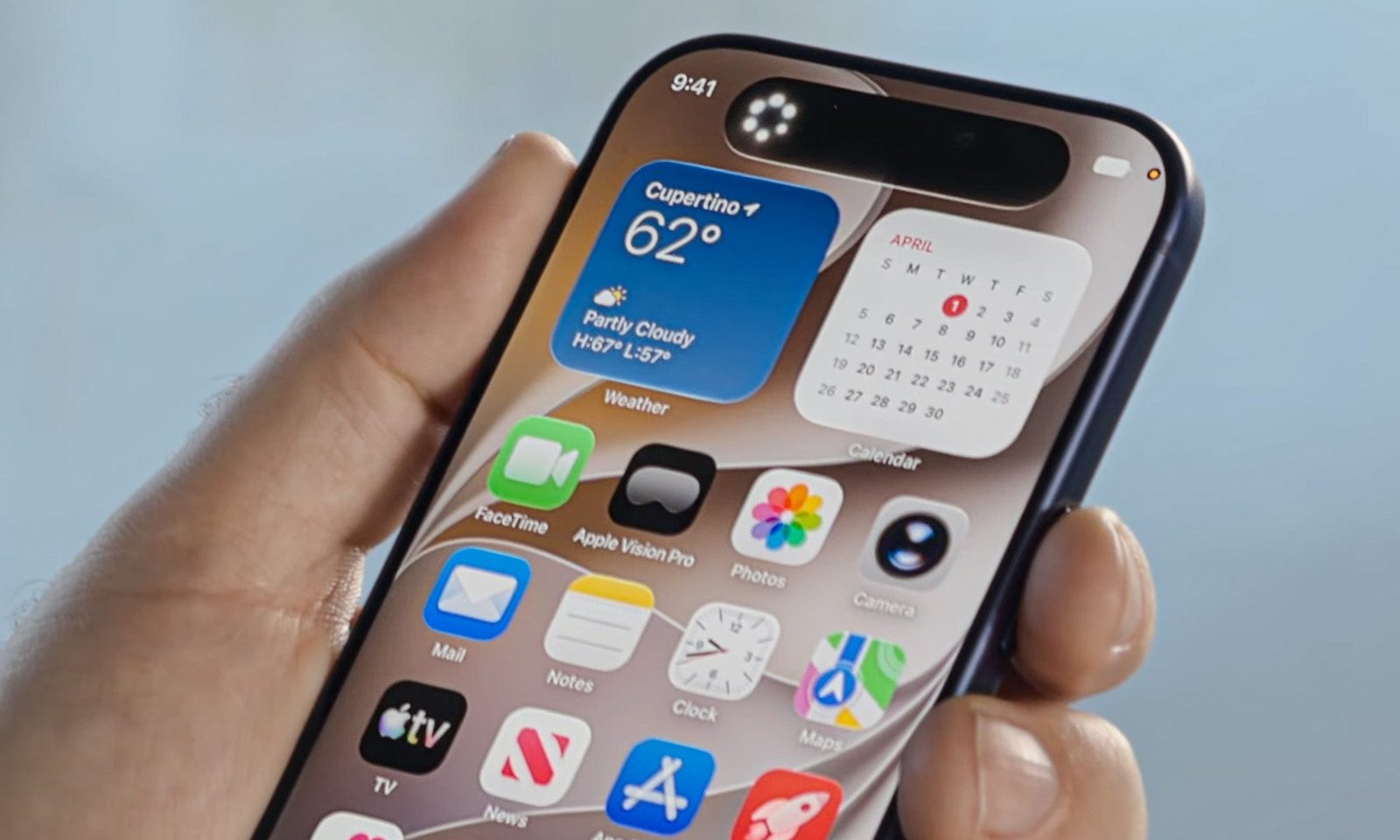
The AI phone era is coming, and the weird brands may not survive it

Published

on

AI phones small brands

What happens to the oddballs when AI becomes the price of admission?

I’ve always had a weakness for the weirdos of the phone world. Brands like Meizu, Fairphone, Unihertz, and Murena — they never tried to beat Apple at its own game. They made Android feel less like a foregone conclusion. Fairphone stubbornly insisted on repairability. Unihertz shipped tiny, baffling phones. Murena tried to sell you a phone that actively resisted Google. They weren’t perfect, and most never sniffed the mainstream, but they kept the smartphone market feeling alive around the edges.

Now the AI phone push is here. And it’s starting to look less like a creative renaissance and more like a cover charge — one that many of those small, strange brands simply can’t afford.

Meizu said in early 2024 that it would abandon traditional smartphone projects and pivot entirely to AI-enabled devices. That sounds futuristic until you realize it’s really a warning label.

The rich end gets to define the future

Apple doesn’t need to own the entire phone industry to bend it toward Cupertino. According to the Wall Street Journal, Apple shipped roughly one in five of the 1.3 billion smartphones sold last year — that puts it near Samsung and Xiaomi on raw volume. But the real control starts higher up the price ladder.

In phones priced at $600 or more, Apple controls more than two-thirds of the segment. At $1,000 or more, it takes more than three-quarters. That’s already lopsided. But it looks even harsher when you consider that overall smartphone shipments are forecast to fall while premium phones are still expected to grow.

The safest money in the industry is gathering around the richest buyers, the strongest ecosystems, and the companies that can raise prices without torching their customer base.

AI raises the cover charge — and it’s steep

AI makes that imbalance harder to ignore because it raises the price of being taken seriously. A smaller brand can still buy a decent OLED panel, tune a passable camera, ship a fast charger, and build something with more personality than another glass rectangle wearing a camera island like a backpack.

The next round demands more. AI phones need newer chips, more memory, cloud infrastructure, model partnerships, longer software support, and a marketing budget big enough to convince people to use the assistant they ignored last year. Counterpoint Research expects GenAI-capable phones to reach 45% of global shipments in 2026, up from 36% in 2025. That makes AI feel less like a bonus feature and more like the next entry fee.

The squeeze isn’t just in software. Reuters reported that IDC expects the smartphone market to see its biggest-ever decline in 2026, partly because AI infrastructure demand is driving up memory costs. Low-end Android makers are expected to take the hardest hit. Premium brands can absorb the shock or pass it along to customers.

Memory costs are the hidden tax

Samsung and other memory manufacturers are prioritizing high-margin AI chips over traditional DRAM and NAND. That pushes up component prices across the board. For a small brand operating on thin margins, a sudden memory price hike can wipe out an entire product line.

The weird brands are running out of room

Some smaller phone brands were niche for good reasons. Some made genuinely bad software. Some treated updates like seasonal gossip — unreliable and eventually abandoned. But the useful ones still kept Android from feeling pre-chewed. The Android world was already watching Oppo, Realme, Vivo, and OnePlus blur into each other before AI became the new seriousness test.

Meizu isn’t the whole story, but it’s a painfully tidy example. A brand that once helped make Android feel less uniform now has to explain its future through AI roadmaps and ecosystem language, because that’s where the industry has decided seriousness lives.

That’s the part I don’t want to lose in this next phone cycle. Odd little brands shouldn’t have to beat Apple to justify existing. Sometimes the useful thing is simply having a phone industry where good, strange devices can hang around long enough to make the giants look a little less inevitable.

AI is being sold as the thing that will make phones more personal. The bleak joke is that the companies most likely to survive the shift are the ones large enough to make every phone feel a little more the same.

If you care about keeping the weird alive in tech, small phone brands worth watching might give you a reason to pay attention. But don’t wait too long. The AI era doesn’t have much patience for the strange.

Continue Reading
Click to comment

Leave a Reply

Your email address will not be published. Required fields are marked *

Artificial Intelligence

Anthropic and Blackstone place a $1.5 billion bet that the real AI money is in implementation, not models

Published

on

AI implementation

It’s not about the model anymore

For years, the AI industry has been obsessed with one question: who builds the smartest model? That race is far from over, but a new bet from Anthropic and Blackstone suggests the next trillion-dollar opportunity lies elsewhere. It’s not about the model. It’s about what you do with it.

Ode with Anthropic is the name of a new $1.5-billion joint venture. Backed by Blackstone, Hellman & Friedman, Goldman Sachs, and others, the company is designed to do one thing: help the world’s largest businesses actually use AI. Not just buy a license. Not just run a pilot. Rewire core operations around it.

The move mirrors OpenAI’s own The Deployment Company, launched earlier this year. Both labs have quietly acknowledged a hard truth: selling enterprise AI requires more than a better benchmark score. It demands engineers on the ground, custom integrations, and a willingness to get your hands dirty.

How a Blackstone frustration became a company

The idea for Oe didn’t start inside Anthropic. It started inside Blackstone. The private equity giant had been trying to implement AI across its portfolio companies, bringing in both large consulting firms and smaller AI services boutiques. The results were mixed.

One boutique stood out: Fractional AI, an AI engineering services startup. Blackstone noticed. Shortly after the joint venture was announced, it acquired Fractional, turning the startup into the foundation of what is now Ode. Fractional had ended an 11-month partnership with OpenAI when the deal went through.

Chris Taylor, CEO of Ode and co-founder of Fractional, is blunt about the ambition. “It’s pretty easy to imagine this as a trillion-dollar company someday if we execute well,” he told TechCrunch. The real challenge, he says, is scaling fast without sacrificing quality.

Ode’s approach: boutique quality, private equity scale

Ode currently employs 100 engineers. It works directly with Anthropic’s applied AI team to identify where the technology can have a real impact, then builds custom systems tailored to each client’s operations. Anthropic’s internal team will continue to handle strategic, mission-aligned deployments. Ode handles the rest.

The venture will operate under a “Claude-first” principle, meaning it will use Anthropic’s technology — including features like Claude Tag in Slack — whenever possible. But it’s not locked in. If a rival model works better for a specific problem, Ode will use it.

Eddie Siegel, Ode’s chief technologist and a Fractional co-founder, puts it this way: “I think model selection matters, but it’s not where the majority of calories are spent. It’s one ingredient in a system that has to be engineered.”

The ideal customer: a CEO who’s all in

For Ode, the right customer isn’t the one with the biggest IT budget. It’s the one whose CEO is personally committed. Taylor says the work Ode does tends to be the top priority for the CEO — “the most important product feature that the company is going to build over the course of the next two years, or reworking the most important business process they have.”

That level of buy-in matters, because the work is not trivial. Taylor describes AI as “this magic, hallucinating ingredient” that needs to be carefully integrated into core business processes. Most companies simply don’t have the talent to do it themselves.

Who are Ode’s engineers? The ‘special forces’

Ode’s executives describe their team as elite generalist software engineers. Over half are former founders. Siegel calls them the kind of people who can “juggle a really challenging technical problem, but also own something end-to-end.” One Blackstone executive put it more bluntly: this is the “special forces,” not an army of forward-deployed engineers (FDEs).

Demand for such teams far outstrips supply. That’s a problem, because Ode plans to scale internationally while keeping its boutique positioning. It runs constant evaluations to measure the business impact of its implementations. But finding enough “grown-up” engineers who combine entrepreneurial experience, systems thinking, AI expertise, and enterprise product judgment is not easy.

Siegel isn’t worried. “It has never been an easier time to become an entrepreneur,” he says. “You learn so much by trying to own problems end-to-end. That’s the skill set that fits really well with Ode.”

The competition: consulting giants and rival labs

Ode is not alone in this market. OpenAI’s The Deployment Company is a direct competitor. So are consulting giants like Deloitte and Accenture, which have built their own forward-deployed engineering teams. The race to own enterprise AI implementation is already crowded.

But Ode’s backers believe the market is big enough for multiple winners. The private equity firms involved will funnel their own portfolio companies to the venture as potential customers, though Ode is not limited to selling to those companies.

The founding belief, Taylor says, is that “non-AI companies are going to be among the big winners of this whole AI moment if they adopt the technology the right way.” That’s a big if. Ode is betting it can be the one to help them get there.

The bottom line: deployment is the new frontier

Whether Ode can train enough engineers, maintain quality, and fend off competitors remains an open question. But the signal from Anthropic, Blackstone, and OpenAI is clear. The next great AI race will not be won on a leaderboard. It will be won inside the world’s largest companies, one custom integration at a time.

Models are becoming commodities. Implementation is the moat.

Continue Reading

Artificial Intelligence

Enterprise AI has an agent deployment problem — most so-called agents are still chatbot wrappers

Published

on

enterprise AI agents

Enterprises are building the plane before they have a fleet

A new wave of VentureBeat Pulse Research, based on a June 2026 survey of 101 enterprise organizations (100+ employees), reveals a stark tension: companies are racing to build sophisticated orchestration layers for AI agents, but the vast majority of those so-called agents are still glorified chatbots.

The headline finding is blunt. When asked to honestly assess their own portfolios, 71% of respondents said a quarter or fewer of their deployed AI agents are true multi-step orchestrated workflows. Only 10% have crossed the halfway mark. The rest are single-prompt chatbot wrappers — dressed up in agent clothing, but doing nothing an orchestration layer is actually for.

This gap between ambition and reality is the central story of the research. Enterprises are standardizing on model-provider platforms, pouring money into workflow tooling, and designing hybrid control planes — all before most of their agents can execute a multi-step task reliably.

Anthropic’s Claude dominates the platform race

When it comes to which platform enterprises are betting on, one name stands out. Anthropic’s Claude is the primary orchestration platform for 40% of respondents — more than double the next contender. Microsoft sits at 18%, OpenAI at 13%, and Google and Amazon trail in single digits. Open-source frameworks like LangChain and LangGraph, which dominate technical discussions, barely register in enterprise deployment.

The logic behind the choice is what the researchers call “model gravity.” The single biggest factor driving platform selection — cited by 21% of respondents — is native alignment with a state-of-the-art base model. Enterprises are picking the orchestration environment that comes with the frontier model they already want to build on.

But satisfaction is lukewarm. Respondents rated their platforms at 3.94 out of 5 overall, with “ease of implementation” the weakest score at 3.85. And 96% plan to change their orchestration approach within the year. These are tools enterprises tolerate, not love.

Reliability rules — but most agents can’t deliver it

What do enterprises actually want from orchestration? The answer is boring but brutal: reliability. Task completion reliability (32%) and multi-step workflow management (28%) together account for 59% of primary success metrics. Developer productivity and end-user experience lag far behind.

This makes the chatbot trap even more pointed. Enterprises define success as dependable multi-step execution, yet most of their deployed agents can’t do multi-step work at all. The ambition is real; the portfolio is not.

The trap is unevenly distributed. Among smaller enterprises (under 2,500 employees), 77% say a quarter or fewer of their agents do true multi-step work. For larger organizations, that figure drops to 62% — still high, but meaningfully better. The chatbot trap is, directionally, a mid-market condition.

Hybrid control planes: The hedge against lock-in

Enterprises are designing their control architecture with one fear in mind: vendor lock-in. By the end of 2026, 51% expect a hybrid control plane — part provider-native, part external. Only 6% plan to hand control entirely to a provider-managed service.

The reason is clear. When asked what worries them most about letting control live inside a model provider, 35% said vendor lock-in, up from 24% in an earlier April-May wave. Security and permissioning limitations (28%) and inflexibility across models (21%) round out the concerns.

This is a notable shift. In the earlier survey, security was the top concern. By June, lock-in had taken the lead. The worry about provider platforms appears to be maturing from whether they can be secured to whether they can be replaced.

The hybrid control plane is the architectural hedge. Enterprises will build on a provider’s platform, but they will not be governed entirely by it.

Investment flows to tooling, but cost control lags

Where is the money going? Agent workflow tooling leads spending plans at 34%, followed by security and permissions enforcement at 25%, and scaling infrastructure at 20%. Monitoring and debugging draws a smaller 11%.

The weight on tooling and permissions over pure observability signals that enterprises are spending to build and harden orchestration, not merely to watch it run.

But fiscal control over token consumption remains reactive. More than a quarter of enterprises (27%) admit they have no real-time, programmatic way to stop a runaway agent before the bill arrives — they learn of it from the logs afterward. Another 32% rely entirely on native caps built into their platform, a control only as good as the provider’s tooling.

Only the enterprises building custom gateways (23%) or exploiting cross-model routing to arbitrage cost (19%) are treating token burn as an engineering problem to be controlled deterministically.

Again, size matters. About one in three smaller enterprises (34%) exercises only reactive control of agent spend, against 20% of larger ones. The mid-market is running the least mature agents on the least instrumented budgets.

The bottom line: The layer is real; most of the agents aren’t yet

This wave of research paints a clear directional picture. Enterprises have decided how they want to orchestrate agents — on model-provider platforms, with hybrid control planes, judged by reliable multi-step execution. The platforms, budgets, and strategies are being put in place.

But the deployed reality is thin. Seventy-one percent of enterprises admit a quarter or fewer of their agents are genuinely orchestrated. Only 10% are past the halfway mark. And more than a quarter cannot stop a runaway agent in real time.

The orchestration layer is being built ahead of the orchestrated portfolio it is meant to run. That is not necessarily a contradiction — it may be a roadmap. The question for subsequent waves is whether the deployed reality closes the gap on the ambition, or whether the chatbot trap proves stickier than the roadmap assumes.

For organizations serious about AI agent deployment, the takeaway is sobering: invest in the orchestration layer by all means, but be honest about what your agents can actually do. And if you can’t stop a runaway agent in real time, fix that before you let it run unsupervised.

Continue Reading

Artificial Intelligence

Australia warns doctors: AI scribing tools pose privacy and safety risks as use surges

Published

on

AI scribing tools

AI scribes are everywhere in Australian clinics. Regulators are scrambling to catch up.

Australian health authorities have issued a blunt warning to doctors about the rapid spread of AI-powered scribing tools in clinics. The technology, which records and summarises doctor-patient conversations into clinical notes, has exploded in popularity. But regulators say oversight has not kept pace.

Internal government documents, obtained by The Guardian through freedom of information requests, reveal that Australia’s federal health department sees significant risks tied to AI scribing tools. Briefing papers prepared for Senate Estimates in February 2026 describe the technology as operating with “little oversight.” Some vendors, the documents note, market their products as falling outside existing medical device regulations — even though they are used in real clinical settings.

Adoption has nearly doubled in 18 months

The numbers tell a stark story. An online survey by the Royal Australian College of General Practitioners (RACGP) found that the share of Australian doctors using AI scribes jumped from 22 percent in August 2024 to 40 percent by November 2025. That is nearly double in just over a year.

Tech providers claim their platforms have processed hundreds of millions of consultations globally over the past 18 months. The appeal is obvious. AI scribes reduce the administrative burden of note-taking, letting doctors focus on patients instead of screens. The health department acknowledges the tools can improve productivity and help cut burnout.

But the same documents warn that these systems inherit the flaws of the large language models they run on. Errors in transcription or summarisation are not hypothetical. They could affect patient safety, clinical accountability, and the quality of data flowing into Australia’s digital health infrastructure.

Privacy and consent: two big unknowns

Privacy is where the alarm bells ring loudest. Officials found that some vendors claim their products are privacy-compliant while offering little transparency about how patient data is actually handled. In some cases, healthcare providers may not even know that patient conversations are being transmitted to cloud servers outside Australia.

That is a serious concern. Sensitive medical information stored abroad may face different legal protections — or none at all.

Patient consent is another flashpoint. The government found huge variation in how clinics obtain permission before recording consultations. Meaningful informed consent, officials argue, requires patients to understand both the benefits and the limitations of AI-assisted documentation. Consumer groups have reported instances where patients were told they would need to find another doctor if they refused to have AI scribes used during their appointments. That is not consent — that is coercion.

Marketing claims under scrutiny

The health department also questioned vendor claims that AI scribes can boost doctor revenue by roughly 30 percent without longer hours or more patients. Officials worry that if higher billing becomes the main incentive for adoption, it could have knock-on effects on Australia’s publicly funded Medicare system.

Who is watching the watchers?

Regulatory oversight is currently split between three bodies: the Therapeutic Goods Administration (TGA), the Australian Health Practitioner Regulation Agency (Ahpra), and the Office of the Australian Information Commissioner. That fragmentation makes coherent oversight difficult.

The TGA is now reviewing whether AI scribes should be formally classified as medical devices. That decision, expected in the coming months, could bring many platforms under much stricter rules. If the TGA says yes, vendors will face tougher requirements around safety, accuracy, and transparency.

For now, the government is urging doctors to proceed with caution. The warning is clear: just because a tool is popular does not mean it is safe.

What this means beyond Australia

This is not just an Australian story. The same tensions are playing out in healthcare systems around the world. AI scribes promise to cut paperwork and give doctors more time with patients. But governments are being forced to ask harder questions about privacy, accuracy, and accountability when artificial intelligence becomes part of medical decision-making.

The Australian warning is a signal. Regulators are watching. And the era of unchecked AI adoption in healthcare may be coming to an end.

Continue Reading

Trending