Connect with us

Artificial Intelligence

The hidden energy cost of AI agents: 136 times hungrier than a standard chatbot

Published

on

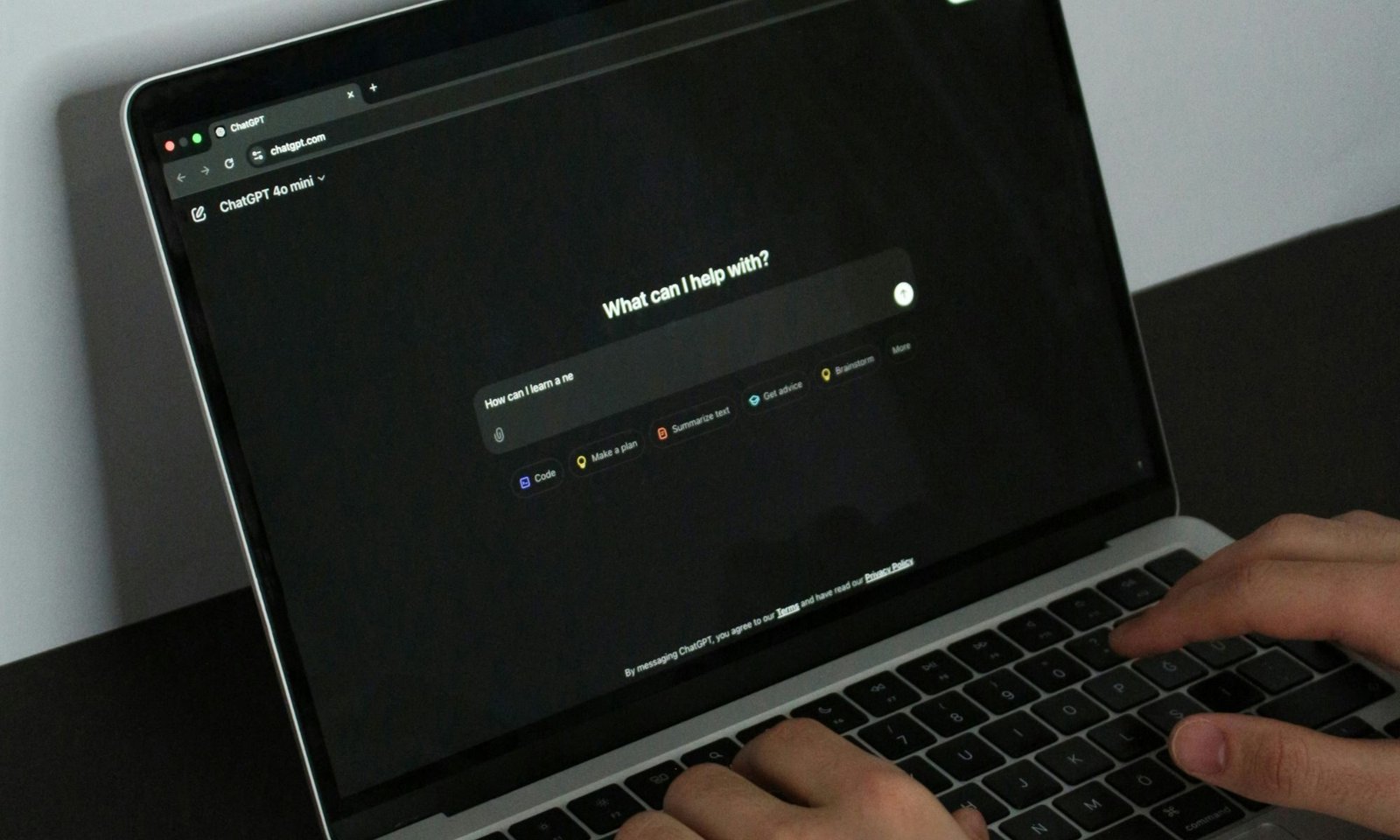
AI agents energy

AI’s next big leap comes with a staggering electricity bill

The AI industry’s growing hunger for electricity has already alarmed utilities, governments, and tech giants. But a new study suggests the problem is about to get much, much worse — not with smarter chatbots, but with the rise of AI agents.

Researchers at the Korea Advanced Institute of Science and Technology (KAIST) have published what they call the first comprehensive analysis of the energy cost of AI agents — autonomous systems that reason, plan, and execute tasks without human hand-holding. Their conclusion? These systems can burn through up to 136.5 times more energy per query than a conventional generative AI model. That’s not a typo.

The paper, presented at the IEEE International Symposium on High-Performance Computer Architecture (HPCA) earlier this year, raises a blunt question: is the infrastructure behind tomorrow’s AI ready for what’s coming?

Why AI agents are so much more power-hungry

Standard chatbots like ChatGPT or Claude answer a prompt in one shot. They generate text, and they’re done. AI agents don’t work that way. They loop through multiple calls to large language models (LLMs), browse the web, execute code, fire up calculators, and talk to external software — all while solving a single complex task.

That makes them far more capable. It also makes them far more expensive.

The KAIST team, led by Professor Minsoo Rhu from the School of Electrical Engineering, treated AI agents as an entirely new category of data center workload. They measured real-world computational requirements. The numbers are sobering.

Response latency can spike by up to 153.7 times compared to standard chain-of-thought reasoning. And here’s the kicker: the expensive GPUs running these workloads sit idle up to 54.5 percent of the time, waiting for external tools to finish. The hardware keeps drawing power even when it’s not doing any actual AI computation. That’s a lot of wasted electricity.

348 watt-hours per query — and that’s just the start

To put a number on it: running an AI agent powered by a 70-billion-parameter language model — roughly the size of today’s commercial systems — required an average of 348.41 watt-hours per query. A conventional chatbot answering a simple question? About 136 times less.

The team then modeled a future scenario where AI agents handle 13.7 billion requests per day, roughly matching Google’s daily search traffic. Under that load, AI infrastructure would need about 198.9 gigawatts of electricity. That’s nearly half of the average power consumed by the entire United States. Today’s AI data centers can’t come close.

The hidden cost no one’s talking about

Companies like OpenAI, Google, Microsoft, Anthropic, and others are pouring billions into agentic AI, betting it’s the next big leap beyond conversational bots. But the study argues that better models alone won’t cut it anymore. Future progress depends just as much on more efficient semiconductors, smarter GPU utilization, better data-center design, and expanded power infrastructure.

Professor Rhu puts it plainly: AI competitiveness is shifting from building “smarter AI” to building more efficient AI. The team believes the path forward requires co-design — optimizing models, AI chips, servers, and energy systems together. Otherwise, operating costs spiral and sustainability goes out the window.

The researchers have open-sourced their AI agent benchmarks, hoping to push the industry toward tackling one of AI’s fastest-growing — and most overlooked — costs: electricity. Because if the next generation of AI is going to be this powerful, it had better learn to be efficient too.

Continue Reading
Click to comment

Leave a Reply

Your email address will not be published. Required fields are marked *

Artificial Intelligence

Rime picks up $24M Series A to help enterprises field customer calls

Published

on

Rime Series A

Voice AI startup Rime lands $24M to tackle enterprise call handling

San Francisco-based Rime has closed a $24 million Series A funding round, the company announced Wednesday. The round was led by M13 Ventures, with participation from Twilio Ventures, Corazon Capital, Unusual Ventures, and others. The startup builds voice AI models designed specifically for enterprise customer calls — an increasingly crowded space.

Founded in 2022 by former Stanford PhD student Lily Clifford, ex-Amazon Alexa engineer Brooke Larson, and Stanford engineer Ares Geovanos, Rime is taking a different approach from many rivals. Instead of scraping the web for audio data, the company built a recording studio in San Francisco to collect its own conversational data. That proprietary dataset, Clifford says, helps the models nail pronunciation of brand names and industry jargon without forcing clients to retrain models from scratch.

The problem with legacy IVR — and why AI still isn’t enough

Despite rapid advances in voice AI, Clifford is surprisingly blunt about the technology’s limits. Enterprises still lean heavily on legacy IVR systems, she told TechCrunch, because AI voice agents just aren’t good enough yet.

“The voice technology is still not there to automate the vast majority of enterprise phone calls,” Clifford said. “LLMs have made it a lot easier to build voice applications that work, but they haven’t changed how it feels to interact. Talking with a voice AI agent is not the most compelling experience for the end user. It’s kinda like a new IVR, but with a better voice.”

That honesty might seem unusual for a startup CEO pitching a voice AI product. But it also signals where Rime sees its edge: not in flashy demos, but in the gritty work of making models that actually sound natural on a call.

From three models to one: Rime’s shift to speech-to-speech

Rime initially used a pipeline of separate models for speech-to-text, text-to-speech, and a large language model. But the company is now pivoting toward a unified speech-to-speech architecture. The goal? Lower latency, better turn-taking, and handling real-world problems like background noise.

That shift also reduces the burden of orchestrating multiple models. Fewer moving parts means less complexity — and, ideally, more reliable performance. For enterprise clients in regulated industries like healthcare and finance, reliability matters more than buzzword compliance.

Who’s using Rime — and why they stay on the call longer

Rime claims its approach is already winning enterprise contracts. The company says it has customers in food service, healthcare, airlines, and fintech. Named clients include Mayo Clinic, Dialpad, Upstart, and Asurion.

The startup asserts that because of its training data and model design, customers stay on calls longer — a key metric for enterprise call centers. Longer calls can mean better issue resolution, higher satisfaction, and more upsell opportunities. That’s the kind of concrete outcome that wins budgets.

M13’s Morgan Blumberg, who is joining Rime’s board as part of the Series A, sees the company’s focus on technical fundamentals as a differentiator. “Companies like ElevenLabs have moved into being an orchestration and the application layer, going head to head with the Sierras and Decagons of the world,” Blumberg said. “I think there’s just so much more to be done technically, and Rime’s approach of pushing forward on the best model with low latency and high reliability in a regulated environment stands out.”

Hiring spree ahead: Rime plans to double down on R&D

With the fresh capital, Rime plans to expand its current team of 35 people. The company is hiring for model development, engineering, and partnerships. It recently brought on Rafael Valle, who worked on audio understanding at Meta Superintelligence Labs and NVIDIA’s applied deep learning audio research team, as Chief Scientist.

Rime had previously raised $5.5 million in a seed round last May. The new funding gives it a runway to compete in a market that includes ElevenLabs, Deepgram, Vapi, Retell, LiveKit, Decagon, and Sierra. But the startup is betting that its proprietary data and focus on regulated verticals will give it an edge that more generalist voice AI companies can’t easily replicate.

For now, Clifford and her team are banking on a simple thesis: enterprise call automation won’t be won by the fanciest demo, but by the model that sounds most human — and doesn’t make customers want to hang up.

Continue Reading

Artificial Intelligence

I hope Apple keeps the MacBook Neo away from the AI hype and preserves its true identity

Published

on

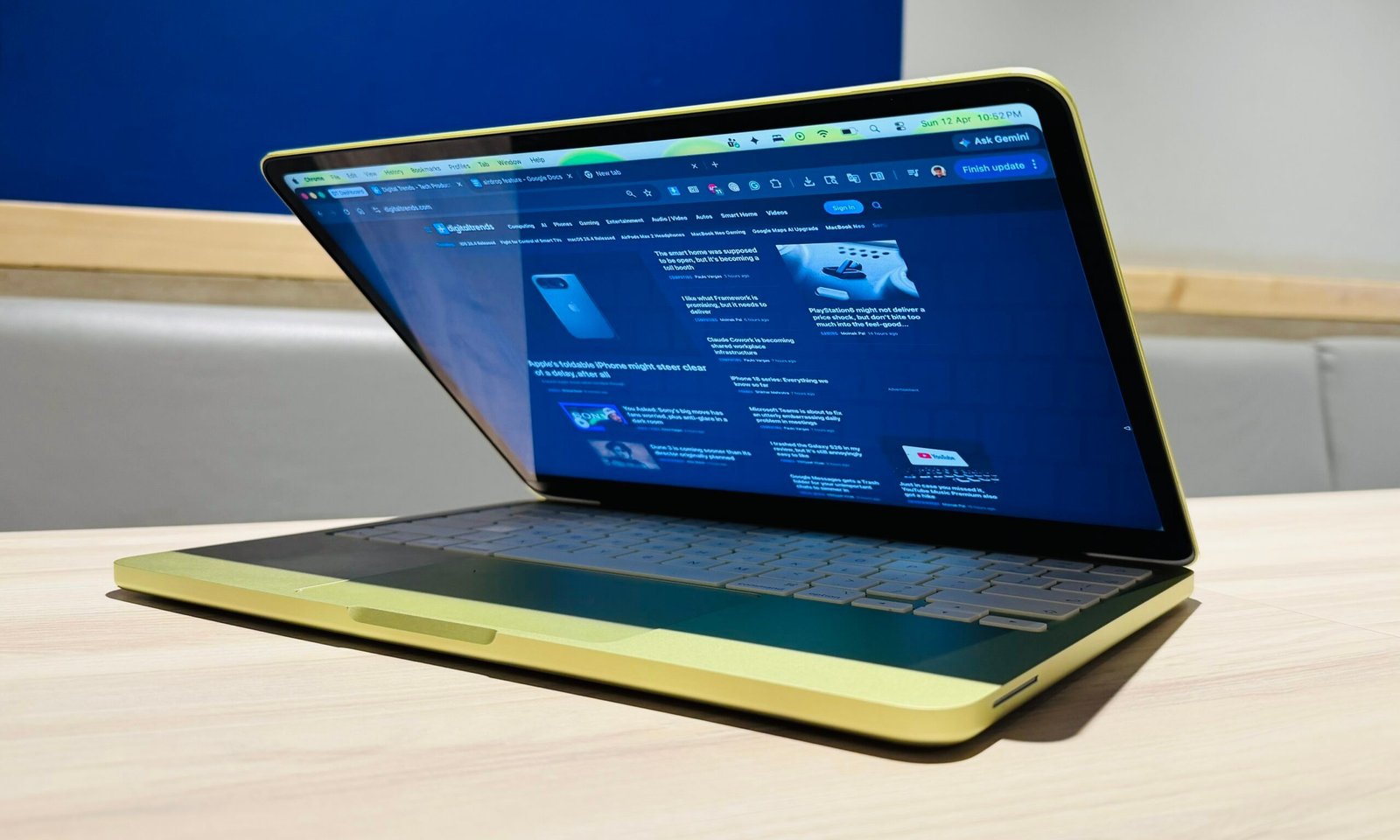
MacBook Neo

A $100 price hike and a pricing problem

Three months after launch, Apple raised the MacBook Neo price by $100. That’s a double-digit jump on a $599 machine. The culprit? A brutal memory crisis that’s squeezing the entire consumer tech industry.

It’s not just Apple. RAM and chip costs have soared as manufacturers race to build AI infrastructure. Enterprise demand is eating up supply. Everyday buyers are left with fewer options, and those options cost more than they did a year ago.

But here’s the thing: even after the hike, the Neo still works. It’s $400 to $500 cheaper than the entry-level M5 MacBook Air. It packs an aluminum unibody in a world of cheap plastic. And it brings Apple Intelligence features — previously reserved for premium models — to a much lower price point. That’s its magic.

Why the Neo sold like crazy

The MacBook Neo launched in March with an iPhone-class chip, 8GB of RAM, and 256GB of storage. It flew off shelves. Apple initially ordered a few million units, then upped that to over 10 million after just a month. The demand was that strong.

Why? Because it knew exactly who it was for. People who browse the web, manage documents, attend Zoom calls, edit a few photos, and stream Netflix. That’s the audience. They don’t care about local LLMs or on-device AI image generation. They just want a laptop that works, feels premium, and doesn’t break the bank.

The Neo checked every box that mattered. It became an aggressive gateway into the Apple ecosystem. And it did all that without chasing the AI hype.

The AI arms race is ruining budget laptops

Look at what’s happening with Windows OEMs. Most brands below $1,000 are scrambling to meet Microsoft’s Copilot+ PC requirements. That means at least 45 TOPS of on-device AI compute. That means more powerful CPUs, GPUs, or system-on-chips like Qualcomm’s. That means larger memory pools and faster memory. And that means higher prices.

The result? Budget laptops are getting expensive. They’re being stuffed with hardware most people don’t need. The MacBook Neo, with its modest 8GB of RAM and repurposed A18 Pro chip, made sense precisely because it ignored that race.

Apple already segments its AI features

Apple isn’t treating AI as a uniform experience. Older iPhones like the iPhone 15 don’t support Apple Intelligence at all. The new Siri AI is available on the Neo and the iPhone 17, but advanced features like on-device Siri voices are limited to the iPhone 17 Pro or iPhone Air.

Apple is comfortable drawing those lines. The Neo’s successor doesn’t need to chase parity. It just needs to hold its lane.

What the Neo 2 should (and shouldn’t) do

If Apple wants to improve performance, it could reuse binned A19 Pro chips, much like it did with the A18 Pro in the Neo. That keeps costs down. It could stick with older, cheaper DDR4 memory instead of jumping to DDR5. That’s perfectly fine for browsing and video calls.

The Neo doesn’t need a desktop-class NPU, a massive GPU, or 16GB of baseline memory. Those components would add $100 to $200 to the price, pushing the Neo closer to $1,000. That would cannibalize the MacBook Air and blur the Neo’s identity.

The 512GB storage variant already costs $800 in the US. Push it much higher, and the Neo loses its reason to exist.

Good enough hardware is a proven strategy

Apple wouldn’t be the first to take this approach. Intel is bringing back older processors for budget machines. Dell recently launched laptops powered by Nvidia’s aging RTX 3050 GPU. Neither company pretends everyone needs the latest CPU or GPU. They recognize the value of “good enough” hardware.

The Neo worked because it knew what it wanted to be: an affordable entry-level laptop that handles lightweight day-to-day tasks while being light on your wallet. Its biggest strength was knowing how few AI it actually needed to succeed.

The bottom line: don’t fix what isn’t broken

The best cheap MacBook is worth far more than the cheapest AI MacBook, which costs hundreds more. I hope the team in Cupertino keeps that in mind as they work on the Neo’s successor.

The Neo’s identity is its price and its simplicity. Adding AI hardware would ruin both. Apple should resist the trend, stay in its lane, and let the Neo be what it is: a genuinely affordable laptop that doesn’t pretend to be something else.

Continue Reading

Artificial Intelligence

Neko Health raises $700 million to bring AI-powered full-body scans to the US

Published

on

AI body scans

A $700 million bet on preventive health

Neko Health, the Swedish health-tech startup co-founded by Spotify founder Daniel Ek, just closed a massive $700 million Series C funding round. The money will fuel the company’s expansion into the United States, starting with a flagship clinic in New York City.

The round was led by Lightspeed Venture Partners and O.G. Venture Partners. Existing backers Atomico, General Catalyst, and Lakestar also participated, alongside new investors including Liberty City Ventures, Positive Sum, and BDT & MSD. David Ofer of O.G. Venture Partners is set to join Neko’s board, pending regulatory approval.

With this latest injection, Neko’s total disclosed funding since 2023 now exceeds $1 billion. The company previously raised $65 million in a Series A in 2023 and another $260 million in January 2025.

A notable detail: the investor list includes Meta CEO Mark Zuckerberg and his wife Priscilla Chan, tennis legend Maria Sharapova, musician will.i.am, and former footballer Thierry Henry. Earlier individual investors include Reddit co-founder Alexis Ohanian and actor Zoë Saldaña.

What happens inside a Neko Health scan?

Neko’s clinics offer a 60-minute, non-invasive, radiation-free health assessment. The service combines full-body imaging, blood tests, custom-built sensors, and artificial intelligence — all reviewed by a clinician during the same visit.

The scan includes an electrocardiogram, arterial measurements, body-composition analysis, and more than 2,000 high-resolution images that map a customer’s skin. Blood samples are processed on-site, so results are ready before the patient leaves. A doctor or nurse discusses findings in person.

The company screens for potential signs of skin cancer, cardiovascular disease, diabetes, metabolic syndrome, and stroke risk factors. Many of these measurements — blood pressure, cholesterol, blood glucose — are available through standard healthcare. Neko’s pitch is convenience: one appointment, proprietary imaging, automated data collection, and immediate results.

But the company’s public materials don’t include a comparative study showing whether this bundled approach actually improves clinical outcomes or saves money versus established preventive care pathways.

US expansion: New York first, more cities to come

Neko plans to open clinics in New York and other US cities, though it hasn’t named specific additional locations or provided a detailed timeline. A waitlist for the New York clinic is already live on its website. Pricing for US scans hasn’t been announced.

Currently, the company operates eight clinics across the UK and Sweden: two in Stockholm, one each in Manchester and Birmingham, and four in London (Marylebone, Spitalfields, Covent Garden, and Victoria). In the UK, a scan costs £299 (about $400); in Sweden, it’s 2,750 Swedish kronor (roughly $285).

Since launching in 2023, Neko says it has completed 100,000 scans. More than 350,000 people have registered or joined waitlists. The company reports that 75% of customers book and prepay for a second scan at the end of their first appointment — a strong retention signal.

That repeat-booking model lets clinicians compare measurements and skin images over time. But public information doesn’t establish whether annual screening is the right interval for every age or risk group.

Regulatory clearance and the US healthcare puzzle

Two of Neko’s internally developed devices have received FDA 510(k) clearance — Derma-2 as an adjunctive telethermographic system, and Spectrum-2 as a tissue-saturation oximeter for cardiovascular measurements. These clearances apply to the specific devices and their intended uses, not to the complete Neko Health Scan as a single FDA-approved screening service.

The company positions its US clinics as preventive health and wellness providers, not full-service medical practices. Its privacy notice explicitly advises customers to continue seeing their existing doctors for diagnoses and treatment, including for conditions flagged during a Neko scan.

Specialist clinicians — dermatologists and cardiologists — review findings that need further examination. Follow-up appointments, referral letters, and introductions to outside specialists are included when recommended. But Neko’s US clinics don’t currently participate in health insurance plans, and the company says most services aren’t covered by a payer. Customers will pay out of pocket for the initial assessment.

Neko hasn’t disclosed what customers might pay for diagnostic tests or treatment delivered by external providers, nor whether employers or insurers will subsidize access.

What about the evidence?

Publicly available information doesn’t include a completed peer-reviewed study validating the full screening service. A trial registered on ClinicalTrials.gov is evaluating Neko’s multimodal skin-imaging technology for screening and diagnostic-support applications, including skin cancer and Raynaud’s phenomenon. But that trial is still ongoing.

Neko’s materials don’t disclose how often its scans produce false-positive findings, how many customers undergo additional procedures, or how many flagged abnormalities turn out to be clinically unimportant. The FDA clearances for individual devices don’t establish the performance of every algorithm used to combine or interpret the resulting data.

The company did share health-outcome data from 1,469 customers who completed a second scan about a year after their first. The group recorded improvements in blood pressure, cholesterol, and blood sugar, while body weight stayed broadly stable. But Neko itself says this wasn’t a scientific study — there was no control group. Customers could have started treatment or changed their behavior between appointments, so the figures don’t prove the scans caused the improvements.

CEO Hjalmar Nilsonne said part of the new capital will fund further research and development. Neko recently added body-composition measurements and clinician reviews of wearable-device data. It also introduced updated versions of its Derma, Echo, and Spectrum medical devices, which capture more health data and automate more of the scanning process.

Neko didn’t disclose its valuation after this round. The Financial Times, citing unnamed sources, pegged it at around $7 billion.

For a deeper look at how AI is reshaping diagnostics, check out our coverage of NHS AI blood test reducing invasive womb cancer checks. And if you’re interested in the broader trend of preventive health screening technology, we’ve got you covered.

Continue Reading

Trending