Connect with us

How To

Wasavi Tasks: The Ultimate Guide to Scheduling Messages and Auto-Replying on WhatsApp

Published

on

Wasavi Tasks: The Ultimate Guide to Scheduling Messages and Auto-Replying on WhatsApp

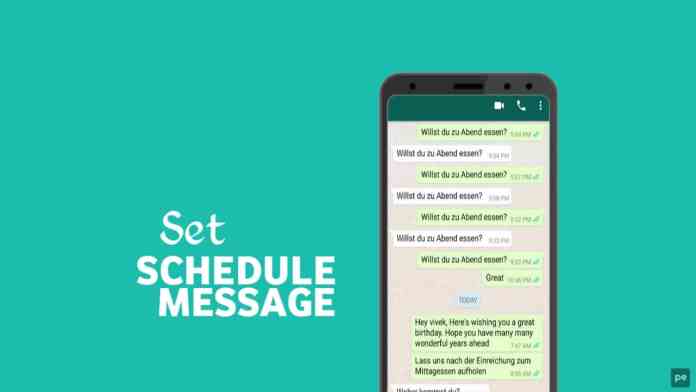
Have you ever missed a friend’s birthday message because you fell asleep? Or forgotten to send an important reminder at a specific time? This is where the Wasavi Tasks app transforms your messaging experience. This powerful Android application allows you to schedule messages and configure auto-replies, ensuring you never miss a crucial communication moment again.

What Exactly is the Wasavi Tasks App?

The Wasavi Tasks app is a specialized utility designed for Android users who want greater control over their messaging schedule. Fundamentally, it automates the process of sending texts through platforms like WhatsApp. Instead of manually sending a message, you can program it to be delivered at a precise date and time. This means you can wish someone “Happy Birthday” at midnight while you’re sound asleep or send a work reminder at 9 AM sharp without lifting a finger.

Building on this, the app’s auto-reply function acts as a virtual assistant. When you’re busy, driving, or in a meeting, the app can automatically respond to incoming messages with a pre-written reply. This maintains communication without requiring your immediate attention.

How to Download and Install Wasavi Tasks

Getting started with this message scheduler is straightforward. The process is designed to be user-friendly, even for those who aren’t tech-savvy.

Step-by-Step Installation Guide

First, unlock your Android device and open the Google Play Store. In the search bar at the top, type “Wasavi Tasks” and tap the search icon. The official app should appear in the results—look for the developer name to ensure it’s the correct application. Tap the “Install” button and wait for the download and installation to complete. The app icon will then appear in your app drawer, ready for configuration.

Core Features That Make Wasavi Tasks Stand Out

This isn’t just another basic scheduler. The Wasavi Tasks app packs several intelligent features that justify its place on your phone.

Primarily, the message scheduling is incredibly flexible. You can set a one-time message for a future date or create recurring messages for weekly meetings or regular check-ins. The interface allows you to select the exact contact or group, write your message, and choose the delivery time down to the minute.

Additionally, the app includes a calendar for special events. You can mark birthdays, anniversaries, or deadlines and link a scheduled message to each event. This creates a personal communication manager that reminds you of important dates and handles the messaging automatically.

For power users, the app offers task management, bot creation for automated interactions, and broadcast features to send scheduled messages to multiple contacts simultaneously. A welcomed bonus is the dark mode, which provides a sleek, eye-friendly interface for nighttime use.

Setting Up Your First Scheduled Message

After installation, open the Wasavi Tasks app. The system will request necessary permissions to read notifications and automate replies—grant these permissions for full functionality. Tap the prominent “+” button to create a new task. Select “Schedule Message” from the options.

Now, choose the messaging app you want to use (like WhatsApp), select the recipient from your contacts, and compose your message. This is where you write that birthday wish or reminder. Next, set the date and time for delivery. You can review all details before saving the task. Once saved, the app will handle the rest, sending your message precisely at the scheduled moment.

Configuring Auto-Replies for Busy Times

The auto-reply feature is perfect for when you’re unavailable. Within the Wasavi Tasks app, navigate to the auto-reply section. Create a new rule by specifying which contacts or keywords should trigger a reply. Then, write your standard response—for example, “I’m currently in a meeting and will respond shortly.”

You can activate this rule for specific time periods. Therefore, if you have a daily focus block from 2 PM to 4 PM, the app can automatically reply to anyone who messages you during that window. This maintains professionalism and manages sender expectations without any manual intervention from you.

For more advanced automation, explore our guide on other WhatsApp automation tools that can complement your setup.

Why This App Saves You Time and Stress

In our connected world, timely communication is often expected. The Wasavi Tasks app removes the mental burden of remembering to send messages. It ensures reliability—if you schedule it, it gets sent. This is invaluable for maintaining personal relationships and professional courtesy.

Moreover, the auto-reply function protects your focus. Instead of being interrupted by notifications, you can work deeply knowing that urgent messages will receive an instant, polite acknowledgment. This creates boundaries in an always-on culture.

Potential Considerations and Best Practices

While the app is powerful, use it thoughtfully. Scheduled messages should feel personal, not robotic. Avoid over-automating personal conversations. For business use, ensure auto-replies are clear and provide a realistic timeframe for your actual response.

Always keep the app updated through the Play Store to benefit from the latest features and security patches. Regularly review your scheduled tasks to ensure they are still relevant.

If you’re interested in expanding your app toolkit, consider reading about top productivity apps for Android that can further streamline your digital life.

Final Verdict: Is Wasavi Tasks Worth It?

For anyone who uses WhatsApp extensively for personal or professional reasons, the Wasavi Tasks app is a significant upgrade. It solves a genuine problem—forgetting to send timely messages—with an elegant, automated solution. The setup is simple, the features are robust, and the time-saving benefits are immediate.

This means that whether you’re a busy professional, a student with a packed schedule, or someone who just wants to be a more reliable friend, this app delivers tangible value. Download it, set up a few scheduled messages for upcoming events, and experience the peace of mind that comes with automated, timely communication.

Continue Reading
Click to comment

Leave a Reply

Your email address will not be published. Required fields are marked *

How To

This is what your smart home actually needs — not another random gadget

Published

on

smart home essentials

Stop buying smart stuff just because you can

It’s easy to get swept up in the smart home craze. A new smart bulb here, a voice-controlled plug there. Before you know it, your living room has more connected gadgets than a tech expo. But here’s the hard truth: most of those devices end up collecting digital dust — or worse, cluttering your countertops.

The real goal of a smart home setup shouldn’t be to own the most gadgets. It should be to make your daily life genuinely easier. That means being selective. Ruthlessly selective.

Why most smart home gadgets fail

Walk into any electronics store and you’ll see shelves of smart plugs, color-changing bulbs, and Wi-Fi-enabled toasters. Many of them are fun for a week. Then the novelty fades. The bulb stays on one color. The plug gets unplugged. The toaster? You use it like a normal toaster.

The problem isn’t the technology. It’s the lack of purpose. A smart device without a clear, recurring use case is just an expensive paperweight. You don’t need a smart bulb in every socket. You need a bulb that turns on automatically when you walk into the hallway at night — and turns off when you leave.

Focus on routines, not devices

The most valuable smart home upgrades aren’t the flashiest. They’re the ones that disappear into your routine. Think about it: a smart lock that unlocks as you approach, saving you from fumbling for keys. A thermostat that learns your schedule and adjusts the temperature before you wake up. A motion sensor that turns off the lights in an empty room.

These are the smart home essentials that actually earn their place. They don’t require you to pull out your phone every time. They just work.

Start with pain points, not product categories

Before you buy anything, ask yourself: What annoys me about my home? Is it coming home to a dark house? Forgetting to turn off the coffee maker? Wasting energy on an empty house? Those are real problems. A random smart gadget won’t fix them. A targeted solution will.

For example, if you constantly lose your keys, a smart lock with geofencing is a better investment than a dozen smart plugs. If you hate getting out of bed to adjust the thermostat, a smart thermostat pays for itself in comfort and energy savings.

How to audit your current smart home

Take a hard look at what you already own. Go through each device and ask: Does it save me time? Does it save me effort? Does it solve a recurring annoyance? If the answer is no to all three, consider removing it from your setup. You don’t have to keep using a gadget just because you bought it.

Here’s a quick checklist for building a streamlined smart home setup:

  • Identify your top 3 daily annoyances at home.
  • Find a single device or automation that addresses each one directly.
  • Avoid buying devices that only add a new feature you didn’t need before.
  • Test each device for two weeks. If it doesn’t stick, return it or repurpose it.

The one exception: smart bulbs done right

Smart bulbs get a bad rap, but they’re not all useless. The key is using them with intention. If you set them on a schedule — warm light in the evening, bright white in the morning — they become part of your circadian rhythm. If you use color for specific occasions (like a party or movie night), they add real value. But if you just control them with your voice once and never touch them again, they’re clutter.

So yes, you can have smart bulbs. Just don’t buy them because they’re on sale. Buy them because they serve a purpose in your daily life.

Final thought: less is more

A smart home should feel like a helper, not a hobby. The best setups are invisible. They anticipate your needs and stay out of your way. That starts with choosing devices that solve real problems — not just the ones that look cool in a box.

Next time you’re tempted by a flashy gadget, pause. Ask yourself: Will this make my life easier tomorrow morning? If the answer isn’t a clear yes, leave it on the shelf.

Continue Reading

How To

The one-time darling of the Android world is officially leaving the US

Published

on

OnePlus leaving US

OnePlus is leaving the US — a brand that once defined what a flagship killer should be is packing up

The news hit like a cold front: OnePlus, the scrappy startup that grew into a global smartphone contender, is officially exiting the United States. The company confirmed the move on July 16, 2026, ending a decade-long run in the world’s most competitive phone market.

For anyone who followed Android closely in the mid-2010s, this stings. OnePlus wasn’t just another phone maker. It was the underdog that took on Samsung and Apple with a simple pitch — top-tier specs, a near-stock Android experience, and a price that undercut the big boys by hundreds of dollars. The “Never Settle” slogan wasn’t just marketing; it felt real.

But the US market is brutal. And OnePlus, for all its early magic, couldn’t sustain the momentum.

Why OnePlus is leaving the US now

The official reason, according to the company, is a strategic shift. OnePlus plans to focus its resources on markets where it sees stronger growth — primarily India, parts of Europe, and Southeast Asia. The US, once a trophy market, has become a drain.

Sales numbers tell the story. OnePlus never cracked the top five in US smartphone shipments. In 2025, the brand held less than 2% market share, according to industry analysts. Carrier partnerships, essential for mass adoption in America, remained limited. Verizon never fully embraced the brand, and T-Mobile was the only major carrier that consistently carried OnePlus phones in stores.

The rise of Google Pixel also squeezed OnePlus from above. Samsung’s A-series phones squeezed it from below. And Chinese competitors like Xiaomi and Oppo (OnePlus’s own sibling brand) started offering similar value propositions globally.

A brief history: from invite-only hype to mainstream shrug

OnePlus launched in 2014 with the OnePlus One. It was a sensation. The phone ran CyanogenMod, offered Snapdragon 801 power, and cost just $299. To buy one, you needed an invite — a marketing gimmick that accidentally created massive demand. Forums lit up. People traded invites like currency.

The OnePlus 3 and 3T refined the formula. The OnePlus 5 introduced a dual camera. The OnePlus 6 brought a notch and glass back. Each year, the brand gained more fans.

But somewhere around the OnePlus 8 series, the magic frayed. Prices crept up. The company started cutting corners — removing the headphone jack, watering down the alert slider, and releasing multiple confusing variants. The “flagship killer” was becoming just another flagship.

By the time the OnePlus 12 arrived in 2024, the brand had lost its edge. Reviewers noted that the phone was good, but not special. The price was near $900. The value proposition was gone.

What OnePlus leaving the US means for customers

If you own a OnePlus phone in the US right now, you’re not instantly stranded. The company says it will continue to provide software updates and security patches for existing devices through their promised support windows. The OnePlus 15, launched earlier in 2026, will still receive updates for at least three more years.

Customer support will remain operational, albeit with reduced staffing. Warranty claims will still be honored. But don’t expect new accessories or repair parts to be easy to find after existing stock runs out.

The bigger question: what do you buy next? For former OnePlus fans, the natural alternatives include:

  • Google Pixel 10 — the closest spiritual successor, with clean Android and long update promises
  • Samsung Galaxy S26 — more expensive, but widely supported and available everywhere
  • Nothing Phone (3) — a new underdog with a similar ethos, though still building its US presence

The carrier landscape is also shifting. T-Mobile will still sell OnePlus inventory until it runs out, then likely pivot to promoting Samsung and Google devices more aggressively.

The bigger picture: what OnePlus’s exit says about the US phone market

The US smartphone market is notoriously hard to crack. It’s dominated by Apple and Samsung, which together control roughly 80% of sales. Carriers hold enormous power — they decide which phones get prime shelf space and which get buried. Marketing budgets are astronomical.

OnePlus tried a different approach: online-only sales, community forums, and word-of-mouth buzz. It worked for a while. But eventually, the realities of the market caught up. Without carrier subsidies and nationwide advertising, you can only go so far.

This isn’t the first time a promising Android brand has retreated from the US. LG left the phone business entirely in 2021. HTC faded into obscurity years earlier. Sony barely registers in US sales charts. The graveyard of Android brands that couldn’t make it in America is long.

OnePlus now joins that list. It’s a sobering reminder that even the most beloved underdogs can’t always survive the big leagues.

What’s next for OnePlus globally?

OnePlus isn’t dying — it’s just refocusing. The brand remains strong in India, where it consistently ranks among the top five premium phone makers. In Europe, it has a loyal following, especially in the UK and Germany. Southeast Asia is also a growth market.

The company will continue to launch phones globally, including the rumored OnePlus Open 2 foldable and the next Nord series devices. But US customers will have to import them — and without carrier support, that’s a tough sell for most people.

OnePlus also owns the OxygenOS software skin, which it will keep developing for international devices. The brand’s integration with Oppo’s supply chain means it can still compete on hardware and pricing outside the US.

But the dream of conquering America is over. The one-time darling of the Android world is leaving the US, and the market won’t be the same without it.

Continue Reading

Social Media

Yope raises $12.3M to build a private social network without algorithms or ads

Published

on

Yope raises $12.3M

The pitch: social media without the noise

Yope, a social app that’s been quietly gaining traction, just announced a $12.3 million seed round. The money comes from investors who believe there’s room for a different kind of social experience—one built around private groups of friends and family, not algorithmic feeds or influencer content.

“We’re not trying to compete with TikTok or Instagram for attention,” a company spokesperson said. “We want to help people stay close to the people who actually matter.”

The app is already live and growing. Early users describe it as a cross between a group chat and a photo-sharing album, with a focus on spontaneity and intimacy. No ads. No recommendation engine. No public profiles.

What Yope actually does

At its core, Yope lets users create small, invite-only groups—typically for close friends, family, or a sports team. Inside those groups, members can share photos, send messages, and even use AI-powered features to enhance their interactions.

The AI tools aren’t about generating content for the masses. Instead, they’re designed to strengthen real-world relationships. For example, the app can suggest conversation starters based on shared memories, or automatically create photo albums from a weekend trip.

The company says it has no plans to introduce an algorithmic feed. “We don’t want to optimize for engagement,” the spokesperson added. “We want to optimize for connection.”

No algorithms, no ads—how do they make money?

That’s the obvious question. Yope’s answer: for now, they don’t need to. The $12.3 million seed round gives them runway to focus on product development and user growth. Eventually, they may introduce premium features or a subscription model, but the core experience will remain ad-free and algorithm-free.

It’s a bet that enough people are willing to pay for a private, peaceful social space. Early signals suggest they might be right. The app has seen steady organic growth, especially among users tired of the noise on larger platforms.

Why investors are betting on private social networks

The seed round was led by a group of venture capital firms that have been watching the backlash against public, algorithm-driven social media. Investors see an opportunity in the growing demand for private social networks that prioritize real relationships over viral content.

“People are exhausted by the performative nature of mainstream social platforms,” one investor told reporters. “Yope offers a quiet alternative.”

The trend is real. Apps like Dispo and VSCO have also tried to carve out spaces that feel less like a broadcast channel and more like a living room. Yope’s twist is its emphasis on messaging and AI features that serve small groups, not individual creators.

How Yope compares to WhatsApp and Signal

You might be thinking: isn’t this just a group chat? In some ways, yes. But Yope is designed specifically for sharing life updates in a visual, lightweight way—closer to a private Instagram than a messaging app.

Unlike WhatsApp or Signal, which are primarily text-based, Yope puts photos and videos at the center. And unlike Instagram, there’s no pressure to curate a perfect feed. Posts disappear after a set time, encouraging candid sharing.

The AI features are another differentiator. While Signal and WhatsApp have added some smart functionality, Yope is building tools specifically for group bonding—like automatically stitching together everyone’s photos from an event, or suggesting when to check in on a friend who’s been quiet.

What’s next for Yope

With the new funding, Yope plans to expand its team, improve the AI features, and scale the app to more users. The company is also exploring partnerships with family-focused apps and services that value privacy and real-world connection.

The goal is clear: become the default private space for the people you actually care about. Whether that’s a group of college friends sharing memes, a family sharing holiday photos, or a book club discussing the latest read.

“We’re building for the moments that don’t need to be public,” the spokesperson said. “The ones that are just for you and your people.”

In a world where every social platform is fighting for your attention, Yope is making a quiet bet that sometimes, less really is more.

Continue Reading

Trending