Connect with us

Social Media

Bluesky’s active user base is shrinking as its focus expands beyond the app

Published

on

Bluesky user decline

The post-election bump has faded

Bluesky rode a wave of discontent out of X in late 2024. Millions signed up after the U.S. elections, eager for a decentralized alternative. But two years on, the numbers tell a sobering story.

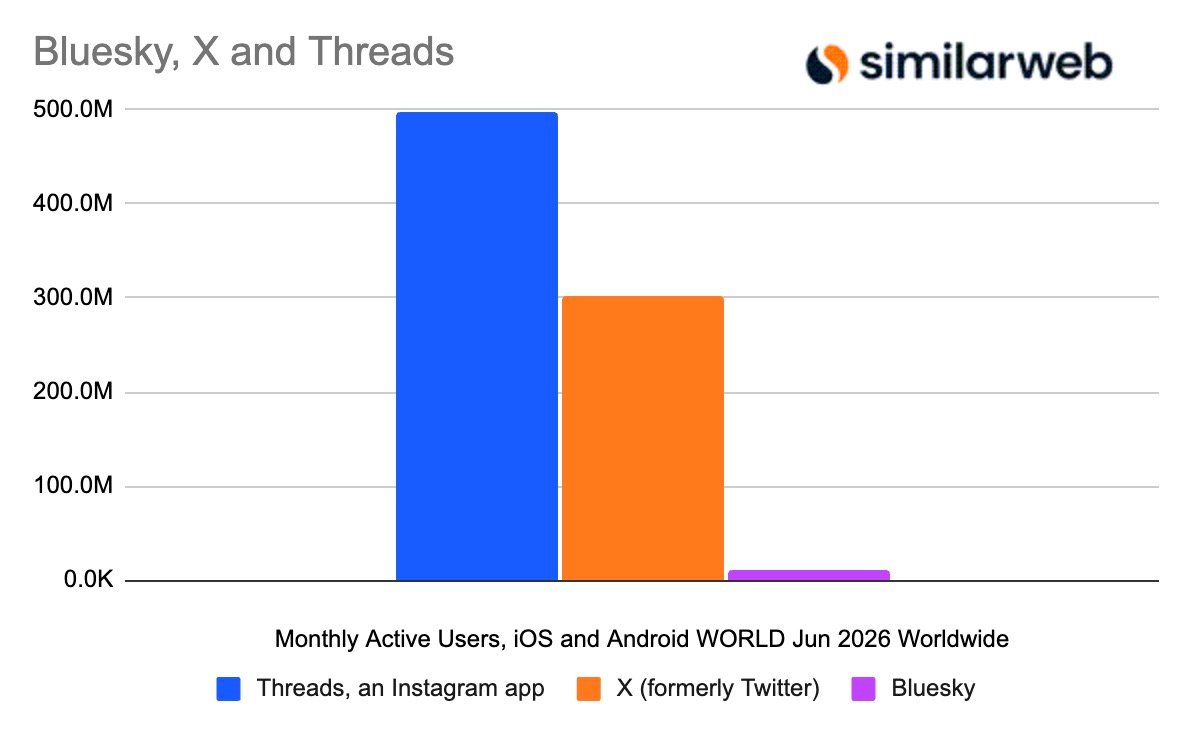
According to digital intelligence firm Similarweb, Bluesky’s mobile app had 10.4 million monthly active users worldwide in June 2026. That’s down 27.2% year-over-year. Daily active users fell even harder — 25.6% year-over-year in July, landing around 3 million.

These are not just post-election jitters. The app has lost more than half its monthly active users since its late-2024 peak. Quarterly averages dropped from roughly 22.1 million in Q4 2024 to 10.7 million in Q2 2026. That’s a 52% decline.

So what happened? Some of those who fled X simply didn’t stick around. The initial surge was real, but retention has been the challenge.

Quality over quantity: the committed core

Here’s the silver lining. The people who stayed are actually engaged. Bluesky’s stickiness rate — the ratio of daily to monthly active users — held at roughly 29% in June. That’s about the same as Threads, Meta’s X competitor.

This suggests Bluesky isn’t a ghost town. It’s a smaller, more loyal community. For a platform built on principles rather than scale, that might be enough.

But is it? The company’s public stats claim nearly 46 million registered users. Yet it doesn’t share daily or monthly active figures. Similarweb’s data fills that gap — and it’s not pretty.

Pivoting beyond the app: the AT Protocol bet

New CEO Toni Schneider isn’t panicking. And here’s why: Bluesky’s future may not be the Bluesky app at all.

The company is increasingly focused on the AT Protocol — the underlying infrastructure that powers Bluesky and now a growing ecosystem of third-party apps. Projects like BlackSky and Eurosky are gaining traction. Video-focused Skylight has found early adopters. The company even launched Attie, an AI-powered research tool.

This is a strategic shift. Instead of competing head-to-head with X or Threads for every user, Bluesky is betting that the protocol becomes the backbone for a new wave of social apps. If that happens, the app’s declining numbers matter less.

Private data support is also on the roadmap. That could attract a different type of user — people more interested in closed communities than public squares.

What the data doesn’t show

One fear was that Bluesky’s losses meant a return to X. Similarweb says no. X’s mobile monthly active users were down 3% year-over-year in June. Daily active users fell 7% in July to 123.7 million.

X is still huge, though — around 302 million monthly active users on mobile as of June 2026. Web visits actually grew 5.3% year-over-year to 4.7 billion in July.

So people aren’t rushing back to X. They’re just… leaving Bluesky.

Threads is the real winner

If anyone’s benefiting from Bluesky’s slide, it’s Threads. The Meta-owned app’s daily active users jumped 21.3% year-over-year to 147 million in July 2026. Website visits soared 112% to 471.6 million.

It’s unclear whether Threads is stealing Bluesky’s disenchanted users or attracting people who never used a Twitter-like service. Either way, the momentum is unmistakable.

For Bluesky, the question is whether a protocol-first strategy can sustain the company while the flagship app shrinks. It’s a risky bet. But with a loyal core and a growing developer ecosystem, it’s not a crazy one.

The next year will tell whether Bluesky becomes the decentralized social network that powers a new generation of apps — or just a footnote in the Twitter wars.

Continue Reading
Click to comment

Leave a Reply

Your email address will not be published. Required fields are marked *

Social Media

Build an AI Creative Director in Claude: Turn Voice Memos Into a Full Content Engine

Published

on

AI creative director

Why You Need an AI Creative Director (Even If You’re Solo)

You’ve got ideas. Lots of them. But between recording a voice memo and actually publishing a polished newsletter, a video script, and a carousel — something always breaks. The spark fades. The formatting eats your morning. The post never ships.

That’s the real problem most creators face. Not a lack of ideas. A lack of systems.

An AI creative director built inside Claude can close that gap. It takes one raw voice note and turns it into a thread, a newsletter, a video script, and a carousel — all from a single source. Here’s how to build yours.

What an AI Creative Director Actually Does

Think of it as a layer between your brain and your publishing calendar. You speak. It listens. Then it produces.

The system works like this: you record a voice journal entry — maybe two minutes of rambling about a lesson you learned or a trend you spotted. Claude transcribes it, extracts the core narrative, and then repurposes that narrative into multiple formats, each tailored to a specific platform.

That’s the whole trick. One source. Many outputs. No creative team required.

The Core Components

To build this, you’ll need three things:

  • A transcription tool — anything that turns your voice memo into text (Whisper, Otter, or even your phone’s built-in dictation).
  • Claude with a custom system prompt — this is your creative director. It holds your brand voice, your content pillars, and your formatting rules.
  • A workflow trigger — a simple routine. Record. Paste. Review. Publish.

Once those are in place, you’re not starting from a blank page anymore. You’re starting from your own thinking.

Step 1: Define Your Brand Voice and Content Pillars

Before you let Claude loose on your voice notes, you need to give it guardrails. A creative director who doesn’t know your voice is just a chatbot with delusions of grandeur.

Start by writing a short brand brief. Include:

  • Your tone (e.g., “conversational but sharp,” “optimistic and practical”)
  • Your audience (who they are, what they struggle with)
  • Your content pillars (3–5 recurring topics you want to be known for)
  • Your formatting preferences (short paragraphs? bullet points? no emojis?)

Paste this brief into a dedicated Claude project. This becomes your system prompt. Every time you feed it a voice note, it will filter your thinking through that lens.

The result? Consistency. Not just across one post, but across every platform you publish on.

Step 2: Turn a Voice Memo Into a Master Narrative

Here’s where the magic happens. You record a voice note — maybe you’re walking your dog and you crack a new angle on an old problem. You transcribe it and paste it into Claude.

Your prompt might look like this:

“You are my AI creative director. Here is a raw voice memo. Extract the core idea, the key examples, and the actionable takeaway. Then rewrite it as a clean, structured narrative in my brand voice.”

Claude will do the heavy lifting: cutting the rambling, finding the throughline, and turning your scattered thoughts into a tight, readable story. That narrative becomes your master asset.

You review it. Edit it. Approve it. Then — and only then — do you ask for the derivatives.

Step 3: Generate Platform-Specific Content From One Source

Now the fun part. With your approved narrative in hand, you prompt Claude to produce each format. You can do this in one go, or one at a time. Here’s what the output looks like for each channel:

Thread for X (Twitter)

  • Hook line that stops the scroll
  • 5–7 short, punchy points
  • A call-to-action at the end

Newsletter

  • Subject line with a curiosity gap
  • Expanded narrative with subheadings
  • A personal aside or story

Video Script

  • Cold open (first 5 seconds)
  • Story arc with a problem-solution structure
  • Verbal call-to-action

Carousel (LinkedIn or Instagram)

  • Title slide with a bold claim
  • 5–7 slides, each with one key point
  • A final slide with a question or takeaway

Each format gets its own prompt. Each prompt references the master narrative. You’re not asking Claude to invent — you’re asking it to adapt.

That distinction matters. It’s the difference between content that feels generic and content that feels like you.

Step 4: Review, Edit, and Add the Human Touch

Here’s the part people skip: the edit. Claude is fast, but it’s not you. It doesn’t know that inside joke with your audience. It doesn’t know that one anecdote that always lands.

So read every draft like a human. Cut what feels off. Add a personal detail. Tighten the language where Claude got wordy. This is where your creative director earns its keep — not by replacing you, but by giving you a first draft that’s 80% done.

That 20% you add? That’s your voice. That’s what makes it yours.

Building the System Is Easier Than You Think

You don’t need a complex tech stack. You don’t need to code. You need a transcription tool, a Claude project with your brand brief, and a repeatable routine.

Start small. Pick one platform. Record a voice note tomorrow, run it through the system, and publish the result. Then add a second platform. Then a third.

The goal isn’t to automate your creativity. It’s to remove the friction between having an idea and sharing it with the world. And honestly? That’s a creative director’s real job.

If you want to dig deeper into content repurposing workflows or Claude prompting strategies, we’ve got you covered. But the fastest way to learn is to build. So go record that voice memo.

Continue Reading

Social Media

YouTube Just Made It Twice as Hard for New Creators to Start Earning Money

Published

on

YouTube monetization requirements

YouTube just doubled the bar for new creators

If you’ve been grinding on YouTube hoping to flip on monetization soon, you might want to sit down. The platform announced Monday that new creators will now need 8,000 qualified watch hours over the past year — double the previous 4,000 — or 20 million qualified Shorts views in the last 90 days, up from 10 million. The subscriber requirement stays at 1,000.

The new thresholds take effect February 1. Existing members of the YouTube Partner Program won’t be affected, according to the Google-owned company.

This isn’t a minor tweak. It’s a deliberate gate, and it’s going to keep a lot of aspiring creators out of the monetization pool.

Why the sudden shift?

YouTube says the changes are meant to “keep pace with the growth of YouTube,” which now sees over 200 billion daily Shorts views and more than a billion hours of watch time on TV every day. The logic: if the platform is bigger, the entry bar should be higher.

But let’s be honest. The real effect is that monetization becomes a reward for proven, sustained traction rather than a starting incentive. For Shorts creators especially, the jump from 10 million to 20 million views in 90 days is steep. That’s not a casual milestone — that’s a viral hit or a very consistent posting schedule.

Shorts creators face an extra hurdle

There’s another layer to this. Even if you’re already in the Partner Program, YouTube is raising the bar for earning through the Shorts Creators Pool. You’ll now need to maintain 10 million Shorts views over 90 days to keep pulling revenue from Shorts. Drop below that, and you stay in the program and keep earning on long-form content, but Shorts revenue pauses until you cross 10 million again.

So a channel that hits 9 million Shorts views in a quarter gets nothing from Shorts. That’s a tough pill to swallow for creators who’ve built their audience on short-form.

Premium Lite is expanding — and that’s good news for earnings

There’s a silver lining. YouTube is rolling out its cheaper Premium Lite subscription to every country where YouTube Premium is available. Premium Lite gives users ad-free viewing on most videos, offline downloads, and background play — all at a lower price point.

Creators get a cut of subscription revenue based on member watch time and views, with 55% going to long-form creators and 45% to Shorts creators. YouTube’s pitch: “When a user signs up for Premium, partners, on average, earn more than when the user was watching ads.” More subscribers means a bigger pool to split, and that could offset some of the sting from the higher thresholds.

What this means for your channel

If you’re just starting out, the math just got harder. You now need roughly 22 hours of watch time per day for a year to hit 8,000 hours. That’s not impossible — a few solid videos can do it — but it’s a different grind than before.

For Shorts-first creators, the 20-million-view threshold is the bigger ask. You’ll need to think hard about whether short-form alone can get you there, or whether you should diversify into long-form to build watch hours as a backup.

Here’s a quick breakdown of the new requirements:

  • Long-form: 1,000 subscribers + 8,000 watch hours in 12 months
  • Shorts: 1,000 subscribers + 20 million views in 90 days
  • Shorts revenue pool: Maintain 10 million views per 90 days once in the program

Not just YouTube — the whole industry is tightening

YouTube isn’t operating in a vacuum. Over the weekend, Elon Musk’s X revamped its creator payouts to only reward original content. Earlier this spring, Facebook launched a new monetization program aimed at luring creators from TikTok and YouTube. The trend is clear: platforms are getting pickier about who gets paid.

For creators, the takeaway is simple. YouTube Partner Program changes like these mean you can’t treat monetization as a near-term goal anymore. You have to build an audience that sticks around — and that might be the point.

If you’re already in the program, breathe easy. Your status is safe. But if you’re on the fence about starting a channel, know this: the bar just got higher, and it’s not coming back down.

Continue Reading

Social Media

How Small Businesses Are Really Using AI: 5 Eye-Opening Findings

Published

on

small business AI use

The Numbers Behind the Shift

Two years ago, roughly one in three marketers relied on AI daily. Fast forward to today, and that figure has jumped to nearly 75%. That’s not a gradual uptick. It’s a full-blown transformation.

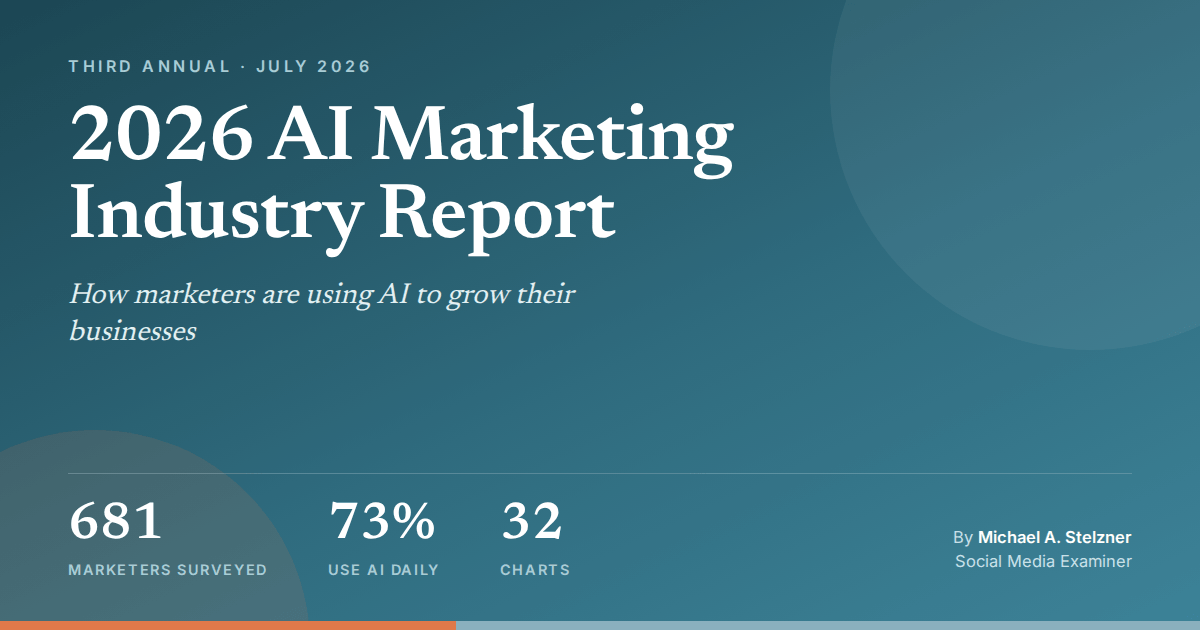
For small business owners, this shift carries weight. The Social Media Examiner‘s 2026 AI Marketing Industry Report digs deep into how businesses like yours are actually using AI — and the findings are more encouraging than you might expect.

Here are five takeaways that stand out, and what they mean for your bottom line.

1. AI Is No Longer a Luxury — It’s a Daily Workhorse

The most striking stat? Daily AI usage among marketers has more than doubled in two years. What was once a novelty tool for tech-savvy early adopters is now as routine as checking email.

Small businesses are leading this charge, not following. They’re using AI for everything from drafting social posts to responding to customer inquiries. The barrier to entry has dropped, and the payoff is immediate.

If you haven’t integrated AI into your daily workflow yet, you’re leaving time and money on the table. The tools are affordable, accessible, and surprisingly easy to master.

2. Content Creation Remains the Top Use Case

Ask any small business owner what they spend their mornings doing, and you’ll likely hear “writing content.” AI has become the go-to sidekick for this grind.

From blog outlines to email newsletters, AI helps marketers overcome the blank page problem. It’s not about replacing human creativity — it’s about amplifying it. You still provide the voice and the strategy; AI handles the heavy lifting.

The report shows that content generation is the most common application across all business sizes. For small teams with limited bandwidth, this is a game-changer in the best sense.

What This Means for Your Workflow

Start small. Use AI to brainstorm headlines, draft social captions, or repurpose a long post into multiple formats. You’ll quickly see where it saves you the most time.

3. Customer Service Is the Quiet Winner

Everyone talks about AI writing, but the real unsung hero is customer support. Small businesses are deploying chatbots and automated responses to handle routine questions, freeing up humans for complex issues.

The result? Faster response times and happier customers. And you don’t need a tech team to set this up — most platforms now offer plug-and-play solutions.

One caveat: the report stresses that AI should augment, not replace, your personal touch. Customers still want to reach a human when things get complicated.

4. The Cost Savings Are Real — and Significant

Hiring a full-time content writer or support agent is expensive. AI offers a fraction of the cost, and the report’s data backs this up.

Small businesses are reporting measurable savings on both time and money. Tasks that once took hours now take minutes. Projects that required outside contractors can now be handled in-house.

That doesn’t mean you should fire your team. Instead, reallocate their efforts to higher-value work — strategy, relationship building, and creative direction.

5. The Learning Curve Is Shorter Than You Think

One of the biggest myths about AI is that it requires technical expertise. The report demolishes that notion.

Most small business owners are learning on the job, using trial and error, and picking up skills faster than they expected. The tools are designed for non-technical users, and the payoff comes quickly.

If you’ve been hesitating because you’re not “techy,” the data says you’re overthinking it. Start with one tool, one task, and build from there.

What’s Next for Small Business AI Adoption?

The trajectory is clear: AI is becoming the standard for marketing operations, not the exception. As tools evolve, the gap between large enterprises and small businesses will continue to narrow.

For a deeper dive into the full dataset, check out the AI marketing industry report and see how your peers are adapting. And if you’re just getting started, our guide on AI tools for small business marketing offers practical first steps.

The bottom line? The future of small business is intertwined with AI, and the news is overwhelmingly positive. Those who embrace it now will have a head start on those who wait.

Continue Reading

Trending