Connect with us

Artificial Intelligence

Google Search Now Identifies AI-Generated Images: SynthID Comes to Chrome, Pixel, and More

Published

on

Google Search Now Identifies AI-Generated Images: SynthID Comes to Chrome, Pixel, and More

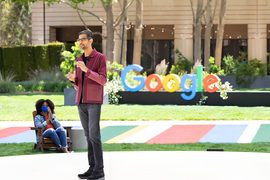
At Google I/O 2026, the company unveiled a major expansion of its SynthID watermarking system, bringing AI-generated image detection directly into products millions use daily. Instead of relying on third-party tools, users can now check whether an image was created or edited by artificial intelligence through Google Search, Chrome, Circle to Search, and Pixel devices. This move aims to tackle the rising tide of synthetic media online, offering transparency without disrupting the browsing experience.

How SynthID Integrates into Everyday Google Tools

Google’s SynthID technology, first introduced in 2023, embeds invisible watermarks into AI-generated content. Now, these markers are becoming part of the core search and browsing workflow. For instance, when you encounter an image online, you can long-press it or use Circle to Search to reveal if it carries SynthID or C2PA metadata. C2PA is an industry standard that tracks digital content origins and edits.

Chrome integration will roll out in the coming months, while Search features—accessible via Google Lens and AI Mode—will appear sooner. This means that verifying an image’s authenticity no longer requires leaving the page or using separate verification portals.

Pixel Devices Get Native AI Content Marking

Pixel phones are also part of the update. Any AI-generated or AI-edited media created on these devices will automatically include SynthID metadata. This is a significant step for mobile users, as it ensures that synthetic content carries traceable markers from the moment of creation.

The Growing Need for AI-Generated Image Detection

As AI tools become more powerful, distinguishing real images from fake ones grows harder. Deepfakes, AI art, cloned voices, and manipulated videos have exploded online, fueling misinformation and scams. Google’s approach is not to label all AI content as harmful but to provide context. This transparency is crucial for news verification, political discourse, and social media, where viral fake visuals can cause real-world harm.

Recent studies have also raised concerns about Google Search AI-generated summaries containing unsupported claims, further eroding trust. By embedding detection tools directly into search results, Google aims to restore confidence and help users make informed judgments.

Industry Collaboration and Limitations

Google is not working alone. The company has partnered with OpenAI, Nvidia, Eleven Labs, and Kakao to expand SynthID support across platforms. This collaboration is vital for creating a unified standard for AI transparency.

However, challenges remain. The current rollout focuses primarily on images, with video and audio verification still evolving. Google also decided against launching a standalone public verification portal, instead embedding detection into Gemini-powered experiences. This limits access for users who prefer a dedicated tool.

What This Means for the Future of Search

Google’s bet is that AI-generated image detection will become as fundamental as search itself. As synthetic media becomes more sophisticated, watermarking and metadata systems must keep pace. The key question is whether invisible markers can stay ahead of AI models that are improving at an exponential rate.

For now, users can expect gradual rollouts across Search, Chrome, Android, Pixel, and Gemini tools over the next few months. To learn more about how to verify AI images in your daily browsing, check our guide. For a deeper dive into SynthID vs. C2PA, explore the technical differences. This update marks a pivotal moment in the fight for online content authenticity, but vigilance remains essential.

Continue Reading
Click to comment

Leave a Reply

Your email address will not be published. Required fields are marked *

Artificial Intelligence

Gemini 3.5 Flash Is Google’s New Default AI Model — Built to Act, Not Just Answer

Published

on

Gemini 3.5 Flash Is Google’s New Default AI Model — Built to Act, Not Just Answer

Google has officially made Gemini 3.5 Flash its default AI model, marking a significant shift in strategy. Announced at Google I/O 2026, this new model is not just about answering questions — it is designed to take action. According to Google, Gemini 3.5 Flash outperforms the previous Gemini 3.1 Pro on coding and agentic benchmarks, delivering four times the speed of comparable frontier models, often at less than half the cost. This move positions agentic capability at the heart of Google’s AI roadmap.

What Makes Gemini 3.5 Flash Different?

Unlike earlier Flash models, which were positioned as faster, cheaper alternatives to the Pro tier, Gemini 3.5 Flash is built for long-horizon agentic tasks. These are workflows that require AI to plan, build, and iterate across multiple steps. Google claims that the model can handle tasks that previously took developers days or auditors weeks, completing them in a fraction of the time.

Benchmark Performance That Speaks Volumes

On Terminal-bench 2.1, Gemini 3.5 Flash scored 76.2%. It achieved 1656 Elo on GDPval-AA and 83.6% on MCP Atlas. Additionally, the model scored 84.2% on CharXiv Reasoning, a multimodal understanding benchmark. These numbers highlight its strength in both coding and complex reasoning.

Built for Agents: The Antigravity Platform

Gemini 3.5 Flash works seamlessly with Google’s Antigravity, an agent-first development platform. This platform allows developers to deploy multiple subagents in parallel, enabling the model to tackle more demanding workloads. On the consumer side, Gemini 3.5 Flash now powers the Gemini app and AI Mode in Google Search.

Furthermore, it powers Gemini Spark, a new personal AI agent announced at I/O. Spark runs around the clock to take actions on a user’s behalf, such as booking appointments or managing workflows. Google is currently rolling out Spark to trusted testers, with a broader beta planned for Google AI Ultra subscribers in the US next week.

Availability and Rollout Details

Gemini 3.5 Flash is available globally starting today. Consumers can access it through the Gemini app and AI Mode in Search. Developers can use it via Google AI Studio, the Gemini API, and Android Studio. Enterprise customers can access it through the Gemini Enterprise Agent Platform and Gemini Enterprise.

Google has also confirmed that Gemini 3.5 Pro is currently in internal testing and expected to roll out next month. This suggests that Google is betting heavily on agentic AI, rather than competing purely on which model can answer questions more accurately.

What This Means for the Future of AI

This release puts agentic capability at the center of Google’s AI roadmap. Instead of just answering queries, Gemini 3.5 Flash is designed to take actions like booking appointments, writing and running code, and managing workflows — all with minimal user input. As a result, Google is positioning itself for the next stage of AI evolution.

Building on this momentum, the upcoming Gemini 3.5 Pro will likely push these capabilities even further. For more insights, check out our coverage on AI trends at Google I/O 2026 and how Google’s AI agents are changing productivity.

Continue Reading

Artificial Intelligence

Google’s Gemini Omni Is an All-Purpose AI Content Generator That Wants to Replace Your Entire Studio

Published

on

Google’s Gemini Omni Is an All-Purpose AI Content Generator That Wants to Replace Your Entire Studio

Google has officially entered the video creation arena with a bang. At its annual I/O 2026 conference, the tech giant unveiled Gemini Omni, an AI content generator that promises to transform any raw material—text, sketches, voice memos, shaky phone clips, or even a photo of your pet—into a polished, coherent video. The company’s bold tagline? “Create anything from any input.” For once, that claim doesn’t feel exaggerated.

This is a major leap forward in the world of generative AI. While previous tools from Google, like Veo, were capable but clunky, Gemini Omni is designed as a unified model that handles the entire creative workflow. No prior camera or editing experience is required. The result is a tool that could fundamentally change how content is produced, from professional studios to everyday social media users.

What Makes Gemini Omni Different from Other AI Video Generators?

Until now, most AI video generators have felt fragmented. Some excelled at visuals but struggled with audio, while others couldn’t maintain character or environmental consistency between scenes. Gemini Omni bridges that gap with two key innovations: continuity and conversation.

The tool allows you to edit or create videos using voice-based inputs sent to Gemini. It always remembers your previous instructions, which means characters, settings, and storylines remain consistent across cuts. This is a game-changer for storytelling, as it eliminates the jarring inconsistencies that plague many AI-generated videos.

Moreover, Omni can adjust physics-aware details like lighting, motion, and environment without breaking the footage. It even understands gravity and fluid dynamics, ensuring that objects fall naturally and water flows realistically. In essence, it’s like having a conversation with your video editor, but with far greater creative liberty.

Who Gets Access to Gemini Omni Flash?

Gemini Omni Flash is rolling out starting today. Here’s the breakdown of who gets access and at what cost:

  • YouTube Shorts users: Completely free. This is a massive move by Google to democratize high-quality video creation for millions of creators worldwide. The feature will be available directly in the YouTube Shorts interface and the YouTube Create app, rolling out this week.
  • Gemini App and Google Flow users: Requires an AI Plus, Pro, or Ultra subscription, starting at $7.99 per month. This tier is aimed at power users and professionals who need advanced capabilities.
  • Enterprise API access: Coming in the next few weeks, this will allow businesses to integrate Omni into their own workflows.

Every video created via Omni Flash is invisibly watermarked with SynthID, Google’s proprietary content authentication system. Whether this is enough to prevent misuse remains an open question, but it’s a step toward responsible AI deployment.

How Does This Change the Content Creation Landscape?

Google has been playing catch-up in the generative video space for two years. Veo, its previous model, was capable but clunky—a text-to-video tool in a world that had already moved on to full creative pipelines. Gemini Omni is the course correction the company needed.

For creators, this means unprecedented efficiency. Instead of juggling multiple tools for scripting, storyboarding, filming, editing, and sound design, you now have a single AI content generator that does it all. Need a promotional video for your small business? Describe your product in a voice note, and Omni will generate a polished clip. Want to turn a family photo into a short film? Upload it and provide a few verbal instructions.

However, this ease of use also raises questions about authenticity and originality. As AI-generated content becomes indistinguishable from human-produced work, the line between creator and curator blurs. Google’s watermarking system is a start, but the broader conversation about content provenance is just beginning.

Practical Implications for Marketers and Businesses

For marketers, Gemini Omni could be a powerful video creation tool that reduces production costs and turnaround times. Imagine generating social media ads, explainer videos, or product demos in minutes rather than days. The ability to iterate quickly based on voice feedback means you can test multiple versions of a campaign without hiring a full production team.

But there’s a catch: the tool is only as good as the input it receives. While Omni handles the technical heavy lifting, the creative vision still comes from the user. Those who master the art of prompting—providing clear, detailed instructions—will get the best results.

What’s Next for Gemini Omni?

Google has already confirmed that Gemini Omni will be integrated into more products in the coming months. Expect to see it in Google Workspace, enabling users to create video content directly from Docs, Sheets, and Slides. The company is also rumored to be working on a standalone desktop app for professional editors.

For now, the AI content generator is available to a wide audience, from casual YouTubers to enterprise clients. The content landscape is about to get very loud, and Google has handed everyone a megaphone. Whether that’s a good thing or a cause for concern depends on how we choose to use it.

As with any transformative technology, the key will be balance. Gemini Omni offers incredible creative freedom, but it also demands responsibility. The future of video creation is here, and it’s powered by AI. Are you ready to press record?

Continue Reading

Artificial Intelligence

Google Wants to Reinvent Your TV Remote with Gemini and Pointer Controls

Published

on

Google Wants to Reinvent Your TV Remote with Gemini and Pointer Controls

At Google I/O 2026, the tech giant unveiled plans to reinvent your TV remote and transform how you interact with the living room screen. With over 300 million monthly active devices on Google TV and Android TV, Google is betting big on artificial intelligence to make televisions smarter and more responsive. The centerpiece of this strategy is Gemini, the company’s advanced AI model, now deeply integrated into the TV experience.

Gemini AI: Smarter Content Discovery on Your TV

Google says Gemini is already helping users find shows through natural voice commands. But the company wants to go further. Instead of static search results, Gemini now delivers a mix of visuals, videos, and text snippets. Ask for a thriller with a strong female lead or a documentary about space exploration, and it pulls contextual recommendations directly from streaming apps and their metadata.

This is a massive shift for streaming platforms. Historically, content discovery on TVs has been messy and fragmented, often dependent on which app you opened first. Gemini acts as a layer above everything, functioning as an intelligent content guide rather than a basic search tool. It makes browsing feel more like searching the web—but from your couch.

Pointer Remotes: A New Way to Navigate

Interestingly, Google’s bigger announcement may not be Gemini itself. It is the remote control. The company says future Google TV devices will increasingly support pointer remotes, which bring motion and cursor-based navigation to televisions. Think of it as a hybrid between a traditional TV remote and a computer mouse.

Most TV interfaces today rely on rigid D-pad navigation—up, down, left, right, select. Pointer controls introduce hovering, free-form movement, touchpad scrolling, and cursor clicks. Suddenly, TV apps must behave more like desktop or tablet interfaces. Google is now asking developers to prepare their apps for this transition. That includes adding hover states to buttons, supporting smoother scrolling, and ensuring apps respond to cursor-based clicks instead of only directional focus controls.

This change feels overdue. TV interfaces have remained clunky for years, especially compared to the fluidity of smartphones and tablets. Streaming apps often feel slow and awkward when browsing massive content libraries. Pointer-based interaction could make that experience significantly faster—assuming developers optimize their apps properly.

Preparing Developers for the Shift

To help developers adapt, Google says apps built with Jetpack Compose already have an easier path forward because many modern interaction models are supported natively. The company is also encouraging developers to test these new interactions today using standard Bluetooth or wired mice connected to Google TV devices. This way, they can understand how hover effects, scrolling behavior, and cursor inputs work on large-screen interfaces.

Google notes that pointer remotes are naturally less precise than a mouse because users are typically sitting several feet away from the television and making rough gestures from the couch. To compensate, developers are advised to create larger interactive targets and more forgiving UI layouts. Additionally, developers can now officially declare pointer remote support on Google Play, making compatible TV apps easier for users with newer remotes to discover.

For more on how AI is reshaping home entertainment, check out our guide on AI in home entertainment. Also, explore best Google TV apps for 2026 to see which titles are already optimized.

The Future of TV Interaction

All of this paints a clear picture of where Google TV is heading next. Televisions are slowly becoming more active, AI-driven computing platforms rather than simple streaming boxes. Gemini handles discovery, pointer remotes modernize navigation, and developers are being nudged to rethink the decade-old TV app experience altogether.

Whether users actually embrace waving remotes around their living rooms is another question entirely. But Google clearly believes the future of TV interaction needs to feel smarter, faster, and a lot less dependent on endlessly clicking directional buttons. As the lines between TV, tablet, and computer blur, Google is positioning itself at the forefront of this transformation.

Continue Reading

Trending