Connect with us

Artificial Intelligence

Wear OS 7 is here and your Pixel Watch is about to get a lot smarter

Published

on

Wear OS 7 is here and your Pixel Watch is about to get a lot smarter
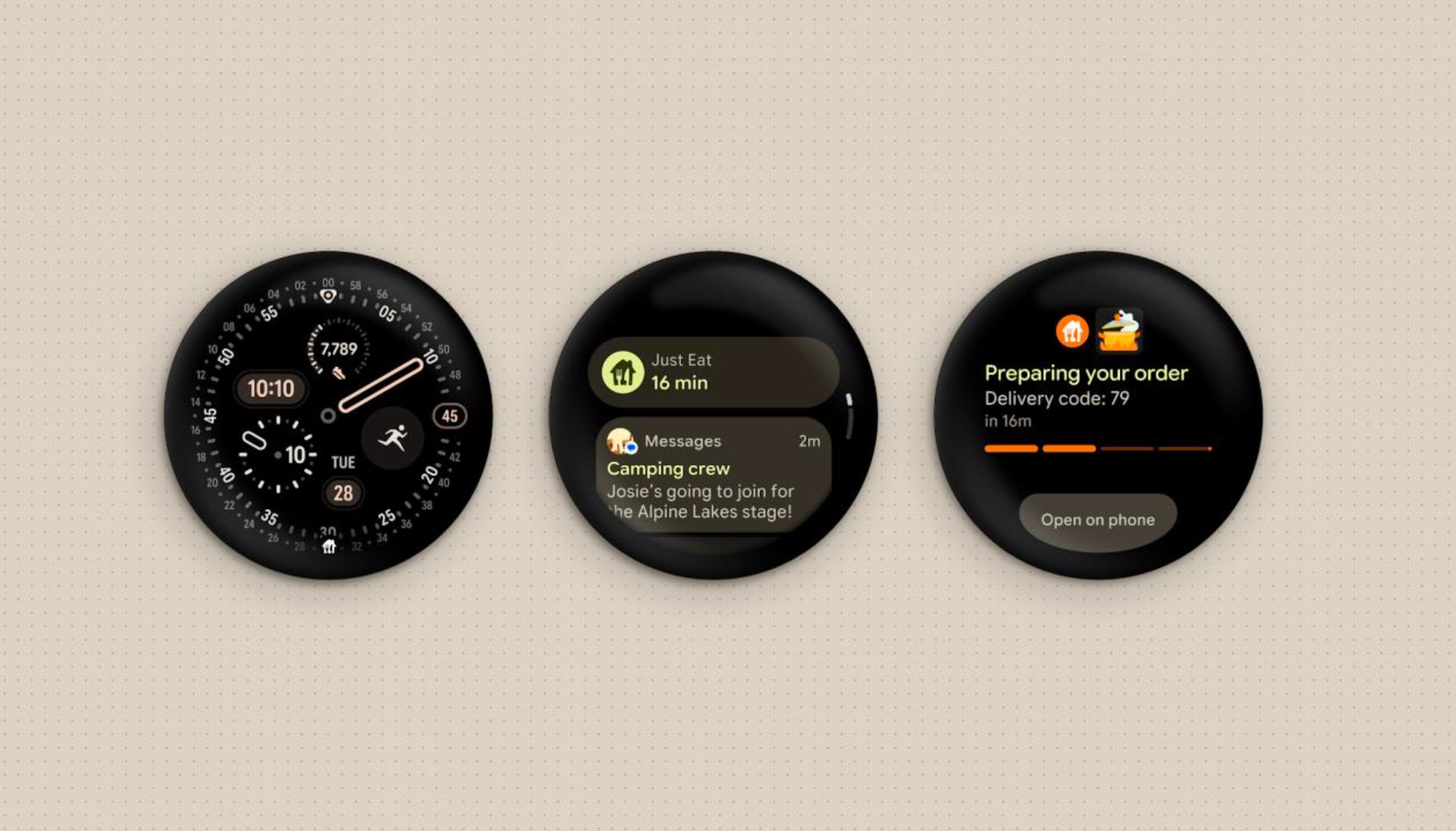
Google has officially started rolling out the Wear OS 7 update to eligible Pixel Watch devices, bringing a suite of intelligent features that aim to make your wrist-worn companion more helpful than ever. With over half of Wear OS users wearing their watch seven days a week, and the most active keeping it on for more than 23 hours daily, this software refresh is designed for that level of commitment.

Live updates: real-time info on your wrist

The standout addition in the Wear OS 7 update is Live Updates, which brings Android’s real-time information system directly to your smartwatch. Instead of reaching for your phone, you can now track food delivery progress, live sports scores, or workout metrics right from your watch face. This feature mirrors data from your phone apps seamlessly, keeping you informed without breaking your stride.

For example, if you order dinner through a delivery app, the watch will display the driver’s location and estimated arrival time. Similarly, fitness enthusiasts can monitor their heart rate zones and distance without swiping through menus. It’s a practical step toward reducing phone dependency during daily activities.

Smarter device control and audio management

Another key improvement in the Wear OS 7 update is the enhanced media output switcher. You can now control audio playback across your headphones, home speakers, and other connected devices directly from your watch. This means you can switch music from your living room speaker to your earbuds with a single tap, without touching your phone.

Additionally, if you use audio glasses to capture photos—like Google’s upcoming intelligent eyewear launching this fall—you can preview the image instantly on your Pixel Watch. This integration highlights how Wear OS 7 positions the watch as a central hub for your connected ecosystem.

Gemini Intelligence: AI-powered personalization

Later this summer, select Pixel Watch devices will unlock Gemini Intelligence, a set of AI-driven features that elevate the smartwatch experience. One of the most exciting tools is Create My Widget, which lets you build personalized watch dashboards simply by describing what you want in plain language. For instance, you could say, “Show my steps, next meeting, and weather,” and the watch will generate a custom widget instantly.

Multi-step app automation takes this further. Gemini can complete complex tasks on your behalf, such as booking a spin class or reordering your usual coffee from a favorite restaurant. This reduces the need to navigate multiple apps manually.

Personal Intelligence draws from your Gmail, Search history, and chat history to offer tailored suggestions. It might remind you of an upcoming flight or suggest a restaurant based on your past preferences. The AI also adopts Gemini’s Neural Expressive design language, giving the watch face a fresh visual identity that feels both modern and intuitive.

For more on how AI is reshaping wearables, check out our guide on top smartwatch AI assistants.

Battery life boost and performance improvements

Beyond new features, the Wear OS 7 update delivers up to 10% better battery life compared to Wear OS 6. For a device you wear around the clock, this extra endurance can make a significant difference. You might find yourself charging less frequently, which is especially valuable for sleep tracking and continuous health monitoring.

Performance optimizations also ensure smoother navigation and faster app launches. Google has focused on refining the core experience, so everyday tasks feel more responsive.

If you’re considering upgrading your smartwatch, explore our comparison of best smartwatches 2025 to see how Pixel Watch stacks up.

What this means for Pixel Watch users

With the Wear OS 7 update, your Pixel Watch becomes a smarter, more proactive assistant. The combination of live updates, enhanced device control, and AI-driven personalization transforms it from a simple notification mirror into a genuine productivity tool. As Google continues to refine its wearable ecosystem, updates like this reinforce the platform’s potential.

However, not all features arrive at once. Live Updates and media controls are available now, while Gemini Intelligence will roll out later in the summer. Patience will reward early adopters with an even richer experience.

For a deeper dive into Wear OS changes, read our article on Wear OS 7 vs Wear OS 6.

Continue Reading
Click to comment

Leave a Reply

Your email address will not be published. Required fields are marked *

Artificial Intelligence

China’s AI talent shortage is so bad that tech giants are recruiting teenagers
Published

on

AI talent shortage

The 13-year-old who’s already ahead of the curve

In Hangzhou, a 13-year-old boy has won national AI competitions and built an online following of more than 136,000 people. His dad, meanwhile, is trying to figure out how to guide a kid through a field that barely existed when he was growing up. That family’s story, first reported by Rest of World, captures where China’s tech industry is heading.

Companies used to wait for graduates to walk through the door. Now they’re reaching further back — first to undergrads, and increasingly to teenagers. The goal? Spot rare talent before anyone else gets to them.

Why the sudden rush to recruit teens?

The short answer is a serious talent gap. McKinsey estimates China could be short by 5 million AI workers by 2030. Right now, there are more open AI jobs than qualified people to fill them. That math has pushed companies to rethink who they even consider.

Tencent recently launched camps for students aged 13 to 18, covering everything from AI product management to quantum computing. ByteDance founder Zhang Yiming went even further, co-founding a research program that hand-picks just 30 students a year as full-time trainees.

Geely flips the hiring order entirely

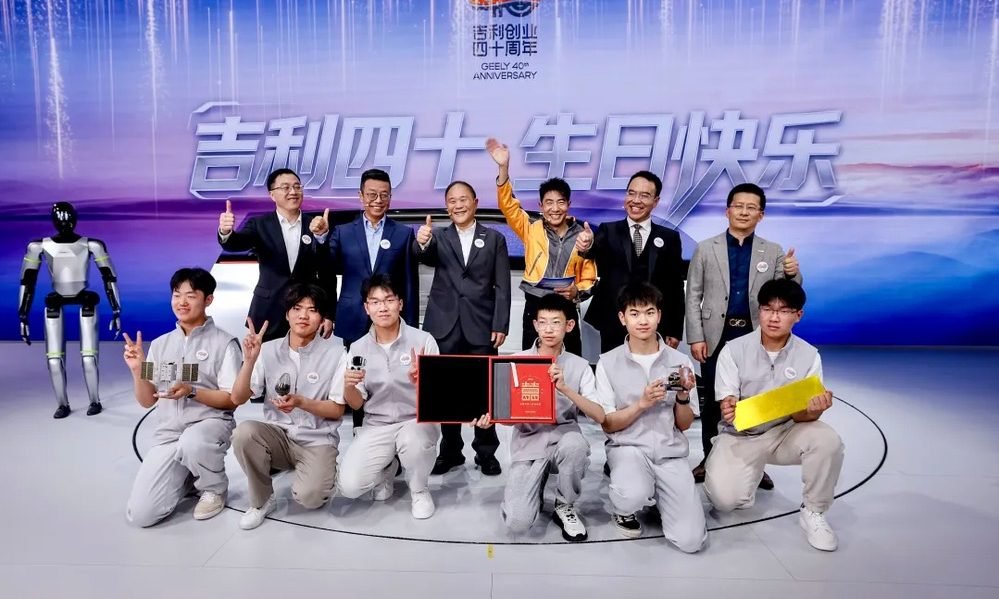
Then there’s Geely, which turned the usual hiring pipeline upside down. The automaker now recruits students straight out of high school, trains them in AI and EV tech alongside their studies, and guarantees them a job that pays the same as a fresh graduate once they’re done. No degree required. No waiting four years.

It’s a bold bet. But Geely isn’t alone in questioning the old rules.

Does a degree matter less now?

MiniMax, one of China’s leading AI startups, says it still isn’t hiring high schoolers — but it has stopped treating a degree as a hard requirement. The company cares more about curiosity and raw ability than a diploma. That shift isn’t unique to China either.

Google co-founder Sergey Brin has said the company is increasingly open to hiring people without a bachelor’s degree. At the end of the day, AI isn’t just changing what jobs look like. It’s rewriting who even gets considered for them.

What this means for the future of hiring

Degrees, age, and traditional resumes are all starting to matter a little less than raw skill and curiosity. That’s a big deal for young people who might have been overlooked before. It’s also a warning for anyone who assumed a diploma was a lifetime ticket.

For parents like that Hangzhou dad, the new landscape raises a tricky question: how do you raise a kid for a career that didn’t exist a decade ago? There’s no playbook. But if China’s tech giants are any indication, the answer might be to start earlier — and think less about credentials, more about capability.

If you’re curious about how AI is reshaping other parts of life, check out AI job market trends or how to build an AI career without a degree.

Continue Reading

Artificial Intelligence

VentureBeat taps Rob Strechay as its first Lead Analyst, doubling down on enterprise AI research

Published

on

Rob Strechay Lead Analyst

VentureBeat’s new research push has a name

Rob Strechay, formerly managing director and principal analyst at theCUBE Research, is now VentureBeat’s first Lead Analyst. He’s also a founding analyst of the company’s new research arm, VentureBeat Research.

The move signals something bigger than a single hire. VentureBeat is deliberately shifting toward specialization — analysis built for technical decision-makers like directors, VPs, CIOs, and CTOs who are actively evaluating, buying, and deploying enterprise AI.

“The enterprise AI stack is being rewritten in real time,” said VentureBeat’s leadership in announcing the appointment. “The decision-makers I talk with are starved for objective, defendable data.”

Why this hire matters now

The questions enterprise technology leaders are asking have changed. Organizations are moving past generative AI experimentation and into production deployment. They want to know how to orchestrate multi-vendor environments, where the security gaps in their agentic pipelines sit, and how to fix the utilization problems draining their infrastructure budgets.

News coverage alone can’t answer those questions. That’s the gap VentureBeat Research is built to fill.

An analyst who has sat on every side of the table

Strechay brings nearly three decades of experience as a practitioner, product executive, and industry analyst. Before becoming an analyst, he was an executive at startups including Zerto. He joined Amazon Web Services to help build a new analytics service. He later served as a senior analyst at Enterprise Strategy Group and, most recently, as managing director and principal analyst at theCUBE Research and SiliconANGLE.

His initial focus areas at VentureBeat: cloud infrastructure, advanced data infrastructure, platform engineering, DevOps orchestration and observability, and the intersection points where AI and enterprise security collide.

Already at work: GPU utilization and the VB Pulse surveys

Strechay hasn’t waited for an official start date. In May he published an analysis of enterprise GPU utilization, examining the compute waste sitting inside enterprise AI infrastructure. He also provided a substantive review of VentureBeat’s AI Infrastructure & Compute survey before it went into the field.

His infrastructure-level focus complements the research engine VentureBeat has built around its monthly VB Pulse surveys. These track five areas of enterprise AI adoption:

  • Agentic orchestration
  • Agent reliability and evals
  • Agentic security and identity
  • AI infrastructure and compute
  • Context layers, including retrieval-augmented generation (RAG)

The June report on agentic orchestration, drawn from a survey of 145 enterprises, found that two-thirds had hedged their AI model strategy rather than committing to a single provider. The June outage of Anthropic’s Claude models made that posture’s value painfully clear.

VB In Conversation: The first vehicle

A core vehicle for this expanded research footprint will be a deepening of VentureBeat’s existing VB In Conversation video interview series, which Strechay will host. The series will bring architectural blueprints, actual deployment barriers, and back-end infrastructure realities to light through in-depth technical interviews with the architects and product leaders behind leading enterprise AI systems.

“VentureBeat has built an audience of enterprise builders and technology buyers that any analyst would want to serve,” Strechay said. “My goal is to use deep empirical metrics and VentureBeat’s proprietary tracking data to help enterprise buyers and the people building for them make sound platform and infrastructure decisions during the most disruptive transition enterprise technology has seen.”

What to expect next

The expanded VB In Conversation series will appear on VentureBeat and on VentureBeat’s YouTube channel, alongside Strechay’s written analysis on the site. Enterprise practitioners who want to take part in the monthly VB Pulse surveys, or arrange an analyst briefing with Strechay, can reach the research team directly.

For those tracking enterprise AI adoption trends, this hire is a signal. VentureBeat is betting that technical depth — not just news — is what enterprise buyers need most right now.

Continue Reading

Artificial Intelligence

Samsung’s humanoid robot dreams are real, but the factory floor comes first

Published

on

Samsung humanoid robots

Samsung’s humanoid robot plans are real, but the factory floor comes first

Samsung wants a piece of the humanoid robot boom. But the company’s first concrete robotics push isn’t about a robot that walks your dog or folds your laundry. It’s about machines built for the factory floor.

The newly formed RX robotics division, led by a CEO, will initially focus on manufacturing robots. Samsung has separately flagged humanoids as a priority, though it hasn’t announced a commercial model or explained how one fits into the division’s near-term roadmap.

That gap between ambition and execution is telling. The machines Samsung can deploy first may look considerably less human than the ones in its promotional videos.

Why factories come first for Samsung’s robot push

The RX division fits neatly into Samsung’s broader plan to transform its manufacturing operations into AI-driven factories by 2030. The roadmap includes humanoids alongside assembly and logistics systems — but the sequencing matters.

Factories are an obvious starting market. The work is structured, the environment can be controlled, and Samsung already runs production facilities across the globe. That’s a far lower barrier to entry than a cluttered living room with unpredictable pets and toddlers.

That doesn’t mean the factory floor is just a training ground for future household humanoids. It gives Samsung somewhere practical to build an industrial robotics business while the grander promises remain unfinished. In other words, the company can make money now and dream later.

What Samsung could actually build first: the Rainbow Robotics RB-Y1

Samsung took control of Rainbow Robotics to accelerate its work on advanced robots, including humanoids. Rainbow was founded by researchers behind South Korea’s first bipedal humanoid, so the pedigree is real.

But the RB-Y1 offers a more realistic picture of what could arrive first. The robot has two arms and a human-like working range, yet it moves on wheels. It has reportedly undergone testing inside a Coupang warehouse, although Samsung hasn’t officially identified it as part of the RX division’s roadmap.

The design choice is pragmatic. Walking robots make impressive demonstrations. Wheels make more sense when the machine has a shift to finish. A robot that tips over on aisle three isn’t exactly a productivity win.

The case for wheeled robots in industrial settings

  • Wheels are more stable and energy-efficient than legs for repetitive tasks
  • Warehouse floors are flat and predictable, so legs add complexity without much benefit
  • Maintenance costs are lower, and uptime is higher

That’s not to say Samsung has abandoned walking robots entirely. The company’s ambition clearly extends beyond conventional robot arms. But the first machines out of the gate will likely be the ones that can do a job reliably today, not the ones that look cool in a demo reel.

When could Samsung robots reach homes?

Samsung’s ambitions could eventually extend into stores and homes, but the company hasn’t announced a consumer humanoid or provided a launch window. Don’t hold your breath.

Its history with Ballie gives us reason to stay skeptical. The rolling home robot missed its planned release before Samsung repositioned it as an internal innovation platform. That’s a polite way of saying it didn’t ship as a consumer product.

So while Samsung’s smart home ecosystem continues to grow, a humanoid that folds your laundry remains firmly in the PowerPoint phase. The company’s immediate focus is on industrial robots, and that’s where the RX division will earn its keep.

What this means for the humanoid robot race

Samsung is hardly alone in chasing humanoids. Companies like Tesla with Optimus and Figure are pushing bipedal designs. But Samsung’s strategy is different: build the industrial business first, and let humanoids come later.

That’s a sensible approach, but it also means Samsung is playing catch-up in the consumer space. The company’s real strength lies in manufacturing and supply chain integration, which gives it a natural edge in factory automation.

For now, the takeaway is clear: Samsung humanoid robots are a long-term ambition, not a near-term product. The RX division will start with machines that work on wheels, in controlled environments, doing structured tasks. If that sounds less exciting than a robot butler, well, it is. But it’s also a lot more likely to actually ship.

Continue Reading

Trending